Regaining movement after a completely severed spinal cord has long been considered one of medicine’s greatest challenges. Now, researchers have shown that an experimental fusogen-based gel enabled pigs with fully severed spinal cords to recover sensation, bladder control, and the ability to stand and walk, raising new hope that damaged nerve fibers may one day be repaired rather than permanently lost.
The loss of movement after a spinal cord injury happens because damaged nerve fibers struggle to reconnect. Instead of rebuilding the broken communication pathway, the body forms dense scar tissue that blocks nerve signals from crossing the injury site. For humans and other mammals, this often means permanent paralysis, loss of sensation, and impaired bladder control.
Researchers have now demonstrated a dramatically different outcome in pigs by taking inspiration from a natural repair strategy found in primitive invertebrates that can reconnect severed nerves through a process known as fusion.
Looking to Nature for a Better Way to Repair Nerves
Some simple invertebrates possess a remarkable ability that mammals lack. When their nerve fibers are cut, the separated ends can locate one another and fuse back together, restoring communication.
Michael Lebenstein-Gumovski and colleagues at the Sklifosovsky Institute for Emergency Medicine in Russia sought to recreate this process in mammals.
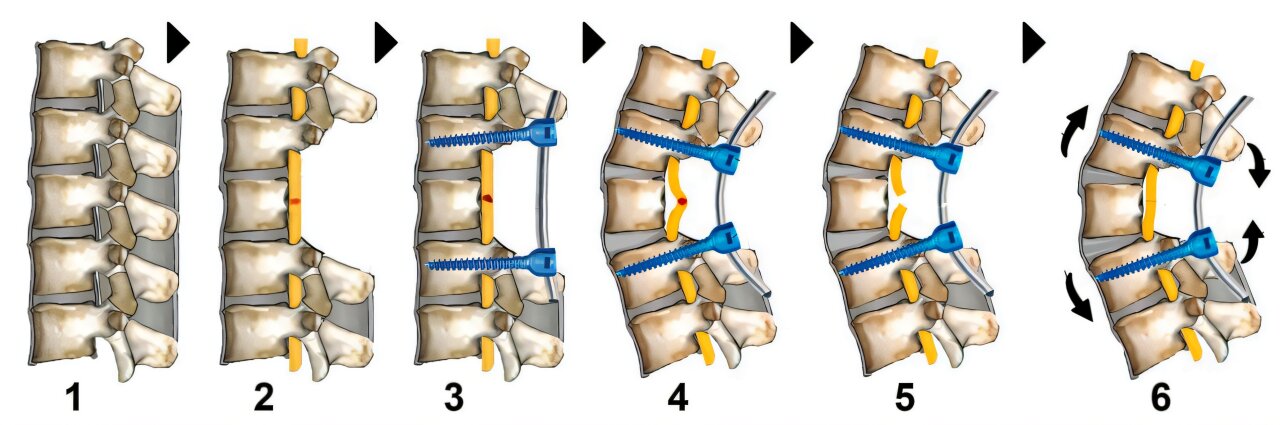
One major obstacle is that when a spinal cord is completely severed, the two cut ends naturally pull apart, leaving a gap. To imitate natural nerve fusion, the researchers needed a material capable of filling this space while holding the damaged tissue together long enough for repair to occur.
An Experimental Gel Designed to Weld Nerve Membranes Together
According to the study published in PLOS One, the researchers engineered a fusogen-based gel specifically designed to reconnect damaged nerve cell membranes.
The gel combines polyethylene glycol, a chemical already used in medicine, with chitosan, a biological polymer. Together, these materials were intended to seal damaged nerve membranes and encourage the separated nerve fibers to reconnect instead of remaining permanently divided.
The goal was not simply to stimulate new nerve growth but to promote immediate repair by physically reconnecting damaged axons.
Testing the Treatment in Pigs
The study involved five female Hungarian Mangalica pigs, each undergoing complete spinal cord transection while under deep anesthesia.
Three pigs received the experimental gel directly at the injury site. Their spines were then stabilized using screws and rods.
The remaining two pigs served as the control group. They underwent the same spinal stabilization procedure but did not receive the gel.
Following surgery, every animal participated in the same rehabilitation program, including daily leg massages and electrical muscle stimulation. During the first week after surgery, the treated pigs also received polyethylene glycol infusions.
This design allowed the researchers to compare whether the gel itself contributed to recovery beyond standard surgical stabilization and rehabilitation.
Recovery Began Within Days
The differences between the treated and untreated animals became apparent almost immediately.
Within just two days, all three treated pigs began recovering sensation and responded to skin pricks, indicating that nerve signals were once again traveling across the injury.
By day five, every treated pig had regained natural bladder control.
Recovery continued over the following weeks. By day 60, all three treated animals could stand independently and walk using all four limbs.
The untreated pigs experienced a very different outcome. Despite receiving the same spinal stabilization and rehabilitation program, they showed no meaningful recovery and remained unable to walk.
Evidence of Reconnected Nerve Fibers
Microscopic examination provided additional evidence supporting the clinical improvements.
The untreated pigs developed extensive scar tissue, large fluid-filled cysts, and deteriorated nerve endings—findings consistent with the failure of damaged spinal cords to reconnect.
In contrast, tissue from the treated pigs revealed nerve fibers crossing the injury site, suggesting that communication had been re-established between the previously separated sections of the spinal cord.
The researchers believe these findings point toward a repair mechanism that acts much more quickly than traditional nerve regeneration.
As the team explained in their paper, the rapid improvements observed could not be explained by axonal regeneration alone. Instead, they concluded that axonal fusion was likely the primary driver of the early recovery.
This distinction is important because growing entirely new nerve fibers typically takes much longer than the rapid restoration of sensation and bladder function seen in the treated animals.
A Promising Step, But Not Yet a Human Treatment
Although the findings are encouraging, the researchers emphasize that this work does not mean a treatment for people is immediately around the corner.
The study involved only five pigs, and additional research in larger animal studies will be necessary before human clinical trials could be considered.
Nevertheless, the results provide evidence that damaged nerve fibers may be capable of reconnecting after complete spinal cord injury under the right conditions.
The researchers concluded that their polyethylene glycol-chitosan conjugate sealant promoted significant structural and functional recovery following complete spinal cord transection, supporting its potential as a future therapeutic approach.
Why This Matters
Spinal cord injuries often result in lifelong disability because severed nerve fibers fail to reconnect, leaving permanent interruptions in communication between the brain and the body. This study challenges that assumption by showing that an experimental fusogen-based gel helped pigs recover sensation, bladder control, and the ability to walk after complete spinal cord transection while untreated animals showed no comparable improvement.
Although much more research is required before the approach could be tested in humans, the findings offer compelling evidence that repairing damaged nerve fibers through axonal fusion may be possible. If future studies confirm these results, this strategy could open an entirely new direction for developing treatments aimed at restoring function after devastating spinal cord injuries.