A naturally occurring compound produced by gut bacteria has been found to activate a protective repair system in the intestine, revealing a promising new strategy for treating inflammatory bowel disease without broadly suppressing the immune system. The discovery identifies how the microbial metabolite urolithin A (UroA) strengthens the gut barrier and helps limit tissue damage by triggering a highly specific cellular pathway.
The human gut is constantly balancing two critical tasks: absorbing nutrients while keeping harmful microbes from entering the body. When that balance breaks down, the consequences can be severe. Researchers have now uncovered an important mechanism that may help restore this delicate defense system, offering fresh insight into how the body naturally protects itself during intestinal injury.
Scientists at the University of Louisville have identified how urolithin A (UroA)—a microbial metabolite generated by gut bacteria after the digestion of foods such as pomegranates, walnuts, and berries—activates a protective pathway that helps maintain the intestinal barrier. Their findings, published in Nature Communications, provide a clearer understanding of how interactions between diet, gut microbes, and the body’s own cells may support future therapies for inflammatory bowel disease (IBD).
Why the Gut Barrier Matters in IBD
Inflammatory bowel disease, which includes Crohn’s disease and ulcerative colitis, affects millions of people around the world. The condition is marked by chronic inflammation and damage to the lining of the intestine.
Under healthy conditions, the intestinal barrier serves as a protective shield. It allows nutrients to pass into the body while preventing harmful bacteria from escaping the gut. In people with IBD, however, this barrier becomes weakened, allowing bacteria to leak through the intestinal lining and fueling persistent inflammation, pain, and long-term complications.
Understanding how to strengthen this barrier has become a major goal in developing better treatments for the disease.
A Gut Microbial Compound With a Protective Role
The research team, led by Venkatakrishna Rao Jala, associate professor in the Department of Microbiology and Immunology and the University of Louisville’s Brown Cancer Center, focused on UroA, a naturally occurring compound produced by gut microbes during digestion.
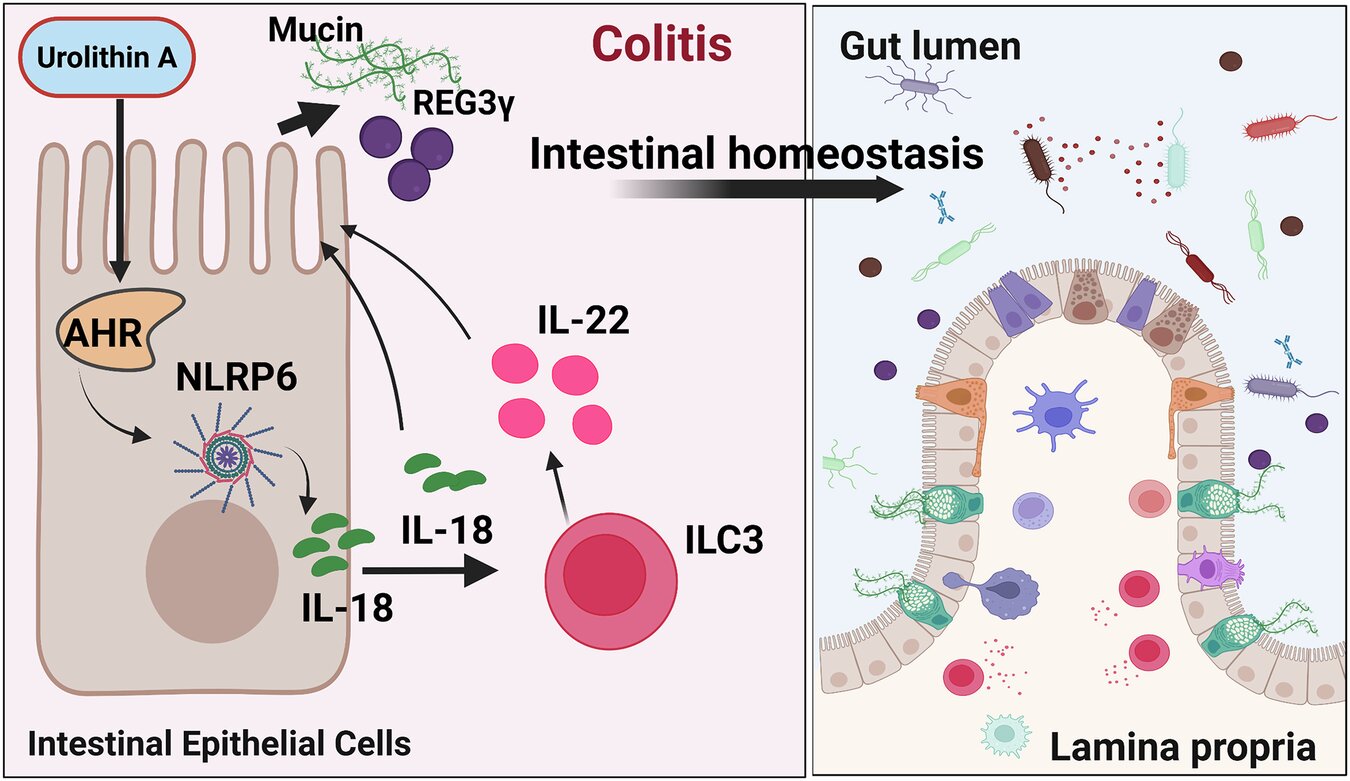
The scientists investigated how UroA interacts with the aryl hydrocarbon receptor (AHR), a protein that functions as a sensor for environmental, dietary, and microbial signals.
Researchers have long known that AHR activation can sometimes produce harmful effects, particularly when triggered by certain environmental toxins. At the same time, previous studies suggested that activation by beneficial dietary compounds could support intestinal health. Until now, however, scientists had not fully understood why these different outcomes occur.
Location Determines the Outcome
The new study shows that the effects of AHR depend not only on whether it is activated but also on where and how strongly that activation takes place.
The researchers discovered that UroA selectively activates AHR within intestinal epithelial cells, the specialized cells that form the protective lining of the gut.
This targeted activation sets off a cellular defense mechanism known as the NLRP6 inflammasome.
Inflammasomes are typically associated with inflammatory responses, but the new findings reveal that they can also perform an important protective function under the right conditions.
Instead of driving damaging inflammation, activation of the NLRP6 inflammasome by UroA prompted the release of the appropriate levels of molecules involved in maintaining normal intestinal function. These signals helped repair the gut lining, strengthen the intestinal barrier, increase protective mucus production, and enhance antimicrobial defenses.
The researchers say this is the first study to demonstrate how a naturally produced microbial compound works together with the body’s own response systems to regulate complex molecular and cellular processes during intestinal injury, ultimately helping preserve gut health while reducing tissue damage.
Not Every Inflammatory Pathway Is Harmful
The findings challenge the common assumption that all inflammatory pathways contribute to disease.
“The findings show that not all inflammatory pathways are harmful,” said Sweta Ghosh, the study’s lead investigator and a former postdoctoral researcher in Jala’s laboratory. “Under the right conditions and in the right cells, these pathways can play an essential role in maintaining gut health and supporting tissue repair.”
This distinction highlights the importance of understanding how specific immune pathways function in different cell types instead of treating inflammation as a single process.
Multiple Experimental Systems Confirmed the Discovery
To validate the mechanism, the research team examined multiple experimental systems, including cell studies, organoid models, and intestinal tissue samples collected from patients with IBD.
Across these different systems, UroA consistently activated the same protective pathway in human intestinal tissue.
These results strengthen the evidence that the mechanism is not limited to laboratory models and may have broader relevance for understanding human intestinal disease.
Toward More Precise Treatments
Current treatment strategies for inflammatory bowel disease often rely on broadly suppressing immune activity to reduce inflammation. While these approaches can be effective, they may also interfere with beneficial immune functions.
The new findings suggest a different possibility.
Rather than shutting down immune responses across the board, future therapies could focus on activating specific protective pathways within carefully targeted cell types. By preserving beneficial immune functions while promoting tissue repair, such treatments could help restore balance in the intestine more precisely.
“This study helps us better understand how natural compounds produced through interactions between diet, gut microbes and the body can influence disease processes,” Jala said. “By identifying this specific protective pathway, we may be able to develop more targeted therapeutic approaches that restore intestinal balance instead of broadly suppressing immune responses.”
The new research also builds on Jala’s earlier work demonstrating the beneficial effects of UroA in the gut, extending those findings by explaining exactly how the compound communicates with the immune system to support intestinal health.
Why This Matters
The discovery provides a clearer picture of how naturally occurring microbial compounds can work with the body’s own protective systems to maintain intestinal health. By identifying a highly specific pathway involving UroA, AHR, and the NLRP6 inflammasome, the study offers a potential blueprint for future therapies that strengthen the gut barrier instead of simply suppressing inflammation. If these protective mechanisms can be harnessed in targeted treatments, they may open a new direction for managing inflammatory bowel disease while preserving the beneficial functions of the immune system.