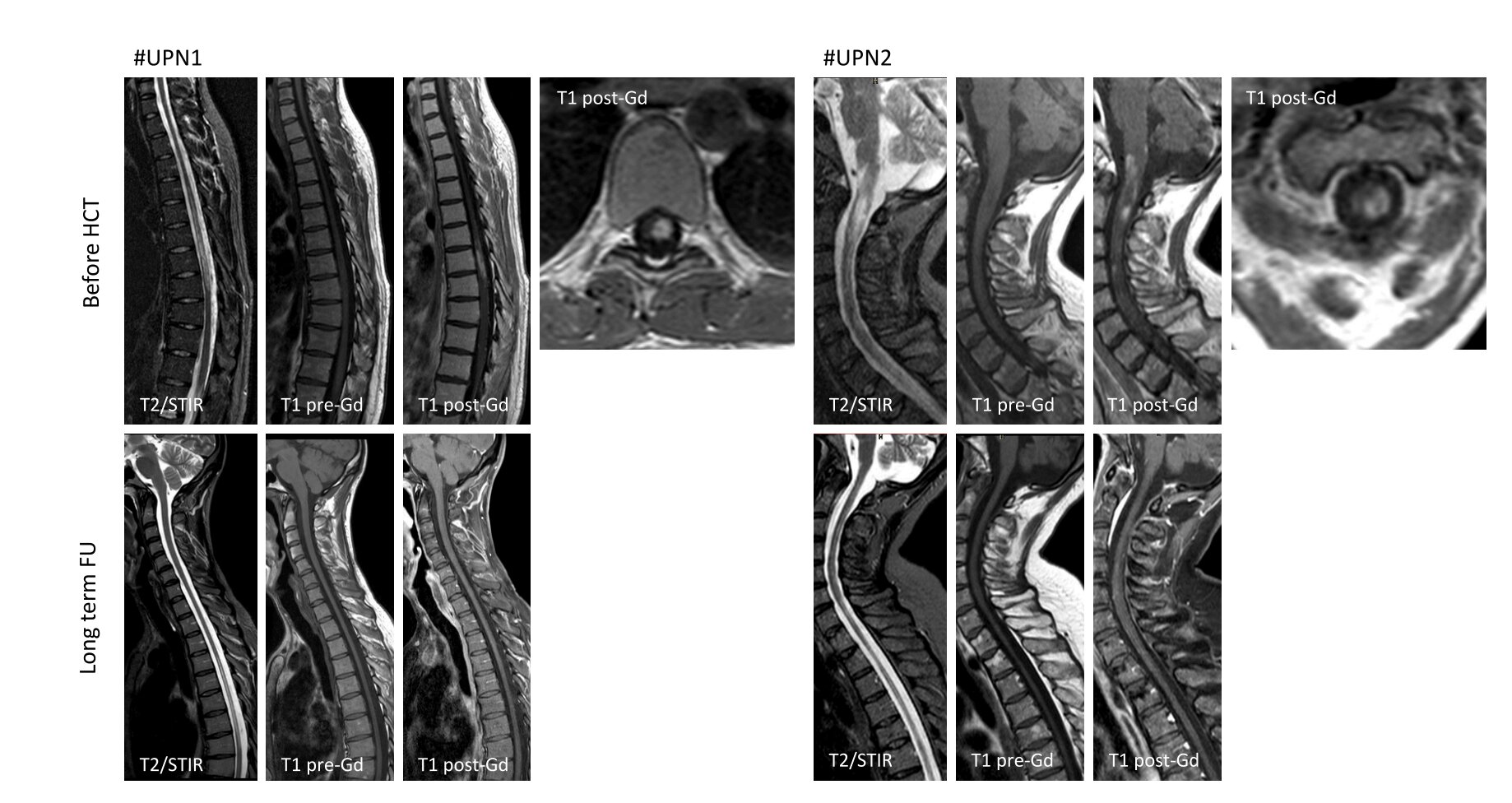
More than 15 years after receiving donor stem cell transplants, two people with severe neuromyelitis optica spectrum disorder (NMOSD) remained completely free of disease relapses without continued immunosuppressive therapy. The long-term follow-up also showed that the disease-causing AQP4-IgG antibodies disappeared and stayed undetectable, offering an encouraging proof of concept for a treatment approach that could fundamentally alter the course of the disease in carefully selected patients.
For people living with severe neuromyelitis optica spectrum disorder, preventing the next devastating relapse is often a lifelong challenge. Even with modern treatments, repeated attacks can continue, causing permanent damage to the optic nerves and spinal cord that may lead to blindness, paralysis, or the loss of bladder and bowel control.
Now, researchers have reported an extraordinary long-term outcome in two patients who underwent donor stem cell transplantation more than a decade ago. After following them for 15 and 16 years, the team found that neither patient experienced another disease attack, despite no longer requiring ongoing immunosuppressive medication.
The findings, published in Med, suggest that replacing a patient’s faulty immune system with healthy donor cells may offer lasting remission in carefully selected cases of severe, treatment-resistant NMOSD.
When the Immune System Turns Against the Nervous System
Neuromyelitis optica spectrum disorder is a rare autoimmune disease in which the body’s immune defenses mistakenly attack the optic nerves and spinal cord. In many patients, the disease is driven by AQP4-IgG antibodies, which target support cells within the nervous system.
This immune attack damages myelin, the protective covering around nerve fibers, leading to serious neurological symptoms. Patients may lose vision, experience weakness or paralysis in their limbs, and develop problems with bladder or bowel function.
Although current therapies can reduce disease activity, many patients continue to suffer repeated relapses. According to the researchers, 60% to 98% of patients experience recurring attacks that can leave permanent neurological disabilities.
Existing treatments also have an important limitation: none can reliably eliminate the harmful antibodies while allowing patients to remain disease-free without continuous therapy.
A Different Strategy: Replacing the Entire Immune System
To address this challenge, researchers explored allogeneic hematopoietic stem cell transplantation (alloHCT), a procedure that replaces a patient’s diseased blood-forming stem cells with healthy stem cells from a donor.
This approach has emerged over the past three decades as an effective treatment option for several autoimmune diseases.
The two patients selected for this case report had particularly severe forms of NMOSD. Their disease had not responded to standard treatments, including previous attempts to transplant their own stem cells.
The patients underwent donor stem cell transplantation in 2009 and 2010.
Before receiving donor stem cells, both patients underwent intensive preparation designed to remove their malfunctioning immune systems. They received the chemotherapy drugs fludarabine and treosulfan to eliminate defective immune cells, along with rituximab, a monoclonal antibody treatment that depleted the B cells responsible for producing the harmful NMOSD antibodies.
Fifteen Years Later, No Disease Relapses
The researchers continued monitoring both patients through regular neurological examinations, MRI scans of the brain and spinal cord, and repeated antibody testing over the next 15 to 16 years.
The long-term results were striking.
Neither patient experienced a disease relapse during the entire follow-up period. Even after stopping immunosuppressive therapy, both remained free of disease activity.
At the same time, the disease-driving AQP4-IgG antibodies disappeared from their blood after transplantation and remained undetectable throughout the follow-up period. According to the researchers, this is an outcome that standard therapies generally cannot achieve.
Laboratory testing also confirmed that the patients’ original malfunctioning immune systems had been completely replaced by healthy donor-derived immune cells.
Improvements Extended Beyond Laboratory Results
The benefits were not limited to disease control.
Both patients reported meaningful improvements in their quality of life following transplantation.
One patient experienced major gains in physical function and eventually became the father of two children, reflecting a significant improvement in daily living compared with life before treatment.
The second patient continued to live with some disability resulting from neurological damage that had occurred before the transplant. Even so, she reported being able to perform activities that had previously been beyond her abilities.
These improvements suggest that while the procedure could not reverse all existing damage, it may have prevented further disease progression while allowing patients to regain important aspects of their independence.
A Promising Proof of Concept, But More Research Is Needed
Although the outcomes are remarkable, the researchers emphasize that these findings come from only two patients.
They believe the results provide important proof of concept that allogeneic hematopoietic stem cell transplantation has the potential to fundamentally change the course of severe NMOSD in selected patients.
However, larger studies will be necessary to determine which patients are the best candidates for the procedure, better understand its safety, and evaluate its long-term benefits across broader groups of people living with the disease.
The findings represent an encouraging step rather than a definitive treatment solution.
Why This Matters
For patients with severe neuromyelitis optica spectrum disorder, current therapies often require lifelong treatment and may still fail to prevent relapses or eliminate the disease-causing antibodies. This long-term follow-up demonstrates that donor stem cell transplantation enabled two patients with treatment-resistant disease to remain relapse-free for more than 15 years, while their harmful AQP4-IgG antibodies stayed undetectable and their quality of life improved. Although the evidence comes from only two cases and larger studies are still needed, the results suggest that replacing the immune system could offer a path toward durable, treatment-free remission for carefully selected patients with this devastating autoimmune disorder.