The question of how long humans can live has haunted our species since the dawn of consciousness. From ancient myths of immortality to modern laboratories humming with gene sequencers, the desire to extend life has remained a defining feature of human imagination. Today, however, this question is no longer confined to philosophy or legend. It has entered the domain of serious science. With advances in genetics, cellular biology, artificial intelligence, and regenerative medicine, a growing number of scientists and technologists are asking a once-unthinkable question with cautious confidence: can humans live to be 150 years old?
At the center of this debate lies the phenomenon often called the biohacking revolution. Biohacking is not a single technology or ideology, but a broad movement that seeks to understand, measure, and deliberately modify biological processes to improve health, performance, and longevity. While some forms of biohacking are sensationalized or speculative, others are grounded in rigorous scientific research. Together, they form a rapidly evolving landscape where the boundaries between medicine, biology, and human enhancement are increasingly blurred.
To explore whether living to 150 is biologically possible, one must first understand what aging truly is, how it operates at the cellular level, and why it has long been considered inevitable. Only then can the promises and limits of biohacking be evaluated with scientific clarity rather than wishful thinking.
Aging: A Biological Process, Not a Destiny
For much of human history, aging was viewed as an unavoidable consequence of time itself, a gradual wearing down of the body like a machine exposed to years of friction. Modern biology has overturned this simplistic view. Aging is now understood as a complex, multi-layered biological process driven by identifiable molecular and cellular mechanisms. It is not governed by a single clock, but by many interacting systems that collectively determine how fast or slow the body declines.
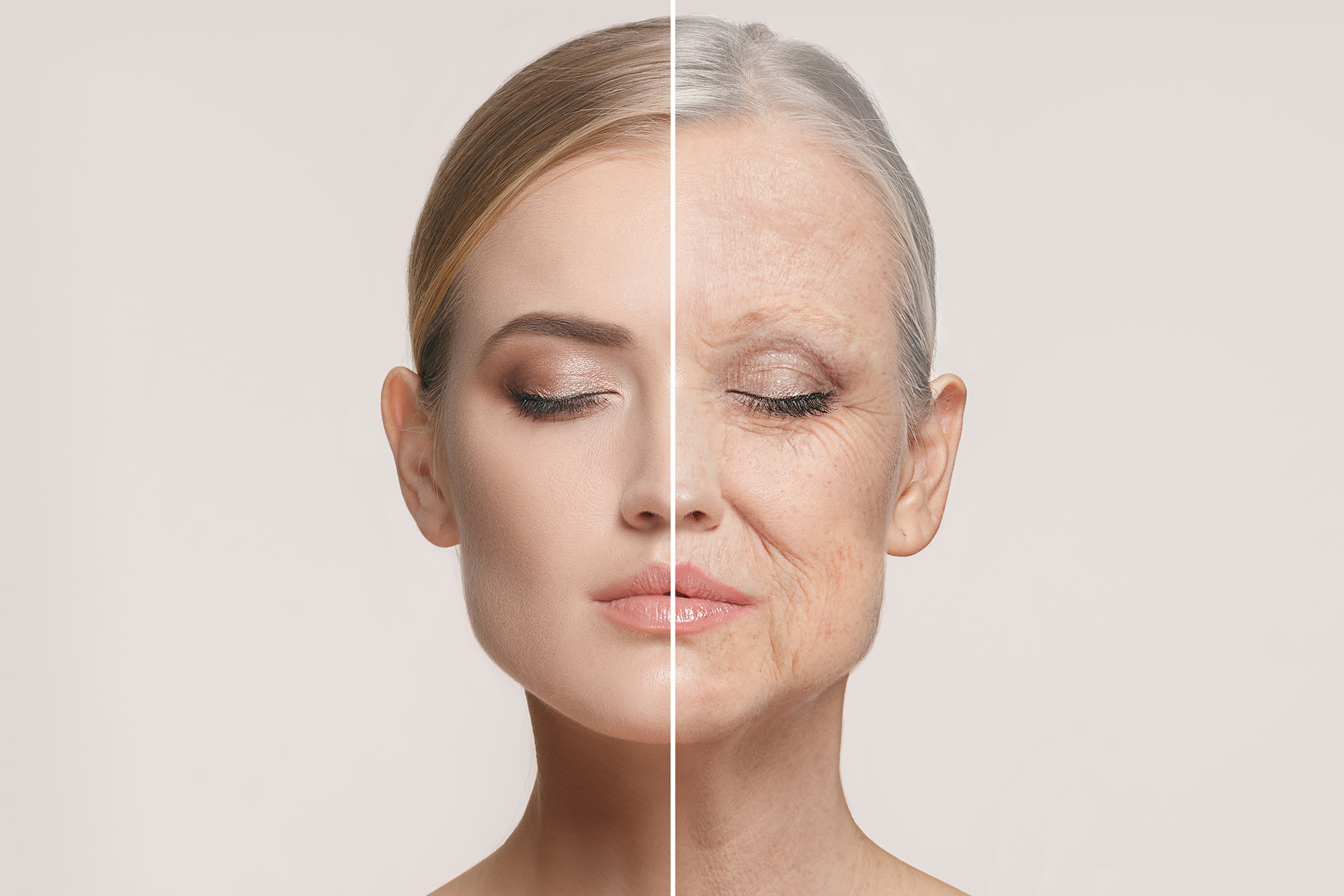
At the cellular level, aging involves the accumulation of damage. DNA becomes less stable, proteins lose their proper structure, and cellular components called organelles begin to malfunction. Cells gradually lose their ability to divide, repair themselves, and communicate effectively with neighboring cells. Over time, this deterioration manifests as tissue dysfunction, organ failure, and increased vulnerability to disease.
Importantly, aging is not uniform across species. Some animals live only days, while others, such as certain tortoises and whales, can live for centuries. Even within humans, lifespan varies widely. These differences strongly suggest that aging is biologically regulated rather than fixed. If biology controls aging, then biology, in principle, can modify it.
The Maximum Human Lifespan: Is There a Hard Limit?
The longest confirmed human lifespan on record is 122 years. This figure has often been cited as evidence that humans cannot live much longer. Yet from a scientific perspective, a record does not define a limit. It merely reflects what has been observed under existing biological and environmental conditions.
Demographic studies show that average human life expectancy has increased dramatically over the past two centuries, largely due to improvements in sanitation, nutrition, vaccination, and medicine. However, maximum lifespan has increased far more slowly. This discrepancy has fueled debate over whether human biology imposes a hard ceiling on longevity.
Some researchers argue that aging imposes unavoidable constraints rooted in thermodynamics and evolutionary trade-offs. Others counter that these constraints reflect current biological states, not fundamental laws. Evolution optimizes organisms for reproductive success, not longevity. As a result, natural selection has little incentive to maintain bodily systems beyond the age of reproduction. This leaves open the possibility that aging is not a fixed boundary, but an unoptimized process that can be altered through intervention.
The Hallmarks of Aging and the Targets of Biohacking
Modern aging research has identified several core mechanisms that drive biological decline. These processes, often referred to as the hallmarks of aging, provide a conceptual framework for understanding how biohacking strategies aim to intervene.
One major hallmark is genomic instability. DNA damage accumulates over time due to environmental stress and normal metabolic activity. Although cells possess repair mechanisms, these systems become less efficient with age. Biohacking approaches targeting genomic stability focus on enhancing DNA repair pathways or reducing sources of damage.
Another key process involves telomeres, the protective caps at the ends of chromosomes. Each time a cell divides, its telomeres shorten. When they become too short, the cell enters a state of senescence and can no longer divide. While telomere shortening is not the sole cause of aging, it is closely linked to cellular lifespan. Research into telomerase, the enzyme that extends telomeres, has become a focal point of longevity science.
Cellular senescence itself represents a critical target. Senescent cells do not die, but they stop functioning properly and release inflammatory signals that damage surrounding tissues. The accumulation of these cells contributes to many age-related diseases. Strategies aimed at removing or neutralizing senescent cells are among the most promising areas in longevity research.
Biohacking: From Lifestyle Optimization to Molecular Intervention
The term biohacking encompasses a wide spectrum of practices, ranging from evidence-based health optimization to experimental biological modification. At its most conservative end, biohacking emphasizes data-driven lifestyle management. Wearable sensors track sleep, physical activity, and physiological markers. Nutritional strategies aim to optimize metabolic health. These interventions, while not revolutionary, can significantly influence healthspan, the portion of life spent in good health.
More advanced forms of biohacking move beyond lifestyle into direct biological intervention. This includes pharmacological agents designed to mimic the effects of caloric restriction, a dietary pattern known to extend lifespan in many organisms. It also includes gene therapies intended to modify the expression of aging-related genes, and regenerative techniques that aim to restore youthful function to aging tissues.
Crucially, scientific biohacking differs from speculative or dangerous practices by its reliance on controlled studies, reproducibility, and ethical oversight. While not all biohacking claims are scientifically valid, the field as a whole reflects a serious effort to translate laboratory insights into real-world interventions.
Caloric Restriction and Metabolic Control
One of the most robust findings in aging research is the effect of caloric restriction on lifespan. In organisms ranging from yeast to rodents, reducing caloric intake without malnutrition extends lifespan and delays the onset of age-related diseases. This phenomenon has driven intense investigation into the underlying mechanisms.
Caloric restriction appears to activate cellular pathways associated with stress resistance, repair, and metabolic efficiency. These pathways involve molecules that sense nutrient availability and adjust cellular behavior accordingly. Biohacking strategies inspired by caloric restriction seek to activate these pathways without requiring extreme dietary changes.
Pharmacological agents that influence metabolic signaling are being studied for their potential to promote longevity. While the translation of these findings to humans remains complex, early evidence suggests that metabolic control plays a central role in determining aging trajectories.
Genetic Pathways and Longevity Genes
Genetics exerts a powerful influence on lifespan. Studies of long-lived individuals reveal that certain genetic variants are associated with reduced risk of age-related diseases and slower biological aging. These findings challenge the notion that longevity is purely a matter of luck or environment.
Research has identified genes involved in DNA repair, inflammation, lipid metabolism, and cellular stress response as key contributors to longevity. Biohacking efforts targeting these pathways aim to modify gene expression rather than altering DNA sequences themselves. This distinction is crucial, as gene expression can be influenced through epigenetic mechanisms that are potentially reversible.
Epigenetics refers to chemical modifications that regulate how genes are turned on or off. These modifications change with age and are influenced by lifestyle, environment, and cellular stress. By understanding and potentially resetting epigenetic patterns, scientists hope to restore youthful gene expression profiles without altering the underlying genome.
Cellular Reprogramming and the Possibility of Reversal
One of the most transformative discoveries in modern biology is that cellular aging may not be irreversible. Experiments in animal models have demonstrated that it is possible to partially reset cells to a more youthful state without erasing their identity. This process, known as partial cellular reprogramming, has profound implications for longevity.
Cellular reprogramming works by activating genes associated with early development. When carefully controlled, this activation can rejuvenate cells without turning them into stem cells or causing uncontrolled growth. Early studies suggest improvements in tissue function and resistance to age-related damage.
While this research is still in its early stages, it challenges the assumption that aging is a one-way process. If aging can be slowed, paused, or partially reversed at the cellular level, then extending human lifespan beyond current limits becomes a scientifically plausible goal.
Regenerative Medicine and Tissue Renewal
Aging is ultimately expressed as the failure of tissues and organs. Regenerative medicine seeks to address this failure by repairing or replacing damaged biological structures. Advances in stem cell research have opened new possibilities for regenerating tissues that were once considered irreplaceable.
Stem cells possess the unique ability to differentiate into multiple cell types and to self-renew. In young organisms, stem cells maintain tissue integrity by replacing damaged cells. With age, stem cell function declines. Biohacking approaches aimed at restoring stem cell activity could, in principle, rejuvenate aging tissues.
Beyond stem cells, tissue engineering and biofabrication aim to create functional biological structures in the laboratory. While the replacement of entire organs remains a formidable challenge, progress in this field continues to redefine what is biologically possible.
Artificial Intelligence and Personalized Longevity
The complexity of aging defies simple solutions. Each individual ages differently, influenced by genetics, environment, and lifestyle. Artificial intelligence has emerged as a powerful tool for navigating this complexity. By analyzing vast datasets, machine learning algorithms can identify patterns that are invisible to human observers.
In the context of biohacking, artificial intelligence enables personalized interventions. Biological age, which reflects physiological condition rather than chronological time, can be estimated using molecular and clinical markers. Tracking changes in biological age allows for the evaluation of interventions in real time.
This data-driven approach transforms longevity from a generalized aspiration into a personalized scientific endeavor. Rather than applying uniform strategies, interventions can be tailored to individual biology, increasing both effectiveness and safety.
The Ethical Dimensions of Extreme Longevity
The prospect of living to 150 raises profound ethical and societal questions. Longevity is not merely a biological issue; it intersects with economics, social structures, and concepts of meaning and identity. If extreme lifespan extension becomes possible, who will have access to it? How will societies adapt to vastly extended working lives and altered generational dynamics?
There is also the question of healthspan versus lifespan. Extending life without preserving physical and cognitive function would offer little benefit. Scientific biohacking emphasizes not merely living longer, but living better for longer. The goal is to compress morbidity, reducing the period of illness at the end of life.
Ethical frameworks must evolve alongside technological capabilities. Responsible longevity science requires transparency, equitable access, and rigorous evaluation of risks and benefits.
Can 150 Be Achieved? A Scientific Assessment
From a strictly scientific standpoint, there is no known law of biology that forbids a human lifespan of 150 years. The mechanisms that drive aging are increasingly understood, and many are demonstrably modifiable in laboratory models. However, translating these insights into safe, effective, and scalable human interventions remains an immense challenge.
The path to extreme longevity is unlikely to involve a single breakthrough. Instead, it will probably emerge from the convergence of multiple advances, including metabolic regulation, genetic and epigenetic modification, cellular rejuvenation, and regenerative medicine. Each advance may add incremental years, but together they could produce a qualitative shift in human lifespan.
Importantly, such progress will require decades of careful research, clinical validation, and ethical oversight. Claims of imminent radical lifespan extension should be met with skepticism, but dismissal of the possibility altogether is no longer scientifically justified.
The Biohacking Revolution as a Cultural Shift
Beyond laboratories and clinics, the biohacking revolution represents a cultural transformation in how humans relate to their biology. It reflects a growing refusal to accept aging as an untouchable fate and a willingness to engage with the body as a dynamic, modifiable system.
This shift does not imply reckless experimentation. At its best, biohacking embodies scientific literacy, self-measurement, and evidence-based intervention. It encourages individuals to see health not as a static state, but as an ongoing process shaped by informed choices and biological feedback.
As public understanding of aging biology deepens, the distinction between medicine and enhancement may continue to blur. Preventing age-related decline may become as routine as treating disease, reshaping healthcare itself.
Living Longer, Living Meaningfully
The question of whether humans can live to 150 ultimately leads to a deeper inquiry: what should such a life look like? Longevity gains value only when accompanied by purpose, connection, and creativity. A longer life offers more time for learning, contribution, and reflection, but it also demands new ways of structuring society and personal identity.
Science can extend the biological canvas of human life, but meaning must be painted upon it by individuals and cultures. The biohacking revolution, at its most profound, is not about escaping death, but about redefining aging as a modifiable process rather than an inevitable decline.
Whether or not 150 years becomes a common human lifespan, the pursuit itself is transforming medicine and biology. It is revealing that aging is not merely something that happens to us, but something we can understand, influence, and perhaps one day master. In that realization lies one of the most significant scientific and philosophical shifts of the modern age.