As a powerful El Niño gathered strength over the Pacific, a carefully timed burst of brighter marine clouds in computer simulations gradually interrupted the atmospheric and oceanic feedbacks that normally fuel the event. In the strongest scenario, the warming weakened enough to return the tropical Pacific to nearly neutral conditions during the peak of one historic El Niño—but the intervention also shifted the climate system toward an earlier La Niña, highlighting both the promise and the risks of trying to deliberately influence natural climate variability.
For decades, marine cloud brightening has largely been discussed as a possible way to cool a warming planet by making low-lying ocean clouds reflect more sunlight back into space. The new research explores a different possibility altogether: instead of targeting long-term global warming, could the same approach be used for just a few months to weaken one of Earth’s most influential climate events?
That question led researchers to focus on El Niño, the recurring warming of the tropical Pacific Ocean that reshapes weather patterns around the world. Because El Niño often compounds the effects of long-term warming and has been linked to enormous global economic costs, the researchers examined whether temporary marine cloud brightening (MCB) could deliberately reduce its intensity.
Rather than beginning with a hypothetical intervention, the study first looked at an unusual real-world event that had already acted as an unintended natural experiment.
Australian wildfire smoke provided an unexpected test case
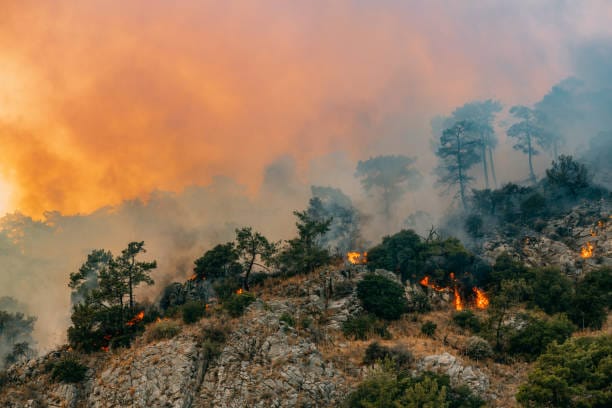
The researchers turned to the extraordinary 2019–2020 Australian wildfires.
Previous modeling work had indicated that smoke from those fires traveled across the South Pacific, brightened marine clouds over the southeast subtropical Pacific, and contributed to the multiyear La Niña that developed afterward. That sequence offered an opportunity to test whether deliberately brightening clouds in the same region could reproduce the same climate response.
Using the Community Earth System Model version 2 (CESM2) and its Seasonal-to-Multiyear Large Ensemble (SMYLE), the researchers simulated marine cloud brightening over the ocean regions where wildfire smoke had produced the strongest cloud changes.
The simulated intervention reproduced many of the key features previously associated with the fires.
Brightened clouds immediately increased reflected sunlight over the targeted region, followed by surface cooling and drying of the lower atmosphere. Those local changes were accompanied by a slight northward shift in tropical Pacific rainfall and, ultimately, a La Niña-like cooling pattern across the tropical Pacific.
Although the average cloud forcing differed somewhat between the wildfire and MCB simulations, both produced a similar global average cooling of about 0.1°C during the following La Niña peak.
According to the authors, this supports the earlier hypothesis that cloud brightening triggered by the Australian wildfires was an important contributor to the 2020–2021 La Niña and suggests that deliberately brightening clouds can reproduce the same chain of physical processes.
Testing whether El Niño itself could be deliberately weakened
After establishing that cloud brightening could recreate the wildfire response, the researchers turned to a much more ambitious question.
Instead of reproducing an already completed climate event, could marine cloud brightening weaken an El Niño while it was still developing?
To investigate this, they simulated interventions during two of the strongest El Niño events of recent decades: the 1997–1998 event, characterized by especially strong warming in the eastern Pacific, and the 2015–2016 event, which included substantial warming farther west in the central Pacific.
The simulations used an idealized cloud-brightening intervention over the southeast subtropical Pacific, increasing cloud droplet number concentrations to 500 particles per cubic centimeter, which the authors describe as being near the upper limit that previous work suggests might be physically achievable with sea-salt spraying.
The intervention covered roughly 7% of Earth’s surface, substantially smaller than the cloud area naturally affected during the Australian wildfire event.
The researchers also varied the timing.
Some simulations began brightening clouds as early as June and continued through February, while others delayed the intervention until September or even December, allowing the team to compare how both timing and duration affected El Niño.
Starting early mattered far more than starting late
The strongest intervention—described by the authors as the “Full effort” strategy—began in June and continued until February.
During the peak of the 2015–2016 El Niño, this produced the largest cooling within the cloud-brightening region, lowering sea surface temperatures there by 1.67°C relative to the control simulation.
More importantly, temperatures within the Niño 3.4 region—a standard measure of El Niño strength—fell by 1.88°C, effectively restoring nearly neutral ENSO conditions by the event’s peak.
At the opposite extreme, the latest strategy, beginning only in December and continuing through February, produced much smaller changes.
Cooling within the cloud-brightening region reached only 0.52°C, while Niño 3.4 temperatures decreased by just 0.31°C.
An intermediate strategy that started early but ended after August produced relatively little local cooling over the southeast Pacific but still generated a moderate reduction in Niño 3.4 temperatures of 0.83°C.
The same overall pattern appeared during simulations of the 1997–1998 El Niño, although the effects were generally smaller, suggesting that the effectiveness of marine cloud brightening depends on the particular type of El Niño and the background climate conditions preceding it.
The intervention worked by interrupting El Niño’s own feedback system
The researchers found that simply reflecting more sunlight away from Earth did not fully explain the simulated weakening of El Niño.
Instead, the timing of the intervention proved crucial because it interfered with the feedbacks that normally allow El Niño to intensify.
As El Niño develops, warmer waters weaken the trade winds, which in turn reinforce additional warming—a self-strengthening process known as the Bjerknes feedback.
Marine cloud brightening initiated during the boreal summer and autumn—the normal growth phase of El Niño—altered this progression.
Compared with an unmodified El Niño, the simulations showed a stronger Walker circulation, a steeper thermocline slope across the Pacific, and a larger east-west temperature difference across the tropical Pacific, all characteristics associated with neutral or La Niña conditions rather than a mature El Niño.
By contrast, when cloud brightening began only after El Niño had already matured, those atmospheric and oceanic changes were largely absent.
The authors conclude that early interventions were more effective because they disrupted the nonlinear feedbacks responsible for amplifying El Niño, whereas later interventions mainly produced local cooling without substantially changing the larger climate dynamics.
A simplified heat-budget analysis further suggested that changes in ocean heat transport, rather than changes in surface heat exchange alone, dominated the cooling response in the tropical Pacific.
Weakening one El Niño also changed what came afterward
Reducing El Niño did not simply erase the event.
The simulations also changed what happened next.
Most of the longer-duration interventions caused La Niña conditions to emerge earlier than they did in the control simulations, with colder-than-normal Niño 3.4 temperatures developing several seasons sooner and, in many cases, becoming stronger.
The exception was the shortest early intervention, which actually delayed cooling after El Niño and produced warmer tropical Pacific temperatures than the control through the following year.
The researchers interpret this as evidence that very early, short-lived interventions may dampen El Niño without strongly accelerating the following La Niña, although they emphasize that additional research is needed to determine whether this result is robust.
The changes after the 1997–1998 El Niño were generally smaller and less consistent, again indicating that responses depend on the background state of the climate system.
Many regional climate impacts became weaker—but not all of them
Because El Niño affects weather across much of the globe, the researchers examined whether weakening El Niño also reduced its remote climate impacts.
They identified regions that experienced unusually large temperature and precipitation anomalies during each historical El Niño and then compared those conditions with simulations that included marine cloud brightening.
For the 2015–2016 event, the strongest intervention generally reduced many of the warming, cooling, drying, and wetting patterns associated with El Niño.
Regions that typically became warmer often experienced less warming under marine cloud brightening, while many regions that became wetter or drier during El Niño saw those changes reduced.
However, the effects were not uniformly beneficial.
Western Africa showed a slight increase in drying, although this change was not statistically significant. Southeastern Asia experienced stronger cooling on top of El Niño-related cooling, while Europe and parts of Asia developed significant warming associated with the cloud-brightening intervention itself, even though those regions had not experienced statistically significant warming during the original El Niño.
These findings demonstrate that targeted cloud brightening did not simply reverse El Niño’s effects everywhere.
Instead, it altered the global pattern of climate responses, reducing many impacts while introducing others.
The authors note that situations in which marine cloud brightening intensified rather than reduced certain regional effects represent ethical risks that would require careful consideration before any real-world implementation.
Different El Niño events did not respond equally
One of the clearest findings was that not every El Niño behaved the same way.
The 2015–2016 event consistently showed stronger responses to marine cloud brightening than the 1997–1998 event.
According to the authors, differences in cloud conditions before each event likely played an important role.
The cloud environment preceding the 2015–2016 El Niño appeared easier to perturb, allowing cloud brightening to produce larger increases in cloud fraction and liquid water, stronger atmospheric drying, and greater surface cooling.
The 1997–1998 event, by contrast, responded less strongly, suggesting that marine cloud brightening may be more effective during some types of El Niño than others.
A proof of concept with important uncertainties
The researchers describe the work as a proof-of-concept study rather than a demonstration that marine cloud brightening could or should be deployed.
The simulations relied on a single Earth system model, and the authors acknowledge that CESM2 has known uncertainties, including its representation of clouds and its sensitivity to aerosol-cloud interactions.
Only two historical El Niño events were examined, and the simulations lasted two years, leaving longer-term consequences unresolved.
Future research, the paper says, should test a wider range of El Niño events, compare results across multiple climate models, investigate longer-term effects on future ENSO cycles, examine interactions with other climate modes such as the South and North Pacific Meridional Modes, and explore how changes in intervention timing, location, magnitude, and duration influence outcomes.
The authors also point to a practical challenge: because seasonal forecasts cannot reliably predict El Niño far in advance, there is a risk that an intervention could be initiated when an expected El Niño ultimately fails to develop, potentially producing unintended consequences.
Even with those uncertainties, the simulations suggest that marine cloud brightening could, in principle, be used not only to influence long-term warming but also to target natural climate variability itself. Whether such an approach could reduce climate risks without creating new ones remains an open question that, according to the authors, warrants much deeper investigation.
Publication details
Jessica S. Wan et al, Targeted marine cloud brightening weakens subsequent El Niño, Science Advances (2026). DOI: 10.1126/sciadv.adx3012