Bringing a child into the world is one of the most profound experiences a human being can have. The first weeks and months after pregnancy are filled with joy, exhaustion, and the overwhelming adjustments of caring for a newborn. In the midst of sleepless nights and endless feedings, many new parents also find themselves facing another important question: When is the right time to think about birth control again?
It is a question rooted not only in practical concerns but also in emotions, health, relationships, and the vision of family life. Some may feel ready to welcome another child soon, while others need time to heal physically and emotionally before considering another pregnancy. Whatever the circumstances, understanding the timing, available options, and safety of birth control after pregnancy is essential for both parents and healthcare providers.
Biology does not wait for us to catch our breath. Fertility can return quickly after childbirth—even before the first postpartum period. That means new parents who are not prepared may face an unplanned pregnancy within weeks. To avoid that stress and to allow the body time to recover, safe and informed decisions about postpartum birth control matter more than ever.
The Body’s Return to Fertility
To appreciate the importance of birth control after pregnancy, it is vital to understand how the body resets after birth. The timeline of returning fertility varies, influenced by breastfeeding, hormonal changes, and individual differences.
For parents who are not breastfeeding, ovulation can resume as early as three weeks after delivery. This surprises many, since menstruation often hasn’t yet returned. Fertility can be silent; ovulation may happen before the first period, creating a window for conception.
For those who breastfeed exclusively, fertility may remain suppressed for several months. This is due to high levels of prolactin, the hormone responsible for milk production, which interferes with ovulation. However, breastfeeding is not a foolproof contraceptive. Its effectiveness depends on strict conditions: exclusive breastfeeding day and night, the absence of menstrual bleeding, and the infant being less than six months old. This method, known as the Lactational Amenorrhea Method (LAM), can be highly effective when practiced correctly—but once conditions change, its reliability decreases rapidly.
The unpredictability of postpartum ovulation highlights why conversations about birth control need to happen soon after delivery, ideally before leaving the hospital or during the first postpartum checkup.
The Importance of Spacing Pregnancies
Biology may allow pregnancies to happen in quick succession, but that does not mean it is always safe. Health organizations, including the World Health Organization (WHO) and the American College of Obstetricians and Gynecologists (ACOG), recommend spacing pregnancies by at least 18 months.
This interval reduces the risk of complications such as preterm birth, low birth weight, and maternal anemia. It gives the body time to replenish nutrients, heal tissues, and recover from the demands of pregnancy and childbirth. Emotional readiness is just as important—caring for a newborn while pregnant again can take a toll on mental health and family stability.
Birth control after pregnancy, therefore, is not simply about preventing conception but about ensuring healthier outcomes for both mother and child when another pregnancy is eventually planned.
Timing of Postpartum Birth Control
When to start using birth control after pregnancy depends on individual circumstances, health conditions, and feeding choices.
- Immediate postpartum contraception refers to methods provided right after delivery, often before leaving the hospital. This includes intrauterine devices (IUDs), implants, or certain hormonal injections. The advantage is convenience and protection before fertility returns.
- Early postpartum contraception is usually initiated within the first six weeks. Healthcare providers consider factors like wound healing, breastfeeding, and risk of blood clots before prescribing certain methods.
- Later postpartum contraception may begin at or after the six-week checkup, when many hormonal options are considered safe regardless of breastfeeding status.
The timing must always balance safety with effectiveness, ensuring the chosen method does not interfere with recovery or newborn care.
Birth Control Options After Pregnancy
Biology and medicine together provide a wide variety of choices for postpartum birth control. Each method has unique benefits and considerations, especially in the context of breastfeeding, physical recovery, and personal lifestyle.
Barrier Methods
Barrier methods, such as male condoms, female condoms, diaphragms, and cervical caps, provide non-hormonal contraception. They can be used immediately after childbirth without affecting breastfeeding. Condoms also protect against sexually transmitted infections (STIs), which is particularly important if either partner has risk factors.
Diaphragms and cervical caps require proper fitting, and childbirth may change the shape of the cervix, meaning previous devices may no longer fit correctly. Refitting is generally recommended at the six-week postpartum checkup.
Barrier methods are safe, accessible, and reversible, though their effectiveness depends heavily on correct and consistent use.
Hormonal Methods
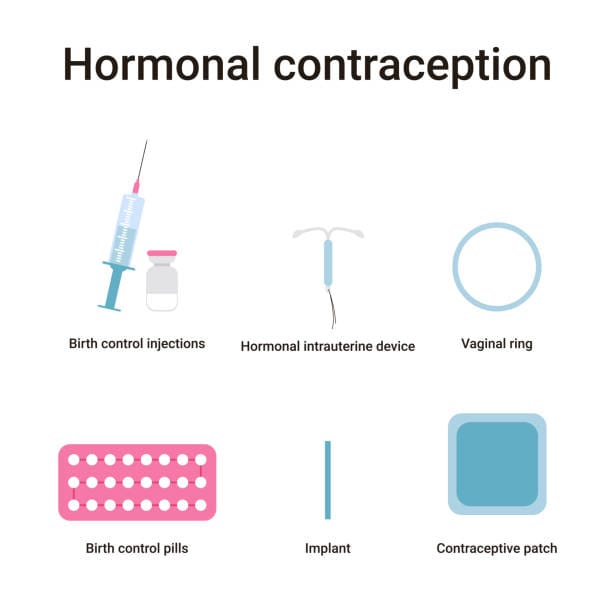
Hormonal contraception works by preventing ovulation, thickening cervical mucus, or thinning the uterine lining. The choice of method depends largely on breastfeeding status and risk factors.
- Progestin-only methods (the “mini-pill,” injections, and implants) are preferred in the early postpartum period, particularly for breastfeeding individuals. Progestin-only pills can be started immediately after childbirth and do not affect milk supply. The injectable contraceptive (Depo-Provera) and contraceptive implants provide longer-term coverage.
- Combined hormonal methods (containing both estrogen and progestin), such as combined pills, patches, or vaginal rings, are generally delayed until at least three to six weeks postpartum. This delay is due to the risk of blood clots and the potential for estrogen to interfere with milk production.
Hormonal methods are highly effective, but healthcare providers tailor their recommendations carefully to ensure safety during recovery and lactation.
Intrauterine Devices (IUDs)
IUDs are among the most effective and convenient methods of contraception. They come in two types: hormonal (releasing progestin) and non-hormonal (copper-based).
Both can be inserted immediately after delivery, including after cesarean sections, or at the postpartum checkup. Immediate insertion offers convenience, though there is a slightly higher risk of expulsion.
IUDs do not interfere with breastfeeding, and once placed, they can last anywhere from 3 to 10 years depending on the type. They are reversible, with fertility returning quickly after removal.
Permanent Methods
For individuals or couples certain that their family is complete, permanent options like tubal ligation (for women) or vasectomy (for men) are available. Tubal ligation can be performed immediately after childbirth, often during a cesarean section, or shortly after a vaginal delivery.
These methods are highly effective but irreversible, so they require careful thought and counseling before choosing.
Natural and Fertility Awareness Methods
Some parents may prefer non-invasive, hormone-free methods based on tracking fertility signs such as temperature, cervical mucus, or cycle days. These methods can be challenging to practice immediately after pregnancy because cycles are irregular, and signs are less reliable during breastfeeding.
Nevertheless, with careful guidance and consistency, fertility awareness can become a meaningful option for couples committed to natural family planning.
Breastfeeding and Birth Control
Breastfeeding is often seen as a natural form of contraception, and indeed, the Lactational Amenorrhea Method (LAM) can be highly effective under strict conditions. However, its reliability decreases as the baby grows older, begins supplementary feeding, or as menstrual cycles resume.
Birth control choices must also consider how they interact with breastfeeding. Estrogen-containing contraceptives may reduce milk supply, which is why progestin-only methods or non-hormonal options are preferred in the early months.
Healthcare providers work closely with breastfeeding parents to find solutions that protect both fertility and milk production.
Safety Considerations
Safety is at the heart of postpartum contraception. The postpartum period carries unique risks, especially for blood clots, wound healing, and breastfeeding.
- Blood clot risk: Estrogen-containing contraceptives increase the risk of venous thromboembolism (blood clots). Since this risk is already elevated after childbirth, these methods are generally avoided in the first six weeks.
- Breastfeeding impact: Estrogen can reduce milk volume. This is why progestin-only or non-hormonal methods are preferred initially.
- Uterine recovery: IUD insertion immediately after childbirth is safe, but there is a higher chance of expulsion as the uterus contracts.
- Mental health: Postpartum depression and anxiety may influence contraceptive decisions. Some people prefer methods that do not involve systemic hormones if they worry about mood side effects.
Healthcare providers personalize recommendations, weighing medical history, lifestyle, and reproductive goals.
Emotional Dimensions of Postpartum Contraception
Birth control after pregnancy is not just a clinical decision—it is deeply emotional. For some, the idea of preventing another pregnancy brings relief, allowing space to heal and bond with the newborn. For others, it may stir conflicting feelings, particularly in cultures where large families are valued or where contraception carries stigma.
Couples may also experience different perspectives. One partner may long for another child quickly, while the other needs time to recover. Honest communication, supported by compassionate healthcare guidance, is vital.
Importantly, contraception after pregnancy should never be imposed but chosen freely, respecting each individual’s values, beliefs, and circumstances.
Postpartum Checkups and Counseling
The six-week postpartum visit is a crucial moment to discuss birth control. Healthcare providers assess physical recovery, breastfeeding status, mental health, and future reproductive goals.
Ideally, conversations about contraception begin even before birth, during prenatal care. Early counseling ensures that parents are not caught off guard by the swift return of fertility. Hospitals and birthing centers increasingly integrate postpartum contraception services, making it easier for families to make informed choices before leaving.
Global Perspectives on Postpartum Contraception
Around the world, access to postpartum contraception varies dramatically. In some regions, cultural expectations, limited healthcare infrastructure, or cost barriers prevent individuals from receiving timely and safe options. This can lead to unintended pregnancies, unsafe abortions, and strain on maternal and child health.
Global health initiatives emphasize postpartum contraception as a cornerstone of maternal health. Expanding access empowers women and families to plan pregnancies, improve outcomes, and break cycles of poverty linked to closely spaced births.
Looking Ahead: The Future of Postpartum Contraception
Science continues to evolve, offering new possibilities for postpartum birth control. Research is underway to develop more user-friendly, reversible, and long-acting methods with minimal side effects. Advances in personalized medicine may soon allow contraceptives tailored to genetic profiles, reducing risks and improving compatibility.
At the same time, conversations about contraception are expanding beyond biology to encompass gender equity, cultural sensitivity, and reproductive justice. The future of birth control after pregnancy is not only about technology but also about ensuring that every parent has the power to make informed, autonomous choices.
Conclusion: Empowerment Through Choice
Birth control after pregnancy is about more than preventing pregnancy—it is about giving families the time, space, and health they need to thrive. It is about recognizing that healing from childbirth takes time, that parents deserve to decide when or if they are ready for another child, and that safe, effective options should be accessible to all.
The journey of parenthood is demanding, emotional, and transformative. In this journey, contraception is not a barrier to love or growth but a tool of empowerment, ensuring that the next chapter unfolds at the right moment.
By understanding the timing, options, and safety of postpartum birth control, families can embrace not only the wonder of new life but also the freedom to shape their future with confidence and care.