At first, it was just part of a floor.
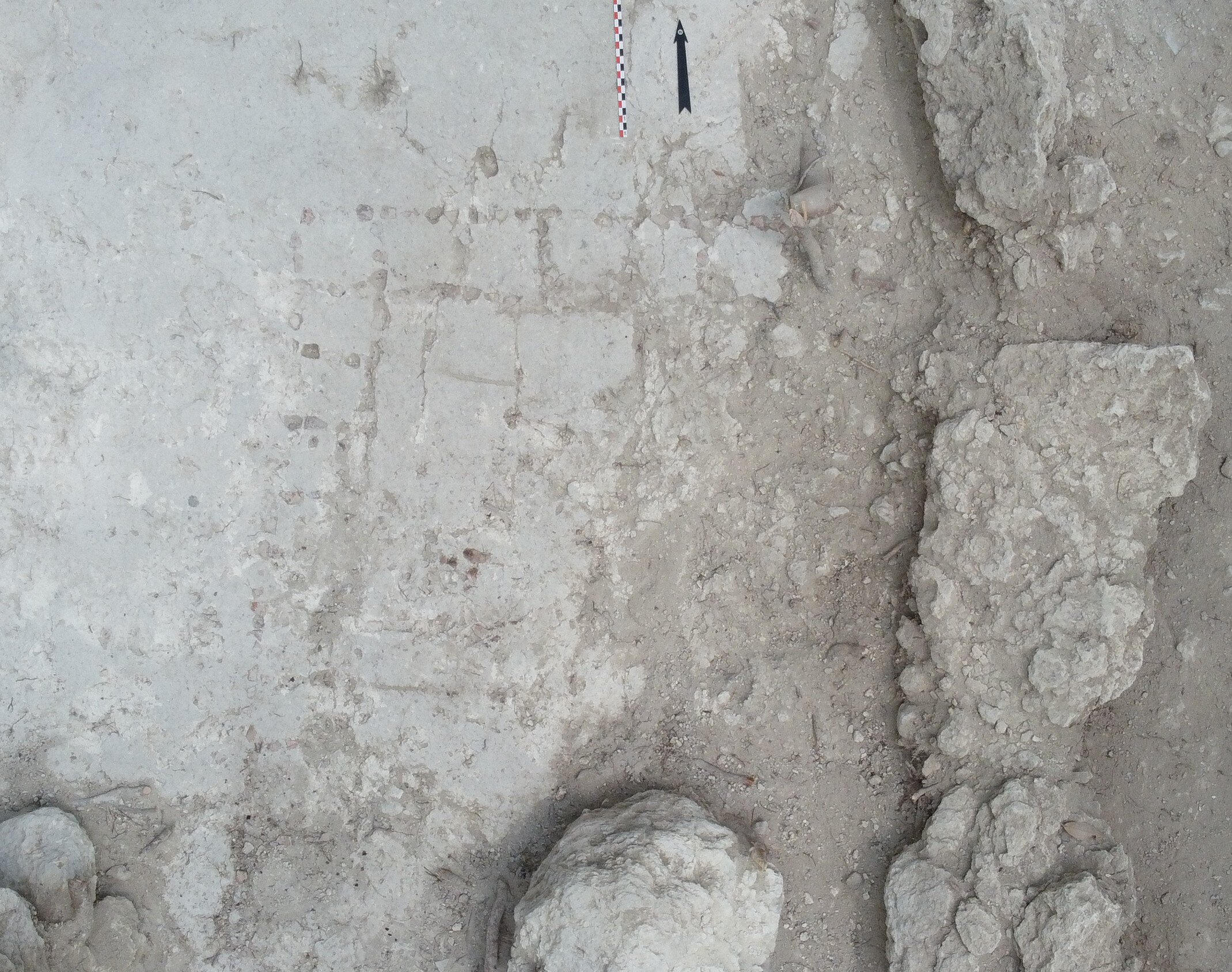
During the 2023 excavation season at Naachtun, an ancient Maya city hidden in the forests of northern Petén, Guatemala, archaeologists were working inside a structure known as 6L-19, part of the Group 6L13 complex. Floors are usually quiet things in archaeology. They support walls, hold footprints, and mark moments of construction and abandonment. But this floor held something unexpected: a carefully arranged pattern of small red tiles, set deliberately into the surface itself.
Part of the pattern had been obscured by a thin wall, as though someone long ago had decided not to erase it, but not to show it either. When researchers looked closer, they realized they were standing on something rare. It was not decoration in the usual sense. It was a game board.
More specifically, it was a patolli board, unlike any ever documented before.
Naachtun, a City That Took Its Time to Speak
Naachtun is no minor settlement. Located in northern Petén, it was once a large regional capital during the Classic Period of Maya history. Scientists knew of its existence as early as the 1920s, and it was mapped in the 1930s, but the site remained largely untouched for decades. Formal excavations did not begin until 2004, and annual fieldwork has only been underway since 2010.
That long silence makes every discovery at Naachtun feel earned. Each structure excavated is a conversation resumed after centuries of quiet. When the mosaic board emerged from the floor of structure 6L-19, it did not arrive as an isolated artifact. It came wrapped in architectural context, stratigraphy, and timing, offering archaeologists a rare opportunity to not only identify an object, but to place it in a living moment of the past.
The Game That Crossed Time and Cultures
Patolli was not an obscure pastime. It appears in ethnographic accounts, in Postclassic codices, and occasionally in archaeological contexts. The game is defined by its board: a cross-shaped design made up of a series of rectangles. Over time and across regions, it carried symbolic weight as well as social meaning.
Dr. Julien Hiquet, one of the authors of the study published in Latin American Antiquity, explains what historical sources tell us about how the game was played centuries later in central Mexico. “The ethnohistoric chronicles written by Spaniards during the early colonial period indicate that in central Mexico, among the Mexica, the patolli game was played using colored pebbles—blue and red—as counters (‘piedras,’ according to Diego Durán, Libro de dioses y ritos [1574–1576]). As for the dice, they were made from beans marked with a dot on one side.
“These ‘patol’ beans gave the game its name … In the case of the board described in my publication, no artifacts that could be considered counters were found in proximity.”
That absence matters. It reminds researchers that while the board survived, the human moments around it may have slipped away, leaving only hints of how it was used and who gathered around it.
A Board Built from Broken Things
What makes the Naachtun board extraordinary is not just that it exists, but how it was made.
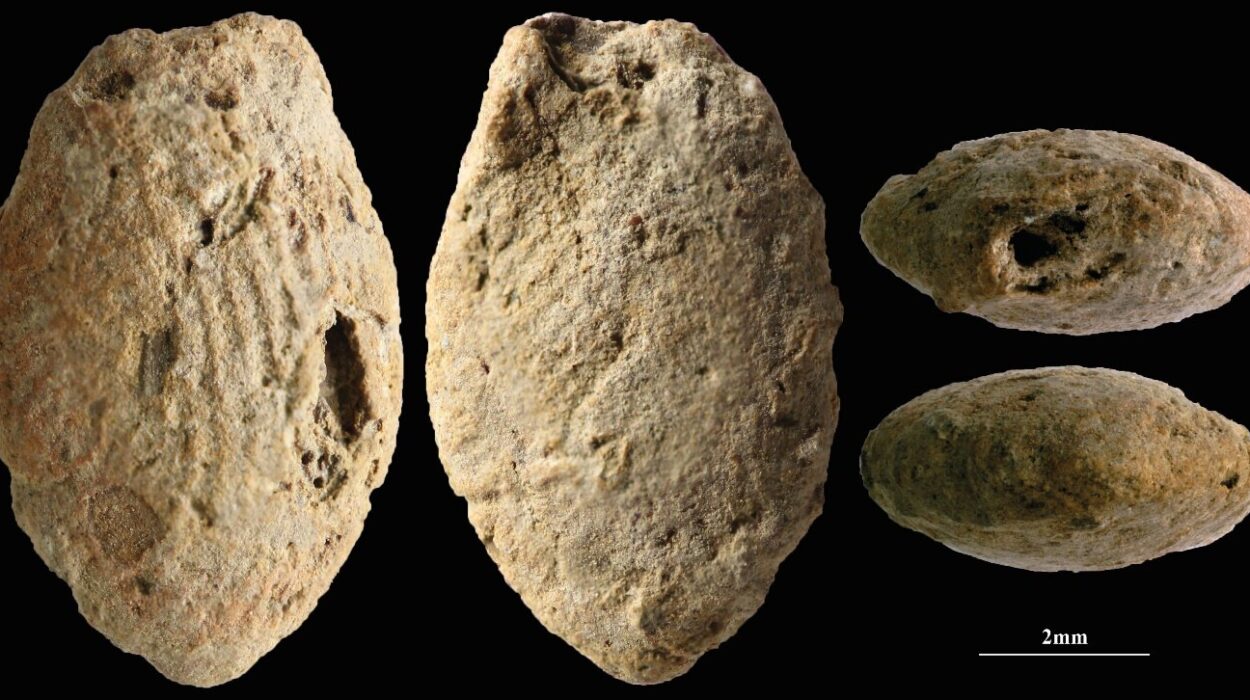
Rather than being scratched into plaster or painted onto a surface, this board was constructed as a mosaic. Small red tesserae, tiles typically used in mosaic work, were carefully arranged to form the game’s pattern. The researchers believe these tesserae were collected from broken ceramic vessels, giving discarded objects a new purpose within the floor itself.
The board was not fully preserved. Parts of it were destroyed, forcing the researchers to estimate its original size. They believe it once measured around 78 centimeters wide and 110 centimeters long, composed of 45 squares and built from approximately 478 tesserae. Even as an estimate, the scale suggests planning, time, and intention.
“This mosaic board appears to be exceptional,” Dr. Hiquet explains. “Dozens of patolli boards have been found throughout the Maya area, but all of them are scratched or painted rather than made in mosaic.”
In a world where simpler methods were readily available, this choice stands out.
Time Captured Beneath the Tiles
Patolli boards are notoriously difficult to date. When they are scratched or painted onto surfaces, they often lack clear stratigraphic context. They can be reused, altered, or exposed long after the moment of their creation.
The Naachtun board is different. Because it was embedded directly into the floor during construction, its creation can be tied closely to the building itself. That architectural connection allows researchers to estimate its age with unusual confidence.
The board is believed to have been made during the Early Classic Period, making it among the earliest known patolli boards in the Maya corpus. This pushes the documented history of the game further back and anchors it firmly within a specific moment of urban development at Naachtun.
It is rare in archaeology to find an object that is both playful and precisely datable. This board manages to be both.
A Game Meant to Disappear?
Perhaps the most puzzling aspect of the board is what happened next.
Despite the effort invested in creating it, the builders partially covered the board with a thin wall. It was not destroyed outright, but it was hidden. This decision suggests that the board’s visibility, and perhaps its usefulness, was temporary.
Dr. Hiquet offers one possible explanation. “[The board] was used only during the interval between the construction of the floor and the construction of the overlying room, possibly by the construction workers during their leisure time. Similar cases have been observed elsewhere … But again, even in that case, the question arises: why use such an elaborate technique instead of simply scratching the board on the floor with a stick or a stone?”
That question opens a door into social life rather than architecture.
“My hypothesis is that it was indeed made for the workers, but in a specific social context: possibly during a construction banquet sponsored by the wealthy patrons who commissioned the building. In preindustrial societies, mobilization of labor for private construction projects could take place through ‘festive mobilization,’ where workers were compensated not with money but with elaborate meals and entertainment.”
In this interpretation, the board becomes more than a game. It becomes part of a temporary world of celebration, reward, and shared experience, created for a moment and then intentionally closed off.
When Games and Gods Shared the Same Space
There is another possibility, more speculative, but no less intriguing.
The nearby structures 6L-19 and 6L-20 run parallel to each other, leading to the suggestion that they may have mimicked a ballcourt, though no direct evidence has yet been recovered to confirm this. In ancient Mesoamerica, games were rarely just games. They carried symbolic meanings that echoed cosmology, ritual, and divine order.
Dr. Hiquet explains the deeper connection. “Another, even more speculative hypothesis would be that the two parallel structures nearby mimicked a ballcourt. In ancient Mesoamerica, there existed a symbolic equivalence between the patolli game and the ballgame. In the codices, patolli boards and ballcourts are frequently depicted together, and often under the patronage of the same gods. Some scholars even propose that the patolli board itself could be viewed as a ballcourt.”
If this interpretation holds, the mosaic board may have served as a symbolic or ritual feature rather than a casual pastime. Its placement, construction, and partial concealment could reflect a complex relationship between play, power, and sacred space.
Waiting for the Ground to Answer Back
For now, the mosaic board of Naachtun remains an open question. It sits at the intersection of labor and leisure, ritual and architecture, permanence and ephemerality. Its uniqueness makes it difficult to interpret, but also deeply valuable.
Further excavations at Naachtun may clarify who the board was meant for and why it was hidden. Each new layer of soil removed may bring new clues, or may simply deepen the mystery. Archaeology often advances not by solving puzzles completely, but by learning how rich and complicated the past truly was.
Why This Discovery Matters
This research matters because it reminds us that ancient cities were not just places of power and ceremony, but places of people. The mosaic patolli board at Naachtun captures a fleeting human moment embedded in stone: a game played, a celebration held, or a symbolic gesture made during construction.
Its unusual craftsmanship challenges assumptions about how games were created and who they were for. Its early date reshapes the timeline of patolli in the Maya world. Its partial concealment invites us to think differently about how ancient societies marked temporary experiences within permanent architecture.
Most of all, the board matters because it shows that play, symbolism, and social connection were built into the very floors people walked on. Even in a great Classic Period capital, amid the labor of construction and the authority of patrons, there was space for games, stories, and shared moments—set carefully in red stone, waiting centuries to be noticed again.
More information: Julien Hiquet et al, Dealing with Uniqueness: A Classic Period Maya Mosaic Ceramic Patolli Board from Naachtun, Guatemala, Latin American Antiquity (2025). DOI: 10.1017/laq.2025.10125