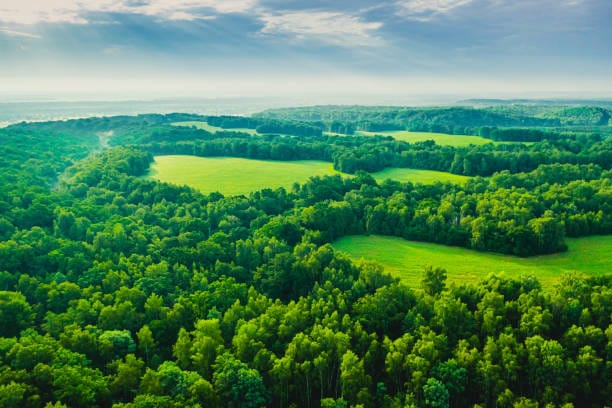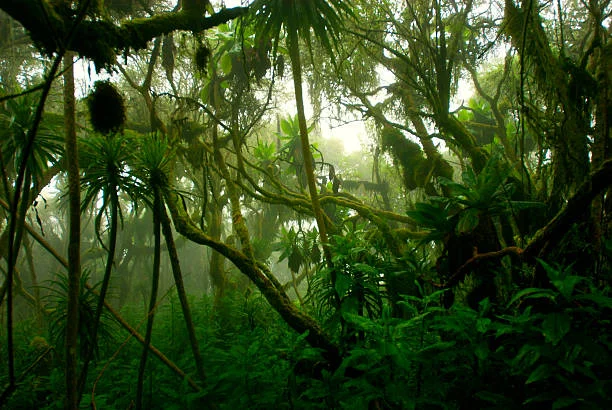
Once seen as powerful allies in the fight against climate change, Africa’s forests have turned into something far less helpful—and much more alarming. A new international study, published in Scientific Reports, reveals that the continent’s once-thriving forests, which had long absorbed carbon dioxide from the atmosphere, are now releasing more carbon than they remove. This unsettling shift marks a critical moment in the battle to curb climate change, offering a stark reminder of how fragile our natural systems are in the face of human activity.
What happened, and how did it happen? The answer lies in the forests themselves, where rapid changes have turned what was once a natural climate ally into a potential climate threat.
The Turning Point
The research, led by experts from the National Center for Earth Observation, Universities of Leicester, Sheffield, and Edinburgh, uses groundbreaking technology to map the changes in Africa’s forest biomass over more than a decade. With the help of advanced satellite data and machine learning, the scientists tracked the amount of carbon stored in trees and woody vegetation—an important metric for understanding how forests impact the climate.
From 2007 to 2010, Africa’s forests were still functioning as carbon sinks, absorbing more carbon dioxide than they emitted. But after 2010, things began to change dramatically. The loss of forest biomass surged, reaching a staggering 106 billion kilograms of carbon lost each year between 2010 and 2017. To put this into perspective, this is equivalent to the weight of about 106 million cars. The loss is concentrated in some of the most biodiverse and ecologically critical areas of the continent, including the tropical rainforests of the Democratic Republic of Congo, Madagascar, and parts of West Africa. Deforestation, forest degradation, and illegal logging have driven these losses, while gains in savanna regions due to shrub growth have not been enough to counterbalance the damage.
The impact is devastating. Once lush and carbon-absorbing, these forests are now adding carbon back into the atmosphere, contributing to the very problem they once helped mitigate.
A Wake-Up Call for Global Climate Action
This study comes as a warning shot to global climate policy, urging immediate and decisive action to protect forests. According to Professor Heiko Balzter, senior author of the study and Director of the Institute for Environmental Futures at the University of Leicester, “This is a critical wake-up call for global climate policy. If Africa’s forests are no longer absorbing carbon, it means other regions and the world as a whole will need to cut greenhouse gas emissions even more deeply to stay within the 2°C goal of the Paris Agreement and avoid catastrophic climate change.”
As the world grapples with the reality of rising emissions and global warming, forests remain one of the few natural buffers we have. Losing them not only accelerates climate change but also amplifies the difficulty of achieving the ambitious targets set in international agreements like the Paris Accord.
The research draws on data from NASA’s GEDI satellite laser instrument and Japan’s ALOS radar satellites, combined with machine learning and thousands of on-the-ground forest measurements. This unprecedented level of data provides the most detailed map ever created of biomass changes across Africa. With this cutting-edge technology, scientists were able to capture local deforestation patterns in incredibly high detail—mapping the destruction of forests down to the individual tree.
What This Means for Global Climate Finance
As the urgency of the situation becomes clear, the question arises: What can be done to reverse this damage? One potential solution has emerged from the recent COP30 Climate Summit in Brazil, where the presidency announced the creation of the Tropical Forests Forever Facility. This facility aims to raise billions of pounds for climate finance, paying countries to preserve their tropical forests. The hope is that by incentivizing forest conservation, nations will have a stronger economic reason to protect their natural resources and stop the deforestation that has taken a toll on the planet.
Yet, as the research shows, the problem is not confined to one region—it is a global issue. If Africa’s forests continue to degrade and turn into carbon sources, it could make global climate goals even more difficult to achieve. Dr. Pedro Rodríguez-Veiga, who carried out much of the analysis for the study, noted, “This study provides critical risk data for Sylvera and the wider voluntary carbon market (VCM), and shows that deforestation isn’t just a local or regional issue—it’s changing the global carbon balance.”
The findings are a stark reminder that the fight against climate change cannot be limited to one region or one issue. If the world hopes to meet its climate goals, governments, businesses, and non-governmental organizations (NGOs) will need to work together to protect and restore the world’s forests—particularly those in Africa.
Can Africa’s Forests Be Saved?
While the situation is dire, there is still hope. Dr. Nezha Acil, co-author of the study, offers a glimmer of optimism: “Stronger forest governance, enforcement against illegal logging, and large-scale restoration programs such as AFR100, which aims to restore 100 million hectares of African landscapes by 2030, can make a huge difference in reversing the damage done.” AFR100 is an ambitious initiative designed to restore degraded African landscapes, and its success could have a profound impact on reversing the deforestation crisis.
However, time is of the essence. The longer Africa’s forests are left to degrade, the harder it will be to reverse the damage and restore them to their former role as vital carbon sinks. Experts agree that urgent action is needed—not just to stop deforestation, but to invest in restoration efforts and ensure that sustainable, long-term solutions are in place to protect these irreplaceable ecosystems.
Why This Research Matters
The study’s findings offer a sobering glimpse into the future of climate change if the world fails to act. The forests of Africa, once champions in the battle against global warming, are now turning into a carbon source, further exacerbating the climate crisis. Without urgent intervention, the planet risks losing one of its most valuable tools in the fight against climate change.
But this research also presents a powerful opportunity for global action. It highlights the critical importance of forests in maintaining the planet’s carbon balance and the necessity of protecting them. It calls for stronger policies, better enforcement against illegal logging, and large-scale efforts to restore Africa’s landscapes.
Ultimately, this study is not just a wake-up call—it is a call to action. It underscores the need for global cooperation and immediate, decisive measures to safeguard our forests. For the future of our planet, and the stability of our climate, we can no longer afford to ignore the value of our natural ecosystems. The time to act is now.
More information: Loss of tropical moist broadleaf forest has turned Africa’s forests from a carbon sink into a source, Scientific Reports (2025). DOI: 10.1038/s41598-025-27462-3