Aerogel is often described with words that sound almost unreal: frozen smoke, solid cloud, material from science fiction. Yet aerogel is not a fantasy or a metaphor—it is a real, tangible substance, created through precise chemistry and physics, and studied for nearly a century. What makes aerogel extraordinary is not just that it is the lightest solid ever produced, but that its unusual structure gives rise to a remarkable combination of physical properties rarely found together in any other material. It is extremely lightweight yet can be surprisingly strong, almost entirely empty space yet capable of resisting heat better than most solids, transparent yet solid to the touch.
To understand aerogel is to confront an idea that challenges everyday intuition about matter. We are accustomed to thinking of solids as dense and heavy, liquids as flowing, and gases as diffuse and intangible. Aerogel blurs these categories. It is technically a solid, but its internal structure is dominated by pores filled with air. In some aerogels, more than 99.8 percent of the volume is empty space. What remains is a delicate, interconnected network of atoms that holds the entire structure together.
This article explores what aerogel is, how it is made, why it behaves the way it does, and why scientists consider it one of the most fascinating materials ever created. Aerogel’s story is not just about chemistry and physics; it is also about human ingenuity, curiosity, and the desire to push materials beyond their apparent limits.
The Birth of Aerogel: A Scientific Curiosity Becomes Reality
The story of aerogel begins in the early twentieth century, when scientists were exploring the nature of gels. A gel is a material that contains both solid and liquid components, with the liquid trapped inside a solid network. Common examples include gelatin and silica gel. In the 1930s, American chemist Samuel Stephens Kistler posed a deceptively simple question: could the liquid inside a gel be replaced with gas without collapsing the solid structure?
This question was far from trivial. When a liquid evaporates under normal conditions, surface tension forces pull the surrounding solid network inward, causing it to shrink or collapse. Kistler realized that if the liquid could be removed without passing through a liquid–gas phase boundary, the structure might remain intact. His solution was to use supercritical drying, a process in which a substance is taken beyond its critical point, where the distinction between liquid and gas disappears.
In 1931, Kistler successfully created the first aerogel. By carefully removing the liquid component of a silica gel under supercritical conditions, he produced a solid that was astonishingly light and porous. This new material, which he named “aerogel,” retained the shape of the original gel but replaced the liquid with air.
At the time, aerogel was a scientific novelty rather than a practical material. It was fragile, expensive to produce, and difficult to handle. Yet even in its earliest form, it hinted at possibilities that would take decades to fully explore.
What Exactly Is Aerogel?
At its most fundamental level, aerogel is a gel in which the liquid phase has been replaced by gas while preserving the gel’s three-dimensional structure. The most common type of aerogel is silica aerogel, made primarily from silicon dioxide, the same compound found in ordinary sand and glass. However, aerogels can also be made from other materials, including carbon, alumina, and various polymers.
What distinguishes aerogel from other porous materials is the scale and uniformity of its pores. In silica aerogel, the pores are typically on the nanometer scale, comparable to the size of large molecules. This nanoscale porosity gives aerogel its extraordinary properties. Because the pores are so small and numerous, they dramatically reduce the movement of air and heat through the material.
Structurally, aerogel consists of a tenuous network of interconnected particles or polymer chains. This network spans the entire volume of the material, providing mechanical integrity despite the overwhelming presence of empty space. The result is a solid with an incredibly low density—sometimes as low as a few kilograms per cubic meter—making it only slightly denser than air itself.
Despite its ghostly appearance, aerogel is indeed a solid. It has a definite shape, resists deformation, and can support small loads. This duality—solid yet almost empty—is at the heart of aerogel’s fascination.
How Aerogel Is Made: From Gel to Solid Cloud
The production of aerogel is a carefully controlled process that combines chemistry, thermodynamics, and materials science. Although specific methods vary depending on the type of aerogel being produced, the fundamental steps remain broadly similar.
The process begins with the formation of a wet gel. In the case of silica aerogel, this typically involves a sol-gel reaction, in which a silicon-containing precursor reacts with water to form a colloidal suspension, or sol. Over time, the sol undergoes polymerization, linking individual molecules into a continuous solid network that spans the entire volume of the liquid. As this network forms, the material transitions from a liquid-like state to a gel.
At this stage, the gel contains a large amount of liquid trapped within its pores. Removing this liquid without damaging the structure is the central challenge of aerogel production. If the liquid were allowed to evaporate under normal conditions, surface tension would cause the pores to collapse, destroying the delicate network.
To avoid this, the gel is typically subjected to supercritical drying. The liquid inside the gel is brought to a temperature and pressure above its critical point, where it becomes a supercritical fluid. In this state, there is no distinction between liquid and gas, and the fluid can be removed without generating surface tension forces. When the pressure is slowly released, the supercritical fluid escapes as a gas, leaving behind an intact solid network filled with air.
Alternative drying methods, such as ambient pressure drying with surface modification, have been developed to reduce cost and complexity. These techniques involve chemically altering the gel’s surface to minimize capillary forces during evaporation. While such methods can produce aerogels with slightly higher density, they have made aerogel more accessible for practical applications.
The Physics of Lightness: Why Aerogel Is So Lightweight
The extraordinary lightness of aerogel arises directly from its internal structure. Density is defined as mass per unit volume, and in aerogel, the mass is distributed over a volume that is mostly empty. With more than 99 percent of its volume consisting of air-filled pores, there is simply very little solid material present.
To put this into perspective, a block of silica aerogel can be hundreds of times less dense than glass, even though both are composed of the same chemical substance. This demonstrates a crucial principle of materials science: properties depend not only on chemical composition but also on structure.
The emotional impact of holding aerogel often surprises first-time observers. A piece that looks like a solid block feels almost weightless in the hand. This experience challenges deeply ingrained assumptions about how matter should behave, making aerogel a powerful demonstration of the relationship between structure and physical properties.
Thermal Insulation: How Aerogel Traps Heat
One of aerogel’s most remarkable properties is its ability to resist heat transfer. Silica aerogel is among the best thermal insulators ever created, outperforming most conventional materials by a significant margin.
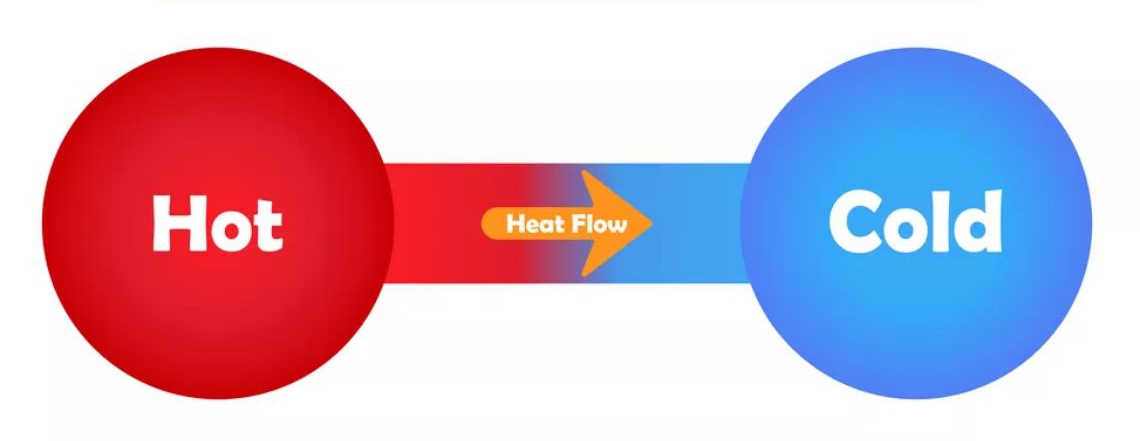
Heat can be transferred through materials by three primary mechanisms: conduction, convection, and radiation. Aerogel effectively suppresses all three. Conduction is limited because the solid framework is extremely thin and discontinuous, reducing the pathways through which heat can flow. Convection is minimized because the pores are so small that air cannot circulate freely within them. Radiation is reduced because the structure scatters and absorbs infrared radiation.
The result is a material that can withstand extreme temperature differences. A thin layer of aerogel can protect against intense heat on one side while remaining cool on the other. This property has made aerogel invaluable in applications ranging from space exploration to energy-efficient building materials.
The physics underlying this performance is elegant. By controlling structure at the nanoscale, aerogel exploits fundamental limits on heat transfer, demonstrating how advanced materials can manipulate physical processes that once seemed fixed.
Optical Properties: Transparency and Light Scattering
Many aerogels, particularly silica aerogels, are partially transparent, allowing light to pass through while scattering it in distinctive ways. This transparency is another consequence of the nanoscale structure. Because the pores and solid features are smaller than the wavelength of visible light, scattering is reduced, allowing light to propagate through the material.
However, aerogel often has a bluish tint, caused by Rayleigh scattering—the same phenomenon that makes the sky appear blue. Shorter wavelengths of light are scattered more strongly by the fine structure of the aerogel, giving it an ethereal appearance that seems almost otherworldly.
This optical behavior is not merely aesthetically pleasing; it has practical implications. Aerogels can be engineered to control light transmission and scattering, making them useful in optical and photonic applications.
Mechanical Behavior: Fragility and Strength
Aerogel is often described as fragile, and this description is accurate in many cases. Traditional silica aerogels can crumble or crack under modest mechanical stress. Their internal structure, while continuous, is extremely thin and brittle.
Yet fragility is not the whole story. On a per-weight basis, aerogel can exhibit impressive strength. Because it contains so little material, even small forces can cause visible damage, but when normalized by density, aerogel’s strength compares favorably with many conventional solids.
Moreover, advances in materials science have led to the development of reinforced and flexible aerogels. By incorporating polymers or fibers into the structure, researchers have created aerogels that can bend, compress, and recover without breaking. These innovations expand the range of possible applications and challenge the notion that aerogel must be delicate.
Aerogel in Space: From Laboratories to the Cosmos
One of the most celebrated uses of aerogel has been in space exploration. Its lightweight nature and exceptional insulating properties make it ideal for spacecraft, where mass is a critical constraint.
Aerogel has been used as thermal insulation on space missions, protecting sensitive instruments from extreme temperature variations. Perhaps most famously, aerogel was employed to capture cosmic dust particles traveling at high velocities. Its porous structure allows particles to embed themselves gradually, minimizing damage and preserving their structure for analysis.
This application highlights aerogel’s unique combination of gentleness and resilience. It can stop fast-moving particles without shattering them, a task that would be impossible for most solid materials.
Aerogel on Earth: Practical and Emerging Applications
Beyond space, aerogel is finding increasing use in terrestrial applications. In construction, aerogel-based insulation materials offer high thermal performance with minimal thickness, enabling energy-efficient buildings without sacrificing space. In industry, aerogels are used for insulating pipelines, especially in environments where space and weight are limited.
Aerogels also play a role in environmental and chemical applications. Their high surface area makes them effective for adsorption, allowing them to capture pollutants or store gases. Carbon aerogels, in particular, are being explored for energy storage devices such as supercapacitors.
In medicine, research is underway to use aerogels for drug delivery and tissue engineering. Their porous structure can be tailored to control the release of therapeutic agents, demonstrating how a material once considered a laboratory curiosity can influence human health.
The Emotional Power of Aerogel
Aerogel inspires fascination not only because of what it does, but because of what it represents. It embodies the idea that materials are not limited by intuition alone. By reimagining structure at the smallest scales, scientists can create substances that seem to defy common sense.
Holding aerogel can feel like holding an idea rather than an object—a physical manifestation of scientific creativity. It invites reflection on how much of reality lies beyond everyday perception, waiting to be revealed through careful experimentation and imagination.
Challenges and Limitations
Despite its remarkable properties, aerogel is not without limitations. Traditional aerogels can be expensive to produce, and their fragility can restrict use in demanding mechanical environments. Scaling up production while maintaining consistent quality remains a challenge.
Ongoing research aims to address these issues by developing more robust formulations, reducing production costs, and exploring new manufacturing techniques. These efforts reflect a broader trend in materials science, where understanding and control at the nanoscale enable continual improvement.
Aerogel and the Future of Materials Science
Aerogel occupies a special place in the landscape of modern materials. It is not merely a single substance but a family of materials with tunable properties. By adjusting composition, structure, and processing methods, scientists can tailor aerogels for specific purposes.
In this sense, aerogel represents a shift in how materials are designed. Rather than relying solely on chemical composition, researchers increasingly focus on architecture—how atoms and molecules are arranged in space. Aerogel shows that emptiness itself can be a resource, that space can be engineered as deliberately as matter.
Conclusion: Why Aerogel Truly Is Incredible
Aerogel is incredible not because it is light, or insulating, or transparent, but because it brings together all these qualities in a single material. It challenges our assumptions about solids, reveals the power of structure over substance, and demonstrates how deeply physics and chemistry shape the material world.
From its origins as a scientific curiosity to its role in space exploration and advanced technology, aerogel tells a story of patient inquiry and bold imagination. It reminds us that even in a universe governed by strict physical laws, there is room for surprise, elegance, and wonder.
In the end, aerogel is more than the world’s lightest solid. It is a symbol of what science can achieve when curiosity meets careful reasoning, and when humans dare to explore not just what matter is, but what it can become.