Weather is the most immediate and emotional expression of Earth’s physical systems. It shapes landscapes, governs ecosystems, and profoundly influences human history. Most days, weather unfolds quietly—clouds drift, rain falls, winds whisper. Yet at rare moments, the atmosphere releases energy on a scale that feels almost apocalyptic. Temperatures soar beyond imagination, winds tear cities apart, rain transforms rivers into inland seas, and cold grips the land with deadly intensity. These events are not random acts of chaos. They are the extreme outcomes of well-understood physical processes operating at their limits.
The following nine weather patterns represent the most extreme expressions of Earth’s atmosphere ever recorded. Each is grounded in rigorous scientific observation, yet each also carries a deeply human story—of survival, loss, resilience, and awe. Together, they reveal both the power of nature and the fragile boundary within which human civilization exists.
1. The Highest Temperature Ever Recorded on Earth
Extreme heat is one of the most direct and dangerous forms of weather. It pushes human physiology beyond safe limits, alters ecosystems, and reshapes entire regions. The highest air temperature ever reliably recorded on Earth was 56.7 degrees Celsius, measured in Death Valley, California, in July 1913. This figure stands not as an anomaly, but as the result of a unique convergence of geography and atmospheric physics.
Death Valley lies below sea level and is surrounded by mountain ranges that trap hot air. During summer, intense solar radiation heats the ground, while sinking air masses suppress cloud formation. As air descends, it compresses and warms further, a process known as adiabatic heating. The result is an extreme amplification of heat near the surface.
At such temperatures, the human body struggles to cool itself through sweating. Evaporation becomes inefficient, leading to dangerous rises in core body temperature. Heat stress, dehydration, and organ failure become imminent threats. Even non-living systems suffer: asphalt softens, electronics fail, and infrastructure degrades.
Scientifically, this record underscores the limits of Earth’s atmospheric energy balance. Heat extremes are constrained by solar input, surface properties, and atmospheric circulation. Yet as global average temperatures rise, the frequency and intensity of extreme heat events are increasing, bringing more regions closer to thresholds once thought nearly unreachable.
2. The Coldest Temperature Ever Recorded
At the opposite end of the thermal spectrum lies a record that feels equally alien. The coldest air temperature ever measured on Earth was −89.2 degrees Celsius, recorded at the Vostok Research Station in Antarctica in July 1983. This extreme cold occurred under conditions almost perfectly designed to remove heat from the environment.
Antarctica’s high elevation, reflective ice surface, and long polar night create a powerful cooling system. During winter, the Sun disappears for months, eliminating solar heating entirely. Clear skies allow heat to radiate freely into space, while dense, cold air settles into the interior of the continent.
At such temperatures, exposed human skin can freeze in seconds. Even metals become brittle, lubricants fail, and mechanical systems seize. Life, as we know it, retreats almost entirely, surviving only in highly specialized forms.
From a physical perspective, this record illustrates the efficiency of radiative cooling in dry, cloudless conditions. It also highlights the role of Earth’s tilt and orbital mechanics in creating extreme seasonal contrasts. Antarctica is not merely cold; it is the coldest place on the planet because it is engineered by physics to be so.
3. The Strongest Wind Speed Ever Measured
Wind is the movement of air driven by pressure differences, and under extreme conditions, it becomes one of the most destructive forces in nature. The strongest wind speed ever directly measured at Earth’s surface was approximately 408 kilometers per hour, recorded during Tropical Cyclone Olivia in Australia in 1996.
Such winds arise within intense cyclonic systems where steep pressure gradients exist over short distances. Air accelerates rapidly from regions of high pressure toward low pressure, and the Coriolis effect organizes this flow into rotating structures. When conditions align—warm ocean waters, minimal wind shear, and strong atmospheric instability—wind speeds can reach extraordinary values.
At these velocities, wind does not merely push against structures; it scours landscapes. Trees are stripped bare, buildings collapse, and airborne debris becomes lethal. The physical force exerted by wind increases with the square of its speed, meaning small increases in velocity lead to dramatic increases in destructive power.
This record demonstrates the upper limits of atmospheric motion near Earth’s surface. While even stronger winds exist higher in the atmosphere, surface winds are constrained by friction and terrain. Cyclone Olivia briefly overcame these constraints, offering a glimpse into the atmosphere’s raw mechanical energy.
4. The Wettest Single-Day Rainfall Ever Recorded
Rainfall is a vital component of Earth’s climate system, redistributing heat and sustaining life. Yet when rain falls too intensely, it becomes catastrophic. The highest rainfall ever recorded in a single 24-hour period was 1,825 millimeters, measured on Réunion Island in the Indian Ocean during Tropical Cyclone Denise in 1966.
This extraordinary deluge occurred because of the island’s mountainous terrain combined with a slow-moving tropical cyclone. Moist air was forced upward by the terrain, cooling and condensing continuously in a process known as orographic lifting. As long as the cyclone remained nearly stationary, rain kept falling over the same area.
Such rainfall overwhelms natural drainage systems, triggering floods and landslides. Soil becomes saturated, slopes fail, and rivers transform into torrents capable of reshaping landscapes in hours.
From a scientific standpoint, this record highlights the role of atmospheric moisture content and vertical motion in precipitation extremes. Warmer air holds more water vapor, meaning that as global temperatures rise, the potential for extreme rainfall increases. This event stands as a benchmark for understanding how much water the atmosphere can release under optimal conditions.
5. The Longest-Lasting Drought Ever Documented
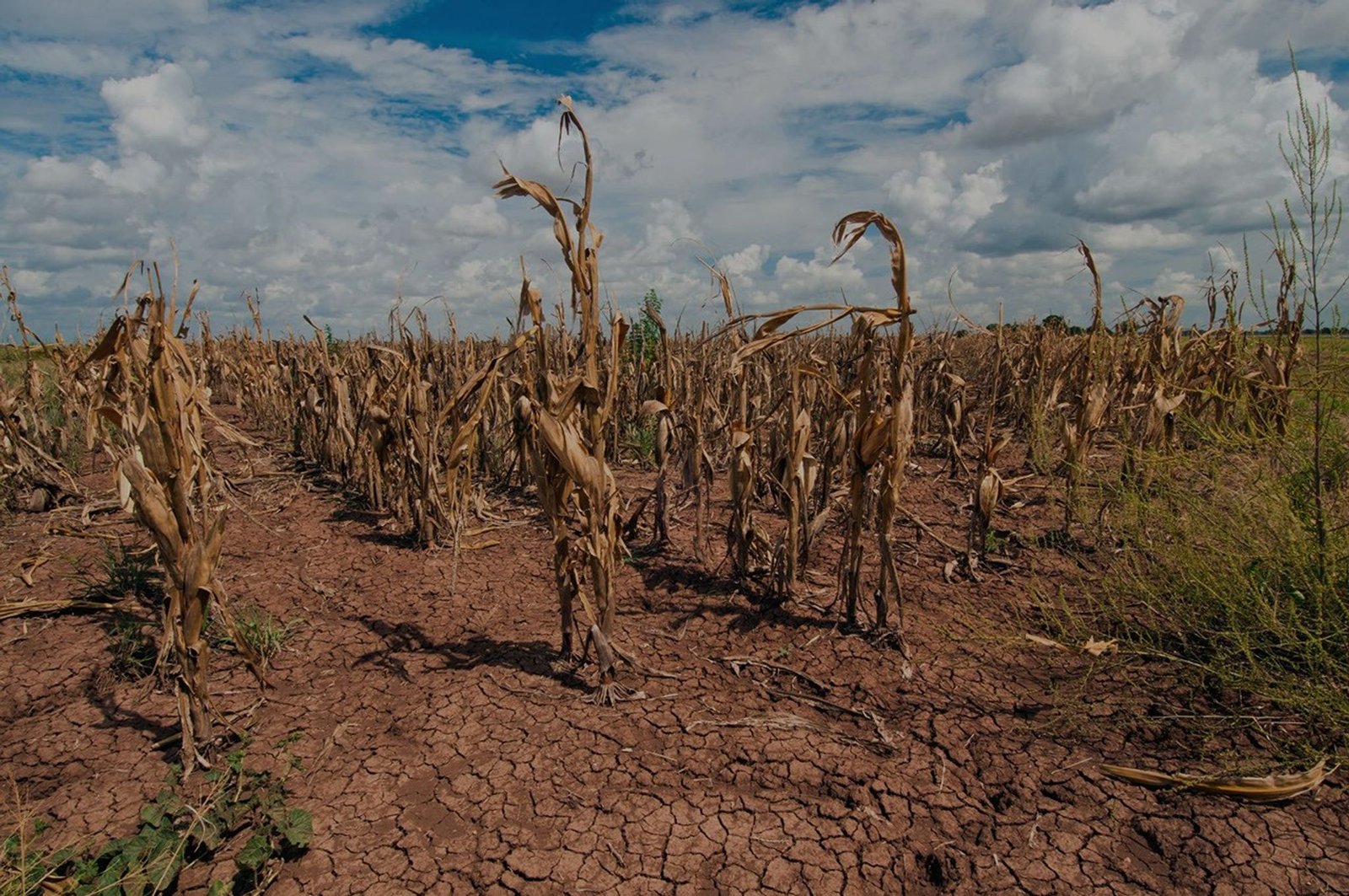
Not all extreme weather announces itself with violence. Some of the most devastating events unfold slowly, silently eroding ecosystems and societies. One of the longest and most severe droughts ever documented occurred in the Atacama Desert region of South America, where some areas experienced centuries with little to no rainfall.
The Atacama’s extreme dryness results from a combination of atmospheric and oceanic factors. Cold ocean currents suppress evaporation, while persistent high-pressure systems inhibit cloud formation. The Andes Mountains block moist air from the east, creating a powerful rain shadow effect.
In some locations, rain is so rare that surfaces remain unchanged for decades. Microbial life survives by extracting moisture from fog, and human settlement is nearly impossible without imported water.
Droughts illustrate the atmospheric circulation patterns that govern moisture distribution. They reveal how stable climate systems can persist over long timescales and how fragile life becomes when water disappears. As climate patterns shift, understanding drought dynamics becomes increasingly vital for global food security.
6. The Most Powerful Hurricane Ever Recorded
Tropical cyclones represent the atmosphere’s most organized and intense storms. Among them, Typhoon Tip, which occurred in the Pacific Ocean in 1979, holds the record as the most powerful tropical cyclone ever recorded in terms of size and central pressure.
Typhoon Tip’s central pressure dropped to approximately 870 millibars, indicating an enormous pressure gradient driving intense winds. The storm spanned over 2,000 kilometers in diameter, affecting vast areas simultaneously.
Such storms derive energy from warm ocean waters through latent heat release. As moist air rises and condenses, it releases heat, further lowering pressure and strengthening the system. This positive feedback continues until disrupted by land, cooler waters, or atmospheric changes.
The scale of Typhoon Tip demonstrates the immense energy stored in Earth’s oceans and atmosphere. It also illustrates why tropical cyclones are so sensitive to sea surface temperatures, making them key indicators of climate change.
7. The Most Extreme Heatwave Ever Recorded
Heatwaves differ from isolated temperature records because they persist over days or weeks, placing sustained stress on ecosystems and societies. One of the most extreme heatwaves occurred in Europe during the summer of 2003, when temperatures remained far above average for extended periods.
This heatwave resulted from a persistent high-pressure system that blocked cooler air masses and allowed heat to accumulate. Soil moisture depletion further amplified temperatures, as less energy was used for evaporation and more went directly into heating the air.
The consequences were devastating. Tens of thousands of excess deaths were recorded, crops failed, and infrastructure was strained. Unlike sudden storms, heatwaves often kill silently, affecting the elderly and vulnerable most severely.
Scientifically, heatwaves illustrate the interaction between atmospheric circulation, land surface processes, and human vulnerability. They are among the clearest examples of how climate variability translates into direct societal impact.
8. The Coldest Wind Chill Ever Experienced
Wind chill is not a true temperature but a measure of how cold it feels due to heat loss caused by wind. One of the lowest wind chill values ever experienced occurred in Antarctica, where strong winds combined with extreme cold to produce conditions beyond the scale of human endurance.
In such environments, exposed skin loses heat so rapidly that frostbite can occur almost instantly. Wind removes the insulating layer of warm air around the body, accelerating heat transfer.
The physics of wind chill is grounded in thermodynamics and fluid dynamics. It emphasizes that human experience of weather depends not only on air temperature, but also on atmospheric motion. Wind chill extremes remind us that survival depends on understanding combined environmental effects, not isolated variables.
9. The Largest Hailstones Ever Recorded
Hailstorms are violent convective events in which ice grows within powerful thunderstorm updrafts. The largest hailstones ever recorded fell in South Dakota in 2010, measuring over 20 centimeters in diameter and weighing nearly one kilogram.
Such hail forms when strong updrafts repeatedly lift ice particles into regions of supercooled water. Each pass adds a new layer of ice, allowing hailstones to grow until gravity overcomes the updraft.
When such massive hailstones fall, they strike with tremendous kinetic energy, damaging buildings, vehicles, and crops. Their existence reveals the incredible vertical energy present in severe thunderstorms.
From a scientific perspective, extreme hail demonstrates the role of atmospheric instability and vertical motion. It also highlights how localized and intense weather events can be, affecting small areas with disproportionate force.
Conclusion: What Extreme Weather Teaches Us About Earth
These nine extreme weather patterns are not mere curiosities or records in a database. They are natural experiments, revealing how Earth’s atmosphere behaves under the most intense conditions permitted by physics. Each event exposes the delicate balance between energy, moisture, motion, and human vulnerability.
Extreme weather reminds us that Earth is not static. It is a dynamic, evolving system capable of breathtaking beauty and profound destruction. As climate patterns shift, the lessons embedded in these extremes become increasingly urgent. Understanding them is not only a scientific pursuit, but a moral one—essential for preparing societies to live wisely on a planet whose atmosphere will always remain powerful, unpredictable, and deeply alive.