The world’s oldest known mummies are not necessarily the ones most people imagine. Ancient Egypt is famous for its elaborate burial rituals and carefully wrapped bodies, but people were preserving their dead thousands of years before Egyptian mummification became widespread. In some places, nature did most of the work. In others, communities developed deliberate techniques to keep human remains intact long before the construction of Egypt’s great pyramids.
The answer depends on what qualifies as a mummy. Some of the oldest known examples are naturally preserved bodies, while others show evidence of intentional human intervention. Among the most important examples are the Chinchorro mummies of South America’s Pacific coast, which demonstrate that sophisticated artificial mummification existed thousands of years before the best-known Egyptian royal mummies.
Understanding these ancient remains requires looking beyond their age. The chemistry of decomposition, environmental conditions, cultural practices, and the archaeological evidence all help explain how human bodies survived for millennia.
What is the world’s oldest known mummy?
There is no single answer that covers every definition of a mummy. If the term includes naturally preserved human bodies, some of the oldest examples date back several thousand years, preserved by exceptionally dry, cold, or oxygen-poor environments. If the question concerns deliberate artificial mummification, the Chinchorro culture of what is now northern Chile and southern Peru provides some of the earliest well-documented examples.
The Chinchorro people practiced artificial mummification thousands of years before the Egyptian techniques most familiar to modern audiences. Some Chinchorro mummies date to approximately 5000 BCE, although dates vary among individual remains and archaeological contexts. This places the earliest examples of their tradition among the oldest known evidence of deliberate human mummification.
Egyptian mummification developed later. Its early history stretches back to the fourth millennium BCE, when some bodies were preserved naturally by the desert before increasingly elaborate burial practices emerged. Over time, Egyptian embalmers developed methods involving dehydration, resin, linen wrappings, and the treatment of internal organs.
The distinction matters because a mummy is not defined by its nationality, burial customs, or appearance. It is a human or animal body whose soft tissues have been preserved, either naturally or through deliberate intervention. The oldest mummy therefore depends on whether the question concerns the earliest surviving body, the earliest intentionally preserved remains, or the oldest example of a particular cultural tradition.
How does a human body normally decompose?
To understand mummification, it helps to begin with what ordinarily happens after death.
A living body constantly repairs and maintains its tissues. When circulation stops, cells lose their supply of oxygen and the energy they need to function. Their internal chemistry begins to change, and enzymes that once helped maintain cellular processes start breaking down cell structures. This process is called autolysis.
Microorganisms also contribute to decomposition. Bacteria already present in the body, particularly in the digestive tract, begin breaking down tissues. Microbes from the surrounding environment can add to the process. Insects and scavengers may accelerate the loss of soft tissue when conditions allow access.
Temperature, moisture, oxygen availability, soil chemistry, and insect activity influence how quickly decomposition proceeds. Warm, moist conditions generally favor microbial activity, while exposure to insects and scavengers can rapidly destroy soft tissues. Cold conditions slow many biological processes, and extreme dryness can prevent microorganisms from functioning effectively.
For a body to survive for thousands of years, the ordinary processes of decay must be greatly slowed or interrupted. Mummification achieves this by removing moisture, restricting microbial activity, altering the chemical environment, or combining several of these effects.
Preservation does not mean that decomposition stops completely. A mummy can gradually deteriorate over centuries or millennia. The remarkable fact is that enough of the body’s structure survives for researchers to examine it long after death.
How nature creates mummies without human intervention
Some of the oldest preserved bodies owe their survival to environmental conditions rather than deliberate burial techniques. Nature can create an effective preservation system when temperature, humidity, and chemistry prevent the usual processes of decay.
Dry deserts
Hot, arid environments can preserve bodies by rapidly removing water from their tissues. Microorganisms require suitable conditions to grow, and most decay-producing microbes cannot remain active when a body becomes sufficiently dry.
The Atacama Desert in northern Chile is one of the driest regions on Earth. Its extreme aridity has helped preserve archaeological remains for thousands of years. Human bodies, textiles, and other organic materials can survive there under conditions that would cause much faster deterioration elsewhere.
However, a desert does not automatically mummify every body. Exposure to scavengers, fluctuating moisture, temperature changes, and other environmental factors can still destroy remains. Exceptional preservation depends on the specific conditions surrounding each body.
Ice and extreme cold
Cold environments can preserve human remains by slowing chemical reactions and microbial growth. When a body freezes, the availability of liquid water decreases, making many biological processes more difficult.
The famous natural mummy known as Ötzi the Iceman illustrates this form of preservation. Discovered in the Ötztal Alps in 1991, he lived during the Copper Age, approximately 3300 BCE. His body survived for more than five millennia in an alpine environment.
Ötzi is not the oldest known mummy under every definition, but he is one of the most informative ancient human remains ever discovered. His preserved tissues, clothing, equipment, and stomach contents have provided evidence about diet, health, technology, and daily life during prehistoric Europe.
Ice preservation is not always permanent. Repeated freezing and thawing can damage tissues, and melting glaciers can expose remains to conditions that rapidly accelerate deterioration.
Bogs and oxygen-poor environments
Some waterlogged environments preserve human bodies through a different combination of chemical conditions. Peat bogs, for example, can contain acidic water with little oxygen. These conditions inhibit many decomposing organisms and can alter skin and other tissues.
Bog bodies from northern Europe sometimes retain remarkably detailed skin and facial features. Their preservation differs from conventional dry mummification, however, because waterlogged tissues may remain chemically altered rather than simply dehydrated.
The same conditions do not necessarily preserve every part of the body equally. Acidic bog water can damage bones while leaving some soft tissues intact. This illustrates an important principle: preservation is selective, and different environments protect different materials.
How the Chinchorro people developed artificial mummification
The Chinchorro people lived along the arid Pacific coast of what is now northern Chile and southern Peru. They depended heavily on marine resources, including fish and other coastal foods, and developed distinctive burial practices that provide evidence of a complex relationship with their dead.
Their mummification tradition began thousands of years ago, with some of the earliest examples dating to around 5000 BCE. This predates the development of Egypt’s most familiar royal mummification practices by several millennia.
Unlike Egyptian mummification, which is especially associated with religious beliefs about the afterlife and the preservation of the individual body, Chinchorro practices took a variety of forms. Researchers have identified techniques that included natural drying as well as extensive artificial reconstruction.
Some Chinchorro mummies were prepared through a labor-intensive process. Embalmers could remove soft tissues, reinforce the body with sticks, and reconstruct its shape using materials such as reeds, fibers, and clay. The surface might then be treated and covered, with facial features modeled to restore a recognizable human appearance.
Other examples were prepared using different methods, including treatments that emphasized drying and surface coatings rather than extensive reconstruction. Chinchorro mummification was not one unchanging technique but a tradition that developed and varied over time.
These practices are especially significant because they demonstrate that sophisticated preservation techniques emerged independently in different parts of the world. Ancient people did not need to borrow Egyptian knowledge to develop ways of preserving the dead.
The Chinchorro record also challenges the assumption that elaborate mummification was exclusively a privilege of kings, nobles, or wealthy families. Their burial traditions included individuals of different ages, including children and infants. This broad participation suggests that the practice held an important place in community life, although the precise beliefs and social meanings behind individual burials remain subjects of archaeological interpretation.
How ancient Egyptian mummification worked
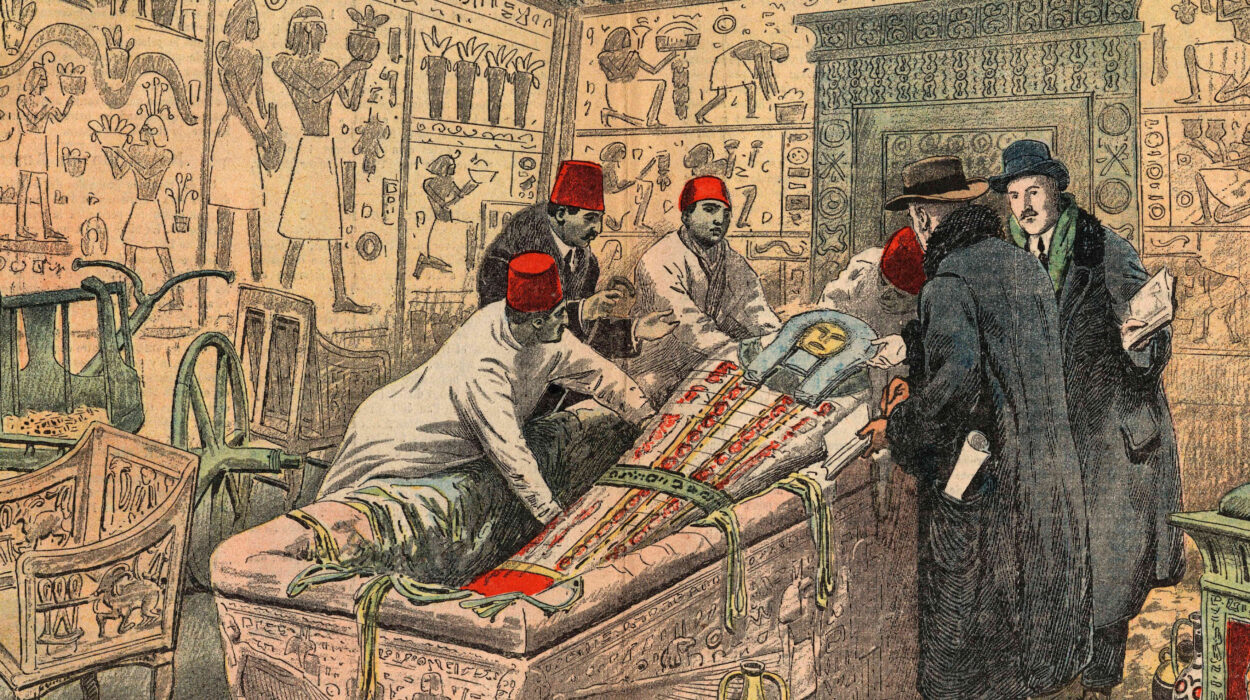
Egyptian mummification became famous for its technical sophistication, but its development was gradual. Early Egyptian bodies were sometimes preserved naturally by contact with dry desert sand. As burial practices changed, embalmers developed increasingly deliberate methods for controlling decomposition.
The central challenge was moisture. Human tissues contain large amounts of water, and water supports many of the chemical and biological processes involved in decay. Removing it substantially reduces the activity of many microorganisms and slows the breakdown of soft tissues.
One of the most important materials used by Egyptian embalmers was natron, a naturally occurring mixture of salts. Natron helped draw moisture from the body and create conditions unfavorable to decomposition. Embalmers used it to dry the body over an extended period before completing the wrapping and burial process.
In many elaborate forms of Egyptian mummification, embalmers also removed certain internal organs because they decomposed readily. The brain could be removed through the nasal passage in some procedures, while abdominal incisions allowed access to organs such as the liver, lungs, stomach, and intestines. Practices varied across periods, individuals, and social groups, so not every mummy underwent the same treatment.
The heart was often left in place because Egyptians associated it with thought, character, and judgment in the afterlife. This was a religious and cultural choice, not a preservation requirement.
After drying, embalmers could apply oils, resins, and other substances that helped protect tissues and secure the wrappings. Linen bandages provided physical support, while amulets and other burial objects reflected religious beliefs and expectations about life after death.
These procedures were part of a larger funerary system. Egyptians believed that preserving the body helped the deceased maintain an enduring identity beyond death. Mummification therefore combined practical knowledge of bodily decay with religious ideas about personhood, death, and the afterlife.
Why removing moisture is so important
The scientific principle behind many forms of mummification is dehydration, or the removal of water from tissues.
Water is essential for the activity of most microorganisms responsible for decomposition. When the amount of biologically available water becomes too low, many microbes can no longer grow or reproduce effectively. Enzymatic reactions that contribute to tissue breakdown are also affected by drying.
This does not mean that all bacteria disappear or that every chemical reaction stops. Some microorganisms can survive harsh conditions, and certain chemical processes continue even in very dry tissues. Dehydration simply makes rapid biological decay much less likely.
Salt-based preservation works partly by drawing water out of tissues and reducing the amount available to microorganisms. This principle is related to the use of salt in food preservation, although ancient mummification involved different materials, goals, and procedures.
Cold preservation operates differently. Rather than removing all the water, freezing makes much of it unavailable in liquid form and slows many reactions. In oxygen-poor environments, the reduced availability of oxygen can restrict some forms of microbial activity, although many microbes can survive without oxygen.
The result is that there is no single universal recipe for creating a mummy. Several different physical and chemical pathways can produce long-term preservation, depending on the body and its surroundings.
What scientists can learn from ancient mummies
Mummies are valuable because they preserve evidence that is often lost when bodies decompose. Their tissues can reveal aspects of human biology, diet, disease, and living conditions that skeletons alone cannot show.
Preserved skin and muscle can help researchers investigate injuries and some medical conditions. Hair and nails may retain information about physiological changes, while stomach contents can sometimes provide evidence of a person’s last meals. Clothing, wrappings, and burial materials can also reveal technologies, trade connections, and cultural practices.
Scientific imaging has made it possible to examine mummies without immediately unwrapping or damaging them. Computed tomography, commonly known as CT scanning, uses X-rays to create detailed cross-sectional images of the body. These images can reveal bones, dental conditions, fractures, foreign objects, and some preserved organs.
DNA analysis can sometimes identify biological relationships, ancestry, or genetic characteristics. However, ancient DNA is vulnerable to degradation and contamination, and results depend on the condition of the remains and the quality of the samples. Not every mummy yields usable genetic information.
Chemical analysis can provide additional evidence. Researchers may study isotopes in tissues to investigate aspects of diet and mobility, although such interpretations require careful consideration of environmental and biological factors. Residues from embalming materials can also help identify the substances ancient people used to prepare bodies.
Mummies are not perfect historical records. Preservation changes tissues, environmental contamination can affect samples, and the individuals available for study may not represent an entire population. Scientific conclusions must therefore be based on multiple lines of evidence rather than a single unusual feature.
Why the oldest mummy is difficult to identify with certainty
Determining which mummy is the oldest requires more than finding a body that looks exceptionally ancient. Archaeologists must establish its age, understand the context in which it was discovered, and determine whether its preservation resulted from natural conditions or deliberate treatment.
Radiocarbon dating is one of the principal methods used to estimate the age of ancient organic remains. It measures the amount of radioactive carbon-14 remaining in a sample and compares it with the expected amount in living material. Because carbon-14 decays at a known rate, the measurement can help estimate when an organism died.
Radiocarbon dating does not usually provide a perfectly precise calendar year. Results are expressed as age estimates with uncertainties and may require calibration to account for changes in atmospheric carbon-14 over time. Contamination, conservation materials, and the choice of sample can also affect the result.
The age of a burial site is not automatically the age of the body found within it. Objects and remains can be disturbed, redeposited, or introduced into older layers. Archaeologists therefore consider the body’s direct dating results alongside its burial context and other evidence.
The definition of mummification creates another difficulty. A naturally dried body may preserve soft tissues for thousands of years without any human attempt to prevent decomposition. An artificially prepared mummy provides evidence of deliberate intervention, but determining exactly when that intervention first emerged is more difficult than identifying a single ancient specimen.
For these reasons, claims about the world’s oldest mummy need to specify what is being compared. The earliest preserved human remains, the oldest naturally preserved body, and the oldest deliberately mummified individual are different categories.
What ancient mummies reveal about human ingenuity
The history of mummification is not confined to one civilization or a single set of religious beliefs. It reflects a broader human effort to understand death, preserve the dead, and maintain connections with the past.
In some places, environmental conditions preserved bodies without human intervention. Elsewhere, people developed increasingly sophisticated techniques to control decomposition. The Chinchorro people of South America’s Pacific coast demonstrate how early deliberate mummification could become a central cultural practice, while ancient Egypt illustrates how preservation techniques could be integrated into a complex religious and funerary system.
These traditions also show that practical knowledge and cultural meaning can coexist. Drying, salting, and protecting tissues were effective ways to slow decay, but the reasons people invested time and effort in preserving the dead depended on their beliefs, social structures, and relationships with the deceased.
The world’s oldest mummy is therefore more than a record of extreme age. It is evidence of the different ways humans have responded to death and of the physical conditions that determine whether a body disappears or survives across millennia.
By studying these remains carefully, scientists can reconstruct aspects of lives lived thousands of years ago while learning how chemistry, biology, climate, and culture interact to shape the archaeological record.