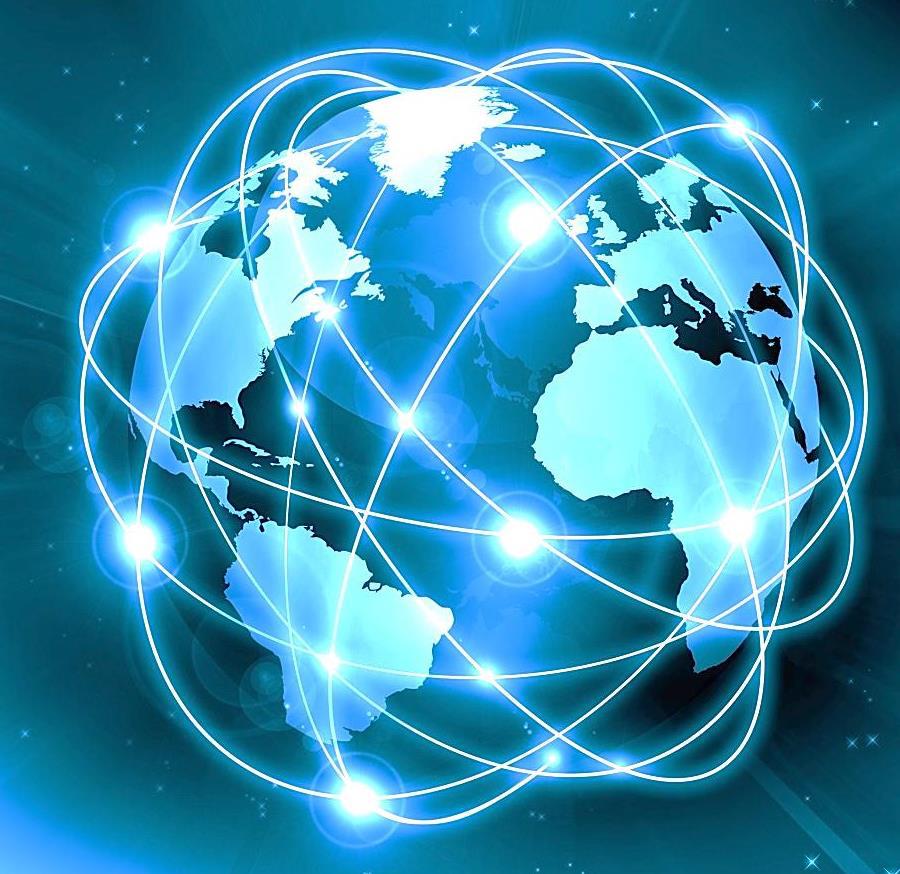
The internet is one of the most powerful inventions in human history. It is invisible, yet it surrounds us. It moves through cables under oceans, through radio waves in the air, and through devices in our hands. Every message sent, every website opened, every video streamed travels through this vast digital network that connects billions of people and machines across the planet.
At its most basic level, the internet is a global system of interconnected computer networks that communicate with each other using standardized protocols. But that technical definition barely captures its true significance. The internet is also a social revolution, a knowledge library, an economic engine, and a cultural meeting place. It has transformed how humans communicate, learn, work, create, and even think.
When someone in Bangladesh sends a message to a friend in Canada, or when a student in a small village watches a lecture from a university thousands of kilometers away, the internet quietly carries those connections across the world in fractions of a second. It makes distance feel smaller and information almost limitless.
Understanding the internet means exploring its origins, its technologies, its structure, and its enormous impact on modern civilization.
The Origins of a Global Network
The story of the internet begins during a tense period of world history. In the 1960s, researchers in the United States were searching for ways to build communication networks that could survive disruptions and still allow computers to share information.
A major step occurred with the creation of ARPANET, a research network funded by the U.S. Department of Defense. It connected computers at universities and research institutions so they could communicate and share data. Unlike traditional communication systems, which depended on continuous circuits, ARPANET used a technique called packet switching.
Packet switching breaks information into small pieces called packets. Each packet travels through the network independently and is reassembled at its destination. This approach made communication more efficient and resilient.
The first successful message sent through ARPANET occurred in 1969 between two computers at universities in California. That moment marked the birth of what would eventually grow into the modern internet.
Over the following decades, more networks joined together. Scientists and engineers developed common standards so different systems could communicate. Eventually these interconnected networks formed a global network of networks—the internet.
The Vision That Shaped the Web
For many years the internet existed primarily as a tool for researchers and academic institutions. That began to change in the late twentieth century with the invention of the World Wide Web.
In 1989, a British computer scientist named Tim Berners-Lee proposed a system that would allow documents to be linked together through hyperlinks and accessed through a simple interface. Working at CERN, he developed the technologies that made this vision possible.
These technologies included HTML, a language used to create webpages, and HTTP, a protocol that allows browsers and servers to communicate. Berners-Lee also created the first web browser and web server.
The World Wide Web transformed the internet from a specialized communication network into a vast information space accessible to ordinary people. Suddenly, anyone with a computer and a connection could publish information, explore knowledge, and communicate globally.
It is important to understand that the internet and the World Wide Web are not the same thing. The internet is the underlying infrastructure—the global network of computers. The web is one of the many services that run on that infrastructure.
How the Internet Actually Works
Although the internet feels almost magical, its operation is based on clear technological principles. Every device connected to the internet—from smartphones to servers—has an address known as an Internet Protocol address, or IP address. This address allows devices to locate and communicate with each other.
When you type the address of a website into a browser, your computer sends a request across the network. That request travels through routers, cables, and servers until it reaches the computer hosting the website. The server then sends the requested information back to your device, where your browser displays it.
This entire process often takes less than a second.
A key technology enabling this communication is the Transmission Control Protocol and Internet Protocol, often referred to together as TCP/IP. These protocols define how data is packaged, transmitted, and received across networks. They ensure that packets arrive correctly and in the proper order.
The internet therefore functions like a global postal system for digital information. Messages are broken into packets, labeled with destination addresses, sent across complex routes, and finally reassembled when they reach their destination.
The Physical Infrastructure of the Internet
Despite its intangible nature, the internet depends on massive physical infrastructure. Beneath the oceans lie thousands of kilometers of fiber-optic cables that carry data between continents. These cables transmit information as pulses of light traveling through glass fibers.
On land, networks of cables connect cities, data centers, and communication hubs. Cellular towers transmit wireless signals to smartphones. Satellites orbiting Earth relay signals to remote areas.
Inside enormous data centers, rows of powerful servers store websites, videos, emails, and cloud applications. These facilities consume vast amounts of electricity and require advanced cooling systems to keep equipment functioning.
When someone streams a video or uploads a photo, that data travels through a chain of physical components: local networks, regional networks, international cables, and remote servers.
The internet may feel weightless, but it is supported by a massive global machine.
Internet Service Providers and Connectivity
Most people access the internet through companies known as Internet Service Providers, or ISPs. These organizations manage the infrastructure that connects homes, businesses, and mobile devices to the broader internet.
ISPs operate networks of routers and communication lines that transmit data between users and the global network. They also manage bandwidth, maintain connections, and provide technical support.
Internet connections can take many forms. Broadband connections through fiber or cable offer high speeds suitable for streaming and online gaming. Mobile networks allow smartphones to access the internet through cellular signals. Satellite internet connects remote areas where cables are difficult to install.
Each of these technologies contributes to expanding internet access across the world.
The Rise of Search and Digital Knowledge
As the web grew, it became increasingly difficult to navigate. Billions of pages of information existed, but finding the right one required powerful search tools.
Search engines emerged to solve this challenge by indexing websites and ranking results based on relevance. Among the most influential of these is Google, which revolutionized internet search by developing algorithms that analyze links between webpages.
Search engines transformed the internet into a vast library of human knowledge. Students, researchers, and everyday users could instantly find information about almost any topic.
The ability to search and access information instantly has changed how people learn and solve problems. Knowledge that once required hours in a physical library can now be discovered in seconds.
Social Media and Digital Communities
As connectivity spread, the internet evolved from a place of information into a place of interaction. Social media platforms allowed users not only to consume content but also to create and share it.
Platforms such as Facebook, YouTube, and Twitter created digital spaces where billions of people could communicate, express opinions, and build communities.
These platforms reshaped communication. News spreads instantly. Movements organize rapidly. Individuals can reach global audiences without traditional media organizations.
At the same time, social media has introduced new challenges, including misinformation, online harassment, and concerns about privacy.
The internet has become not only a technological system but also a complex social environment.
The Internet Economy
The internet has also transformed the global economy. Entire industries now exist primarily online. E-commerce allows businesses to sell products to customers around the world without physical storefronts.
Companies like Amazon built vast digital marketplaces connecting buyers and sellers. Digital payment systems allow secure financial transactions across borders.
Remote work, online education, digital marketing, and streaming entertainment have all become major sectors of the modern economy. Entrepreneurs can launch businesses from small apartments and reach customers across continents.
The internet has lowered barriers to entry for many industries while creating entirely new opportunities.
Cybersecurity and the Challenges of a Connected World
As more information and activities move online, protecting digital systems becomes increasingly important. Cybersecurity focuses on defending networks, devices, and data from attacks.
Cybercriminals may attempt to steal personal information, disrupt services, or gain unauthorized access to systems. Techniques such as encryption help protect communication by scrambling information so that only intended recipients can read it.
Organizations invest heavily in security technologies and protocols to safeguard digital infrastructure.
Yet cybersecurity remains an ongoing challenge because the internet is open and constantly evolving.
The Internet and Human Culture
Beyond technology and economics, the internet has reshaped culture itself. Music, films, literature, and art now circulate globally within seconds. Independent creators can share their work with worldwide audiences.
Online communities bring together people who share interests regardless of geography. Language barriers shrink through translation tools. Cultural exchange accelerates.
Education has expanded dramatically through online courses, digital textbooks, and video lectures. Students in remote regions can access resources once available only at major universities.
The internet has democratized information and creativity in ways that previous generations could hardly imagine.
The Future of the Internet
Even after decades of growth, the internet continues to evolve. Emerging technologies promise to expand its capabilities further.
Faster communication networks, such as next-generation mobile systems, aim to provide higher speeds and lower latency. The Internet of Things is connecting everyday objects—appliances, vehicles, sensors—to the internet, allowing them to communicate and exchange data.
Artificial intelligence systems analyze vast amounts of online information to provide personalized services and insights.
At the same time, policymakers and researchers are working to address challenges related to digital privacy, data ownership, and equitable access.
The future internet may become even more immersive, interactive, and integrated with daily life.
Why the Internet Matters
The internet is far more than cables and computers. It is a global nervous system for human civilization. It connects ideas, cultures, economies, and individuals in ways never before possible.
It allows knowledge to flow across borders, enabling collaboration among scientists, educators, artists, and entrepreneurs. It amplifies voices that might otherwise remain unheard. It accelerates innovation by allowing information to spread rapidly.
Yet the internet also reminds us that technology is shaped by human choices. How it is used—whether to educate, connect, and empower or to divide and mislead—depends on society.
Understanding the internet means recognizing both its extraordinary potential and its responsibilities.
A Network That Changed the World
From its humble beginnings as an experimental research network to its current role as the backbone of global communication, the internet has transformed nearly every aspect of modern life.
It carries the voices of billions of people, the discoveries of scientists, the creativity of artists, and the dreams of entrepreneurs. It allows families separated by oceans to speak face to face, students to learn from distant teachers, and communities to form across continents.
The internet is not a finished invention. It is a living system, continuously expanding and adapting as technology and society evolve.
In many ways, it represents humanity’s collective mind—an ever-growing network of knowledge, conversation, and imagination.
And as long as curiosity, creativity, and connection remain central to human life, the internet will continue to shape the way our world communicates, learns, and moves forward into the future.