Every star has a story. Some quietly fade away after billions of years, while others end their lives in one of the most powerful explosions the universe has ever witnessed. Among these cosmic giants are supergiant stars—enormous, brilliant stars that burn through their nuclear fuel at astonishing speeds. Although they live only a tiny fraction of the lifespan of smaller stars like our Sun, they leave behind some of the most fascinating objects in the cosmos, including neutron stars, black holes, and the glowing remains of supernova explosions.
The death of a supergiant star is not simply the end of a star. It is a dramatic event that reshapes its surroundings, creates many of the elements needed for planets and life, and influences the evolution of entire galaxies. Understanding what happens during these final moments helps us understand where the atoms in our bodies came from and how the universe continues to evolve.
What Is a Supergiant Star?
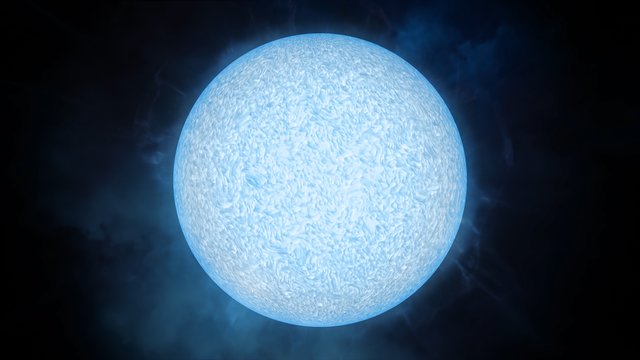
A supergiant star is one of the largest and most luminous types of stars in the universe. These stars are much more massive than the Sun, typically beginning their lives with at least about eight times the Sun’s mass. Some contain more than 100 times the Sun’s mass, making them true cosmic heavyweights.
Despite their enormous size, supergiant stars do not live long. Their tremendous mass creates immense pressure in their cores, causing nuclear fusion to occur at an incredibly rapid rate. Instead of lasting around 10 billion years like the Sun is expected to, many supergiants survive for only a few million to tens of millions of years.
Their lives are short but spectacular.
A Star Powered by Nuclear Fusion
Like all stars, a supergiant shines because nuclear fusion occurs deep within its core. At first, hydrogen atoms fuse into helium, releasing enormous amounts of energy. This energy pushes outward while gravity pulls inward, creating a delicate balance that keeps the star stable.
For most of its life, this balance allows the star to shine brightly.
However, because a supergiant has so much mass, it consumes hydrogen at an extraordinary pace. What might take billions of years in a Sun-like star happens much faster inside a supergiant.
Eventually, the hydrogen in the core begins to run out.
The Star Begins Burning Heavier Elements
Once the hydrogen fuel is exhausted in the core, gravity starts compressing the star.
As the core becomes hotter and denser, helium begins fusing into carbon and oxygen. When helium is depleted, the core contracts again, becoming even hotter.
Unlike smaller stars, supergiants are massive enough to continue this process many times.
Over time, they begin fusing progressively heavier elements, including carbon, neon, oxygen, and silicon. Each stage produces new elements and releases energy that temporarily supports the star against gravitational collapse.
This sequence happens faster and faster as the star ages. Hydrogen burning may last millions of years, helium burning hundreds of thousands of years, carbon burning centuries, oxygen burning months, and silicon burning only about a day before the star reaches its final stage.
The closer the star comes to death, the faster time seems to move.
The Formation of an Iron Core
Eventually, the star begins producing iron in its core.
This marks the beginning of the end.
Fusion normally releases energy because lighter elements combine into heavier ones. However, iron is different. Fusing iron or heavier elements requires energy instead of releasing it.
Once an iron core forms, the star loses its ability to generate enough outward pressure to resist gravity.
The delicate balance that held the star together for millions of years suddenly disappears.
Gravity Wins the Battle
Without energy from fusion, gravity takes over completely.
The iron core collapses in a fraction of a second.
The collapse is astonishingly fast. The core, once thousands of kilometers across, can shrink to only a few tens of kilometers almost instantly. During this collapse, matter becomes unimaginably dense.
Electrons are forced into protons, creating neutrons and releasing vast numbers of neutrinos—nearly massless particles that stream out from the collapsing core.
This collapse happens so quickly that the outer layers of the star have no time to react until the core suddenly stops collapsing.
What happens next is one of nature’s greatest explosions.
A Spectacular Supernova Explosion
When the collapsing core reaches extreme density, it suddenly becomes incredibly resistant to further compression.
The inward-falling material slams into the dense core and rebounds, helping generate a powerful shock wave. At the same time, the flood of escaping neutrinos transfers energy to the surrounding material, helping revive and strengthen the shock.
The shock wave races outward through the star.
Within moments, the star explodes as a core-collapse supernova, one of the brightest events in the universe.
For a short time, a single exploding star can outshine an entire galaxy containing hundreds of billions of stars.
The explosion blasts the star’s outer layers into space at speeds of thousands of kilometers per second.
The Birth of Heavy Elements
A supernova is not simply a spectacular explosion.
It is also one of the universe’s greatest factories for creating and dispersing elements.
During the explosion, extreme temperatures and pressures allow many elements heavier than iron to form through rapid nuclear reactions. Gold, platinum, uranium, and many other heavy elements are produced in these violent environments or in related events involving neutron stars.
The explosion scatters these elements across interstellar space.
Over millions of years, this material becomes part of new clouds of gas and dust that eventually form new stars, planets, and sometimes living organisms.
The calcium in your bones, the iron in your blood, and many of the atoms that make up Earth were forged inside ancient stars and spread across the galaxy by stellar explosions.
In a very real sense, every person is made from recycled stardust.
What Remains After the Explosion?
Although the outer layers are blown away, the collapsed core remains.
Its final fate depends mainly on how much mass is left in the core after the explosion.
If the remaining core is relatively modest, it becomes a neutron star.
If the core is much more massive, gravity overwhelms every known force, and the core collapses further into a black hole.
Both are among the strangest objects known in the universe.
Neutron Stars: Cities with the Mass of the Sun
A neutron star is one of the densest objects in existence.
Although only about 20 kilometers across, it can contain more mass than the Sun.
Its matter is packed so tightly that a teaspoon of neutron-star material would weigh billions of tons on Earth.
Many neutron stars rotate rapidly, spinning several times every second. Some emit beams of radio waves, X-rays, or gamma rays from their magnetic poles.
If these beams sweep across Earth as the star spins, astronomers observe regular pulses, creating objects known as pulsars.
Neutron stars provide natural laboratories for studying matter under conditions impossible to reproduce on Earth.
Black Holes: Gravity Without Escape
If the collapsing core is massive enough, not even neutron pressure can stop gravity.
The core continues collapsing until it forms a black hole.
A black hole is a region where gravity becomes so intense that nothing—not even light—can escape once it crosses the event horizon.
Although black holes themselves cannot be seen directly, astronomers detect them by observing their effects on nearby stars, gas, and light.
Some black holes formed from supergiant stars are only a few times more massive than the Sun, while others may grow much larger by merging with other black holes or consuming surrounding matter.
The Beautiful Remains of the Explosion
The expanding gas from a supernova does not disappear.
Instead, it forms a glowing cloud known as a supernova remnant.
These colorful clouds contain shock waves, magnetic fields, and enriched material that interact with surrounding gas.
Over thousands of years, the remnant expands across space, mixing freshly created elements into the galaxy.
Some of the most famous astronomical objects, including the Crab Nebula, are supernova remnants that continue to reveal the dramatic aftermath of stellar death.
Can We Predict When a Supergiant Will Explode?
Astronomers can identify stars that are nearing the end of their lives, but predicting the exact moment of a supernova remains extremely difficult.
Stars like Betelgeuse, the famous red supergiant in the constellation Orion, are approaching the final stages of stellar evolution. However, “approaching” in astronomical terms could mean tomorrow, a thousand years from now, or even much longer.
Because these timescales are so vast, the chance of witnessing a nearby supernova during a human lifetime is relatively small.
Nevertheless, telescopes around the world continuously monitor massive stars, hoping to capture the earliest moments of one of these extraordinary explosions.
Why the Death of Supergiant Stars Matters
At first glance, the death of a distant star may seem unrelated to life on Earth.
In reality, it is essential.
Without supergiant stars, many of the chemical elements that make rocky planets and living organisms possible would never have been spread throughout the universe.
Each exploding star enriches its galaxy with new material, allowing future generations of stars and planets to form.
The cycle of stellar birth, life, death, and rebirth has been shaping the universe for more than 13 billion years.
Every generation of stars inherits material from earlier generations, making the universe increasingly rich in the ingredients needed for complexity.
How Scientists Study Stellar Death
Modern astronomers use a wide range of tools to study dying supergiant stars.
Powerful optical telescopes observe visible light from supernovae and their remnants.
Radio telescopes detect expanding clouds of gas and energetic particles.
Space telescopes observe X-rays and gamma rays produced by extremely hot material.
Neutrino detectors can capture some of the nearly massless particles released during a core collapse, while gravitational-wave observatories search for ripples in space-time produced by some of the universe’s most violent events.
Computer simulations also play a crucial role, allowing scientists to model the complex physics inside collapsing stars and compare predictions with observations.
Each new observation improves our understanding of how these magnificent stars meet their end.
A Cosmic Ending That Creates New Beginnings
The death of a supergiant star is not a story of destruction alone.
It is a story of transformation.
After millions of years shining brilliantly, the star reaches a point where it can no longer support itself. Gravity triggers a catastrophic collapse, followed by a spectacular supernova that briefly lights up the galaxy. In its final moments, the star creates and disperses many of the elements that future worlds—and perhaps future life—will depend upon.
The collapsed core survives as either an incredibly dense neutron star or a mysterious black hole, while the expanding debris enriches the surrounding galaxy with fresh material for new generations of stars.
In this way, the end of a supergiant star is also the beginning of countless new cosmic stories. Every atom of calcium, oxygen, silicon, and iron that makes planets, mountains, oceans, and living creatures possible owes its existence to stars that lived and died long before our Solar System was born.
The universe is constantly renewing itself, and few events illustrate this grand cycle more beautifully than the final moments of a supergiant star.