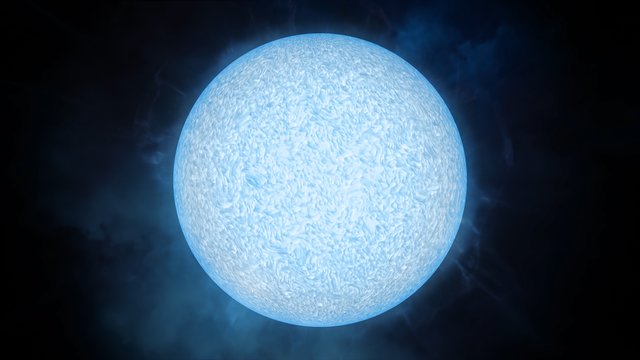
On a clear, dark night, the sky is filled with countless stars. Some appear as tiny points of light, while a few shine with remarkable brilliance, standing out from the rest. Among these celestial giants are supergiant stars—some of the largest, hottest, and most luminous stars in the universe. Their incredible brightness has fascinated astronomers and skywatchers for centuries, inspiring myths, guiding travelers, and helping scientists unlock the secrets of stellar evolution.
But what exactly makes supergiant stars so bright? Is it simply because they are larger than other stars? Are they closer to Earth? Or is something much more extraordinary happening deep within these cosmic titans?
The answer lies in a fascinating combination of enormous size, immense energy production, high temperatures, and the powerful laws of physics that govern every star in the universe.
What Is a Supergiant Star?
A supergiant star is one of the most massive and luminous types of stars known. These stars are much larger than the Sun and can have radii tens to more than a thousand times greater than our star.
Supergiants are not just bigger—they are also among the most energetic objects in the universe. They burn through their nuclear fuel at astonishing rates, producing enormous amounts of energy every second.
Astronomers generally classify supergiants into two broad categories based on their surface temperatures.
Blue supergiants are extremely hot, with surface temperatures ranging from about 10,000 to more than 40,000 kelvin. Their intense heat gives them a blue-white color and makes them extraordinarily luminous.
Red supergiants, on the other hand, have much cooler surfaces, typically between about 3,000 and 4,500 kelvin. Despite their cooler temperatures, they are still incredibly bright because they are so enormous.
Famous examples include Betelgeuse in the constellation Orion, Antares in Scorpius, Rigel in Orion, and Deneb in Cygnus.
Brightness Is More Than What We See
When people say a star is “bright,” they often mean it looks bright in the night sky. However, astronomers distinguish between two different kinds of brightness.
Apparent brightness is how bright a star appears from Earth. This depends not only on the star’s true power but also on how far away it is. Even a tremendously luminous star can appear faint if it is very distant.
Intrinsic brightness, called luminosity, is the total amount of energy a star emits every second. This is the true measure of how powerful a star really is.
Supergiant stars have exceptionally high luminosities. Many shine tens of thousands to hundreds of thousands of times brighter than the Sun. The most extreme examples can exceed one million times the Sun’s luminosity.
This enormous energy output is what truly makes supergiant stars extraordinary.
Their Enormous Size Makes a Huge Difference
One of the biggest reasons supergiant stars are so bright is their incredible size.
Imagine replacing the Sun with Betelgeuse. If placed at the center of our Solar System, Betelgeuse would extend beyond the orbit of Mars and possibly even approach Jupiter’s orbit, depending on its changing size. Although the star’s outer layers are extremely thin compared to its dense core, its sheer volume is almost impossible to imagine.
A larger star has vastly more surface area from which light can escape. Even if every square meter of the surface emitted the same amount of energy as a smaller star, the giant star would still produce much more total light simply because it has so much more surface.
For red supergiants especially, this enormous surface area compensates for their relatively cool temperatures.
The Power of Nuclear Fusion
At the heart of every star lies a powerful engine called nuclear fusion.
Gravity squeezes the star’s core so intensely that temperatures rise to millions of degrees. Under these extreme conditions, hydrogen nuclei collide and fuse into helium. This process releases tremendous amounts of energy according to Einstein’s famous equation, E = mc², where a tiny amount of mass is converted into enormous amounts of energy.
In supergiant stars, this process occurs on an extraordinary scale.
Their immense mass creates extremely high pressures in their cores, allowing fusion reactions to proceed much faster than in stars like the Sun.
As the star evolves, it begins fusing heavier elements such as helium, carbon, neon, oxygen, and silicon. Each stage produces tremendous energy, helping maintain the star’s incredible brightness.
Massive Stars Produce More Energy
Mass is one of the most important factors determining a star’s luminosity.
Supergiant stars often begin their lives with at least eight times the Sun’s mass, while some may exceed one hundred solar masses.
More mass means stronger gravity. Stronger gravity compresses the core more intensely. Greater compression raises the core temperature and pressure, causing nuclear fusion to occur much more rapidly.
This dramatically increases the star’s energy output.
The relationship between stellar mass and luminosity is not simple or linear. A star that is ten times more massive than the Sun can be thousands of times brighter, while the most massive stars can be millions of times more luminous.
This is why massive stars shine so brilliantly despite living relatively short lives.
Temperature Also Matters
Temperature plays a crucial role in determining how much energy a star radiates.
According to the Stefan–Boltzmann law, the energy emitted from each unit of a star’s surface increases very rapidly as temperature rises. Specifically, the energy emitted per unit area is proportional to the fourth power of the star’s surface temperature.
This means that even modest increases in temperature lead to dramatic increases in energy output.
Blue supergiants are among the hottest stars in the universe. Their extremely high surface temperatures allow each square meter of their surface to emit enormous amounts of radiation.
Combined with their already large sizes, this makes blue supergiants some of the brightest stars known.
Red Supergiants Shine Through Sheer Size
At first glance, red supergiants may seem less impressive because they are cooler than blue stars.
However, their gigantic size completely changes the picture.
A red supergiant has an enormous surface area—sometimes hundreds or even over a thousand times the Sun’s radius. Even though each part of its surface emits less energy than a hot blue star, the immense total area produces an extraordinary amount of light.
This is why stars like Betelgeuse remain among the brightest stars in Earth’s night sky despite having relatively cool surfaces.
Supergiants Live Fast and Die Young
Ironically, the stars that shine the brightest often have the shortest lives.
Our Sun, which burns its fuel relatively slowly, is expected to remain stable for about ten billion years.
A massive supergiant burns through its nuclear fuel much more rapidly. Instead of lasting billions of years, many survive only a few million to tens of millions of years.
In astronomical terms, this is an incredibly short lifespan.
Their intense brightness is a direct consequence of consuming fuel at an extraordinary rate. Like a powerful engine running at full speed, they produce tremendous energy but exhaust their resources quickly.
Layers of Fusion Create Incredible Energy
As supergiant stars age, their interiors become remarkably complex.
Instead of having only one fusion region, they develop multiple layers where different elements undergo fusion simultaneously.
Hydrogen may fuse in one shell, helium in another, carbon deeper inside, followed by oxygen, neon, and silicon closer to the core.
These nested fusion layers resemble the layers of an onion.
Each fusion process contributes additional energy, helping maintain the star’s tremendous luminosity during its later stages of life.
Eventually, the core begins producing iron. Since iron fusion does not release energy, the star can no longer support itself against gravity. The core collapses, leading to one of the most spectacular events in the universe—a supernova explosion.
Distance Affects How Bright They Look
Although supergiants are incredibly luminous, their appearance from Earth depends heavily on distance.
Betelgeuse is roughly 550 light-years away, close enough to be one of the brightest stars visible in the night sky.
Deneb, however, lies approximately 2,600 light-years away. Despite being much farther away, it still appears among the brightest stars because its intrinsic luminosity is so enormous.
Many supergiants in distant galaxies are actually brighter than the stars we see in our own galaxy, but their vast distances make them appear faint.
This distinction between apparent brightness and true luminosity is essential in astronomy.
Why Supergiants Have Different Colors
The color of a star depends mainly on its surface temperature.
Blue supergiants are extremely hot and emit much of their light at shorter wavelengths, giving them a blue-white appearance.
Yellow supergiants have intermediate temperatures and appear yellowish.
Red supergiants are cooler and emit more light at longer wavelengths, giving them their distinctive reddish glow.
Color is therefore not simply decorative—it reveals important information about a star’s physical properties.
Supergiants Help Build the Universe
Supergiant stars are not only brilliant; they are also essential to the evolution of galaxies.
Inside their cores, they manufacture many of the heavier elements that make planets—and life—possible.
When these stars explode as supernovae, they scatter those elements across space.
Carbon in living organisms, oxygen in Earth’s atmosphere, calcium in bones, silicon in rocks, and iron in blood all originated inside ancient stars that lived and died billions of years ago.
In this sense, every person on Earth is literally made from material forged inside long-dead stars.
Supergiants Guide Astronomers
Because supergiant stars are so luminous, astronomers can observe them across enormous distances.
They help scientists study the structure of galaxies, measure cosmic distances, understand stellar evolution, and investigate how elements are created.
Some supergiants also vary in brightness over time. Certain types, such as Cepheid variable supergiants, play a crucial role in measuring distances across the universe. Their predictable changes in brightness have helped astronomers determine the scale of our galaxy and many neighboring galaxies.
Without these remarkable stars, our understanding of the universe would be far less complete.
Are Supergiants the Brightest Stars Ever?
Many supergiants rank among the brightest stars known, but some even more extreme stars exist.
Hypergiants are an exceptionally rare class of stars that are generally larger, more massive, and more luminous than ordinary supergiants. Stars such as Eta Carinae and some Wolf–Rayet stars can outshine typical supergiants by enormous margins, although they represent unusual stages of stellar evolution rather than the norm.
Even so, supergiants remain among the universe’s greatest beacons, visible across vast regions of space.
The Last Great Light Before a Spectacular End
Every supergiant star is living on borrowed time.
Its incredible brilliance is the result of an immense battle between gravity pulling inward and nuclear fusion pushing outward. For millions of years, these opposing forces remain in delicate balance, allowing the star to radiate extraordinary amounts of light into the cosmos.
Eventually, gravity wins. The fusion engine falters, the core collapses, and the star ends its life in a brilliant supernova that may briefly outshine an entire galaxy.
Yet this dramatic ending is also a new beginning. The explosion sends newly forged elements into space, where future stars, planets, and perhaps even life itself will eventually form.
The next time you look up and notice a particularly bright star shining against the darkness, remember that you may be seeing one of these magnificent supergiants—a colossal cosmic furnace whose dazzling light is powered by the deepest forces of nature and whose final act will help shape the future of the universe itself.