For decades, consciousness has sat at the center of science like an unsolved riddle. We experience it every waking moment, yet we cannot say with certainty how the physical matter of the brain turns into thoughts, sights, pain, or a sense of self. Scientists often call this the “hard problem” of science, not because it is abstract or philosophical, but because the tools to truly probe it have been missing.
Now, a quiet but powerful technology is beginning to change that situation. It is called transcranial focused ultrasound, and according to a new paper by researchers connected to MIT, it may finally allow scientists to ask sharper, more direct questions about how consciousness arises in the human brain.
The researchers describe their work not as a final answer, but as a roadmap. It is a guide for how this technology could be used to explore consciousness in ways that were previously impossible, safely and noninvasively, in healthy human volunteers. The paper appears in the journal Neuroscience & Biobehavioral Reviews, and its tone reflects both excitement and caution. Something new has arrived, and no one yet knows how far it will take us.
A Tool That Can Reach Where Hands Never Could
To understand why this matters, it helps to understand the problem brain researchers face. The deepest, most emotionally rich parts of the brain lie far beneath the surface. Studying them directly usually requires neurosurgery, which is obviously not an option for most research on healthy people. Other noninvasive methods can observe the brain, but they struggle to change what the brain is doing.
MRIs can show structure and activity. EEGs can measure electrical signals. But neither can easily answer the question scientists care about most: what causes what.
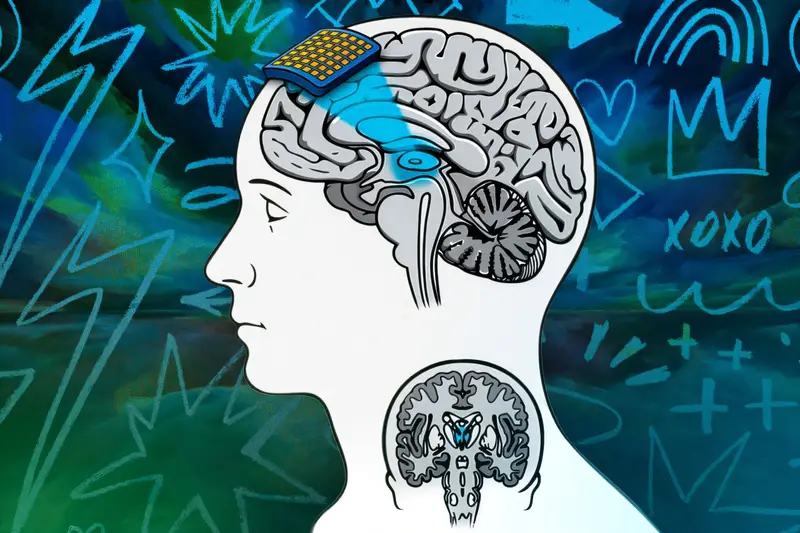
Transcranial focused ultrasound changes that equation. Instead of magnets or electrical currents, it uses acoustic waves that pass harmlessly through the skull. These waves can be focused down to an area only a few millimeters wide, even centimeters below the scalp, allowing researchers to gently modulate activity in precise brain regions.
Daniel Freeman, an MIT researcher and co-author of the paper, describes it as something fundamentally new. For the first time, researchers can stimulate deep brain structures without surgery, with a level of precision that was once unimaginable. Areas involved in emotion, perception, and sensation, long out of reach, are suddenly accessible.
Matthias Michel, a philosopher at MIT who studies consciousness and also co-authored the work, puts it simply. There are very few safe ways to reliably manipulate brain activity. This, he says, might be one of them.
Why Cause and Effect Change Everything
Much of modern consciousness research relies on observation. Scientists show a person an image, record brain activity, and look for patterns. But this creates a lingering uncertainty. Is the activity they see producing consciousness, or merely responding to it?
The difference matters. Without knowing which brain signals are causes and which are consequences, theories of consciousness remain speculative.
This is where transcranial focused ultrasound becomes transformative. By actively modulating brain activity and observing the resulting changes in experience, researchers can begin to trace cause-and-effect relationships. If stimulating a specific region alters what a person sees or feels, that region may play a direct role in generating conscious experience.
Michel calls this a solution to a long-standing problem. Instead of guessing whether a brain signal matters, scientists can now test whether changing it changes consciousness itself.
Two Competing Visions of Consciousness
The roadmap laid out in the paper is not just technical. It is also deeply theoretical. The authors frame their experiments around two broad and competing views of what consciousness actually is.
One view, often called cognitivist, suggests that conscious experience depends on higher-level mental processes such as reasoning, integration, and self-reflection. In this picture, consciousness emerges when information from many parts of the brain is bound together, likely involving the frontal cortex.
The other view, described as non-cognitivist, takes a very different stance. It argues that conscious experience does not require sophisticated mental machinery. Instead, specific patterns of neural activity directly give rise to particular experiences. In this view, consciousness may be more localized, possibly arising in regions toward the back of the cortex or even in subcortical structures deeper in the brain.
These ideas are not just abstract debates. They lead to very different predictions about where consciousness lives in the brain. And with transcranial focused ultrasound, researchers can finally test those predictions.
Asking the Brain the Right Questions
Rather than rushing toward answers, the authors emphasize the importance of asking precise questions. What role does the prefrontal cortex play in conscious perception? Is perception generated locally, or does it require brain-wide networks? If consciousness spans distant regions, how are those experiences unified into a single moment of awareness?
Another question is especially intriguing. What role do subcortical structures play in consciousness? These deep regions are involved in emotion and sensation, yet they have been difficult to study in healthy people. Now, they are within reach.
By carefully modulating activity in these areas while participants experience visual stimuli or pain, researchers hope to identify which brain regions are necessary for conscious experience, not just correlated with it.
Seeing Is More Than Neurons Firing
Freeman and Michel are not content to simply propose ideas. They are planning experiments, starting with the visual cortex. Visual perception is one of the most studied aspects of consciousness, yet even here, fundamental questions remain unanswered.
Traditional methods can show which neurons respond to light. But as Freeman points out, electrical response alone does not guarantee experience. A neuron can fire without a person consciously seeing anything.
The upcoming experiments aim to bridge that gap. By modulating activity in visual areas and observing whether a person actually reports seeing light, researchers hope to build a causal picture of perception. From there, they plan to move toward higher-level regions in the frontal cortex, gradually mapping how raw sensory signals become conscious experiences.
The Mystery of Pain and Where It Begins
Pain offers another powerful window into consciousness. It is immediate, personal, and deeply tied to survival. Yet even here, scientists are unsure where conscious pain is generated.
We withdraw our hand from a hot surface before the pain fully registers. That reflex does not require conscious awareness. But the sensation of pain does. Where does it arise?
Freeman admits the uncertainty is surprising. Pain could stem from cortical areas near the surface of the brain, or it could originate in deeper, subcortical regions. The new technology allows researchers to test these possibilities directly.
There is practical motivation here, including potential therapies. But Freeman’s curiosity goes deeper. If subcortical structures play a larger role in pain than previously believed, it would reshape how scientists understand conscious sensation itself.
A New Generation of Consciousness Research
Beyond the experiments, the work reflects a broader shift. Michel is helping build a community around consciousness research, including co-founding the MIT Consciousness Club with neuroscientist Earl Miller. The goal is to bring philosophers, psychologists, and neuroscientists into the same conversation.
At the center of that conversation right now is transcranial focused ultrasound. It is new, unproven, and full of uncertainty. But Michel sees that as an advantage rather than a drawback.
The risk is low, he believes, and the potential reward is enormous. For a field that has struggled for decades to move beyond correlation, this tool offers a rare chance to experiment directly with the mechanisms of consciousness.
Why This Research Matters
Consciousness is not a niche problem. It shapes how we experience pain, perceive the world, and understand ourselves. Without knowing how it arises, science is missing a central piece of the human story.
This research matters because it offers a method, not just a theory. By allowing scientists to safely and precisely manipulate deep brain activity in healthy people, transcranial focused ultrasound opens a path toward identifying the neural circuits that generate experience itself.
If successful, this work could clarify whether consciousness depends on complex thought, localized activity, or deep emotional circuits. It could change how pain is understood. It could redefine where experience begins in the brain.
For the first time, researchers are not just watching consciousness happen. They are learning how to gently touch it, and see what changes.
Study Details
Daniel K. Freeman et al, Transcranial focused ultrasound for identifying the neural substrate of conscious perception, Neuroscience & Biobehavioral Reviews (2026). DOI: 10.1016/j.neubiorev.2025.106485