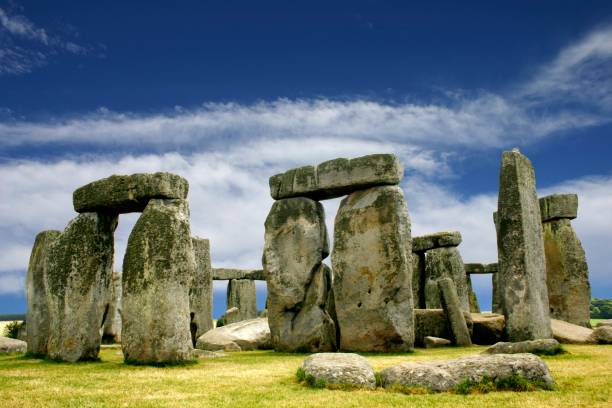
Ancient civilizations emerged when human communities developed the institutions, technologies, and economic systems needed to support large populations and increasingly complex societies. Beginning thousands of years ago, these societies transformed agriculture, built cities, established governments, developed writing systems, and created traditions that continue to influence the modern world. Their histories reveal how people adapted to changing environments, organized collective life, exchanged ideas, and responded to the challenges of political power, economic inequality, and environmental change.
The history of ancient civilizations is not a single story of progress from primitive villages to advanced empires. Different societies followed different paths, developed independently in many regions, and interacted through trade, migration, warfare, and cultural exchange. Some flourished for centuries, while others changed dramatically or disappeared as political entities. Understanding their achievements and limitations helps explain the foundations of modern society and the diversity of human experience.
How the first civilizations emerged
For most of human history, people lived in small, mobile groups that obtained food through hunting, fishing, and gathering wild plants. This way of life changed in several regions after the end of the last ice age, when communities increasingly cultivated plants and domesticated animals. Agriculture developed independently in multiple parts of the world, including Southwest Asia, China, New Guinea, Africa, and the Americas, although the timing and specific crops differed.
Farming made it possible for some communities to produce more food in a given area than mobile groups generally could. When harvests were sufficient, stored grain and other food supplies could support people who did not farm full time, including craftspeople, merchants, administrators, and religious specialists. Permanent settlements grew, populations increased, and social relationships became more complex.
Agriculture did not automatically produce cities or states. Farming communities also faced new challenges, including crop failure, soil depletion, disputes over land, and vulnerability to droughts and floods. The transition to settled life occurred gradually, and many agricultural societies remained relatively small and decentralized. Civilizations emerged where particular combinations of food production, population growth, trade, political organization, and environmental conditions supported more extensive institutions.
Archaeologists generally identify early urban civilizations through several overlapping features: substantial settlements, specialized occupations, organized political authority, long-distance exchange, social hierarchies, and, in some cases, writing. No single characteristic defines every civilization. Writing, for example, developed in some early states but was not necessary for every complex society.
Mesopotamia and the rise of urban society
Mesopotamia, located between the Tigris and Euphrates rivers in what is now largely Iraq and neighboring areas, was one of the earliest regions to develop large cities and complex states. Its name comes from a Greek expression meaning “between rivers.” From the fourth millennium BCE onward, settlements in southern Mesopotamia expanded into urban centers supported by intensive agriculture, craft production, and trade.
The rivers provided water and fertile alluvial soils, but farming depended on managing irrigation and coping with unpredictable floods. Communities constructed canals and coordinated the distribution of water across agricultural land. Such systems required labor and organization, although their development did not follow one uniform pattern. The need to maintain infrastructure, allocate resources, and settle disputes helped create opportunities for powerful institutions to emerge.
Sumerian cities such as Uruk, Ur, and Lagash became centers of political, religious, and economic activity. They were often organized as independent city-states, meaning that each city and its surrounding territory operated as a separate political unit. City-states competed for land and water while also participating in trade and sharing cultural practices.
One of Mesopotamia’s most consequential innovations was writing. The earliest known writing in southern Mesopotamia appeared around the late fourth millennium BCE and was initially used largely for administrative and economic purposes. Scribes recorded goods, labor, and transactions on clay tablets using a system that developed into cuneiform, a method of writing with wedge-shaped marks. Over time, writing expanded to include literature, mathematics, law, diplomacy, and religious texts.
Mesopotamian societies also made important contributions to mathematics, astronomy, and legal administration. Their use of a number system based on 60 influenced later ways of measuring time and angles. The Code of Hammurabi, produced under the Babylonian king Hammurabi in the eighteenth century BCE, preserved a collection of laws and royal judgments. It illustrates how rulers presented justice and authority, although its penalties varied according to social status and legal circumstances.
Mesopotamia was not a single, unchanging civilization. Sumerian, Akkadian, Babylonian, and Assyrian states rose and fell, sometimes absorbing earlier traditions and sometimes introducing new political arrangements. Their history demonstrates how cities, writing, organized religion, and centralized government could reinforce one another while remaining vulnerable to conflict, shifting trade networks, and environmental pressures.
Ancient Egypt and the power of the Nile
Ancient Egyptian civilization developed along the Nile River in northeastern Africa. The river created a narrow corridor of cultivable land surrounded by deserts, making it the foundation of agriculture, transportation, and settlement. Seasonal flooding deposited nutrient-rich sediment across the floodplain, supporting crops in a region where rainfall was often limited.
The unification of Upper and Lower Egypt around 3100 BCE marked the beginning of Egypt’s early dynastic period. Over subsequent centuries, pharaonic government developed a durable system of kingship, religious authority, taxation, and administration. The pharaoh was understood not simply as a political leader but as a central figure in maintaining the cosmic and social order.
Egypt’s geography helped connect settlements along a navigable river while also providing some protection from invasion. These conditions contributed to periods of political stability, although Egypt experienced internal divisions, foreign rule, and major changes in royal authority throughout its history. Historians commonly divide its long history into major periods, including the Old Kingdom, Middle Kingdom, and New Kingdom, separated by eras of fragmentation and political transition.
The pyramids are among the most recognizable achievements of ancient Egypt. The largest pyramids at Giza were built during the Old Kingdom, especially in the twenty-sixth century BCE. Their construction required quarrying, transportation, skilled labor, food supplies, and sophisticated project management. Evidence supports the use of organized workforces rather than the simplistic image of pyramids being built solely by enslaved people. The exact details of some construction methods remain debated.
Egyptian writing included hieroglyphs, a system that combined signs representing sounds, words, and concepts. Scribes used writing to manage the state, preserve religious knowledge, record events, and communicate across generations. Egyptians also developed expertise in medicine, geometry, architecture, and astronomical observation, often in response to practical needs and religious traditions.
Beliefs about death and the afterlife shaped Egyptian art, burial practices, and monumental architecture. Mummification was intended to preserve the body for continued existence after death, while tombs contained objects and texts associated with the deceased’s journey into the afterlife. These practices changed over time and differed according to wealth, status, and historical period.
Egypt’s influence extended beyond the Nile Valley through trade, diplomacy, migration, and military campaigns. Contact with Nubia, the Levant, and other neighboring regions brought valuable materials and cultural influences into Egypt while spreading Egyptian ideas abroad. Its long history shows how a river-supported agricultural economy could sustain a powerful state, even as political institutions and religious traditions evolved.
The Indus Valley civilization and its planned cities
The Indus Valley civilization developed in parts of present-day Pakistan and northwestern India. Its mature urban phase flourished approximately from 2600 to 1900 BCE, with roots extending earlier and related cultural developments continuing afterward. Major sites included Harappa and Mohenjo-daro, which reveal an extensive urban society with sophisticated construction and infrastructure.
Indus cities often featured carefully arranged streets, standardized bricks, drainage systems, and wells. Many houses had access to water and sanitation facilities, suggesting that urban planning and public infrastructure were important elements of community life. The scale and consistency of these features indicate shared building practices and substantial coordination, although the precise political institutions responsible for them remain uncertain.
The civilization participated in long-distance trade with neighboring regions, including Mesopotamia. Archaeological evidence includes seals, beads, pottery, and other goods that help researchers reconstruct commercial and cultural connections. Standardized weights and measures suggest that people used shared systems to support exchange and economic activity.
Unlike the surviving records of ancient Egypt and Mesopotamia, the Indus civilization’s writing system has not been deciphered. Its inscriptions are generally short, and researchers lack a confirmed bilingual text that would provide a reliable key to their meaning. Consequently, much remains unknown about its languages, political leadership, religious beliefs, and social organization.
The civilization’s urban centers declined after about 1900 BCE, and many settlements changed in size, location, or economic function. Researchers have considered several contributing factors, including shifts in river systems, changing monsoon patterns, altered agricultural conditions, and the reorganization of trade. The evidence does not support a simple explanation in which one sudden catastrophe destroyed the entire civilization.
The decline of major cities did not mean that their populations vanished. Communities continued living across the region, and some cultural practices persisted or changed within later societies. The Indus Valley experience illustrates how a civilization can lose its urban structure without its people or cultural traditions disappearing.
Ancient China and the development of enduring states
Early Chinese civilization developed across several river valleys, particularly those of the Yellow River and the Yangtze. Communities cultivated millet in northern regions and rice in southern regions, creating agricultural traditions adapted to different climates and landscapes. Over time, population growth, craft specialization, and competition among political centers contributed to the emergence of increasingly complex states.
The Xia dynasty occupies an important place in traditional accounts of China’s earliest history, but the relationship between these accounts and archaeological evidence remains uncertain. The Shang dynasty, which flourished during the second millennium BCE, is the earliest Chinese dynasty supported by substantial archaeological evidence and securely identified writing. Shang rulers governed through networks of settlements and relied on agriculture, bronze production, warfare, and ritual practices.
Shang oracle bones preserve some of the earliest known Chinese writing. Diviners inscribed questions on animal bones or turtle shells, which were heated to produce cracks interpreted as answers. The inscriptions document royal concerns about warfare, harvests, weather, health, and ritual obligations. They also provide evidence for a writing tradition that developed into later forms of Chinese script.
The Zhou dynasty replaced the Shang around the middle of the eleventh century BCE, according to conventional chronology. Zhou rulers promoted the concept known as the Mandate of Heaven, which held that a legitimate ruler’s authority depended on moral and political responsibility. Natural disasters, disorder, and defeat could be interpreted as signs that a dynasty had lost this mandate. The concept became influential in later Chinese political thought by offering a framework for explaining both the legitimacy of rulers and the possibility of dynastic change.
During the Eastern Zhou period, especially the Spring and Autumn and Warring States eras, rival states competed for territory and power. This political fragmentation encouraged changes in military organization, administration, agriculture, and philosophy. Thinkers associated with Confucianism emphasized ethical conduct, social responsibility, and proper relationships, while Daoist traditions explored harmony with the natural order and the limitations of rigid control. Legalist thinkers stressed clear laws, administrative discipline, and the concentration of state power.
In 221 BCE, the Qin state unified much of the region under Qin Shi Huang, the first emperor of a centralized imperial system. The Qin government standardized important aspects of administration, writing, weights, measures, and infrastructure. Its rule was short-lived, but many imperial institutions were developed further under the Han dynasty, which began in 206 BCE.
The Han period saw the expansion of bureaucracy, agriculture, scholarship, and trade. Networks later associated with the Silk Roads connected China with Central Asia and more distant regions, allowing goods, technologies, and ideas to move across Eurasia. Buddhism eventually entered China through these wider networks. The development of Chinese civilization demonstrates how political fragmentation, philosophical debate, and administrative innovation could contribute to institutions that survived the dynasties that created them.
Ancient civilizations of the Americas
Civilizations in the Americas developed independently of those in Africa and Eurasia for much of their history. Their achievements included large cities, monumental architecture, complex calendars, intensive agriculture, and systems of political organization adapted to local environments. They followed distinct historical paths rather than reproducing a single model of civilization.
In Mesoamerica, a region encompassing parts of present-day Mexico and Central America, early complex societies developed through agriculture and regional exchange. The Olmec civilization flourished along the Gulf Coast of what is now Mexico during the second millennium BCE and the early first millennium BCE. Olmec sites contain monumental stone sculptures, ceremonial centers, and evidence of far-reaching cultural connections. The Olmec influenced later regional traditions, although the precise relationships between their practices and subsequent civilizations are complex.
The Maya developed across parts of present-day southern Mexico, Guatemala, Belize, and neighboring areas. Their civilization included numerous independent kingdoms rather than a single unified empire. During the Classic period, approximately 250–900 CE, Maya cities such as Tikal, Palenque, and Copán became important political and ceremonial centers.
Maya scholars developed sophisticated systems of mathematics and astronomy and used a place-value number system that included zero. Their calendar traditions supported the tracking of time, ritual cycles, and astronomical events. Maya writing was a complex script capable of recording language, and surviving inscriptions preserve information about rulers, warfare, dynastic history, and religious beliefs.
Many major southern lowland Maya cities experienced political decline and population changes during the late eighth and ninth centuries CE. Researchers have identified interacting pressures that may have included drought, warfare, political instability, and stress on agricultural systems. The changes varied across the Maya region, and Maya communities continued to thrive in other areas. Maya peoples and languages remain part of the modern world.
Further west, the central Mexican city of Teotihuacan became one of the largest urban centers in the Americas during the first millennium CE. Its monumental pyramids, planned avenues, residential compounds, and evidence of specialized crafts reveal a complex society connected to distant regions through trade and political influence. Its political system is less clearly understood than those of some other ancient societies, and its decline around the middle of the first millennium CE remains a subject of investigation.
In the Andes of South America, civilizations adapted to steep mountains, coastal deserts, and high-altitude environments. The Norte Chico, or Caral-Supe, civilization developed in coastal Peru during the third millennium BCE, making it one of the earliest known complex societies in the Americas. Its monumental architecture and settlements demonstrate that large-scale social organization emerged in the region without relying on the same agricultural patterns as early states elsewhere.
Later Andean societies developed irrigation systems, terraced fields, roads, and specialized crafts. The Inca Empire, which expanded rapidly during the fifteenth century CE, organized extensive territories through administrative centers, labor obligations, roads, and state storage facilities. The Incas used quipu, arrangements of knotted cords, to record information, although the full range of information encoded in these devices remains under study.
The civilizations of the Americas demonstrate that urban life and complex government could arise through diverse combinations of farming, trade, religious institutions, and collective labor. Their achievements were shaped by local environments and histories, not by a universal sequence that every society had to follow.
Ancient Greece and the development of political thought
Ancient Greek civilization emerged from earlier societies in the Aegean, including the Minoan civilization on Crete and the Mycenaean civilization on the Greek mainland. The Minoans developed major palace centers and participated in maritime exchange during the second millennium BCE. The Mycenaeans built fortified centers, used an early form of Greek known as Linear B, and maintained political systems centered on powerful palatial institutions.
The collapse of many Mycenaean palace centers around 1200 BCE was part of a wider period of disruption across the eastern Mediterranean. The causes remain debated and likely differed by region. Warfare, population movements, political instability, and changes in trade may have contributed. The centuries that followed saw changes in settlement patterns and literacy, before new forms of Greek political and cultural life emerged.
By the first millennium BCE, Greek communities had developed into independent city-states known as poleis. Each polis possessed its own institutions, laws, and political identity. Mountains and islands contributed to regional diversity, while the sea facilitated trade, travel, and the establishment of colonies around the Mediterranean and Black Sea.
Political systems varied considerably. Athens developed a form of direct democracy in the fifth century BCE, allowing eligible male citizens to participate personally in public decisions. Women, enslaved people, and resident foreigners were excluded from citizenship and political participation. Sparta, by contrast, organized much of its society around military discipline and a distinctive system of rule shared among several institutions. Neither city represented every Greek community.
Greek thinkers explored questions about nature, ethics, knowledge, and government. Philosophers such as Socrates, Plato, and Aristotle developed influential approaches to reasoning and political analysis. Greek mathematicians and natural philosophers investigated geometry, mechanics, astronomy, and medicine. Their explanations were not always correct by modern scientific standards, but their emphasis on argument, observation, and logical analysis became important parts of later intellectual traditions.
The Persian Wars in the early fifth century BCE and the Peloponnesian War later in that century shaped Greek politics and military affairs. In the fourth century BCE, Macedon rose to power under Philip II, and his son Alexander the Great created an empire that extended from Greece and Egypt into western and central Asia. Alexander’s conquests spread Greek language and cultural practices across a vast region, although these interacted with established local traditions rather than simply replacing them.
After Alexander’s death in 323 BCE, his empire fragmented into several kingdoms. The resulting Hellenistic world fostered the movement of scholars, merchants, and ideas across political boundaries. Greek became an important language of administration and scholarship in many eastern Mediterranean cities, while centers such as Alexandria in Egypt supported mathematical, astronomical, literary, and medical research.
Ancient Rome and the growth of an imperial system
Rome began as a settlement in central Italy and developed into one of the most influential states of the ancient Mediterranean. According to Roman tradition, the city was founded in 753 BCE, but this date belongs to a later foundation narrative rather than a precise archaeological determination. Evidence indicates that settlements in the area gradually developed into an urban community during the early first millennium BCE.
Roman political tradition describes an early monarchy followed by the establishment of a republic around 509 BCE. Under the republic, political authority was divided among elected magistrates, the Senate, and popular assemblies, although power was distributed unequally and heavily favored the wealthy. Conflicts between patricians, traditionally associated with elite families, and plebeians, the broader body of free citizens, shaped the evolution of Roman institutions.
Rome expanded across Italy and then throughout much of the Mediterranean. Its wars with Carthage, especially the Punic Wars, helped establish Roman dominance in the western Mediterranean. Military expansion brought territory, resources, enslaved laborers, and new populations under Roman control. It also generated political and economic pressures, including disputes over land, wealth, military command, and citizenship.
During the first century BCE, civil wars undermined the republic. Julius Caesar accumulated extraordinary power and was assassinated in 44 BCE. After further conflict, Octavian emerged as the dominant ruler and became Augustus in 27 BCE, establishing the political system known as the Principate. This period is conventionally regarded as the beginning of the Roman Empire, although republican institutions continued to exist in altered form.
Roman power depended on more than military conquest. Roads, ports, bridges, aqueducts, and urban infrastructure connected distant territories. Roman law and administration helped govern diverse populations, while local elites often retained important roles in their communities. Latin became dominant in much of the western empire, while Greek remained widely used in the eastern Mediterranean.
Roman engineers developed durable concrete construction techniques, arches, vaults, and large-scale water systems. Roman law addressed property, contracts, citizenship, family relationships, and public authority. Roman writers also preserved and adapted Greek literature, philosophy, and scientific learning. These contributions influenced later European legal, architectural, linguistic, and political traditions, although the modern institutions that draw on Roman precedents differ substantially from ancient ones.
Christianity emerged in the eastern provinces of the Roman Empire during the first century CE. It began as a movement within the Jewish religious world and gradually spread across the empire through travel, urban networks, and organized communities. In the fourth century, imperial policies changed significantly under Constantine and his successors, and Christianity eventually became the empire’s dominant religious tradition.
The western Roman imperial government ended in the fifth century CE, conventionally dated to 476, when the last western emperor was deposed. This did not mean that Roman civilization disappeared overnight. Roman laws, administrative practices, religious institutions, languages, and urban traditions continued in different forms. The eastern Roman Empire, commonly called the Byzantine Empire by modern historians, survived for nearly another thousand years, until Constantinople fell in 1453.
Other important centers of ancient civilization
The history of ancient civilization extends well beyond the most familiar examples. Africa, Southwest Asia, Central Asia, and the Mediterranean contained many societies that developed distinctive political systems, technologies, and cultural traditions.
In Nubia, south of Egypt along the Nile, communities developed powerful kingdoms with their own political and cultural identities. The Kingdom of Kush became a major regional power, and during the eighth and seventh centuries BCE, Kushite rulers controlled Egypt for a period as its Twenty-fifth Dynasty. Nubian societies maintained long-standing connections with Egypt while developing distinctive artistic, religious, and political traditions.
In the eastern Mediterranean, the Phoenicians established influential maritime trading networks. Their cities, including Tyre, Sidon, and Byblos, connected the Levant with North Africa, Cyprus, and other Mediterranean regions. Phoenician traders and settlers helped spread an alphabetic writing system that influenced the development of Greek writing and, through subsequent adaptations, many later alphabets.
The Persian Empire, founded under Cyrus the Great in the sixth century BCE, united a vast territory stretching across parts of Southwest Asia and beyond. Its rulers used provincial administration, road networks, imperial communication systems, and cooperation with local elites to govern diverse populations. The Achaemenid Empire demonstrated how a large state could maintain authority without requiring every region to abandon its local languages and customs.
In South Asia, the Indus Valley civilization was followed by a long and varied history of Vedic traditions, regional kingdoms, and urban development. The Maurya Empire, founded in the fourth century BCE, unified much of the subcontinent under an extensive imperial administration. Its ruler Ashoka, who reigned in the third century BCE, promoted ethical conduct and public welfare in inscriptions distributed across his territories. These records offer unusually direct evidence of how an ancient ruler communicated political and moral ideas to a diverse population.
Other regions developed complex societies through different combinations of agriculture, exchange, and political organization. The Aksumite kingdom in northeastern Africa became an important commercial power during the first millennium CE, linking the Red Sea region with wider trade networks. In Central Asia, oasis settlements supported agriculture and commerce along routes connecting China, India, Persia, and the Mediterranean. These societies remind us that ancient history was shaped by networks of interaction, not only by the rise and fall of major empires.
How trade and migration connected ancient civilizations
Ancient civilizations rarely developed in complete isolation. Merchants, travelers, migrants, soldiers, and diplomats carried goods and knowledge between communities, creating connections across considerable distances. These networks helped spread technologies and cultural practices while encouraging societies to adapt foreign ideas to local conditions.
Trade routes crossed deserts, mountains, rivers, and seas. Mesopotamian cities exchanged goods with neighboring regions, Mediterranean sailors connected distant ports, and caravan networks moved materials across Southwest and Central Asia. Maritime trade linked the Red Sea and Indian Ocean with the Arabian Peninsula, East Africa, South Asia, and Southeast Asia. The routes later known collectively as the Silk Roads connected East Asia with Central Asia and western Eurasia through multiple land and maritime corridors.
Trade involved more than luxury goods. Timber, metals, grain, textiles, ceramics, and other materials supported everyday life and specialized production. Access to scarce resources encouraged political alliances and sometimes conflict. Merchants also carried languages, religious beliefs, artistic styles, and practical knowledge, although cultural change was rarely uniform or immediate.
Technologies spread through both direct contact and gradual adaptation. Metallurgy, shipbuilding methods, agricultural practices, writing systems, and mathematical ideas developed in different places and circulated through complex networks. Some innovations were independently invented in multiple regions, while others emerged through the exchange and modification of existing techniques. Determining the exact path of an invention often requires careful comparison of archaeological evidence, chronology, and historical records.
Migration also shaped civilizations. People moved because of trade, warfare, environmental pressures, political expansion, and opportunities for settlement. Their movements could transform languages, diets, religious practices, and population patterns. Conquest sometimes imposed new political structures, but conquerors frequently adopted elements of the societies they ruled.
These connections complicate the idea that each civilization had a separate, self-contained history. Ancient societies influenced one another while maintaining distinctive institutions and identities. Their achievements often depended on the movement of resources and knowledge across regional boundaries.
The role of religion, knowledge, and writing
Religion was central to many ancient societies, influencing political authority, calendars, architecture, burial practices, and community identity. Rulers often claimed divine support or presented themselves as responsible for maintaining a sacred order. Temples and other religious institutions could also serve as centers of economic activity, education, recordkeeping, and redistribution.
Religious traditions differed widely. Egyptian beliefs emphasized a complex relationship between gods, kingship, death, and the afterlife. Mesopotamian communities worshiped multiple deities associated with cities and natural forces. Ancient Greek and Roman religions incorporated many gods, rituals, and local traditions. South Asian religious and philosophical systems evolved through diverse traditions, while Buddhism emerged in the first millennium BCE and eventually spread across Asia. Religious life in ancient China included ancestral rites, ideas about cosmic order, and several philosophical traditions.
Writing transformed how some societies stored and communicated information. Spoken language depends on memory and repeated interaction, whereas written records can preserve information beyond the immediate presence of the speaker. Administrators could use writing to track resources, rulers could issue instructions across distance, and scholars could compare ideas over generations.
Writing did not instantly make societies literate. In many ancient states, the ability to read and write was concentrated among trained scribes, officials, priests, and other specialists. Written records also reflected the priorities of those who created them. Royal inscriptions often celebrated victories, while administrative tablets documented transactions and religious texts preserved particular traditions. Historians must therefore consider who produced a record, why it was created, and whose experiences it leaves out.
Knowledge developed through practical observation as well as intellectual inquiry. Farmers tracked seasonal changes, sailors observed the stars, builders applied geometry, and healers accumulated experience with injuries and illness. Some societies developed sophisticated systems for predicting celestial events, calculating quantities, and recording medical practices. However, ancient explanations often combined empirical observations with religious or philosophical assumptions that differ from modern scientific methods.
The surviving record is uneven. Clay tablets and stone inscriptions can endure for thousands of years, while wooden documents, textiles, and oral traditions are more vulnerable to loss. As a result, some ancient societies are known through extensive written archives, while others must be reconstructed primarily from buildings, tools, bones, pottery, and environmental evidence.
How archaeology reveals the ancient past
Archaeology is the study of past human life through material evidence. Archaeologists examine settlements, graves, tools, buildings, food remains, and other objects to reconstruct how people lived. Their findings often complement written sources, but they can also challenge traditional narratives or reveal societies for which written records are unavailable.
The location and arrangement of artifacts provide important clues. Houses can reveal differences in household size and wealth, workshops indicate specialized production, and storage facilities suggest ways of managing resources. Animal bones and plant remains help researchers understand diets, farming practices, domestication, and environmental conditions. Skeletal evidence can provide information about health, physical activity, disease, and aspects of migration.
Scientific methods have expanded the range of questions archaeologists can investigate. Radiocarbon dating estimates the age of once-living material by measuring the remaining radioactive carbon-14. It is especially useful for dating organic remains, although calibration and the context of a sample are essential for interpreting results. Other dating techniques can establish the ages of sediments, volcanic materials, or objects heated in the past.
Researchers also analyze ancient DNA, stable isotopes, pollen, and microscopic plant remains. Genetic evidence can reveal biological relationships and patterns of population movement, while isotopes preserved in teeth and bones can help reconstruct aspects of diet and geographic origin. These methods provide valuable information, but none can independently explain an entire civilization. Genetic ancestry, for example, does not automatically establish a person’s language, political identity, or cultural affiliation.
Uncertainty is a normal part of historical research. A building’s function may be disputed, an inscription may have several possible interpretations, and the cause of a city’s decline may involve multiple interacting factors. New discoveries can change established interpretations, especially when they reveal evidence from communities that were poorly represented in written records.
Archaeology also raises ethical questions. Excavation can damage sites if it is poorly conducted, and artifacts removed without proper documentation lose much of their scientific value. Responsible research involves preserving context, respecting descendant communities, and recognizing that ancient objects can carry cultural and spiritual significance beyond their importance to scholars.
Why ancient civilizations changed or declined
Civilizations did not rise and fall according to a single universal pattern. Some states were conquered, others fragmented through internal conflict, and some urban centers declined as people moved to different locations or adopted new economic practices. Political collapse did not necessarily mean that a population disappeared or that its cultural knowledge was lost.
Environmental change could place pressure on agricultural societies. Drought, changing rainfall patterns, floods, soil erosion, and shifts in river channels affected the reliability of food production in different regions. Where populations depended heavily on a narrow range of crops or a vulnerable water system, environmental disruption could make existing arrangements more difficult to sustain.
The consequences depended on social and political conditions. A community with diverse food sources, effective storage, and flexible institutions might withstand a period of poor harvests. A state facing debt, conflict, inequality, or administrative weakness might be less able to respond. Environmental pressures therefore interacted with human decisions rather than determining outcomes on their own.
Warfare could destroy settlements, disrupt trade, displace populations, and weaken governments. Yet military conflict sometimes created larger political units by bringing smaller states under a single authority. Imperial expansion could improve the movement of goods and information while also imposing taxes, forced labor, and political subordination. The same process could create benefits for some groups and serious losses for others.
Economic systems also changed. Trade routes shifted, important resources became harder to obtain, and new centers of production emerged. As economic opportunities changed, people could abandon older cities for more favorable locations. Religious practices, languages, and political institutions might survive these transitions even when monumental buildings fell into disuse.
The decline of the western Roman Empire, the transformation of the Indus Valley’s urban system, and changes in Classic Maya political centers illustrate different combinations of these processes. None can be explained adequately by a single cause. In each case, researchers must distinguish the end of a particular government or urban system from the continued lives and adaptations of the people who had supported it.
How ancient civilizations shaped the modern world
The legacy of ancient civilizations is visible in many aspects of modern life, although these connections are often indirect and have changed over time. Writing systems, mathematical conventions, legal traditions, political ideas, architectural techniques, and religious practices all developed through long histories of innovation and exchange.
The division of an hour into 60 minutes and a minute into 60 seconds reflects the influence of ancient Mesopotamian numerical traditions. The alphabetic systems used in many modern languages descend through historical adaptations of earlier writing systems, including those associated with the Phoenicians and Greeks. Modern calendars incorporate traditions shaped by ancient astronomical observations and political reforms.
Greek philosophy and scientific inquiry influenced later intellectual traditions in Europe and the Mediterranean, while Roman law and administration became important reference points for many later legal systems. Chinese bureaucratic practices, philosophical traditions, and technological developments influenced societies across East Asia. Mathematical, medical, and astronomical knowledge also circulated among scholars working in South Asia, the Middle East, Africa, Europe, and other regions.
Agricultural practices and domesticated species transformed societies far beyond their regions of origin. Crops such as wheat, rice, maize, and potatoes supported population growth and reshaped economies as they spread through trade, migration, and conquest. These transfers did not always occur in antiquity, but they demonstrate the continuing influence of agricultural systems that originated in early human societies.
Ancient civilizations also provide lessons about political authority and social inequality. Monumental construction and imperial expansion required large amounts of labor and resources, often obtained through taxation, compulsory service, or enslavement. Historical achievements should therefore be understood alongside the social costs borne by the people who produced them.
Modern societies are not simply extensions of ancient ones. Contemporary science, democracy, law, and technology emerged through many additional centuries of debate, experimentation, conflict, and institutional change. Ancient precedents can illuminate these developments, but they should not be treated as identical to modern systems or as evidence that history inevitably moves toward a predetermined outcome.
Understanding the history of ancient civilizations
The history of ancient civilizations reveals the many ways human communities have organized themselves in response to opportunities and challenges. Agriculture supported permanent settlements, cities encouraged specialized work, writing expanded administration and communication, and trade connected societies across vast distances. Political institutions and cultural traditions developed through both local innovation and contact with other peoples.
No civilization achieved every form of progress, and no single society followed a universal path. Complex states could support extraordinary achievements while also producing inequality, warfare, and coercion. Urban centers could decline while their inhabitants continued to live, adapt, and preserve elements of their culture. These patterns show that civilization is not a fixed stage of human development but an evolving set of social, economic, political, and cultural arrangements.
The study of ancient civilizations continues to change as researchers uncover new sites, refine dating methods, analyze biological and environmental evidence, and reconsider familiar historical accounts. By combining archaeology with written records and scientific investigation, scholars can reconstruct a richer account of the human past—one that recognizes both the remarkable accomplishments of ancient societies and the complexity of the lives behind them.