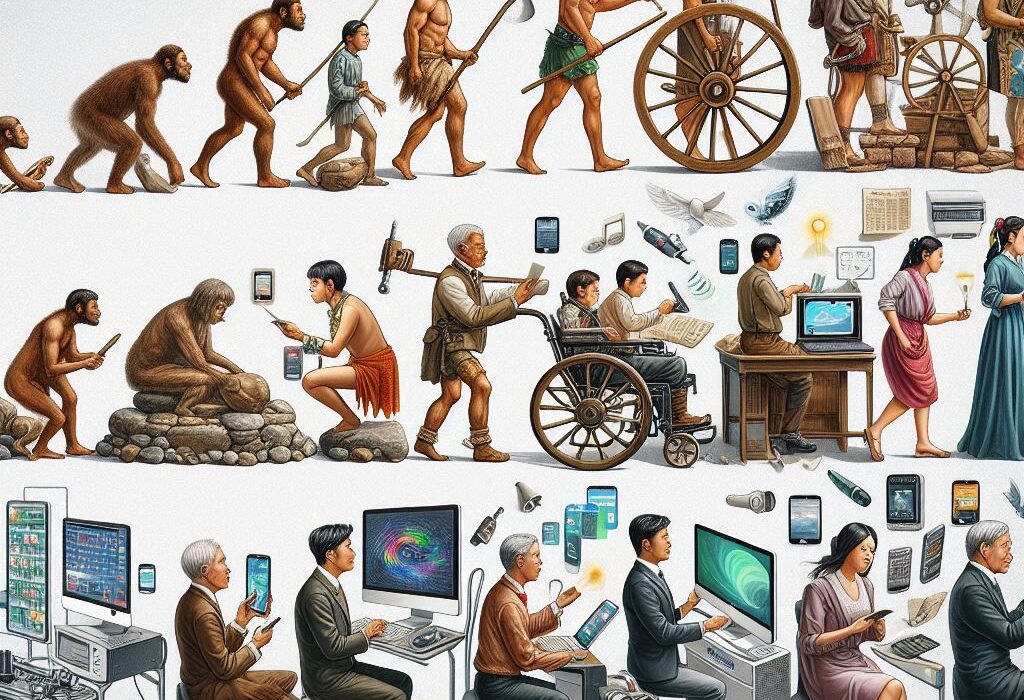
Money has always been one of humanity’s most powerful inventions. It began as simple barter—grain for cattle, tools for cloth—before evolving into metal coins, paper banknotes, and eventually digital balances stored in computers. Each transformation reflected a deeper shift in society, technology, and trust. Today, humanity stands at another turning point. The rise of digital currencies signals a profound reimagining of what money is, how it moves, and who controls it.
For centuries, governments and central banks have been the custodians of currency. Their authority to issue and regulate money has shaped global trade, politics, and economic stability. Yet in the early twenty-first century, a technological experiment began challenging that long-standing order. The creation of decentralized digital currencies introduced a radical idea: money that exists entirely online, operates without central authority, and relies on cryptography rather than institutions for trust.
The emergence of early cryptocurrencies ignited a global conversation about the future of finance. What began as a niche project among programmers and cryptography enthusiasts soon expanded into a worldwide movement involving banks, corporations, governments, and billions of dollars in investment.
But the story of digital currency is far larger than the earliest systems that captured public attention. The future of digital money extends beyond those pioneering platforms. It includes new forms of programmable currency, government-issued digital cash, decentralized financial ecosystems, and innovations that could reshape the entire architecture of the global economy.
The journey toward that future is still unfolding, and its consequences may redefine how humanity exchanges value in the digital age.
The Birth of Decentralized Money
The origins of modern digital currencies lie in a simple yet revolutionary question: can money exist without a central authority? Traditionally, financial systems rely on trusted intermediaries such as banks, payment processors, and clearinghouses. These institutions verify transactions, prevent fraud, and maintain records of ownership.
In 2008, a mysterious figure or group using the pseudonym Satoshi Nakamoto published a white paper proposing a decentralized electronic cash system. The idea was elegant in its simplicity. Instead of relying on a central institution to verify transactions, a network of computers would collectively maintain a public ledger.
This ledger, known as a blockchain, would record every transaction ever made. Each block of data would link to the previous one, forming an immutable chain secured through cryptographic algorithms. Participants in the network would validate transactions through a process called mining, ensuring that no single entity controlled the system.
The first implementation of this concept was Bitcoin, launched in 2009. Initially, it attracted little attention outside cryptography circles. Yet its implications were profound. For the first time, it became possible to transfer value globally without relying on banks or governments.
Over the following years, interest in digital currencies grew rapidly. Developers began experimenting with new blockchain designs and capabilities. Among these innovations was Ethereum, introduced in 2015 by Vitalik Buterin and collaborators. Unlike earlier cryptocurrencies focused solely on payments, Ethereum allowed programmable contracts—self-executing agreements encoded directly into the blockchain.
These early breakthroughs established the foundation of the digital currency revolution. Yet they were only the beginning of a much broader transformation.
The Technology Behind Digital Currencies
To understand the future of digital currencies, it is essential to understand the technology that powers them. At the core lies the concept of distributed consensus. In traditional banking systems, transaction records are stored in centralized databases controlled by financial institutions. In decentralized systems, copies of the ledger exist on thousands of computers across the world.
Each participant in the network can verify transactions independently. When new transactions occur, they are grouped into blocks and validated by the network according to predefined rules. Once confirmed, they become part of the permanent ledger.
This architecture offers several advantages. It increases transparency because transaction histories are publicly verifiable. It enhances resilience because the network has no single point of failure. It also reduces the need for intermediaries, potentially lowering transaction costs and increasing accessibility.
However, early blockchain systems also faced significant challenges. Processing transactions across decentralized networks can be slower than traditional payment systems. Energy consumption became a major concern in networks that rely on computationally intensive mining processes. Scalability—the ability to handle millions of users simultaneously—remains one of the central engineering challenges.
Over time, developers have created new consensus mechanisms designed to improve efficiency. Systems based on proof-of-stake, delegated validation, and other innovations seek to maintain security while dramatically reducing energy usage and increasing transaction speed.
These technological improvements form the foundation upon which the next generation of digital currencies will emerge.
The Expansion of the Cryptocurrency Ecosystem
The years following the introduction of early cryptocurrencies witnessed an explosion of innovation. Thousands of new digital tokens appeared, each exploring different economic models, technological features, and use cases.
Some currencies focused on privacy, enabling transactions that conceal the identities of participants. Others emphasized speed, enabling near-instant payments across international borders. Still others explored governance models in which token holders vote on network decisions.
At the same time, blockchain technology began extending far beyond currency itself. Developers built decentralized applications capable of operating without centralized servers. These applications created new digital ecosystems where users could exchange assets, lend funds, or manage digital identities without relying on traditional institutions.
This growing ecosystem gave rise to a new concept known as decentralized finance. Often referred to as DeFi, it aims to replicate and expand traditional financial services using blockchain technology. Lending platforms, decentralized exchanges, derivatives markets, and insurance protocols began appearing within these networks.
While still in early stages, decentralized finance demonstrated that digital currencies could serve as the foundation for an entirely new financial infrastructure.
The Rise of Stable Digital Assets
One of the major challenges facing early cryptocurrencies was price volatility. Rapid fluctuations in value made them difficult to use as everyday money. A currency that might lose or gain ten percent in a single day is poorly suited for paying salaries, buying groceries, or managing savings.
To address this problem, developers introduced stable digital currencies designed to maintain consistent value. These assets are typically linked to existing currencies or financial instruments, providing stability while retaining the advantages of blockchain technology.
Stable digital assets became widely used in cryptocurrency trading and decentralized finance. They allow participants to move funds across platforms without converting back into traditional bank deposits. In many cases, they function as digital representations of conventional money within blockchain ecosystems.
However, stable digital assets also raise complex regulatory and financial questions. Their stability often depends on reserves held in traditional financial systems. Ensuring transparency, accountability, and adequate backing has become a key issue for regulators and developers alike.
Despite these challenges, stable digital currencies represent an important bridge between the traditional financial world and the emerging digital economy.
Central Bank Digital Currencies
As private digital currencies expanded, governments and central banks began exploring their own digital alternatives. The concept of central bank digital currency, often abbreviated as CBDC, refers to government-issued digital money that exists alongside physical cash.
Unlike decentralized cryptocurrencies, these digital currencies would be issued and regulated by national monetary authorities. They would represent official legal tender, backed by the full faith and credit of the issuing state.
The motivations for developing central bank digital currencies vary across countries. Some governments seek to modernize payment systems and reduce reliance on cash. Others aim to improve financial inclusion by providing digital payment options to populations without access to traditional banking.
Central bank digital currencies could also enhance the efficiency of cross-border payments, reduce transaction costs, and provide new tools for implementing monetary policy.
Yet they also raise profound questions about privacy, surveillance, and financial freedom. Digital currencies issued by governments could theoretically allow unprecedented insight into individual transactions. Balancing efficiency with civil liberties will be one of the defining challenges of the digital currency era.
The Transformation of Global Payments
One of the most immediate impacts of digital currencies lies in international payments. Today’s global financial system relies heavily on intermediary institutions that coordinate cross-border transfers. These transactions often involve multiple banks, currency conversions, and clearing systems, leading to delays and high fees.
Digital currencies offer an alternative approach. Because blockchain networks operate globally and continuously, they can facilitate direct transfers between participants anywhere in the world. Transactions can be verified within minutes rather than days.
For migrant workers sending remittances to their families, faster and cheaper transfers could have life-changing effects. For businesses engaged in international trade, streamlined payment systems could reduce friction and improve efficiency.
However, achieving widespread adoption will require regulatory clarity, technological reliability, and integration with existing financial infrastructure.
The potential transformation of global payments represents one of the most powerful drivers behind the development of digital currencies.
Programmable Money and Smart Contracts
One of the most transformative aspects of modern digital currencies is their programmability. Unlike traditional money, which functions primarily as a medium of exchange, programmable digital currencies can carry instructions embedded within them.
Smart contracts enable transactions that execute automatically when predefined conditions are met. For example, a digital contract could release payment when goods are delivered, distribute royalties to artists whenever their work is used, or automatically settle insurance claims after verified events.
Programmable money has the potential to reshape industries ranging from supply chain management to entertainment. It could reduce administrative overhead, eliminate intermediaries, and increase transparency in complex financial arrangements.
This capability transforms digital currencies from simple payment tools into platforms for economic automation. The implications extend far beyond finance itself.
Digital Identity and Financial Inclusion
Another promising frontier lies in the integration of digital currencies with identity systems. Millions of people around the world lack formal identification documents, preventing them from accessing banking services, loans, and other financial opportunities.
Blockchain-based identity systems could provide secure digital credentials that individuals control themselves. Combined with digital currencies, these systems could allow people to participate in global economic networks without relying on traditional banks.
For populations in developing regions, such technologies could open pathways to entrepreneurship, savings, and international trade. Mobile devices might serve as gateways to financial systems previously inaccessible to entire communities.
Achieving this vision will require careful attention to privacy, security, and accessibility. But the potential benefits for financial inclusion are enormous.
Environmental Challenges and Sustainable Innovation
One of the most controversial aspects of early cryptocurrency systems was their energy consumption. Networks relying on proof-of-work consensus require large amounts of computational power to validate transactions. Critics argued that the environmental impact of such systems could be significant.
In response, developers and researchers began exploring alternative consensus mechanisms that dramatically reduce energy usage. Proof-of-stake systems, for example, rely on economic incentives rather than computational competition to secure networks.
The transition toward more energy-efficient designs reflects a broader trend within the digital currency ecosystem. Sustainability has become a central concern for both developers and policymakers.
Future digital currencies will likely prioritize environmental responsibility alongside security and efficiency.
Regulation and the Struggle for Balance
As digital currencies expanded in scale and influence, governments around the world began grappling with how to regulate them. Regulators face a delicate balancing act. On one hand, they must protect consumers, prevent fraud, and ensure financial stability. On the other, overly restrictive regulations could stifle innovation.
Different countries have adopted different approaches. Some have embraced digital currencies as opportunities for economic growth and technological leadership. Others have imposed strict limitations or outright bans.
The future of digital currencies will depend heavily on how regulatory frameworks evolve. Clear and consistent rules could encourage investment and development, while uncertainty could slow adoption.
International coordination may also become necessary as digital currencies operate across national borders.
The Integration with Traditional Finance
Despite their origins as alternatives to traditional banking, digital currencies are increasingly intersecting with established financial institutions. Major banks, payment companies, and investment firms are exploring blockchain technologies and digital assets.
Financial markets have begun offering cryptocurrency trading, custody services, and investment products. Large corporations have experimented with digital currency payments and blockchain-based supply chains.
This convergence suggests that the future of digital currencies may not involve replacing traditional finance entirely but integrating with it in complex ways.
Hybrid systems combining decentralized technologies with regulated financial institutions may become the dominant model.
The Next Frontier: Web3 and the Digital Economy
The concept often referred to as Web3 envisions a decentralized internet built on blockchain technologies. In this vision, digital currencies serve as the economic foundation of online ecosystems where users control their data, assets, and identities.
Within such systems, creators could receive direct compensation for their work without relying on centralized platforms. Communities could govern online services collectively through decentralized organizations. Digital ownership could extend to virtual worlds, digital art, and new forms of economic activity.
While still evolving, this vision highlights the broader cultural and technological significance of digital currencies. They are not merely financial tools but potential building blocks of a new digital civilization.
The Uncertain Road Ahead
The future of digital currencies remains uncertain. Technological breakthroughs, regulatory decisions, economic forces, and social attitudes will all shape the path forward.
Some digital currency projects may fail, while others may evolve into critical infrastructure of the global economy. New technologies may emerge that surpass existing blockchain designs entirely.
What is clear is that the idea of digital money has already altered the financial landscape. It has forced institutions to reconsider long-standing assumptions about trust, value, and economic organization.
A New Chapter in the Story of Money
Throughout history, money has continually transformed alongside human civilization. From shells and metal coins to paper banknotes and electronic transfers, each evolution reflected deeper changes in technology and society.
Digital currencies represent the latest chapter in that story. They challenge traditional notions of authority, redefine the architecture of financial systems, and open possibilities that were once unimaginable.
The world that emerges beyond the pioneering platforms of early cryptocurrencies will likely be more complex, more interconnected, and more technologically sophisticated than anything seen before.
Whether issued by governments, maintained by decentralized networks, or embedded in programmable systems, the digital currencies of the future will shape how humanity exchanges value in the decades to come.
And as the digital economy expands across the globe, the question is no longer whether money will become digital. The real question is what form that digital money will take, who will control it, and how it will redefine the relationship between technology, trust, and human society.