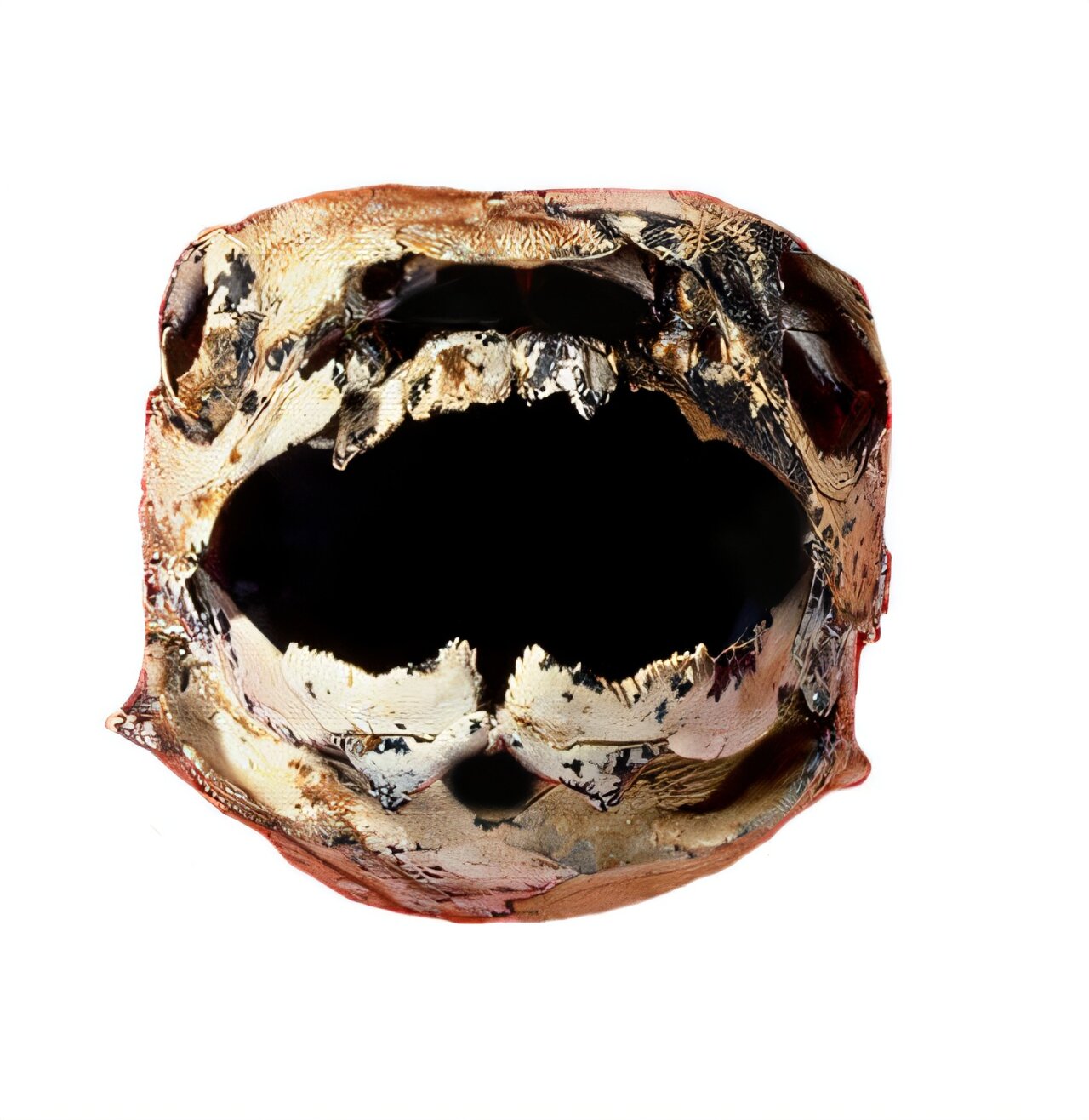
Some of the armored fish that lived in Australia’s Devonian seas could crush hard-shelled prey with broad, flat biting surfaces, while a much larger species had a reinforced jaw and unusually complex dentition that may have let it break apart prey too large to swallow whole. The contrast suggests that these ancient predators did not rely on a single design for hard-object feeding. Instead, their jaw mechanics varied with the size of prey they could process.
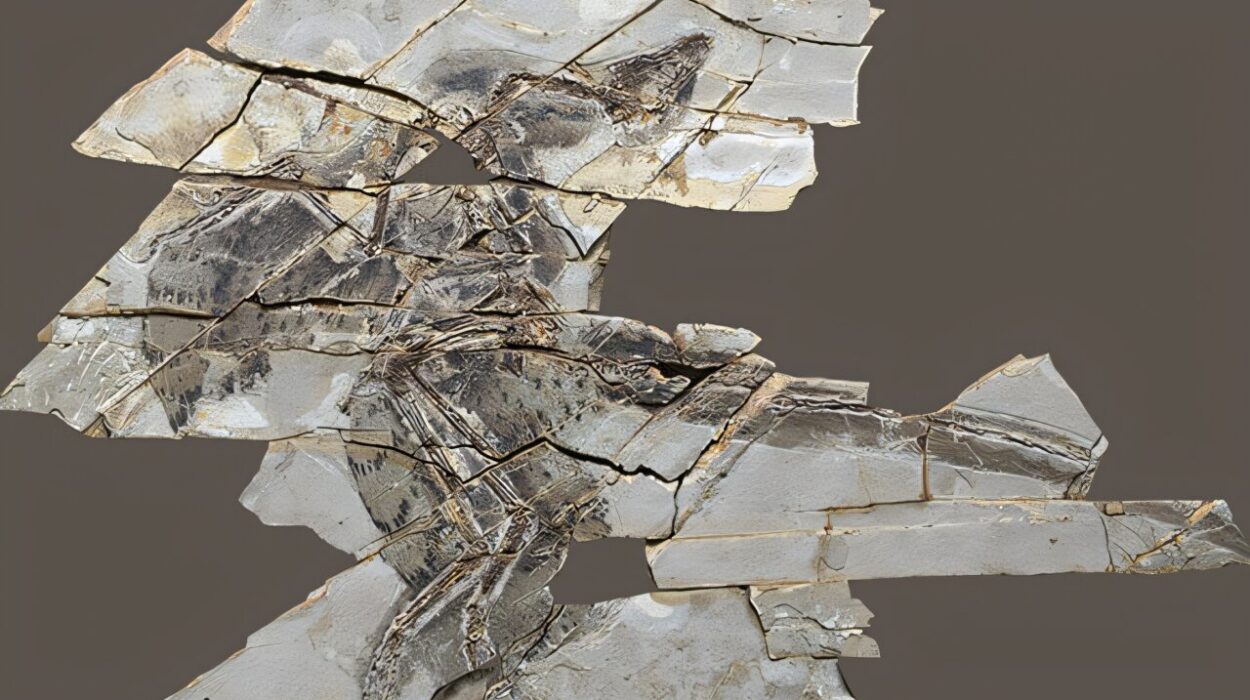
The fossils come from the Late Devonian Gogo Formation on Gooniyandi Country in the Kimberley region of northern Western Australia. The formation preserves a diverse marine ecosystem that includes arthropods, molluscs and vertebrates, with placoderms, an extinct group of jawed and largely armored fishes, making up much of its vertebrate fauna.
The study focused on eight eubrachythoracid arthrodire placoderms from the formation. Their lower jaws, called inferognathals, vary substantially in size, shape and the arrangement of their biting surfaces. The inferognathals examined ranged from about 3 to 7 centimeters long.
That variation offered a way to examine how different jaw designs performed when the animals encountered mechanically resistant food.
Hard-object feeding, or durophagy, requires an animal to deal with material that resists being crushed or cut. In placoderms, researchers have previously used features such as jaw shape, mechanical advantage and dental morphology to infer feeding strategies. But those characteristics have not always pointed to the same ecological interpretation.
The researchers therefore asked whether jaw performance and dental complexity might make more sense when body size and the relative size of potential prey are considered together.
Bite force was only part of the equation
Mechanical advantage describes how much of the force generated by the jaw-closing muscles is transmitted to the biting point. It is often treated as an important indicator of biting ability, but the researchers note that bite force also depends on muscle force and that larger animals naturally have more bone volume and larger muscles available to produce and withstand forces.
That creates an important distinction between a predator trying to crush a small armored animal that can fit inside its mouth and one trying to process a much larger armored prey item.
A small hard-shelled prey item can potentially be engulfed whole and then crushed through relatively distributed compression. A broader, flatter biting surface can be effective in that situation. But if prey approaches or exceeds the predator’s oral capacity, it cannot simply be swallowed whole. It first has to be broken into pieces small enough to ingest. The authors propose that this can favor dental features capable of concentrating forces and initiating fractures.
The researchers tested these possibilities using two complementary approaches.
They built three-dimensional finite-element models of the eight inferognathals and simulated biting. The models were used to compare mechanical advantage and the amount of deformation experienced by each jaw under standardized loads. They also measured the complexity of each biting surface using Dirichlet Normal Energy, or DNE, a measure based on changes in the orientation of surface elements. Lower values indicate flatter, simpler surfaces, while higher values indicate more complex topography.
The simulations used two forms of standardized loading. One compared jaws under bite forces scaled relative to their size. The other applied an equivalent absolute bite force to each model, allowing the researchers to examine differences in the capacity of differently sized jaws to withstand the same force.
The smallest jaws were not simply weaker versions of the largest
The finite-element results revealed substantial differences among the eight species.
When equivalent bite forces were scaled relative to size, Camuropiscis concinnus and Rolfosteus canningensis had the lowest mean microstrain, indicating relatively low deformation under the standardized loading. Torosteus pulchellus and Eastmanosteus calliaspis had the highest mean microstrain in that comparison.
The picture changed when the same absolute bite force was applied to every model. The three species with the smallest inferognathals, R. canningensis, Compagopiscis croucheri and T. pulchellus, experienced much higher mean microstrain. T. pulchellus in particular experienced more microstrain than its size alone would predict. The largest species in the sample, Kimberleyichthys sp., had the lowest mean microstrain under the equivalent absolute bite force.
The numerical measurements illustrate the range of jaw sizes and surface forms. R. canningensis had an inferognathal 29.94 millimeters long and a DNE of 116.327. C. concinnus measured 38.93 millimeters with a DNE of 77.817. At the other end, Kimberleyichthys sp. had a 70.96-millimeter inferognathal and the highest DNE, 353.843. T. pulchellus, despite having a much smaller 36.05-millimeter inferognathal, had a DNE of 315.953.
The DNE measurements also separated relatively simple crushing surfaces from more complex biting surfaces. The flatter crushing surfaces generally had DNE values below about 150 and were dominated by convex curvature. Species with sharper, more complex slicing edges generally had values above 250, with the highest values associated with combinations of convex and concave curvature.
Those two measurements did not simply track one another.
C. concinnus and R. canningensis combined relatively low strain with low DNE. But Kimberleyichthys sp. also had relatively low strain while possessing the highest DNE in the sample. Bullerichthys fascidens had relatively higher strain despite having a DNE closer to those of C. concinnus and R. canningensis. E. calliaspis and T. pulchellus combined relatively high strain with high DNE. Incisoscutum sarahae occupied a more moderate position across the measurements.
These results led the researchers to reject two of their initial expectations. Mechanical advantage did not closely correspond to jaw performance or inferred hard-object feeding in this sample, and dental complexity did not consistently correspond to jaw stiffness. Their third hypothesis, that incorporating body size would clarify ecological differences, received substantial support.
Broad biting surfaces suited smaller prey
The combination of jaw stiffness, body size and dental form gave the clearest picture when the likely relationship between predator and prey size was considered.
The two smallest species, R. canningensis and C. concinnus, had relatively stiff jaws and the flattest dental surfaces. Under equivalent absolute bite forces, however, their smaller jaws experienced more strain than those of larger species. The authors interpret this as evidence that these fish could crush resistant prey that was small enough to fit within their oral cavity, but that their lack of specialized dentition would have limited their ability to break larger prey into smaller pieces.
For C. concinnus, the new three-dimensional analysis also changes the interpretation of earlier work cited by the authors. Previous linkage modeling and two-dimensional finite-element analyses had suggested a relatively weak jaw and elevated stress near the front of the inferognathal. Those results had been interpreted as evidence for fine prey manipulation rather than durophagy.
The three-dimensional model instead showed a broad inferognathal blade with a rounded, ellipsoidal cross section. The authors suggest that this geometry dispersed bite-induced stresses more effectively. They therefore interpret the result as consistent with an ability to crush structurally resistant prey.
Other anatomical features of C. concinnus have also been described as consistent with durophagy, including structures associated with the mandibular joint and a robustly ossified ethmoid capsule with broad, closely packed upper supragnathals.
R. canningensis showed a similar mechanical signature, but its higher strain under equivalent absolute bite forces led the authors to suggest that it was probably restricted to smaller prey or prey with weaker structural defenses. Its somewhat higher dental complexity than C. concinnus came from a sharper anterior biting edge, which the authors propose may have aided fine-scale prey selection or extraction from substrates.
Both species belong to the family Camuropiscidae. The authors note that their shared edentulate inferognathals may reflect contingent factors within that lineage that constrained their dietary ecology, although this remains a possibility rather than a demonstrated explanation.
The largest species had a different mechanical toolkit
Kimberleyichthys sp. stood apart from the smaller crushing specialists.
It was the largest species in the sample, and its jaw combined high stiffness with the greatest dental surface complexity measured in the study. Its DNE was 353.843, compared with 77.817 in C. concinnus and 116.327 in R. canningensis. Its mechanical advantage was also the highest in the sample at 0.25, although the researchers found that mechanical advantage itself was not a strong determinant of the overall feeding differences among the species.
The complex biting surface was associated with a robust anterior odontode and a tall rear dental arcade containing small teeth with rounded apices. The authors interpret this arrangement as capable of concentrating forces and initiating fractures in stiff materials.
The fish also had a notably wide skull and well-developed postocular processes that braced the neurocranium during feeding. Taken together, these features led the authors to propose that its crushing ability involved more than simple compression. They suggest it could puncture armor or shell and fragment prey that exceeded its ability to swallow whole.
This is the key contrast in the study. The smallest species had relatively stiff jaws and simple, broad biting surfaces suited to crushing prey that could be engulfed. The largest species combined a strong jaw with a highly complex biting surface that the authors interpret as better suited to fragmenting larger, mechanically resistant prey. Hard-object feeding therefore appears to have involved different mechanical configurations rather than one universal placoderm solution.
Several medium-sized fish favored cutting
Other species occupied different parts of the mechanical spectrum.
Compagopiscis croucheri, E. calliaspis and T. pulchellus combined relatively high strains with high DNE values. Their jaws were therefore relatively less resistant to deformation while their biting surfaces were comparatively sharp and complex. The authors interpret these combinations as consistent with feeding strategies that emphasized slicing softer tissues.
The authors do not treat slicing and hard-object feeding as completely incompatible. They note that a slicing edge could still be used against hard prey if the animal was sufficiently large or its jaw and dental arcade were sufficiently reinforced. But within this sample, the mechanical results point toward different feeding possibilities.
The larger-bodied E. calliaspis, for example, is interpreted as having had a more generalist diet. The authors suggest that its slicing morphology may have been suited to cutting through the armor of smaller prey or the softer flesh of larger prey.
Co. croucheri performed only moderately in the size-relative bite simulation and poorly when subjected to the equivalent absolute bite force. Although its deeper inferognathal and larger second moment of area had previously been interpreted as supporting stronger bites, the new results led the authors to suggest a diet focused on softer tissues or smaller, less mobile prey. Its complex, sharp dental surface may have allowed it to slice soft tissue from smaller active prey or carcasses.
Torosteus pulchellus had the weakest inferognathal in the sample under both loading regimes. Its high dental complexity reflected the sharpness of its well-developed dentition, which the authors interpret as likely useful for slicing soft tissues. The simulations did not support an ability to capture or break down particularly large or armored prey.
One crushing design did not necessarily mean a specialist
Bullerichthys fascidens presented a different complication.
Its low dental complexity and relatively lower jaw stiffness might initially seem inconsistent with a specialized crushing role. Its flat dental surface and rounded supragnathals had previously been described as a distinctive mortar-and-pestle arrangement suited to crushing. But the new mechanical results showed a weaker jaw.
The authors suggest that this combination could instead reflect a generalist diet or feeding on less resistant materials. They also propose that the crushing-like dentition might represent retained ancestral morphology after a shift toward more generalist feeding. That explanation is presented as a possibility rather than a demonstrated dietary history.
Incisoscutum sarahae likewise did not fit a simple specialist category. It showed moderate jaw stiffness and dental complexity, while its DNE maps revealed fossa-like pits across the biting surface. These could represent places where teeth had previously been positioned or wear facets produced during feeding. The authors suggest that grinding invertebrate prey or sediment-associated feeding could potentially have produced such wear, but they note that future microwear analysis would be needed to test that possibility.
The models compare jaws rather than recreating a living bite
The mechanical results come from three-dimensional finite-element models built from Micro-CT or surface scans of the fossil specimens. Micro-CT scans were made with isotropic pixel sizes of 50 to 65 micrometers, while some specimens were surface scanned with a handheld three-dimensional scanner. Each finite-element model contained approximately 0.5 million tetrahedral elements.
The researchers assigned the models a Young’s modulus of approximately 20 gigapascals and a Poisson’s ratio of 0.3, material properties previously used in finite-element modeling of placoderm inferognathals. They explicitly caution that the resulting strain values should be interpreted comparatively rather than as actual strain magnitudes experienced by the animals during life.
The initial simulations used a 10-newton muscle force for Kimberleyichthys sp. That force was scaled to the inferognathal volume of the other species using a two-thirds power relationship to account for the allometric relationship between muscle force and size. Mechanical advantage was calculated by dividing the simulated bite reaction force by the input muscle force.
Because the model included only the adductor mandibulae muscle and its orientation produced an unnatural lateral bending of the inferognathal, the researchers subsequently applied the rescaled bite reaction forces as external downward forces at the front tooth. This treated the inferognathal more like a beam bending under a standardized external load rather than attempting to reproduce the full muscle action. The authors considered this a more appropriate setup for their specific comparison of bending performance.
For the size-relative comparison, each model received a bite force based on its scaled muscle force multiplied by the sample’s average mechanical advantage. For the ecological comparison, every model received the same absolute bite reaction force, equal to the average from the initial simulations. The latter approach can be sensitive to differences in size among individuals, although the use of adult specimens was expected to reduce that effect.
The researchers measured von Mises microstrain across the models and removed the upper 1% of stress values because these were typically associated with artificially elevated values near the model restraints.
Dental complexity was measured separately. The functional dental arcade was isolated from the rest of each inferognathal, then remeshed to approximately 9,500 to 10,000 triangles so differences in mesh resolution would not drive the DNE comparisons.
The study points to prey size, not predator size alone
The central result is not that larger placoderms were universally better at hard-object feeding. Instead, the authors argue that the relationship between predator and prey size helped shape the mechanical solutions available to these fishes.
A small predator with a relatively stiff jaw could still crush resistant prey if that prey was small enough to be swallowed whole. But its jaw and dentition would not necessarily allow it to fragment a larger armored animal into ingestible pieces. A larger predator, by contrast, could withstand greater absolute forces because of its greater size, while specialized dental structures could concentrate those forces against hard materials.
This helps explain why two species with similarly stiff jaws could possess very different dental surfaces. Jaw stiffness and dental complexity were not simply two parts of the same adaptation. In the authors’ interpretation, the two could respond to different demands created by the size of prey relative to the predator.
The finding also explains why mechanical advantage did not emerge as the main separator among these eight Gogo Formation placoderms. Their mechanical advantage values were relatively close, ranging from 0.19 to 0.25, while their jaw performance and dental morphology varied considerably. The authors note that mechanical advantage varies more widely across placoderms as a whole, but within this particular sample it was not necessary to explain the apparent differences in feeding niches.
Jaw anatomy does not reveal an exact menu
The researchers caution against treating these anatomical and mechanical results as direct evidence of specific diets.
They emphasize that actual diet composition would have been influenced by short-term changes in productivity and species diversity. Instead, the more robust features associated with hard-object feeding are interpreted as evidence of fundamental niche partitioning. Such features indicate a capacity to exploit mechanically resistant food resources that would be inaccessible to animals with more fragile jaws, but they do not establish exactly what individual fish ate.
The authors also note that demanding feeding behaviors may not always reflect the majority of an animal’s diet. Opportunistic feeding and access to less desirable resources during periods of low productivity could have influenced the evolution and maintenance of feeding structures.
Within those limits, the eight jaws preserve a range of mechanical possibilities. Some were relatively stiff with broad, simple crushing surfaces. Others paired sharper, more complex dental structures with greater deformation under standardized loading. Kimberleyichthys sp. combined large body size, a stiff jaw and the most complex biting surface in the sample, leading the authors to propose that it could puncture and fragment hard prey beyond its ingestive capacity.
The resulting picture is of Devonian arthrodire durophagy as a set of different mechanical solutions shaped by the relative size of predator and prey, rather than a single jaw design shared by all hard-object feeders.
The study was published in Scientific Reports.