Imagine standing on a distant asteroid, gazing across the barren, rocky surface of a celestial body that hasn’t changed much in over 4.6 billion years. This ancient relic, known as Bennu, orbits the Sun in a way that leaves it untouched by the forces that have shaped Earth’s surface. And yet, what Bennu holds beneath its dust and stones may hold the answers to one of the greatest mysteries of life itself: How did life on Earth begin?
In a groundbreaking analysis, scientists have unlocked new secrets from the samples that NASA’s OSIRIS-REx spacecraft brought back from Bennu. What they found—14 amino acids, the building blocks of proteins, and traces of nucleobases, the essential components of DNA and RNA—could be the key to understanding how life on our planet was sparked. This discovery builds on a theory that suggests life may have been “seeded” on Earth by cosmic material delivered by asteroids or comets. But Bennu’s contributions go further, revealing more about the processes that could have turned those ancient building blocks into life itself.
A Hidden Treasure in the Stars
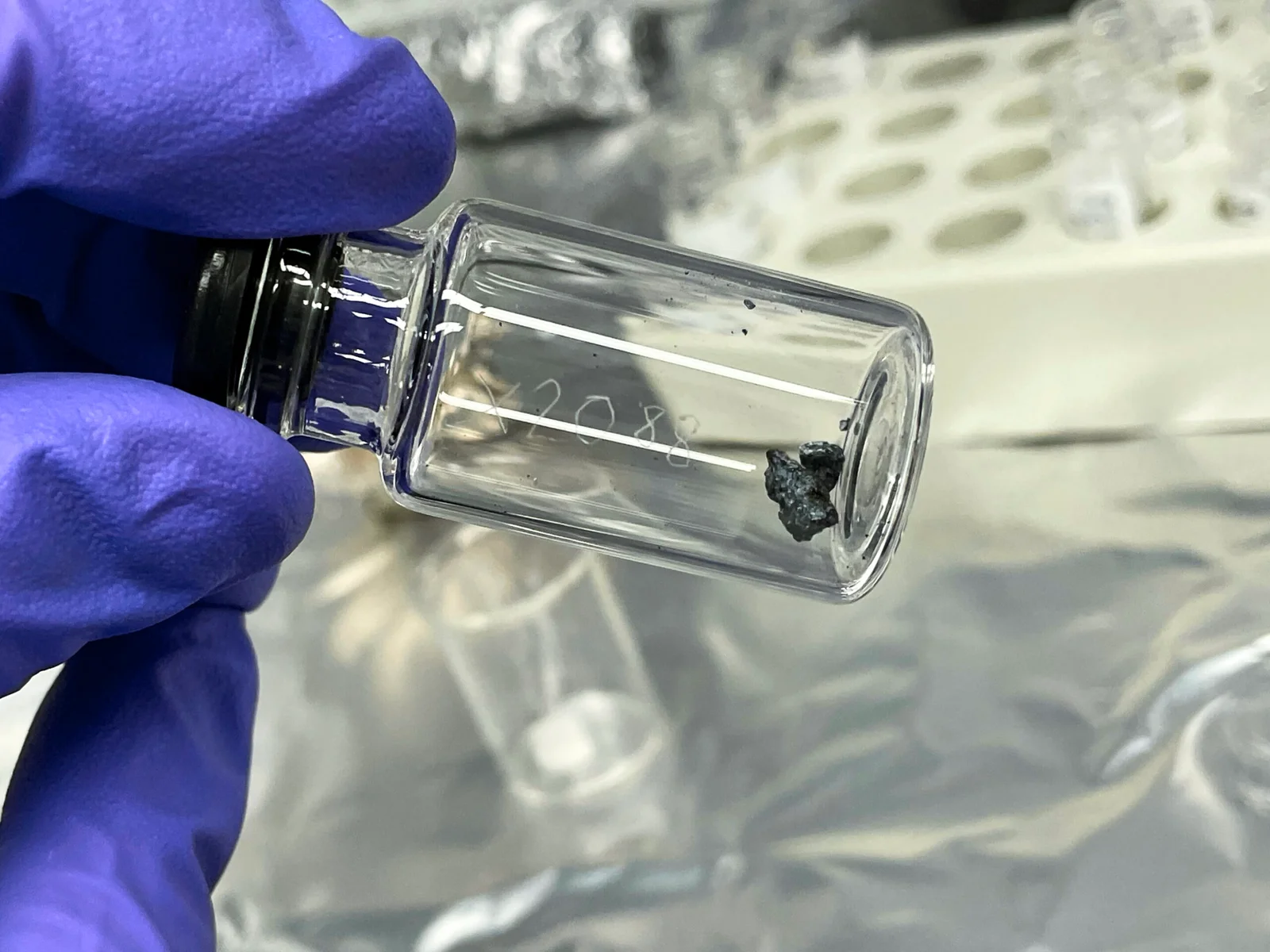
In 2020, when the OSIRIS-REx spacecraft arrived at Bennu, the mission was nothing short of extraordinary. After months of orbiting and studying the asteroid, the spacecraft made history by collecting samples from Bennu’s surface—a journey that would take years to unfold. The samples were safely delivered to Earth, and when researchers began to analyze them, they discovered something remarkable: a collection of prebiotic molecules—compounds that are crucial to the formation of life.
While these molecules had been found in meteorite samples before, there was always a lingering uncertainty: Could Earth’s environment have contaminated them, skewing the results? Bennu, however, was different. It had never been exposed to Earth’s atmosphere or surface conditions. It was a pristine time capsule from the early days of the solar system, untouched and unspoiled. And within this untouched rock, scientists uncovered a treasure trove of life’s building blocks.
The team’s findings were stunning. They identified 14 amino acids—organic compounds that play a fundamental role in the formation of proteins, the molecular machines that make life function. Among them was a surprising discovery: the tentative detection of tryptophan, an amino acid that had never before been found in extraterrestrial material. Tryptophan is essential for life on Earth, contributing to the formation of proteins and serving as a precursor to important molecules like serotonin, the “feel-good” neurotransmitter. Finding it on Bennu was a monumental step in supporting the idea that the basic ingredients of life were already scattered throughout the cosmos long before life ever took root on Earth.
The Blueprint for Life
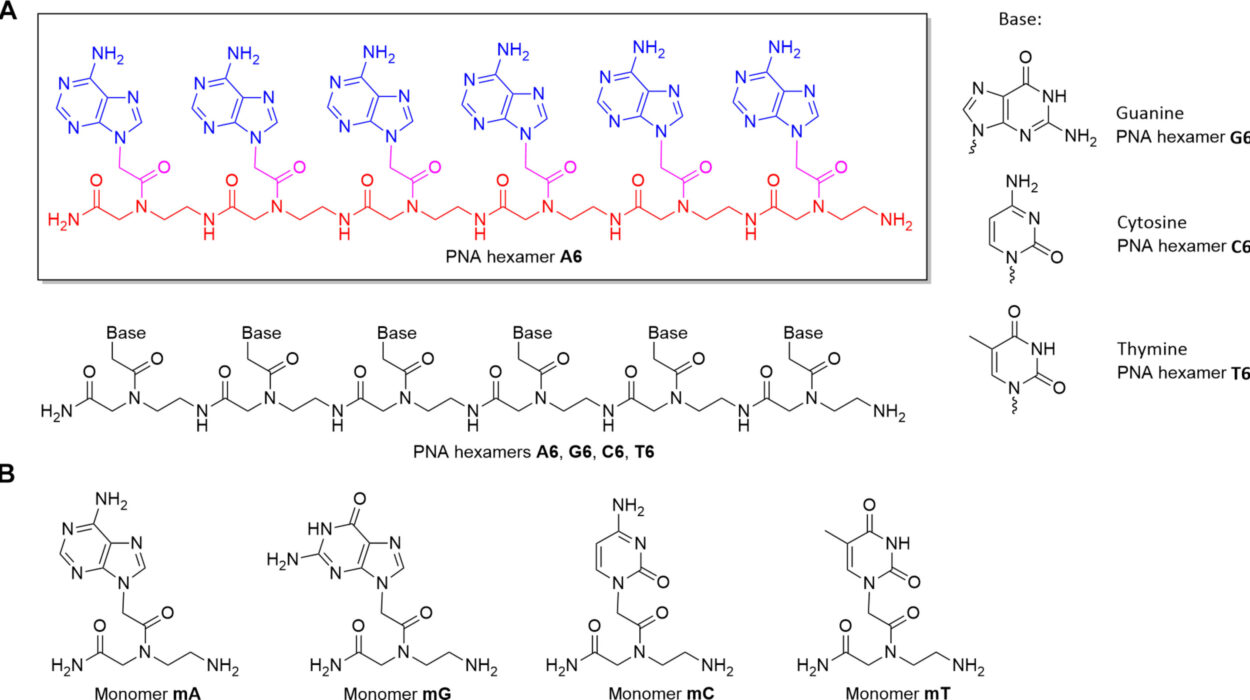
But amino acids were just part of the picture. In another exciting discovery, the team detected five nucleobases in the Bennu samples—key components of RNA and DNA. These nucleobases are the molecules that carry genetic information in all living organisms. To find both the building blocks of proteins and the genetic blueprint in the same place—on a rock that has been drifting through space for billions of years—was an unprecedented breakthrough.
The scientists believe that the presence of these complex molecules hints at the kind of chemical processes that might have been happening in space, long before Earth was even formed. But how did these molecules get there, and what role did they play in the origins of life? According to the researchers, the answer may lie in liquid water and chemical reactions.
Water, Ammonia, and the Cosmic Chemistry of Life
For the team, the key to unlocking the mystery of how these molecules formed lies in the presence of phyllosilicates—clay-like minerals that are abundant in the Bennu samples. Phyllosilicates form only when rock is exposed to water. This suggests that, long ago, liquid water must have existed inside Bennu’s parent body, the celestial body from which the asteroid broke off. And it wasn’t just water—it was likely water mixed with ammonia, a compound that can act as a catalyst, speeding up the chemical reactions that build complex molecules like amino acids and nucleobases.
With this understanding, the researchers propose that the asteroid’s parent body was once a watery world where chemical reactions could have transformed simpler interstellar materials into the complex molecules necessary for life. These prebiotic compounds could then have been carried by the asteroid through the cosmos, eventually arriving on Earth through cosmic impacts.
It is a tantalizing possibility that suggests that the building blocks of life didn’t originate on Earth, but were delivered to our planet by asteroids, comets, or other celestial bodies. These “cosmic deliveries” could have seeded life on Earth and other bodies within our solar system, providing the raw materials needed to start the process of life.
The Seeds of Life: A Cosmic Delivery
“Our findings expand the evidence that prebiotic organic molecules can form within primitive accreting planetary bodies and could have been delivered via impacts to early Earth and other solar system bodies, potentially contributing to the origins of life,” the researchers explained in their study.
This theory, known as panspermia, has been proposed for centuries, but it has always been difficult to prove. Bennu’s pristine samples provide some of the strongest evidence yet that life’s ingredients may not have arisen solely from Earth’s early environment. Instead, they could have been part of a larger cosmic exchange, where the basic components of life were spread throughout the universe long before Earth itself was capable of sustaining life.
The idea that life on Earth may have been seeded by material from space challenges our traditional understanding of life’s origins. But it also opens up exciting new possibilities. If life can form on asteroids and comets, it raises the intriguing question of whether life exists elsewhere in the universe, waiting to be discovered on other planets, moons, or even distant asteroids like Bennu.
Why This Research Matters
This research is important for several reasons. First, it deepens our understanding of the building blocks of life and how they might have formed in space. The discovery of amino acids, nucleobases, and phyllosilicates on Bennu adds to the growing body of evidence suggesting that life’s essential ingredients were present in the early solar system. It offers us a glimpse into the cosmic chemistry that could have led to the emergence of life not only on Earth but also on other planets and moons.
Second, this research challenges our Earth-centric view of life. For decades, scientists have struggled to explain how life began on Earth, but the idea that life could have been “seeded” from space opens up new avenues of exploration. Could life have arisen elsewhere in the solar system, or even in other star systems? If the raw ingredients for life are scattered throughout the cosmos, then the possibility of life elsewhere is not so far-fetched after all.
Finally, this research inspires a sense of wonder about the universe. It reminds us that we are part of a vast, interconnected cosmos, where the same molecules that make up our bodies may have traveled across the stars before arriving here on Earth. It’s a humbling thought, and one that challenges us to think beyond our planet as we continue to search for answers about life’s origins.
More information: Angel Mojarro et al, Prebiotic organic compounds in samples of asteroid Bennu indicate heterogeneous aqueous alteration, Proceedings of the National Academy of Sciences (2025). DOI: 10.1073/pnas.2512461122