Special relativity and general relativity are two closely related theories developed by Albert Einstein that transformed our understanding of space, time, motion, and gravity. Both show that familiar ideas about the universe, such as the passage of time and the measurement of distances, depend on physical conditions rather than remaining universally fixed. However, they address different aspects of reality.
Special relativity explains how space and time behave when objects move relative to one another, particularly at speeds approaching the speed of light. General relativity explains gravity as a consequence of the curvature of spacetime caused by mass and energy. The first establishes how measurements of space and time depend on motion in the absence of gravity’s effects as a fundamental part of the theory. The second extends this picture to include gravity and accelerated motion through a geometric description of spacetime.
Together, these theories underpin modern physics, from particle accelerators and satellite navigation to our understanding of black holes, gravitational waves, and the evolution of the universe. Their differences become clearer when we examine the principles behind each theory, the phenomena they predict, and the evidence supporting them.
Why Einstein needed a new understanding of space and time
Before Einstein’s work, classical physics, especially the mechanics developed by Isaac Newton, treated space and time as separate, absolute frameworks. In this view, space provided a fixed stage for physical events, while time passed at the same rate for everyone, regardless of their motion.
This framework works remarkably well for everyday experiences. A baseball’s trajectory, a moving car’s speed, and the motion of planets can often be calculated accurately using Newtonian mechanics. But experiments involving light and other electromagnetic phenomena revealed that classical assumptions could not provide a complete description of nature.
One crucial finding was that the speed of light in a vacuum is the same for all observers measuring it in inertial reference frames. An inertial reference frame is a perspective in which an object experiences no acceleration unless a force acts on it. Two observers moving at constant velocities relative to each other can disagree about distances, elapsed times, and whether two distant events happened simultaneously, yet they measure the same vacuum speed of light.
This result conflicts with everyday expectations. If a person throws a ball forward from a moving train, an observer on the ground ordinarily measures the ball’s speed as the train’s speed plus its speed relative to the train. Light does not follow this simple rule. Its measured speed in a vacuum remains the same regardless of the steady motion of its source or the observer.
Einstein resolved this conflict in 1905 by developing special relativity. Rather than treating time and space as absolute, he showed that their measurements must adjust in ways that preserve the laws of physics and the invariant speed of light.
Ten years later, in 1915, he completed general relativity, a theory that incorporated gravity into this revised understanding of spacetime.
What special relativity explains
Special relativity describes the relationships among space, time, and motion for observers in inertial reference frames. Its central principles are that the laws of physics are the same in all inertial frames and that the speed of light in a vacuum is invariant.
These principles have consequences that seem strange only because everyday life takes place at speeds far below the speed of light. At ordinary speeds, the differences between relativistic and classical predictions are usually too small to notice. At sufficiently high speeds, however, they become measurable and essential.
Time dilation: Why moving clocks run slower
One of the most important predictions of special relativity is time dilation: an observer who measures a clock moving relative to them finds that the clock accumulates less elapsed time than a comparable clock at rest in that observer’s frame, when the clocks’ paths and readings are compared appropriately.
This is not simply a mechanical defect in a clock. Every physical process carried along with the moving clock, including chemical reactions and biological processes, follows the same relativistic relationship between elapsed time and motion.
Imagine two highly accurate clocks. One remains on Earth while the other travels on a spacecraft at a substantial fraction of the speed of light and later returns. The clocks can show different elapsed times when reunited. The difference depends on their journeys through spacetime, including how their paths compare between departure and reunion.
A useful analogy is to think of different observers as tracing different paths through a landscape. The paths help illustrate why their experiences need not match, but time is not literally a landscape, and the analogy cannot reproduce the precise geometry of spacetime.
Time dilation has been measured in experiments using fast-moving particles and highly accurate clocks. Unstable particles called muons, for example, survive longer when observed in Earth’s frame while traveling at relativistic speeds than their rest-frame lifetimes would suggest. Their behavior agrees with special relativity.
Length contraction: Why distances depend on motion
Special relativity also predicts length contraction. An observer measures a moving object’s length along its direction of motion to be shorter than the length measured in the object’s own rest frame.
The effect becomes significant only when the object’s speed approaches the speed of light. It does not mean that an object necessarily experiences itself being physically squeezed in its own rest frame. Instead, different observers measure its length using different sets of simultaneous events at its two ends.
That qualification matters because simultaneity is itself relative. Two events that occur at the same time for one observer may occur at different times for another observer moving relative to the first.
Length contraction and time dilation are connected aspects of the same underlying spacetime geometry. They are not independent distortions added to otherwise absolute space and time.
The relativity of simultaneity
In everyday life, people generally assume that if two distant events occur at the same time for one observer, they occur at the same time for everyone. Special relativity shows that this is not generally true.
Consider two flashes of light occurring at opposite ends of a long train. An observer standing beside the track and positioned symmetrically between the flashes may judge them simultaneous if their light signals arrive together. An observer moving with the train can reach a different conclusion because the observer’s motion changes how the signals are received and how distances and times are assigned.
The important point is not merely that light takes time to travel. Even after observers account for the travel time using their own measurements, they can disagree about simultaneity because their reference frames define time differently.
This result is essential to understanding both time dilation and length contraction. Space and time are not independent universal quantities; they are interrelated parts of a four-dimensional structure called spacetime.
Mass, energy, and the speed of light
Special relativity also establishes a fundamental relationship between mass and energy. The familiar expression E = mc² expresses the rest energy associated with an object’s mass, where the speed of light squared provides the conversion factor between mass and energy units.
This relationship does not mean that matter can be converted into unlimited usable energy or that every physical process releases all an object’s rest energy. It means that mass and energy are related properties, and that changes in a system’s total energy can correspond to changes in its mass.
Nuclear reactions demonstrate this principle. In nuclear fission, fusion, and radioactive decay, the total mass of the products can differ from the initial mass of the reactants. The difference corresponds to energy released or absorbed, while total energy and momentum remain conserved in an appropriately defined system.
Special relativity also establishes that objects with nonzero rest mass cannot be accelerated to the speed of light by any finite amount of energy. As their speed approaches the speed of light, the energy required to accelerate them further increases without bound. Light in a vacuum, by contrast, propagates at that invariant speed.
What general relativity explains
Special relativity provides a framework for understanding space and time without treating gravity as a fundamental part of the theory. General relativity goes further by describing gravity through the geometry of spacetime.
Einstein’s central insight was that gravity is not simply a force pulling objects through a fixed background. Mass and energy influence the curvature of spacetime, and freely moving objects follow paths determined by that geometry.
In Newtonian physics, Earth orbits the Sun because the Sun exerts a gravitational force that continually changes Earth’s direction. In general relativity, the Sun’s mass curves the surrounding spacetime, and Earth follows a natural path through that curved geometry. From this perspective, an orbit is a form of free fall.
This description does not mean gravity is imaginary or that gravitational forces cannot be measured. It means that the theory explains gravitational phenomena through a different underlying framework. In situations where Newtonian gravity works well, general relativity reproduces its successful predictions to an excellent approximation.
The equivalence principle: A key to understanding gravity
The equivalence principle is central to the development of general relativity. In its simplest form, it states that the effects of a uniform gravitational field and those of an appropriately accelerating reference frame are locally equivalent.
Imagine an observer inside a closed elevator. If the elevator accelerates upward in otherwise empty space, the observer feels pressed against the floor. If the elevator rests on Earth’s surface, the observer experiences a similar sensation because the floor pushes upward against them while gravity pulls them downward.
Under suitable conditions, experiments confined to a sufficiently small region inside the elevator cannot distinguish between these situations solely through their local effects.
This analogy has limits. Earth’s gravitational field is not perfectly uniform, and a large enough laboratory could detect differences, including tidal effects. General relativity does not claim that gravity and acceleration are identical in every possible circumstance. Rather, the equivalence principle reveals a deep connection between gravity and the behavior of reference frames.
It also explains why people in free fall can feel weightless. Astronauts orbiting Earth are still within Earth’s gravitational field. They float because they and their spacecraft are falling together, not because gravity has disappeared. The spacecraft’s motion continually carries it around Earth rather than allowing it to fall directly to the surface.
Curved spacetime: How gravity shapes motion
General relativity describes spacetime as a four-dimensional structure with three dimensions of space and one of time. Its geometry is influenced by the distribution and flow of mass and energy, including pressure and momentum.
The theory’s central field equations relate spacetime curvature to the matter and energy present. Their full mathematical form is complex, but the physical principle is straightforward: the distribution of matter and energy influences geometry, and that geometry governs the motion of matter and light.
A common analogy compares spacetime to a stretched rubber sheet on which a heavy ball creates a depression. A smaller ball placed nearby may curve around the depression, suggesting how a massive object can influence another object’s path.
However, this analogy is limited and can be misleading. A rubber sheet bends downward because Earth’s gravity acts on it, so the model uses gravity to illustrate gravity. Real spacetime does not need an external downward direction or a higher-dimensional space into which it must sag. Moreover, the analogy poorly represents the role of time, which is essential to gravitational motion.
A more accurate way to think about general relativity is that spacetime geometry determines which paths count as natural, force-free motion. Near a massive body, those paths differ from the straight-line paths that would occur in flat spacetime.
The effects become particularly striking near extremely dense objects. Black holes, for example, are regions where spacetime curvature is so strong that, inside the event horizon, all future-directed paths lead farther inward. The event horizon is the boundary beyond which signals cannot escape to distant observers.
Gravity affects the passage of time
General relativity predicts that clocks at different gravitational potentials can accumulate different amounts of time. In the usual comparison between stationary clocks, a clock farther from an isolated massive body, where gravity is weaker, runs faster than one closer to it.
This phenomenon is called gravitational time dilation. It differs in its physical origin from the motion-related time dilation of special relativity, although both arise within the broader framework of spacetime.
The difference is measurable. A clock at sea level generally accumulates time slightly more slowly than a comparable clock at a higher altitude, assuming the clocks are otherwise stationary relative to Earth and the comparison accounts for Earth’s rotation and other relevant effects.
Gravitational time dilation becomes especially important around extremely compact objects such as neutron stars and black holes. It also matters in practical technology. Satellite clocks experience both gravitational and motion-related relativistic effects, and satellite navigation systems must account for them to maintain accurate timing and positioning.
The key differences between special and general relativity
Although the two theories share a common foundation, their primary purposes and descriptions of gravity differ.
| Feature | Special relativity | General relativity |
|---|---|---|
| Main subject | Space, time, and motion | Gravity and spacetime geometry |
| Original formulation | 1905 | 1915 |
| Reference frames | Primarily inertial frames; accelerated observers can also be analyzed within the theory | Generalizes the description to arbitrary coordinate systems and includes gravity |
| Spacetime | Flat spacetime in its standard formulation | Generally curved spacetime |
| Gravity | Not included as a dynamical gravitational field | Describes gravity through spacetime curvature |
| Major predictions | Time dilation, length contraction, relativity of simultaneity, mass-energy equivalence | Gravitational time dilation, light deflection, orbital corrections, gravitational waves, black holes |
| Everyday applications | Particle physics, nuclear reactions, high-energy physics | Satellite timing, precision navigation, astrophysics, cosmology |
The distinction between inertial and accelerated frames needs some care. Special relativity is formulated around inertial frames and flat spacetime, but it can also describe accelerated motion. An accelerating observer does not automatically require general relativity. What general relativity adds is a dynamical account of gravity and the ability to describe curved spacetime.
Likewise, flat spacetime does not mean that objects cannot accelerate or that their paths must always be straight in every coordinate system. Objects can accelerate because of applied forces, and coordinates can make even simple motion appear complicated. The crucial distinction is whether spacetime itself is treated as flat or is allowed to possess physical curvature.
General relativity includes special relativity as a local limiting case. In a sufficiently small region of spacetime, where tidal effects from gravity are negligible, the laws of physics can be described using a freely falling frame in which special relativity applies to a very good approximation. This connection is one reason the theories are complementary rather than competing explanations.
How scientists test special and general relativity
Both theories make quantitative predictions that can be compared with measurements. Their scientific standing rests not simply on their mathematical elegance but on repeated experimental and observational success.
Special relativity has been tested in numerous settings. Experiments with fast-moving particles confirm time dilation, while precision measurements of particle behavior and electromagnetic processes support its predictions. Modern particle accelerators depend on relativistic calculations because particles traveling close to the speed of light behave very differently from objects described accurately by classical mechanics alone.
The invariance of the speed of light has also been tested with increasingly precise experiments. These tests constrain possible deviations from special relativity, although, as with any scientific theory, experimental confirmation does not establish that every conceivable prediction has been tested under every possible condition.
General relativity has passed several influential tests. One early success was explaining the anomalous part of Mercury’s orbital precession: the gradual rotation of the orientation of its elliptical orbit that Newtonian calculations, accounting for known planetary effects, could not fully explain.
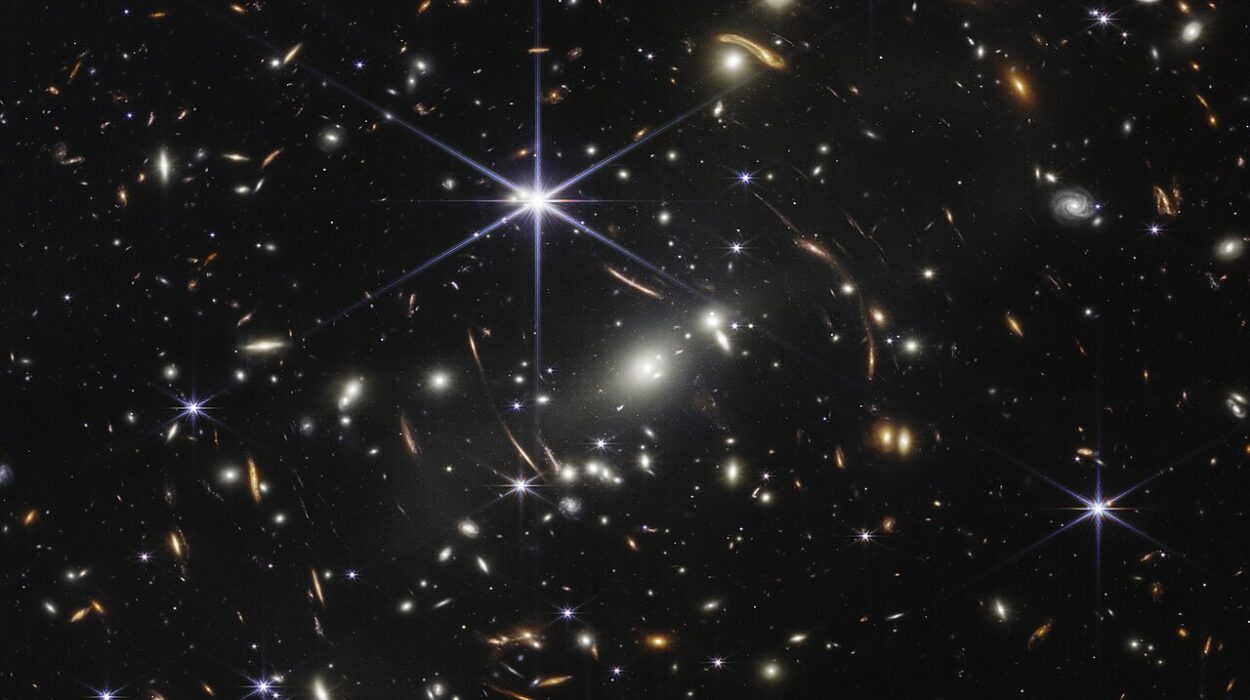
General relativity also predicts that gravity bends the paths of light. Measurements of the apparent positions of stars near the Sun during eclipses helped establish this effect, and modern observations of gravitational lensing use the bending of light by galaxies and galaxy clusters to study the distribution of matter, including matter that emits little or no light.
Another major prediction is the existence of gravitational waves: disturbances in spacetime geometry produced by accelerating masses in suitable configurations. In 2015, detectors observed gravitational waves from a collision of two black holes. Subsequent observations of merging black holes and neutron stars have provided additional tests of the theory in strong-gravity conditions.
These observations are particularly valuable because they probe regimes that differ greatly from the relatively weak gravitational fields of everyday life. Agreement with general relativity across these different settings strengthens confidence in its predictions.
Still, scientific support for a theory is not the same as proof that it is the final description of nature. Experiments test particular predictions within measurable limits, and future observations may reveal phenomena that require new physics.
Why both theories matter in everyday technology
Relativity is sometimes described as a theory relevant only to distant stars or extreme cosmic events. In fact, its principles affect technologies used on Earth and in space.
The Global Positioning System (GPS) is a prominent example. GPS satellites carry highly accurate clocks, and their signals allow receivers to determine their positions by comparing signal travel times from multiple satellites. Because light travels at a finite speed, even tiny clock errors translate into significant positioning errors.
The satellites move rapidly relative to observers on Earth’s surface, so special relativity predicts that their clocks accumulate time differently because of their motion. At the same time, they orbit at higher gravitational potential than clocks on the ground, so general relativity predicts a different rate because of gravity.
For GPS satellites, the gravitational effect makes their clocks run faster by roughly 45 microseconds per day relative to clocks on Earth’s surface, while the special-relativistic effect makes them run slower by roughly 7 microseconds per day. The net difference is approximately 38 microseconds per day, with satellite clock rates adjusted to account for it.
That difference may seem negligible, but radio signals travel about 300 meters in one microsecond. If relativistic timing effects were ignored, positioning errors would accumulate rapidly, making the system unreliable for precise navigation.
Relativistic corrections also matter in other satellite systems, precision timekeeping, particle physics, and astrophysical measurements. The practical lesson is that relativity is not an abstract alternative to everyday physics. It is the more accurate framework needed when the required precision or physical conditions make classical approximations inadequate.
What relativity does not explain completely
Despite their remarkable success, special and general relativity do not constitute a complete theory of every physical phenomenon.
Special relativity is compatible with quantum mechanics, the framework used to describe matter and interactions at microscopic scales. When special relativity is combined with quantum principles, it leads to quantum field theories, which underpin the modern description of elementary particles and three of the four known fundamental interactions: electromagnetism, the weak nuclear interaction, and the strong nuclear interaction.
General relativity presents a more difficult challenge. It describes gravity classically, through spacetime geometry, whereas quantum field theory describes other fundamental interactions using quantum principles. The two frameworks are each extraordinarily successful within their established domains, but they have not yet been unified into a complete, experimentally confirmed theory of quantum gravity.
This limitation matters in conditions where both strong gravitational effects and quantum behavior are expected to be important, such as the deepest interiors of black holes or the earliest moments of the universe. General relativity predicts the formation of singularities in certain circumstances, where its mathematical description ceases to provide a physically complete account. Such predictions are generally understood as signs that the classical theory is incomplete in those regimes, rather than as a full explanation of what physically happens at the singularity.
Scientists are investigating approaches to quantum gravity, but no proposed framework has yet been confirmed as the definitive theory by decisive experimental evidence.
Cosmology also raises open questions. General relativity provides the foundation for modern models of the universe’s large-scale expansion, but observations indicate that the expansion is accelerating. The phenomenon is commonly modeled using dark energy, a name for whatever drives that acceleration in the standard cosmological model. Its fundamental nature remains uncertain.
These unresolved questions do not undermine the extensive evidence supporting relativity. Instead, they identify where the theories’ established descriptions may need to be extended.
How to choose between special and general relativity
The choice depends on the physical situation being studied and the accuracy required.
Special relativity is usually the appropriate starting point when the central issue involves high speeds, particle behavior, or the relationship between measurements made by observers moving at constant velocities relative to one another. It is also essential in high-energy physics, even when gravity is negligible.
General relativity is needed when gravitational effects are important enough that Newtonian gravity is insufficient, especially in precision timing, strong gravitational fields, black-hole physics, gravitational waves, and cosmology. It describes not only how objects move in gravitational fields but also how spacetime geometry responds to matter and energy.
Many everyday problems can still be solved using Newtonian mechanics and gravity. These theories are excellent approximations when speeds are low compared with the speed of light, gravitational fields are relatively weak, and the required precision is modest. Relativity does not make Newtonian physics useless; it explains why Newtonian predictions work so well within their domain and identifies the conditions under which corrections become necessary.
The essential difference is that special relativity reveals that space and time depend on the observer’s motion, while general relativity shows that gravity is linked to the geometry of spacetime itself. Together, they replace the idea of a fixed cosmic stage with a more dynamic picture in which measurements of space and time depend on motion and gravitational conditions, and the geometry of spacetime helps determine how the universe evolves.