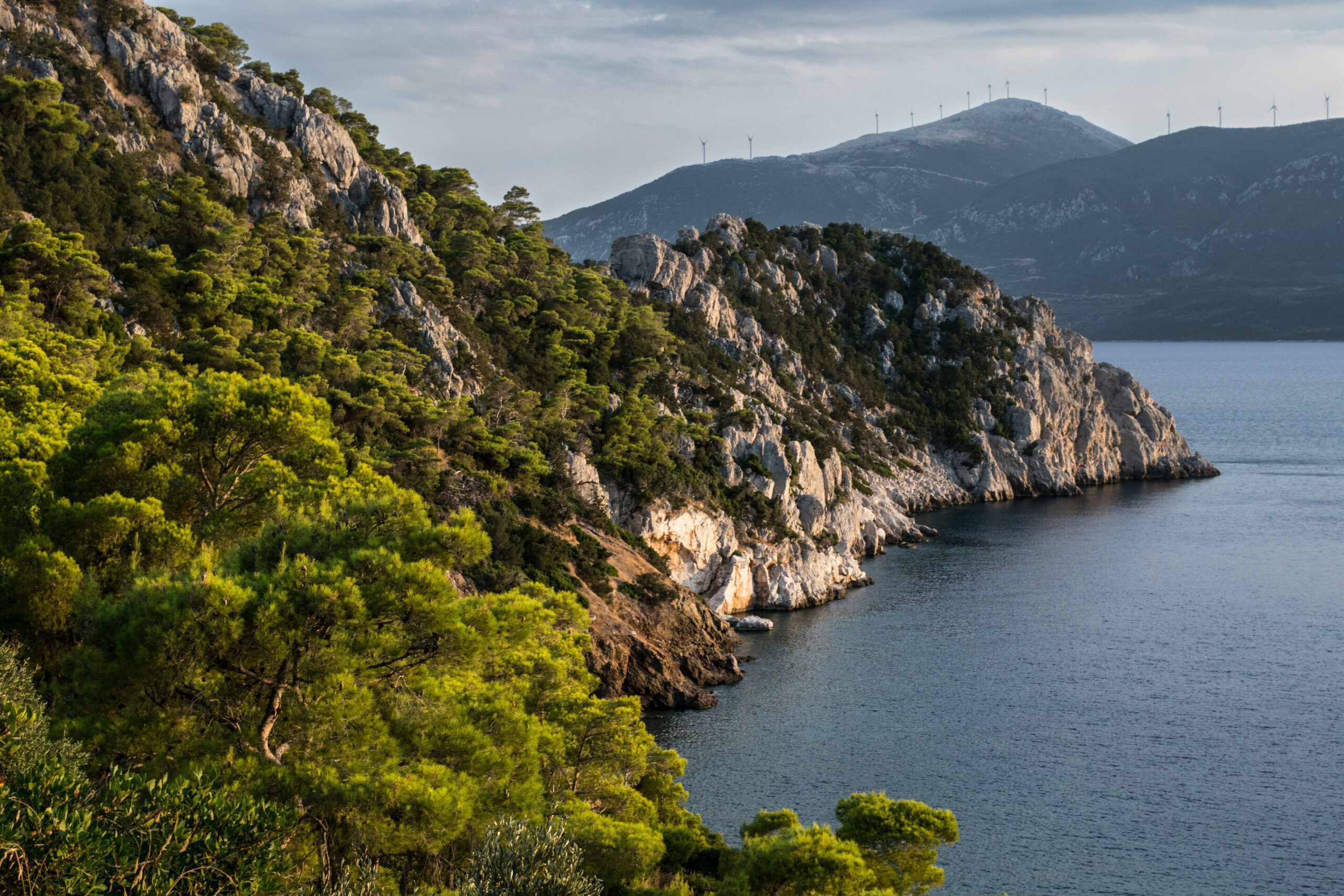
Researchers at ETH Zurich have discovered that volcanoes can remain geologically active for over 100,000 years without erupting, silently accumulating vast reservoirs of magma beneath the surface. This hidden activity is driven by water-rich melts that thicken deep underground, suggesting that many volcanoes currently labeled as “extinct” may actually be in a state of long-term preparation for future unrest.
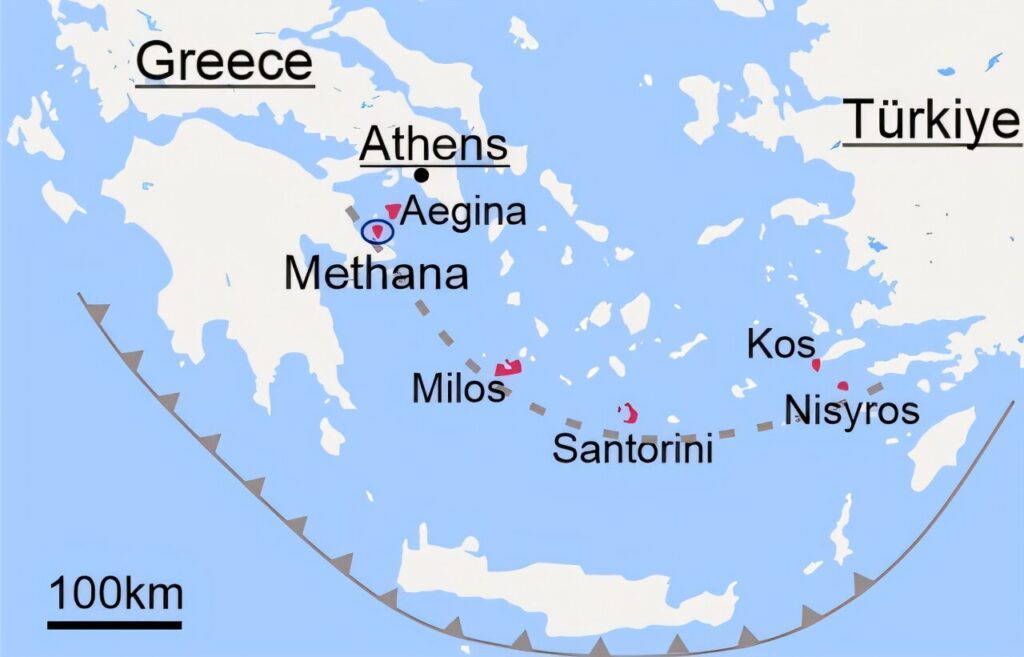
For over a millennium, the Methana volcano in Greece has stood as a quiet sentinel over the Aegean Sea. To any observer, the mountain appeared essentially dead—a relic of a violent past that had long since surrendered to dormancy. There were no ash clouds darkening the sky, no tremors shaking the earth, and no glowing rivers of lava carving through the landscape. However, new research suggests that this outward silence was a profound geological deception.
Deep beneath the crust, a massive plumbing system was far from idle. An international team of scientists has peered into the “inner life” of Methana, revealing that the volcano has been “breathing” underground for tens of thousands of years. Their findings, published in the journal Science Advances, challenge the traditional definitions of volcanic extinction and suggest that the most dangerous phase of a volcano’s life might be the one where it appears to be doing nothing at all.
Tiny Time Capsules of the Magma Chamber
To reconstruct the hidden history of the volcano, the research team focused on a mineral that acts as a natural flight recorder: zircon. These microscopic crystals form within magma reservoirs as they cool and crystallize. Because zircon is incredibly durable and chemically stable, it preserves a precise chemical and chronological record of the conditions present during its growth.
The researchers analyzed more than 1,250 zircon crystals spanning a staggering 700,000 years of volcanic history. By dating these minerals, the team was able to determine exactly when the magma chambers were active, even when those active periods did not result in an eruption. The data revealed a startling paradox: the most intense period of zircon growth occurred during a quiet phase that lasted more than 100,000 years.
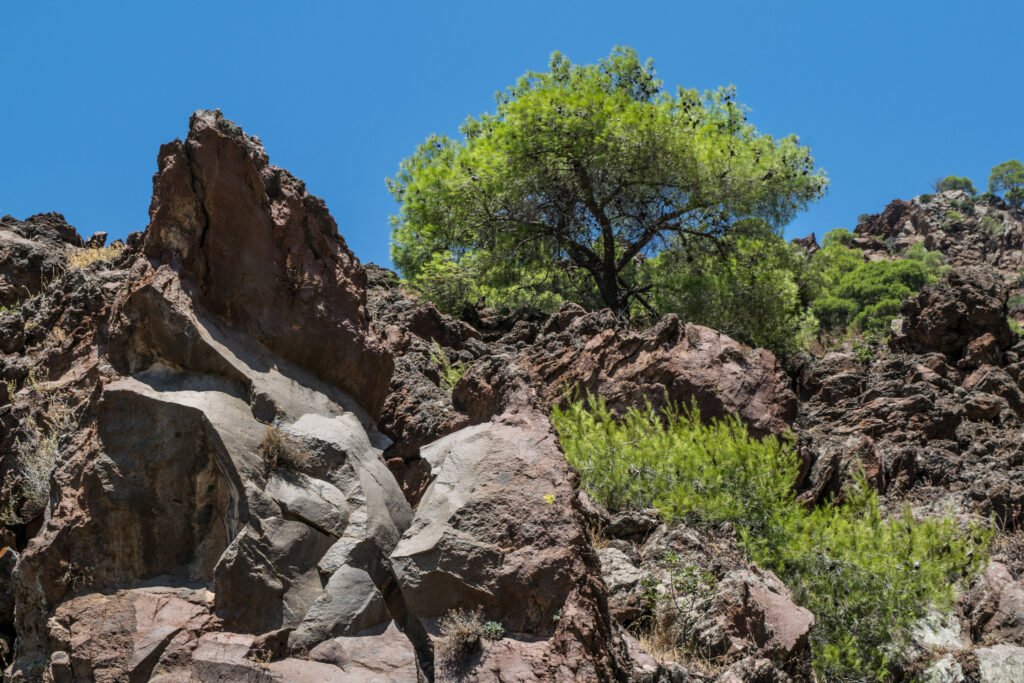
During this massive hiatus, the surface of Methana remained completely calm. Yet, the high concentration of young zircon crystals proves that magma was being produced and stored almost continuously deep within the Earth’s crust. The volcano was not dead; it was simply filling its tank.
The Paradox of the Water-Rich Melt
The discovery that magma can accumulate for millennia without breaking the surface led the scientists to ask a critical question: why didn’t this enormous volume of molten rock erupt? The answer lies in the specific chemistry of the magma being produced beneath the Greek arc.
The mantle beneath Methana is heavily influenced by subduction, a process where one tectonic plate slides beneath another. As the oceanic plate descends, it carries with it seafloor sediments and significant amounts of water. This water is released into the mantle, acting as a flux that makes the production of magma exceptionally efficient. The resulting “superhydrous” or water-rich melts are far wetter than volcanologists previously expected.
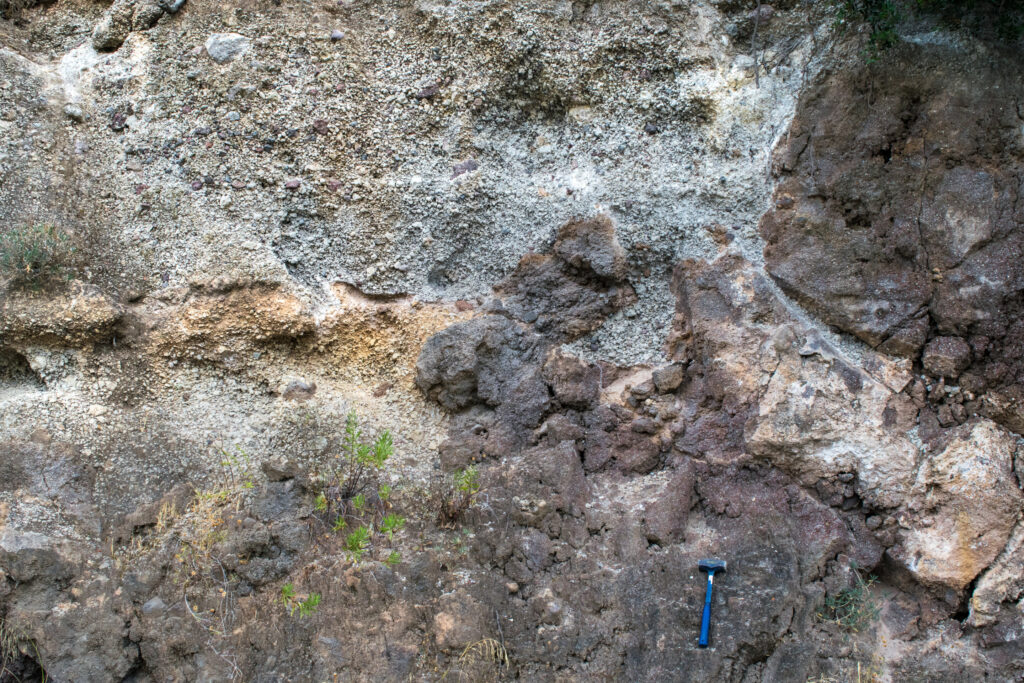
As this water-saturated magma rises through the crust, the decrease in pressure causes water to form bubbles. This saturation triggers a rapid process of crystallization, which fundamentally changes the physical properties of the melt. Instead of remaining a fluid, mobile liquid that can easily punch through to the surface, the magma becomes thick, viscous, and heavy with crystals.
Using physical and thermodynamic models, the researchers demonstrated that this high water content effectively acts as a brake. The magma slows itself down as it ascends, becoming too “mushy” to reach the surface. Paradoxically, the very thing that makes the mantle produce more magma—water—is the same factor that prevents that magma from erupting in the short term.
Redefining the Threat of Extinction
This “superhydrous” behavior suggests that the global count of active volcanoes may be significantly underestimated. Scientists believe that many subduction zone volcanoes around the world—from Japan to South America—may be periodically fed by these wet, primitive melts. If a volcano is being fed by magma but isn’t erupting, it is often downgraded in threat level or ignored by monitoring agencies.
The study indicates that a prolonged period of silence is not necessarily a sign of safety; rather, it could be a signal that a large and potentially more dangerous magmatic system is being built. When a system that has been “breathing” and accumulating mass for 100,000 years finally does reach a breaking point, the resulting eruption could be far more significant than those from volcanoes that vent their energy frequently.
Currently, volcanoes that have not shown activity for tens of thousands of years are frequently categorized as extinct. This research proves that such labels can be dangerously misleading. A volcano can remain dormant on a human timescale while remaining highly active on a geological one, quietly storing the energy required for a massive future reawakening.
Why This Matters
The findings from Methana provide a vital wake-up call for global volcanic risk assessment. For hazard authorities in regions like Italy, Indonesia, the Philippines, and the Americas, the study suggests a need to re-evaluate volcanoes that show signs of magmatic unrest despite having no modern eruption history.
By shifting the focus from surface activity to the hidden processes occurring miles below ground, scientists can better identify which “sleeping giants” are truly dead and which are merely pausing. Utilizing modern tools like ground deformation measurements, earthquake monitoring, and high-resolution geophysical imaging of the crust will be essential in detecting these hidden reservoirs before they escalate into a crisis. Understanding that silence is a temporary state of accumulation—not a permanent state of extinction—is the first step in protecting populations living in the shadow of these deceptive peaks.
Study Details
Răzvan-Gabriel Popa, A volcano reawakens after more than 100,000 years of ‘silent’ magma reservoir growth, Science Advances (2026). DOI: 10.1126/sciadv.aec9565