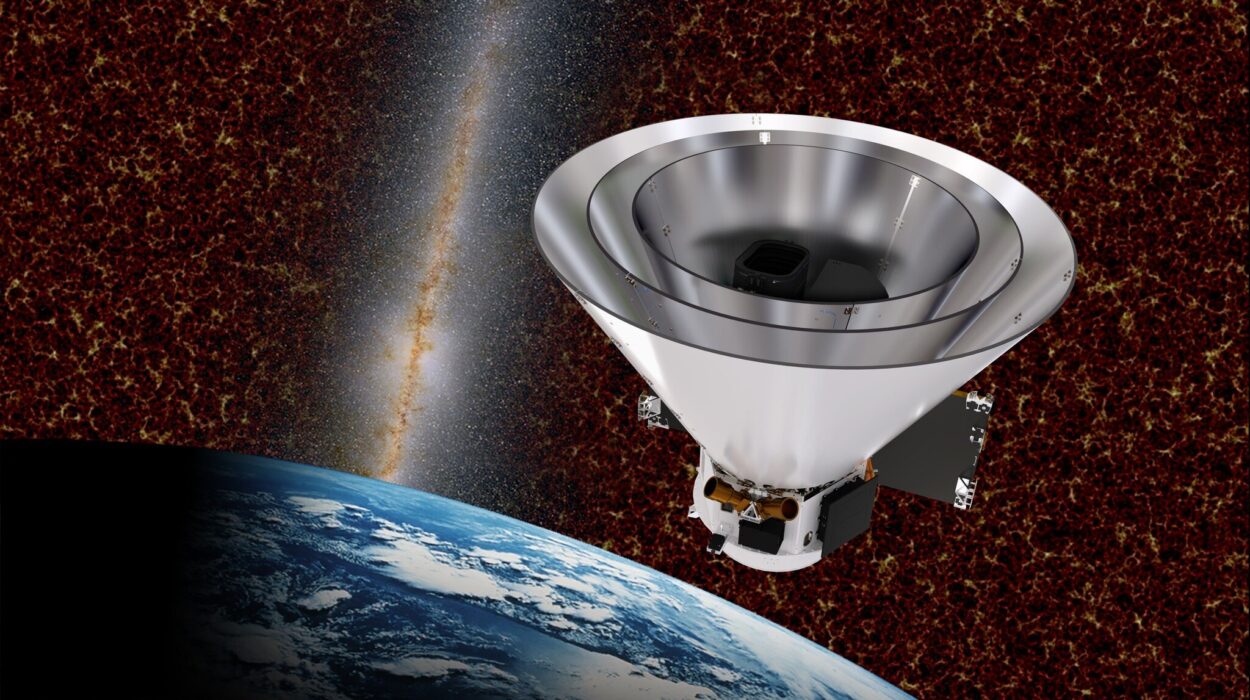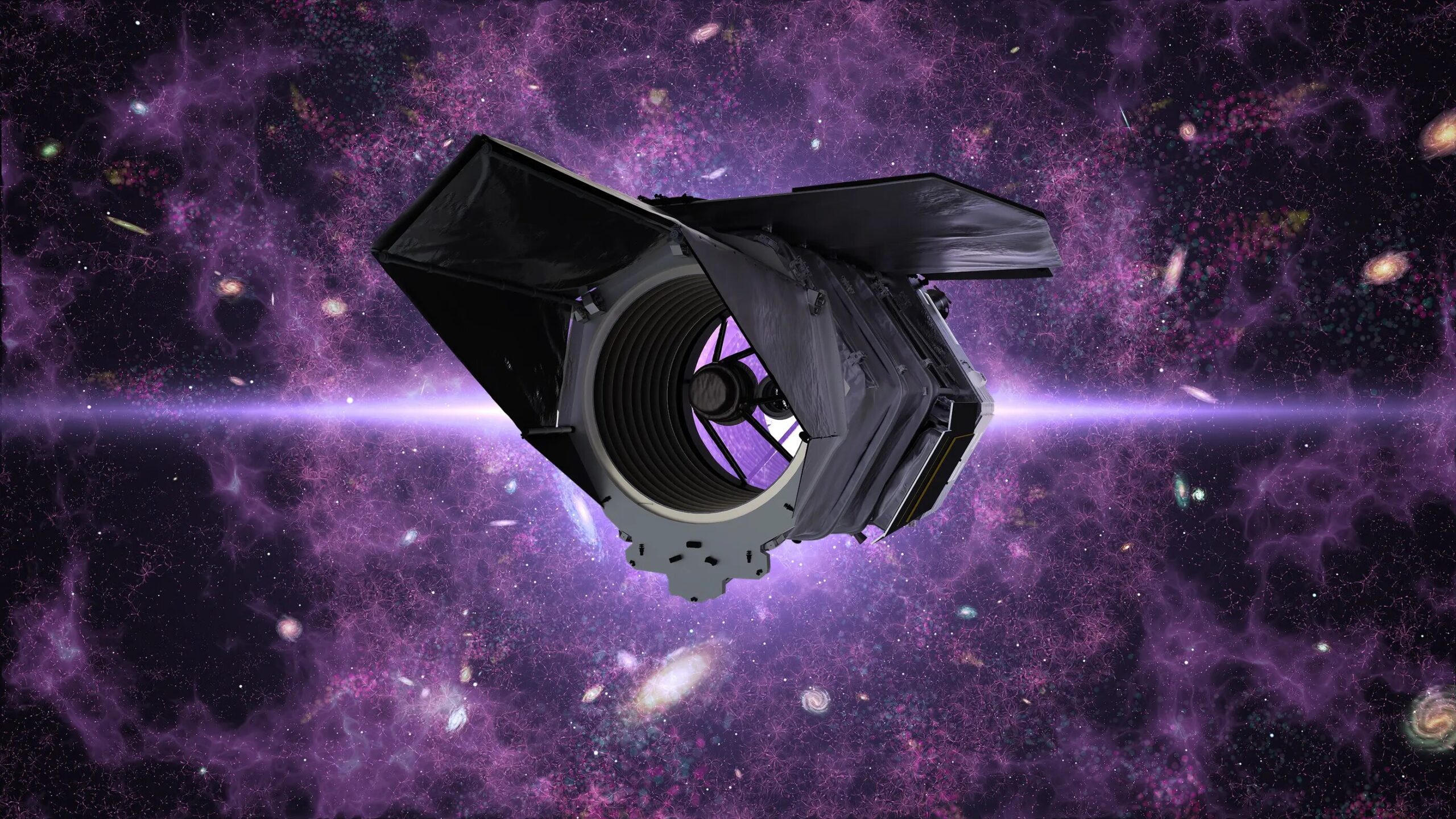
The Roman Space Telescope is being built to do something that has remained extremely difficult: directly photograph relatively cool, faint exoplanets that can be a billion times dimmer than the stars they orbit. Its coronagraph will use precisely aligned optics, deformable mirrors and advanced image processing to block the overwhelming glare of a host star and isolate the tiny point of light from a planet.
NASA has been developing the Roman Space Telescope for about a decade, with launch scheduled for Aug. 30, 2026, at 7:26 a.m. EDT. The telescope is named after Nancy Grace Roman, who was considered the architect of NASA’s modern science program and played a role in the success of the Hubble Space Telescope project.
Roman will travel to the L2 Lagrange point, about 1.5 million kilometers, or 930,000 miles, from Earth on the side facing away from the sun. At that location, the gravitational forces of the celestial bodies cancel each other out, allowing the telescope to orbit the sun without propulsion.
Roman’s 2.4-meter, or 7.9-foot, primary mirror is a replica of Hubble’s mirror. Its Wide Field Instrument has a detector area about 100 times larger than Hubble’s. Over five years, it is expected to image an area of sky 50 times larger than Hubble covered in 30 years.
The Wide Field Instrument will also be used to search for planets that are cooler than the hot, bright gas giants that have been easier to detect. Researchers aim to identify about 100,000 new planets through the transit method, in which a planet passing in front of its star produces a small measurable decrease in the star’s brightness. Microlensing observations are expected to add another 1,000 exoplanets.
Those techniques detect planets indirectly. Roman’s second instrument, the Coronagraph Instrument, or CGI, has a different task.
Blocking the star to see the planet
A coronagraph uses masks to block the light from a bright host star. This allows fainter objects nearby, including an orbiting planet, to become detectable.
From Earth, the planets Roman is designed to image can appear about a billion times fainter than their host stars. That is roughly the brightness contrast between Jupiter and the sun.
The CGI is designed to detect these planets as point sources about a thousand times fainter than what has been technically possible so far. Researchers specifically want to study cooler and smaller planets, including Jupiter-like worlds that mainly reflect light from their host stars.
Previous coronagraphs on ground-based telescopes could directly image particularly bright gas giants farther from their stars. The CGI is intended to extend direct imaging toward cooler and smaller exoplanets.
That requires the telescope’s optical components to remain aligned with extraordinary precision.
Keeping the optics precisely aligned
The Max Planck Institute for Astronomy in Heidelberg built the Precision Alignment Mechanisms, known as PAMs, for the CGI. These mechanisms control the position of important optical components inside the coronagraph.
The institute supplied six flight models that will remain installed in the instrument and travel into space. Another six engineering models are being used for testing on Earth.
The PAMs keep the coronagraph’s masks, filters and mirrors from tilting by more than 40 milliarcseconds over an eight-hour period. Since 3.6 million milliarcseconds make up one degree, this represents an extremely small angular movement.
Engineers at the Heidelberg institute designed, manufactured and tested the PAM modules in the institute’s workshops and laboratories. The company von Hoerner & Sulger in Schwetzingen, Germany, supported their construction.
Monica Ebert oversaw the design and assembly of the system at the institute.
“When the individual parts of the flight model were lying in front of me, it really hit me that I was holding components that would fly into space and explore it,” Ebert said.
The mechanisms also underwent long-duration testing. A service-life model completed more than 27,000 movements, roughly twice the stress placed on a flight model.
That testing is intended to reduce potential errors and problems with a mechanism that will not be accessible for repair once Roman is in space.
A mirror that corrects the telescope’s own distortions
Precise mechanical alignment is only part of the problem. The CGI also has to suppress distortions produced within the telescope’s optical system.
The instrument uses adaptive optics to address those effects. Adaptive optics can change a mirror’s shape to correct distortions in an image. On Roman, a small deformable mirror will make these corrections in real time.
Although there is no atmosphere in space to distort the telescope’s view, the optical system itself can still introduce effects that interfere with the extremely faint signal from a planet.
The corrections require substantial computing power, while the computing resources available aboard a satellite are limited. Solving that problem was therefore another challenge in developing the instrument.
Oliver Krause, head of the infrared astronomy research group at the Max Planck Institute for Astronomy, described the CGI as a highly sophisticated optical observation instrument.
If the initial tests in space are successful, the CGI will be made available to astronomers for exoplanet studies.
Testing the technology in space
The CGI’s initial work will also test technology that could support future efforts to directly image even smaller and fainter rocky planets.
Krause said that finding and studying a second Earth in the future would require a powerful coronagraph incorporating the full complexity of the CGI. He also noted that such observations would require a telescope with substantially higher image resolution, such as the proposed Habitable Worlds Observatory, whose initial designs call for a mirror at least 6 meters, or 20 feet, across.
Roman itself is not expected to begin producing scientific images immediately after launch. Members of the Community Participation Program, based in the United States, Japan and Europe, will gradually bring the telescope online while continuously analyzing the data sent back to Earth.
The commissioning process is expected to last 90 days, roughly the same amount of time Roman will take to reach L2. The first scientific images are expected in early 2027.
The Max Planck Institute for Astronomy will continue contributing to the development of software for analyzing Roman’s technical and scientific data and will help plan and prepare observations. Some observing programs, including a survey of the plane of the Milky Way for previously unknown planets and black holes, are expected to take years to complete.