Ramesses II, one of ancient Egypt’s most powerful rulers, left behind monumental temples, colossal statues, and inscriptions celebrating his military achievements. Yet some of the most revealing evidence about his life comes from something far smaller than his monuments: his preserved body. His mummy offers clues about his age, physical condition, appearance, and the methods ancient Egyptians used to prepare their dead for eternity.
The mummy cannot confirm every story told about the pharaoh, nor can it reconstruct his personality or explain all the decisions he made as king. It provides something different: physical evidence that can be examined independently of royal inscriptions. By studying his remains, researchers can investigate the biological realities behind the image of a ruler who presented himself as powerful, vigorous, and favored by the gods.
Ramesses II’s mummy also illustrates the strengths and limitations of modern scientific investigation. Although thousands of years of preservation have left much of his body available for examination, the processes of mummification, natural aging, and later handling have altered or obscured some of the evidence.
Who was Ramesses II?
Ramesses II ruled Egypt during the 19th Dynasty, approximately 1279 to 1213 BCE. Often called Ramesses the Great, he reigned for about 66 years, making him one of the longest-reigning pharaohs of ancient Egypt.
His rule coincided with a period when Egypt competed for influence with other major powers in the eastern Mediterranean and Near East. One of his best-known military campaigns was the Battle of Kadesh, fought against the Hittite Empire in what is now Syria. Egyptian inscriptions presented the confrontation as a personal triumph for the pharaoh, although the battle’s outcome was more complicated than royal propaganda suggested.
Ramesses II also became famous for his extensive building program. He commissioned temples, expanded existing religious complexes, and established a new royal capital, Pi-Ramesses, in the eastern Nile Delta. Among the monuments associated with his reign are the temples at Abu Simbel and his contributions to the Ramesseum, his mortuary temple in western Thebes.
These structures were intended to preserve his name and reinforce his authority long after his death. His mummy provides a complementary record. Rather than showing how Ramesses wanted the world to remember him, it reveals aspects of the physical human being who occupied the throne.
How the mummy survived for more than 3,000 years
Ancient Egyptian mummification was designed to preserve the body after death. Egyptians believed that maintaining the physical remains was important to the deceased person’s continued existence in the afterlife. Their religious beliefs evolved over time, but bodily preservation remained a central feature of elite funerary practices.
The process depended on controlling decomposition. After death, the body begins to break down through the activity of microorganisms and the action of enzymes that naturally occur within its tissues. Moisture accelerates many of these processes, allowing bacteria and other organisms to flourish.
Egyptian embalmers developed techniques to slow this deterioration. In elite burials during the New Kingdom, the period in which Ramesses II lived, they commonly removed internal organs, treated the body with natron, and wrapped it in linen.
Natron is a naturally occurring mixture of salts that draws water out of tissues. By dehydrating the body, embalmers made conditions less favorable for the microorganisms and chemical reactions responsible for decomposition. The dried body could then be treated with resins and oils before being wrapped in layers of linen.
The details of the process varied according to period, resources, and funerary traditions. Not every mummy was prepared in exactly the same way, and the preservation of a particular body depended on both the embalming procedure and its subsequent environment.
Ramesses II’s mummy survived partly because of this deliberate treatment. However, preservation was not a one-time achievement. Over centuries, the body faced additional risks, including humidity, physical damage, and human intervention.
The mummy also survived because ancient Egyptians eventually moved royal remains to protect them from tomb robbers. Ramesses II was originally buried in the Valley of the Kings, but his body was later transferred to a royal cache, a hidden deposit containing the remains of several pharaohs. This relocation helped preserve the mummy even as many royal tombs were looted.
What his physical appearance reveals
Ramesses II’s preserved face provides a rare opportunity to examine the physical appearance of a named ancient ruler. His facial features, hair, and remaining soft tissues have attracted considerable attention because they offer a more direct connection to the individual than his idealized statues do.
Royal Egyptian art was not intended to function as modern photographic portraiture. Images of pharaohs followed conventions that emphasized authority, youthfulness, divine associations, and the continuity of kingship. A ruler’s sculpted face might convey recognizable features while still presenting an idealized version of his appearance.
A mummy preserves different information. Although dehydration and embalming alter facial tissues, the remaining structures can reveal features of the person’s face and head. The result is not a perfect record of how someone looked in life, but it offers physical evidence that can be compared with artistic representations.
Ramesses II’s mummy is generally described as having a prominent nose, a long face, and a narrow jaw. His preserved hair has also been examined. Such observations help researchers understand his physical appearance, although they should not be treated as a complete reconstruction of his living face.
A mummy’s appearance must be interpreted cautiously because preservation changes the body. Skin shrinks and darkens, tissues lose their normal volume, and the face may appear different from how it did when the person was alive. Linen wrapping, embalming materials, and later damage can also affect what remains visible.
The distinction between observation and reconstruction is important. Scientists can describe surviving anatomical features with reasonable confidence, but recreating the exact appearance, expression, or complexion of Ramesses II during his lifetime requires interpretation beyond what the preserved body alone can establish.
What his mummy reveals about aging
Ramesses II died after an exceptionally long reign. Historical chronology places his death at approximately 90 years of age, although ancient dates and the calculation of an individual’s age are not always as precise as modern records.
His mummy is consistent with the broad picture of an elderly man. Researchers have described signs of advanced age in his remains, including changes to his teeth and skeletal system. These findings are significant because they connect the historical record of his long life with the biological effects of aging.
Aging is not a single process. It involves gradual changes in many tissues and organs, including the loss of bone density, deterioration of joint surfaces, alterations in skin and connective tissue, and cumulative damage to cells. These changes vary among individuals according to genetics, environment, nutrition, physical activity, and disease.
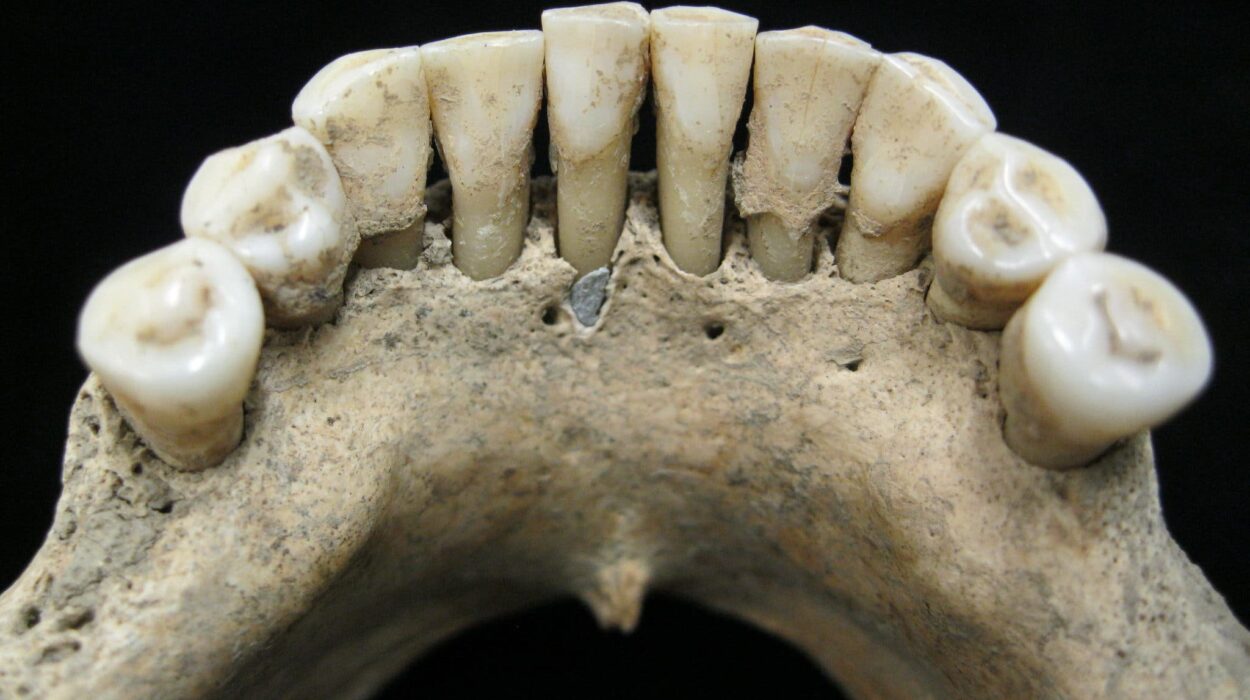
Teeth can be particularly informative because they record aspects of a person’s lifetime exposure to wear and disease. Ancient Egyptian diets often contained particles of sand and mineral grit introduced during food processing. Repeated exposure could wear down tooth enamel, sometimes causing severe damage.
Tooth wear is not a straightforward measure of age, however. Diet, food preparation, oral hygiene, and individual biology all influence dental condition. A person with heavily worn teeth was not necessarily older than another person whose teeth were better preserved.
The same caution applies to the skeleton. Degenerative changes in joints and the spine can become more common with age, but they are not unique to old age. Physical labor, previous injuries, and other conditions can produce similar changes.
Taken together, the evidence supports the conclusion that Ramesses II lived to an advanced age and experienced physical deterioration consistent with an elderly person. It does not provide a complete medical history or allow every visible change to be assigned to a specific cause.
What his bones and joints tell us
Bones preserve information about the forces placed on the body during life. Their surfaces and internal structures respond to movement, weight-bearing, injury, and disease. This makes skeletal remains valuable sources of evidence about health and physical function in ancient populations.
Ramesses II’s remains show age-related degenerative changes, including abnormalities associated with arthritis. Arthritis is a broad term for conditions affecting the joints, and several different processes can produce pain, stiffness, and restricted movement in living people.
One common form, osteoarthritis, involves the gradual deterioration of joint cartilage and changes to the underlying bone. Cartilage normally helps joint surfaces move smoothly against one another. As it breaks down, the body may respond by producing additional bone around the joint margins, creating bony projections known as osteophytes.
These changes can sometimes be recognized in skeletal remains. However, identifying arthritis in a skeleton does not reveal exactly how much pain a person experienced. Some people with substantial joint damage have limited symptoms, while others experience considerable discomfort despite less dramatic structural changes.
The mummy’s age and skeletal condition make degenerative joint disease unsurprising. After decades of life, the cumulative effects of ordinary movement and biological aging can become pronounced.
Nevertheless, researchers cannot determine precisely how freely Ramesses II moved during his final years from bone changes alone. Nor can they reliably calculate the severity of his pain. His physical remains reveal structural changes, not the subjective experience of living with them.
This distinction matters when interpreting the lives of ancient rulers. A pharaoh could possess extraordinary political authority while remaining vulnerable to the same biological processes that affect other human beings.
What can be learned from his teeth?
Dental remains are especially useful in archaeological research because teeth are among the hardest structures in the human body. Their mineral-rich composition allows them to survive conditions that destroy many other tissues.
The enamel covering the crown of a tooth is highly mineralized, while the underlying dentin is less resistant to wear and damage. Together, these structures can preserve evidence of dietary abrasion, decay, tooth loss, and other oral problems.
Ramesses II’s teeth show signs of substantial wear and dental deterioration. Such findings fit the broader evidence of an elderly individual, but they also reflect the conditions of ancient life.
Grinding grain into flour could introduce tiny mineral particles into food. These particles acted as abrasives, gradually wearing down the teeth during chewing. The effects could accumulate over many years, especially when people regularly consumed coarse or gritty foods.
Severe wear could expose the more sensitive tissues inside a tooth. If the pulp became inflamed or infected, the resulting condition could be painful. Dental infections could also spread into surrounding tissues, potentially producing abscesses.
Yet the appearance of worn teeth does not automatically prove that a person suffered from an infection. Tooth wear, cavities, fractures, and abscesses are different conditions, and each requires appropriate evidence before a diagnosis can be made.
Researchers must also account for changes that occurred after death. Teeth may become loose, break, or shift during burial, excavation, handling, or conservation. Distinguishing damage from life from damage after death is essential to interpreting the evidence correctly.
Ramesses II’s dental condition therefore provides useful information about his physical health and the cumulative effects of age, while also illustrating the limits of diagnosing specific illnesses from ancient remains.
Could scientists identify the diseases that affected him?
Modern examinations of mummies can reveal certain diseases and injuries, but the evidence is rarely complete. Some conditions leave distinctive marks on bones, while others affect only soft tissues or internal organs that may not have survived preservation.
Skeletal abnormalities can provide clues about chronic disease, trauma, and long-term changes in physical function. Imaging methods, including X-rays and computed tomography, can reveal internal structures without requiring researchers to unwrap or dissect a mummy.
Computed tomography, commonly called CT, uses multiple X-ray measurements to create cross-sectional images of the body. A computer combines these images into a detailed representation of internal anatomy. Researchers can examine the skull, spine, joints, and other preserved structures while limiting physical disturbance to the remains.
Such imaging is especially useful for mummies because the external appearance can conceal internal damage or anatomical details. It can also help distinguish structures that are difficult to examine directly through traditional methods.
However, a scan cannot automatically identify every disease. Many illnesses do not leave distinctive marks on bones, and dehydration can distort soft tissues. Embalming materials may also obscure anatomical boundaries or create patterns that resemble biological structures.
Genetic analysis and chemical testing can sometimes provide additional evidence, but these methods have their own limitations. DNA may be fragmented or chemically damaged, while samples can be contaminated by modern human material, microorganisms, or substances introduced during conservation. A result must be evaluated in light of how the sample was collected and analyzed.
Ramesses II’s mummy is therefore best understood as a source of partial medical evidence rather than a complete diagnostic record. Researchers can identify some physical abnormalities, but they cannot confidently reconstruct every illness he experienced or establish a definitive cause of death from preservation alone.
What the mummy can—and cannot—tell us about his death
Ramesses II died near the end of the 13th century BCE, after decades of political leadership and building activity. His advanced age provides an important context for understanding his final years, but the exact medical circumstances of his death remain uncertain.
In modern medicine, determining a cause of death often requires a combination of medical history, clinical observations, laboratory tests, and examination of internal organs. Even with these resources, some deaths remain unexplained.
For an ancient mummy, the available evidence is much more restricted. The body has undergone chemical changes, internal organs may have been removed during embalming, and soft tissues may have deteriorated or become difficult to interpret. Many diseases that could have caused death leave no unmistakable trace in preserved remains.
Age-related changes can indicate that a person was elderly, but old age itself is not a precise medical cause of death. An elderly individual might die from an infection, cardiovascular disease, respiratory illness, injury, or another condition that leaves little recognizable evidence after thousands of years.
It is therefore important not to confuse signs of aging with proof of a particular fatal illness. Although researchers can investigate possible explanations, the mummy does not provide enough information to establish every detail of Ramesses II’s final days.
The most defensible conclusion is that he died at an advanced age, while the specific circumstances and immediate cause of his death remain uncertain.
Why his mummy was moved after burial
The history of Ramesses II’s mummy did not end when his body was placed in its original tomb. Royal burials in ancient Egypt were vulnerable to robbery, particularly when tombs contained precious objects and materials.
Tomb robbery was a serious problem because royal burials held valuable grave goods and symbolically important objects. Although tombs were designed to protect their contents, their locations could become known, and determined intruders could breach even elaborate defenses.
Ancient Egyptian officials sometimes responded by relocating royal mummies to safer places. Priests could transfer bodies from vulnerable tombs, rewrap damaged remains, and place them in concealed caches alongside other royal dead.
Ramesses II’s mummy was eventually deposited in a cache at Deir el-Bahri, in the Theban region. The cache contained the remains of multiple pharaohs and members of the royal elite. Its concealment helped protect the bodies from further disturbance for centuries.
The mummy was discovered in the modern era during the investigation of this cache. Its subsequent history involved archaeological study, conservation, and scientific examination.
This sequence reveals an important feature of ancient Egyptian funerary practice: preservation was not simply a matter of preparing a body and leaving it undisturbed. Religious obligations could require later interventions when tombs were threatened. Moving a mummy could be an act of protection intended to maintain the deceased’s dignity and security in the afterlife.
The body now examined by researchers is consequently both an ancient biological specimen and an archaeological object with a long history of handling and preservation.
How modern science studies an ancient body
Scientific examination of Ramesses II’s mummy combines archaeological context with methods from anatomy, imaging, chemistry, and other fields. Each approach addresses different questions, and the strongest conclusions emerge when independent lines of evidence agree.
Visual examination can document the condition of the skin, hair, teeth, and remaining soft tissues. Researchers can record damage, distinguish exposed anatomical features, and assess how preservation has changed the body.
Radiographic imaging provides information about internal structures. X-rays can reveal bones and certain dense materials, while CT scans produce more detailed views of anatomy. These techniques can identify skeletal abnormalities and help researchers understand how the body was prepared.
Chemical analysis can sometimes identify embalming substances or provide information about materials used during preservation. Such findings contribute to knowledge of ancient funerary techniques and the choices made by embalmers.
Biological testing can potentially reveal additional details, including evidence of particular infections or genetic relationships. However, the reliability of these findings depends on sample quality, contamination controls, and the ability to distinguish ancient biological material from later sources.
A major challenge is that the methods used to preserve a mummy also change the evidence available for study. Dehydration shrinks tissues, chemical treatments alter their composition, and centuries of exposure can introduce further changes.
Researchers must therefore distinguish between features that existed during life, changes caused by embalming, and damage that occurred after burial. This process requires careful comparison and an understanding of how both human anatomy and preservation chemistry work.
Modern technology expands what can be learned from Ramesses II’s remains, but it does not remove the limitations imposed by time. Some questions may never be answered because the relevant evidence has been lost.
How the body compares with the pharaoh’s royal image
Ramesses II used monuments, inscriptions, and religious ceremonies to establish his authority. His public image emphasized strength, divine favor, and the enduring power of the Egyptian state.
These representations served political and religious purposes. Ancient Egyptian kingship was associated with maintaining cosmic order, protecting the country, and sustaining the relationship between people and the gods. Royal art therefore communicated ideals of leadership as well as the identity of an individual ruler.
The mummy introduces a different perspective. It shows that the man who occupied this extraordinary position experienced biological aging, dental deterioration, and degenerative changes to his body.
There is no contradiction between these realities and his political achievements. Royal imagery and human remains answer different questions. Monumental art reveals how the king wished to be represented, while physical evidence offers clues about his health and appearance.
The contrast also demonstrates why archaeological evidence is so valuable. Inscriptions can describe events and express official interpretations, but they were often created within systems of royal patronage. Physical remains can provide independent evidence, although they too require careful interpretation.
Neither source tells the entire story. Written records help establish chronology and political context, while the mummy provides evidence about the ruler’s physical existence. Together, they offer a fuller understanding of Ramesses II than either could provide alone.
What Ramesses II’s mummy ultimately reveals
Ramesses II’s preserved body connects one of ancient Egypt’s most famous rulers with the ordinary biological processes of human life. His mummy provides evidence about his physical appearance, advanced age, dental condition, and degenerative changes in his skeleton. It also reveals the effectiveness of ancient Egyptian preservation techniques and the later efforts made to protect royal remains.
At the same time, the body cannot answer every question about the pharaoh. It does not reveal his private thoughts, establish the full extent of his physical suffering, or provide a definitive explanation for his death. The preservation process itself has changed the evidence, while thousands of years of handling and exposure have introduced additional uncertainties.
These limitations do not diminish the mummy’s scientific value. Instead, they clarify what it can teach us. Human remains preserve some aspects of the past remarkably well while leaving others inaccessible. Understanding the difference requires knowledge of anatomy, chemistry, archaeology, and the conditions under which evidence survives.
Ramesses II is remembered for a reign that reshaped the monumental landscape of Egypt and left an enduring mark on its history. His mummy adds a more personal dimension to that legacy. Behind the royal titles and colossal statues was an aging human being whose preserved remains continue to provide a rare glimpse into the physical realities of life in the ancient world.