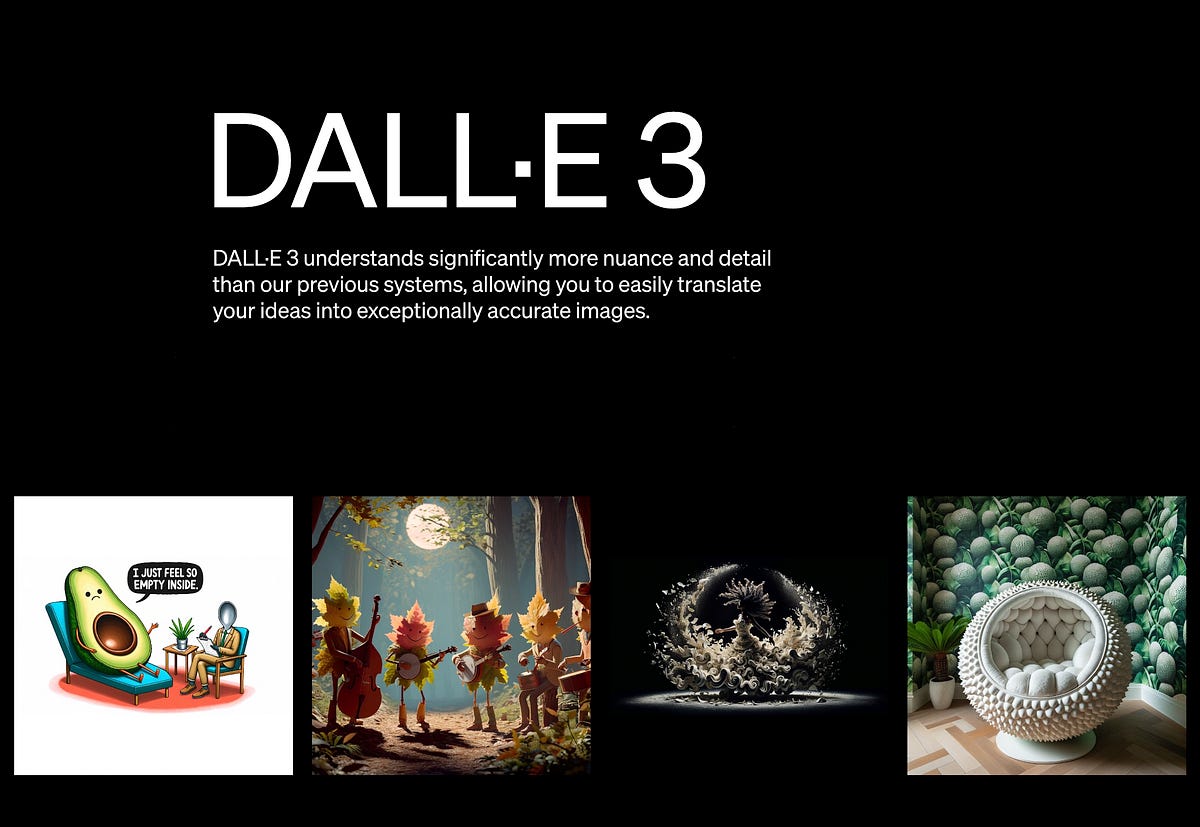
DALL·E 3 represents one of the most sophisticated advancements in generative artificial intelligence. Developed by OpenAI, DALL·E 3 is an image generation model capable of creating highly realistic and contextually accurate images from natural language prompts. It is the third major iteration in the DALL·E series, and it refines the ability to translate human imagination into visual form with an unprecedented degree of fidelity, coherence, and creativity.
Where early image generation models often struggled with compositional accuracy and detail, DALL·E 3 introduces a new level of precision and control. It is deeply integrated with ChatGPT, allowing users to generate, refine, and iterate on images using conversational language. The model not only understands textual descriptions but also interprets nuances, styles, and artistic intents. Whether you are an artist, designer, educator, marketer, or casual user, learning to use DALL·E 3 effectively opens up an entirely new realm of creative potential.
This comprehensive guide explores the foundations of DALL·E 3, how to use it in practical and advanced workflows, how its prompting system works, and how users can achieve professional-quality results through iteration, composition, and ethical usage.
Understanding What DALL·E 3 Is
DALL·E 3 is a generative image model that uses deep neural networks to transform natural language descriptions into images. The model is built upon diffusion architecture—a type of generative modeling that starts from random noise and gradually refines it into an image that fits the given prompt. Unlike earlier models such as DALL·E and DALL·E 2, DALL·E 3 achieves a near-seamless alignment between textual instructions and visual output.
The name “DALL·E” itself is a combination of “Dalí,” a nod to the surrealist painter Salvador Dalí, and “WALL·E,” the Pixar robot known for creativity and curiosity. This blend captures the model’s essence: an AI that can imagine and construct entirely new visual worlds from words.
DALL·E 3 builds upon OpenAI’s research into multimodal models—systems that understand and generate both text and images. It is tightly integrated with OpenAI’s language models, particularly GPT-4 and ChatGPT. This integration enables a two-way dialogue: you describe what you want, and the AI refines your vision through conversation, adjusting style, color, composition, or subject matter interactively.
The model supports a wide range of styles, from hyperrealistic photography and cinematic lighting to 2D illustrations, digital paintings, and abstract art. It also features improved coherence when generating scenes with multiple objects, characters, or interactions. Where previous versions sometimes misaligned text and visual elements, DALL·E 3 demonstrates a human-like understanding of relationships, perspective, and spatial composition.
How DALL·E 3 Works
The operation of DALL·E 3 can be understood as a multi-step generative process. It begins with a text prompt that describes an image. The model encodes this text into a latent space—a mathematical representation of meaning and context—and then uses a diffusion process to generate an image that corresponds to this representation.
Diffusion models are based on a simple but powerful principle. They start with random noise, similar to static on a television screen. The model then iteratively removes noise in a guided way, informed by the encoded text prompt, until a coherent image emerges. Each step refines details and aligns visual components with the semantic intent of the text.
DALL·E 3 benefits from extensive multimodal training. It has been trained on large datasets of text-image pairs that teach it how words relate to visual forms. This training enables it to understand not only nouns and adjectives but also relational phrases, stylistic cues, and abstract concepts. It can distinguish between “a cat on a couch” and “a couch on a cat,” correctly interpreting the grammatical structure to produce accurate results.
The integration with ChatGPT enhances this capability further. ChatGPT acts as a natural-language interface that helps users express and refine their prompts. When users provide an ambiguous description, ChatGPT can clarify intent through dialogue, ensuring that DALL·E 3 receives an unambiguous, structured prompt. The result is a dramatically improved user experience—more intuitive, interactive, and accessible.
Getting Started with DALL·E 3
DALL·E 3 is accessible through OpenAI’s platforms, including ChatGPT Plus and the OpenAI API. Users interact with it through a conversational interface where text prompts are submitted and corresponding images are generated in seconds. The process of getting started is remarkably straightforward, but understanding how to craft effective prompts and refine results takes practice and experimentation.
When using DALL·E 3 within ChatGPT, users simply type a description of the image they want to create. The model responds with one or more image options that match the request. If the result isn’t quite what you envisioned, you can refine it by describing the desired changes conversationally. The system understands context, so you can say, “make it more cinematic,” “add a mountain in the background,” or “change the lighting to sunset,” and the model will generate a modified version accordingly.
For developers, DALL·E 3 can be accessed via the OpenAI API. The API allows programmatic control over image generation, size, style, and variation, enabling integration into applications, creative workflows, or content-generation systems.
Users can also edit existing images by uploading them and instructing DALL·E 3 to make specific modifications. This feature, known as inpainting, allows for precise edits—adding or removing objects, changing backgrounds, or adjusting compositions without recreating the entire image.
Crafting Effective Prompts
Prompting lies at the heart of using DALL·E 3 effectively. The model’s ability to generate detailed, coherent images depends on the clarity and specificity of the input prompt. While DALL·E 3 is far more robust than its predecessors in understanding natural language, certain best practices enhance its performance.
A well-crafted prompt describes not only the subject but also style, setting, perspective, and mood. For instance, “a fox in a forest” produces a generic image, while “a hyperrealistic photograph of a red fox standing on moss in a misty pine forest at dawn, soft lighting and shallow depth of field” yields a much richer and more controlled result.
DALL·E 3 understands descriptive and stylistic modifiers, including artistic genres, lighting conditions, and compositional techniques. Terms like “cinematic,” “oil painting,” “isometric illustration,” or “macro photography” guide the model’s aesthetic choices. Similarly, emotional cues such as “melancholic,” “vibrant,” or “dreamlike” influence color palette and atmosphere.
Another important aspect of prompting is iteration. Because DALL·E 3 can refine images interactively, users often start with a broad prompt and narrow down to the ideal composition through feedback. This process mimics a conversation with an artist, where you guide the creative process by responding to intermediate drafts.
The key to effective prompting is balance—providing enough detail to direct the model without overconstraining its creativity. Excessively rigid prompts may limit the model’s interpretative power, while vague descriptions may produce unpredictable results.
Styles, Composition, and Artistic Control
DALL·E 3’s versatility spans an extraordinary range of visual styles. It can emulate traditional media such as watercolor, charcoal, or oil painting; mimic digital aesthetics like 3D rendering or vector art; and replicate photographic realism indistinguishable from real-world images.
Understanding how to control style allows users to align output with creative intent. By combining descriptive terms like “in the style of Studio Ghibli animation” or “inspired by Renaissance art,” you can direct the model toward particular visual traditions. However, DALL·E 3 does not copy specific artists’ work—it synthesizes new imagery inspired by stylistic characteristics, maintaining ethical distance from imitation.
Composition control in DALL·E 3 is achieved through spatial and relational language. You can specify positioning—“a castle on a hilltop overlooking a lake,” “a cat sitting beside a vase of flowers,” or “a person walking toward the camera on a rainy street.” The model accurately interprets spatial prepositions and visual relationships, ensuring coherent layouts.
Lighting and atmosphere are equally significant for realism and emotional tone. Words like “sunset,” “moonlit,” “neon glow,” or “backlit portrait” guide illumination. DALL·E 3’s diffusion process models light behavior convincingly, making lighting control one of the most powerful tools for visual storytelling.
Advanced Techniques: Variations and Revisions
DALL·E 3’s ability to generate variations allows for exploration of different artistic directions. Once an image is created, users can request alternate versions that reinterpret the same concept with new angles, styles, or color schemes. This function is invaluable for creative professionals who wish to explore multiple possibilities quickly.
Revisions take this concept further. Instead of starting from scratch, you can modify existing images by specifying changes. For example, you might say, “make the background snowy,” or “replace the cat with a dog.” The model uses inpainting to edit targeted areas while preserving the rest of the composition.
This iterative workflow mirrors real-world design processes, where creators build upon previous drafts to refine their vision. DALL·E 3’s conversational refinement feature within ChatGPT makes this process fluid and natural. The AI maintains context across iterations, ensuring continuity in tone, composition, and style.
Integration with ChatGPT
The integration between DALL·E 3 and ChatGPT is one of the model’s most transformative aspects. Instead of relying on static prompt writing, users can generate and edit images interactively through dialogue. This combination merges the creativity of a conversational assistant with the visual imagination of a generative model.
When using ChatGPT with DALL·E 3, you describe the image in natural language. ChatGPT reformulates your request into an optimized prompt for DALL·E 3. After the image is generated, you can provide feedback—ask for stylistic adjustments, compositional changes, or additional elements—and the system regenerates the image based on your feedback.
This conversational workflow lowers the barrier to entry for users unfamiliar with technical prompt engineering. It also enables complex, multi-stage creative projects. For instance, you might first generate concept art for a character, then ask the model to place that character in different settings or emotional contexts, refining details step by step.
The integration also supports text-based image editing. If you upload an image, ChatGPT can interpret its contents and apply targeted edits. This bridges the gap between textual creativity and visual design, enabling a seamless human-AI collaboration.
Image Editing and Inpainting
DALL·E 3 introduces advanced inpainting capabilities that allow for precise image editing. Inpainting is the process of modifying parts of an existing image while keeping the rest unchanged. It enables tasks such as object addition, removal, background alteration, and visual corrections.
To use inpainting, users upload an image and describe the modification. For instance, “add a blue umbrella in the woman’s hand,” or “replace the cloudy sky with a sunset.” The model identifies the relevant region and regenerates that section consistent with the rest of the image.
Inpainting extends beyond aesthetic tweaks—it’s also valuable for design iteration, product visualization, and storytelling. Designers can prototype new ideas by modifying real photographs, while artists can enhance compositions dynamically.
The model’s contextual awareness ensures that edits blend seamlessly, preserving lighting, color harmony, and perspective. This is particularly useful for professional workflows, where maintaining visual coherence is essential.
Ethical Use and Content Limitations
With powerful creative tools come significant ethical responsibilities. OpenAI has implemented strict safeguards in DALL·E 3 to prevent misuse, including restrictions against generating harmful, violent, or explicit content. The model also avoids reproducing identifiable individuals or creating images that could be used for deception.
Users are expected to follow ethical guidelines in both personal and professional use. This includes respecting privacy, avoiding misinformation, and acknowledging the distinction between AI-generated and real imagery. Transparency in using AI-generated content is increasingly important in journalism, advertising, and education.
OpenAI also encourages the responsible use of DALL·E 3 for creative exploration rather than imitation. While users can request stylistic inspiration, the system does not replicate specific artists’ copyrighted works. Instead, it synthesizes unique compositions that draw on general artistic traditions.
The democratization of image generation raises broader questions about authorship, authenticity, and creative labor. By understanding these issues and engaging responsibly, users help shape an ethical ecosystem for generative AI technologies.
Applications of DALL·E 3
The versatility of DALL·E 3 enables applications across virtually every creative and professional domain. In design, it accelerates ideation and prototyping, helping artists visualize concepts instantly. In education, it serves as an interactive tool for learning about art, science, and storytelling.
Marketing and advertising professionals use DALL·E 3 to generate campaign visuals, brand concepts, and product mockups. Filmmakers and game designers use it for worldbuilding, character design, and storyboarding. The model can also assist architects, fashion designers, and illustrators by rapidly producing conceptual imagery that would otherwise take hours or days to create.
Beyond creative industries, DALL·E 3 supports research, communication, and accessibility. It can generate educational diagrams, visualize abstract data, or help non-visual learners grasp complex ideas through imagery. Its capacity to transform language into visuals bridges the gap between verbal and spatial reasoning.
Troubleshooting and Limitations
Despite its sophistication, DALL·E 3 is not infallible. It can occasionally misinterpret ambiguous prompts, produce inconsistent proportions, or overemphasize certain details. Users may also encounter variation in realism depending on the requested style or complexity of the scene.
When results deviate from expectations, refinement through iterative prompting is the most effective solution. Clarifying details such as perspective, lighting, or relationships between objects often resolves inconsistencies. Moreover, understanding the model’s biases—arising from patterns in training data—helps anticipate potential inaccuracies.
Resolution limitations also exist, as the model generates images at predefined sizes optimized for web and presentation use. While these images are suitable for digital projects, they may require post-processing for print-quality output.
Nonetheless, as generative models evolve, these constraints continue to diminish. Each new iteration of DALL·E expands fidelity, resolution, and compositional intelligence, pushing the boundaries of what AI-generated imagery can achieve.
The Future of DALL·E and Generative Visual AI
DALL·E 3 is not merely a creative tool—it represents the vanguard of a larger transformation in human-computer interaction. Future iterations will likely deepen multimodal integration, enabling seamless interplay between text, image, audio, and video.
Generative AI is evolving toward fully interactive creativity, where users co-create with models that understand context, emotion, and intent. The fusion of visual and linguistic intelligence will empower new forms of storytelling, education, and artistic collaboration.
In professional domains, AI image generation will augment, not replace, human creativity. Artists will use models like DALL·E to explore new aesthetic frontiers, accelerating workflows and expanding imagination. Businesses will leverage them for agile visual communication, while educators will use them to make knowledge more tangible and engaging.
As these systems grow more capable, ethical stewardship will remain paramount. Ensuring transparency, respecting intellectual property, and maintaining human oversight will determine how society harnesses generative AI responsibly.
DALL·E 3 embodies a vision of creativity augmented by technology—a vision where ideas can take visual form instantly, where imagination flows as freely as language, and where the boundary between art and computation dissolves.
Conclusion
Learning to use DALL·E 3 is not merely about mastering a tool; it is about engaging with a new form of creative dialogue between humans and machines. The model transforms text into visual reality with astonishing precision, guided by principles of natural language understanding, artistic control, and ethical design.
By understanding its mechanics—prompting, inpainting, variation, and conversational refinement—users can unlock the full power of this generative system. Whether used for art, education, design, or exploration, DALL·E 3 stands as a testament to how far artificial intelligence has come in bridging imagination and expression.
The essence of DALL·E 3 lies in its ability to empower human creativity. It does not replace the artist’s vision; it amplifies it. Through thoughtful collaboration and responsible use, it enables anyone to turn words into worlds—transforming imagination into imagery, one prompt at a time.