How the Bombay duck became a dominant fish in the East China Sea
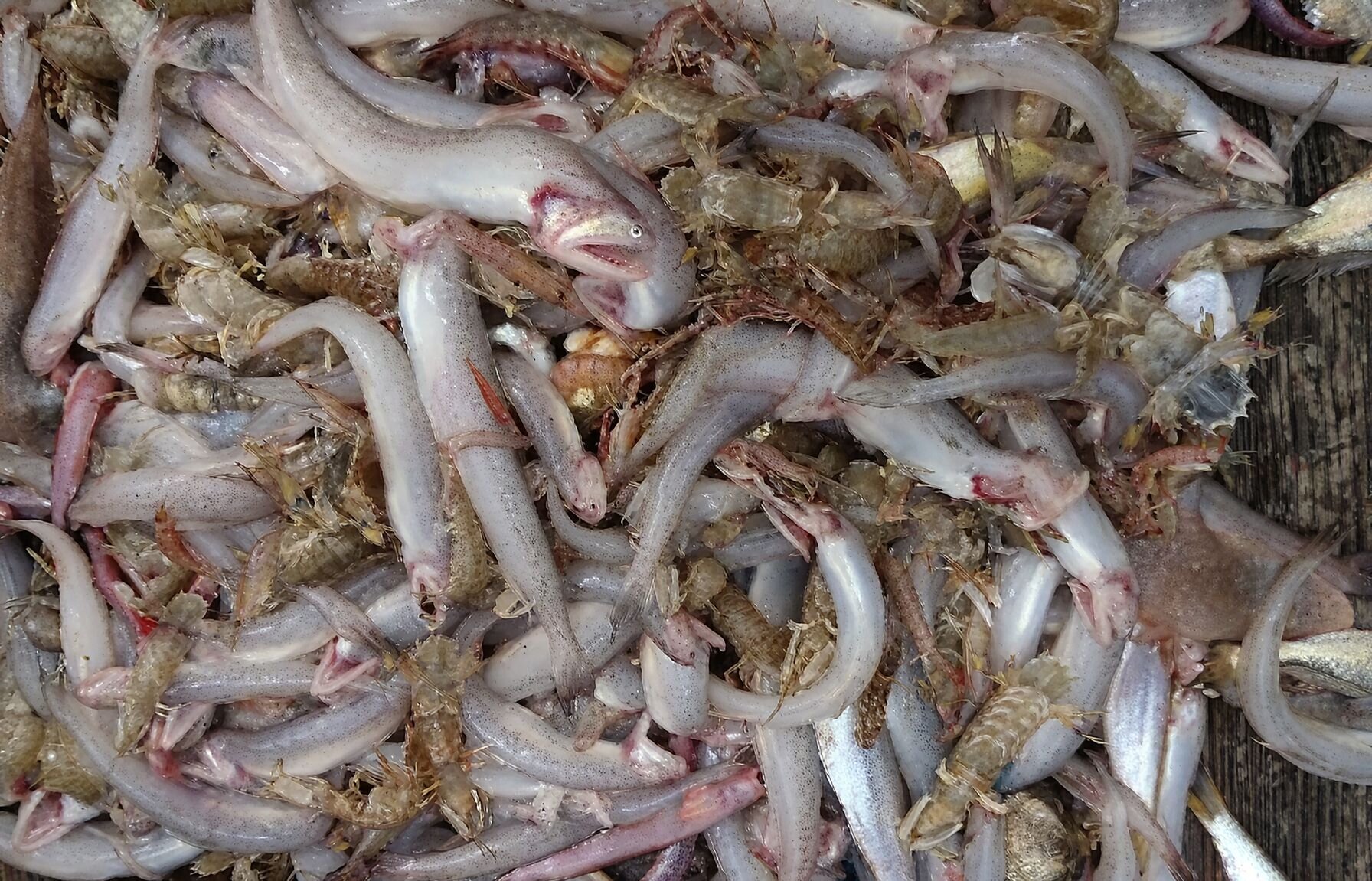
Once a minor bycatch species in the East China Sea, the Bombay duck underwent a dramatic population surge, accounting for 83% of the catch in the region’s main fishing grounds in 2005. A new genetic study suggests that the fish may have already possessed traits that helped it thrive as coastal waters became increasingly affected by low oxygen, pollution and other environmental pressures.
The rise of the Bombay duck (Harpadon nehereus) presents an unusual ecological puzzle. Unlike a species introduced from another part of the world, this fish is native to the northern Indian Ocean and western Pacific. Yet its sudden dominance in the East China Sea resembles the ecological disruption often associated with invasive species.
For years, fisheries in the region caught relatively few Bombay ducks. By 2005, however, the fish made up 83% of the total catch in the East China Sea’s main fishing grounds. Its abundance surged again in subsequent years, raising questions about what allowed a previously minor species to become so dominant.
Researchers from Ocean University of China, Sun Yat-sen University’s Shenzhen campus and other institutions have now investigated the fish’s genetic makeup for clues. Their findings point to genetic characteristics associated with low-oxygen tolerance, salt and water regulation, and immune function. These traits may have given the species an advantage as coastal conditions changed.
“For a long time the Bombay duck was merely a small bycatch species in the East China Sea, and for years it was not even recorded in official statistics,” Bin Kang, first author of the paper, told Phys.org.
“Then, around 2005, it erupted: it came to account for 83% of the total catch from the main fishing grounds of the East China Sea, and it has broken out repeatedly in the years since—turning from a bit player into a dominant species and reshaping community structure and ecosystem functioning.”
Kang and his colleagues describe this phenomenon as a form of native invasion: a species that already belongs to an ecosystem becomes dominant when environmental changes favor its survival and expansion.
Genetic advantages in changing coastal waters
The researchers suspected that the Bombay duck might have been genetically equipped to cope with difficult environmental conditions long before its population began to surge.
Previous research by Kang and colleagues had examined the fish’s responses to hypoxia, a condition in which oxygen levels in water become unusually low. Their earlier work proposed that declining oxygen levels could be one explanation for the species’ increasing abundance.
The team had also investigated how the fish responds to cold temperatures, along with its anatomy, feeding strategies, growth patterns and exposure to mercury contamination.
Building on those findings, Kang proposed that the Bombay duck might have been preadapted to coastal environments affected by low oxygen, pollution and fluctuating conditions. In this scenario, environmental pressures such as overfishing could have created opportunities for the species to expand by reducing competition for ecological resources.
“Building on my earlier work, we proposed a hypothesis: the Bombay duck may have been genomically preadapted to this hypoxic, polluted and fluctuating environment all along, so that once external pressures arose (overfishing freeing up ecological niches, intensifying hypoxia, etc.) it could expand rapidly,” explained Kang.
To investigate this possibility, the researchers assembled detailed genetic reference sequences for two fish species: the Bombay duck and the closely related brushtooth lizardfish (Saurida undosquamis).
A chromosome-level genome provides a detailed map of an organism’s DNA, organizing most of its genetic material into sequences corresponding to individual chromosomes. Having such reference genomes allowed the researchers to compare the two species and look for genetic differences that might have contributed to their different population histories.
They also analyzed the genomes of 48 Bombay ducks collected from six locations along China’s coast.
The fish from these locations did not form separate genetic groups. Instead, their genetic similarities suggested that the sampled animals belonged to a single interbreeding population across the surveyed coastal region.
The researchers then examined differences in gene families, including genes that had undergone changes in evolutionary selection. Such comparisons can help identify genetic characteristics that may have provided an advantage under particular environmental conditions.
Three copies of a gene linked to low-oxygen responses
One of the most notable findings involved a gene called epas1, which helps regulate the body’s response to low oxygen.
The researchers found three copies of this gene in the Bombay duck genome, compared with just one copy in the brushtooth lizardfish genome.
The finding is particularly interesting because epas1 has previously been associated with adaptations to low-oxygen conditions in different vertebrates, including humans living at high altitudes.
“The epas1 gene has been repeatedly shown to be adaptive for high-altitude hypoxia in different vertebrates including humans,” said Cui. “The Bombay duck genome contains three copies of epas1, which might be consistent with their preadaptation to hypoxia.”
Having additional gene copies could potentially affect how an organism responds to environmental stress. In the Bombay duck, the researchers consider the expanded epas1 gene family a possible genetic advantage in oxygen-depleted waters.
However, the comparison does not establish that the extra copies directly improve the fish’s ability to survive hypoxia. The study identified a genetic difference and a plausible connection to low-oxygen tolerance, but the researchers could not experimentally test its effects.
Other genetic findings also pointed to potential advantages in changing coastal environments. The team’s analyses identified characteristics associated with salt and water balance and immune function. More recent signals of natural selection also highlighted genes linked to immunity.
Together, these results suggest that the Bombay duck may possess several genetic features relevant to surviving environmental stress, rather than relying on a single adaptation.
Why the brushtooth lizardfish mattered
The researchers selected the brushtooth lizardfish as a comparison because it is closely related to the Bombay duck but did not experience a similar population surge.
Comparing related species can help researchers identify genetic differences that might be associated with distinct evolutionary histories. In this case, the lizardfish provided a reference against which the Bombay duck’s genetic characteristics could be examined.
“We sampled and assembled from a single lizardfish to be used as the ‘outgroup.’ Later methods are mostly bioinformatic and are now commonly applied in the field of evolutionary genomics. Genes showing unusual statistics may suggest that they are under natural selection in Bombay duck and might point to the genetic predisposition for the fish to become natively invasive.”
The team also used population-level genetic data to investigate whether geographic separation had produced distinct populations of Bombay ducks along China’s coast.
Finding no clear genetic divisions among the sampled fish suggests that geographic isolation was not a prominent feature of the population they examined. It does not, however, explain exactly when or how the species began expanding so rapidly.
The genetic comparisons instead provide clues about characteristics that may have made the fish particularly successful under changing environmental conditions.
A native species can become an ecological disruptor
The Bombay duck’s rise raises a broader question for marine conservation: can a species already established in an ecosystem become an invasive-like problem without arriving from somewhere else?
Invasive species are commonly associated with organisms introduced into new environments, where they can spread and disrupt existing ecological relationships. But the Bombay duck illustrates another possibility. A native species may become unusually abundant when environmental changes favor its existing biological characteristics.
Overfishing, for example, can reduce populations of other species and leave ecological resources available. At the same time, declining oxygen levels and other changes in coastal waters can alter which organisms are best equipped to survive.
The researchers suggest that these pressures may help explain why some native species suddenly become dominant. Their findings also raise the possibility that genetic information could eventually help identify species with the potential to expand as marine environments change.
“The core implication of this work is that species already genomically preadapted to environments affected by global change may abruptly become new native invaders,” said Kang. “Global change—expanding hypoxia, eutrophication and overfishing that releases ecological niches—may reorganize existing marine communities by elevating these preadapted species into dominance.”
For fisheries managers, this means monitoring ecological risks may require looking beyond non-native species. Native fish populations can also undergo major changes in abundance, potentially affecting other species and the functioning of marine ecosystems.
Kang argues that fisheries and conservation programs should pay closer attention to this possibility, particularly as coastal environments continue to change.
The genetic explanation still needs experimental testing
Despite the findings, important questions remain unanswered. The researchers have identified genetic characteristics that could help explain the Bombay duck’s success, but they have not established that these differences caused its population surge.
One major obstacle is that the Bombay duck is a non-model organism. Unlike laboratory species such as zebrafish, it lacks established experimental tools that would allow researchers to manipulate its genes and directly test their functions.
As a result, the team could not determine whether increasing the number of epas1 copies actually improves the fish’s ability to tolerate low oxygen.
Cui suggested one way to investigate the question: introduce comparable genetic changes into a model fish species and examine whether they improve hypoxia tolerance.
“It would be informative if we could replicate these genomic changes (e.g., by increasing the epas1 copy) in a model fish species (say, the zebrafish or the turquoise killifish) to directly test their role in hypoxia tolerance,” added Cui.
Another possibility is to use genomic and population-level data to assess which native species might become dominant as environmental conditions shift. Such predictions could potentially help fisheries managers identify emerging ecological risks before major population changes occur.
But predicting which species will become invasive-like remains difficult. Genetic advantages alone cannot explain every population surge, particularly when environmental conditions, competition and human activities also influence marine ecosystems.
The Bombay duck’s expansion therefore remains a complex ecological event. Its genome offers evidence of traits that may have helped it take advantage of changing coastal conditions, but further experiments will be needed to establish how much those traits contributed to its rise.
The study was published in Proceedings of the Royal Society B.