Dark matter may be difficult to detect not because it is entirely invisible to experiments, but because its particles could move too slowly to produce measurable signals. A new study suggests that planets and stars could help overcome this problem by capturing these elusive particles over time, allowing scientists to search for their effects through neutrino emissions and excess heat.
Dark matter is thought to account for about 85% of all matter in the universe, yet scientists have never detected it directly. Its presence is inferred mainly from its gravitational effects on stars, galaxies and other cosmic structures.
Most experiments searching for dark matter try to detect particles interacting with ordinary matter. But some possible forms of dark matter may interact so weakly that their signals remain below the sensitivity of existing detectors.
Speed could make the problem even harder. A slowly moving dark matter particle might transfer too little energy during a collision to produce a detectable signal. However, that same low speed could make it easier for a planet or star to capture the particle through gravity.
Alejandro Ibarra, Merlin Reichard and Gaurav Tomar investigated whether this process could provide another way to constrain the properties of dark matter. By combining theoretical calculations with existing observations, they examined how captured particles might affect four celestial objects: Earth, the Sun, Jupiter and white dwarfs.
Why slow-moving particles could accumulate inside celestial bodies
One possibility scientists have explored is that dark matter interacts with ordinary matter through extremely weak electromagnetic forces, in addition to gravity.
For example, its particles might carry a tiny electric charge or behave like miniature magnets. Such properties would allow them to interact with atoms and other particles in ordinary matter, although the interactions could be too weak for conventional detectors to register.
When a dark matter particle passes through a planet or star, collisions with its material can cause it to lose energy. If it loses enough energy, it may no longer have sufficient speed to escape the object’s gravitational pull.
Over time, more particles could become trapped, gradually accumulating in the object’s central regions.
This concentration could increase the likelihood of particles encountering one another. Depending on their properties, some might undergo annihilation, a process in which dark matter particles transform into other particles.
The resulting particles could escape the celestial body or deposit energy inside it, potentially producing additional heat.
That possibility gives scientists two different ways to search for indirect signs of dark matter: looking for particles released by annihilations or measuring excess heat that cannot otherwise be explained.
Four celestial bodies, two ways to search
The researchers examined Earth, the Sun, Jupiter and white dwarfs, using different observational approaches depending on the object.
For Earth and the Sun, they considered searches for neutrinos that could be produced by dark matter annihilations. Neutrinos are extremely difficult to detect because they interact very weakly with ordinary matter. However, they can travel through enormous amounts of material, potentially escaping the interiors of celestial bodies and reaching detectors.
Existing experiments, including IceCube at the South Pole, search for neutrinos that could originate from dark matter annihilations inside the Sun and Earth.
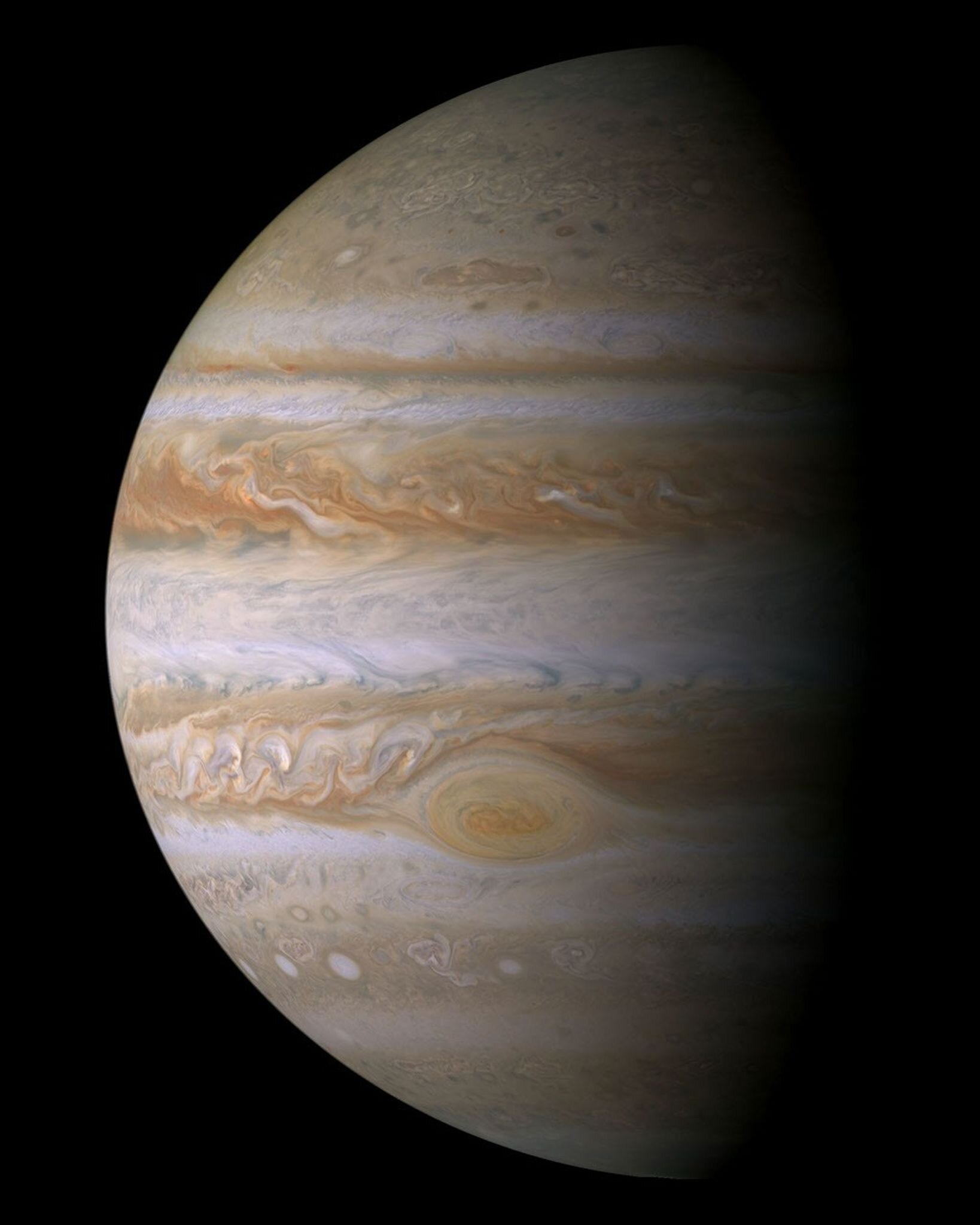
For Jupiter and white dwarfs, the researchers instead investigated the possibility of additional heating.
Unlike the Sun, Jupiter and white dwarfs are not powered by nuclear fusion. This makes them potentially useful for identifying an additional source of energy.
The team calculated how much heat captured dark matter could generate under different assumptions and compared those estimates with the energy each object actually emits.
The logic is straightforward: if a particular dark matter scenario predicts more heating than an object is observed to produce, that scenario can be ruled out.
What the observations rule out
The analysis excluded some combinations of dark matter particle mass and electromagnetic properties that had remained possible after other experiments.
Different celestial bodies proved useful for testing different possibilities. Earth provided particularly useful constraints on dark matter particles carrying a tiny electric charge, while white dwarfs helped limit other possible electromagnetic properties.
The results do not mean scientists have found dark matter. Nor do they establish that dark matter particles actually accumulate inside planets and stars. Instead, they show how existing observations can be used to eliminate some theoretical possibilities without detecting the particles directly.
There is also an important uncertainty in the calculations: the amount of dark matter surrounding a celestial body affects how many particles it can capture over time.
This is particularly relevant to the white dwarfs examined in the study, which are located in the M4 star cluster.
“We do not know the dark matter density there. We used estimated values, so if those values change, our limits could become weaker or stronger,” Tomar notes, referring to the M4 cluster, which contains the white dwarfs considered in the study and where the dark matter density has not been measured and is estimated from models.
In other words, the strength of the constraints depends partly on how much dark matter is actually available for the stars to capture. Different estimates of the surrounding density could change which particle properties can be ruled out.
Colder stars and distant planets could offer new opportunities
The researchers also identified potential directions for future searches.
Colder white dwarfs in regions with higher dark matter densities could be especially useful. If these stars capture dark matter and the particles generate additional heat, that contribution may be easier to distinguish in objects that are otherwise colder.
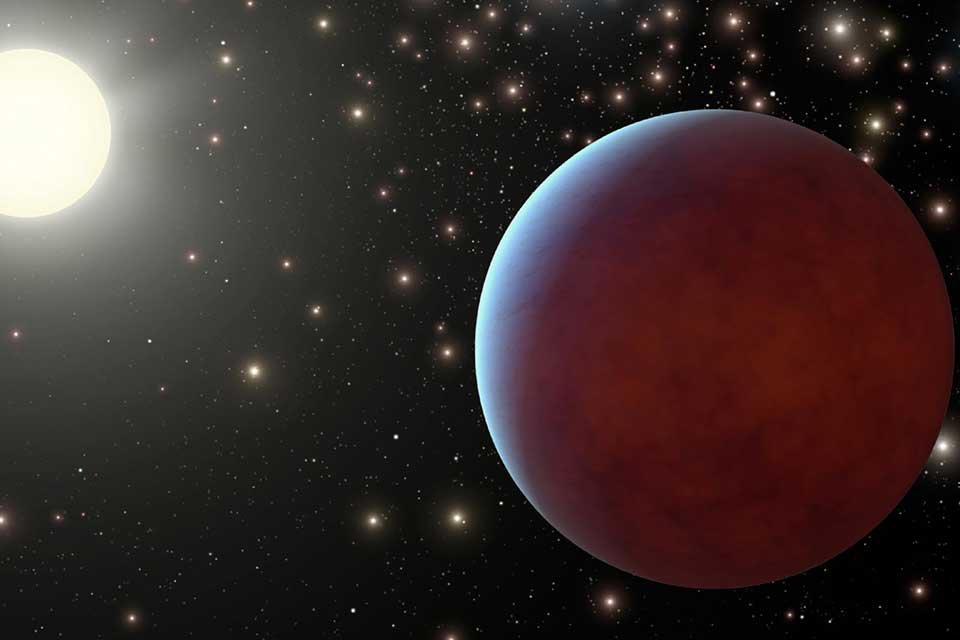
Exoplanets could offer another opportunity. These planets orbit stars beyond our solar system and might also capture dark matter over long periods, potentially making them useful targets for investigating how dark matter interacts with ordinary matter.
For now, the study provides constraints rather than a detection. But by examining how dark matter might affect the temperatures and particle emissions of celestial bodies, researchers can test possibilities that conventional particle detectors may struggle to explore.
The study was posted to the arXiv preprint server.