A 324-million-year-old insect fossil from western Texas suggests that insects did not move directly from aquatic environments to fully terrestrial life. Instead, early insects retained and reshaped aquatic features while living in humid habitats along the boundary between water and land.
The new species, Chosha praecursor, comes from calcareous claystone concretions in the Tesnus Formation of the Marathon Uplift in western Texas. Its fossils preserve unusually detailed anatomical features that allowed researchers to reassess a long-misidentified group of specimens.
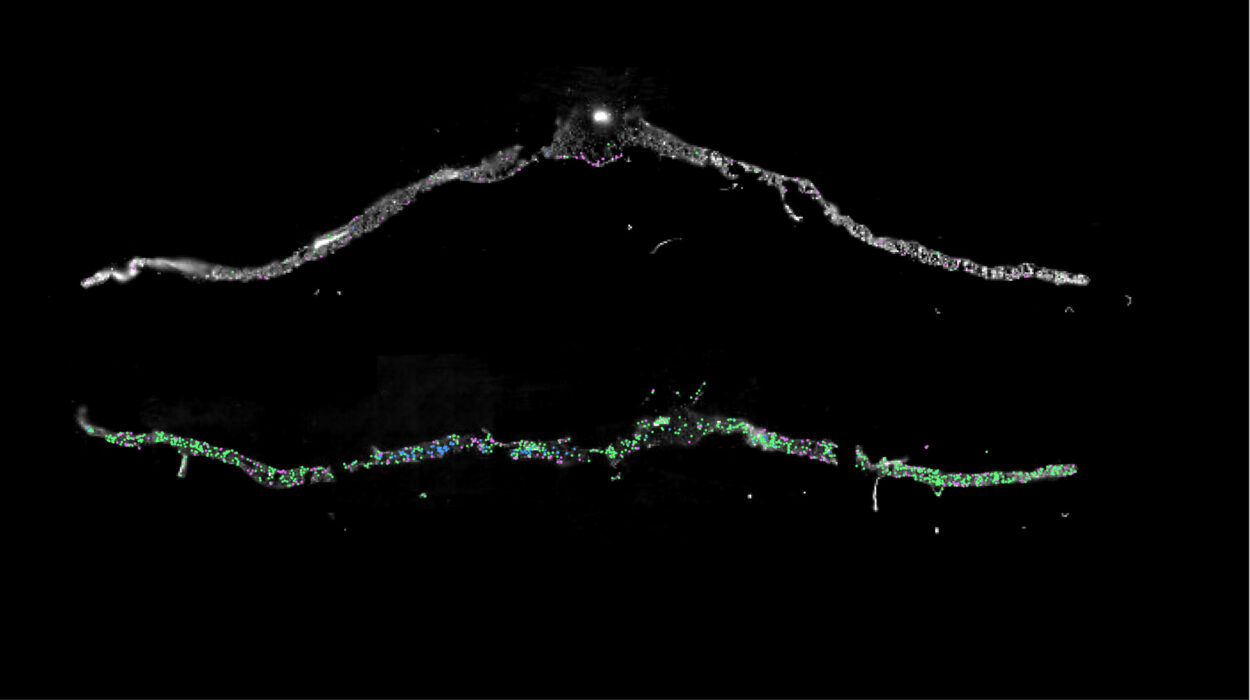
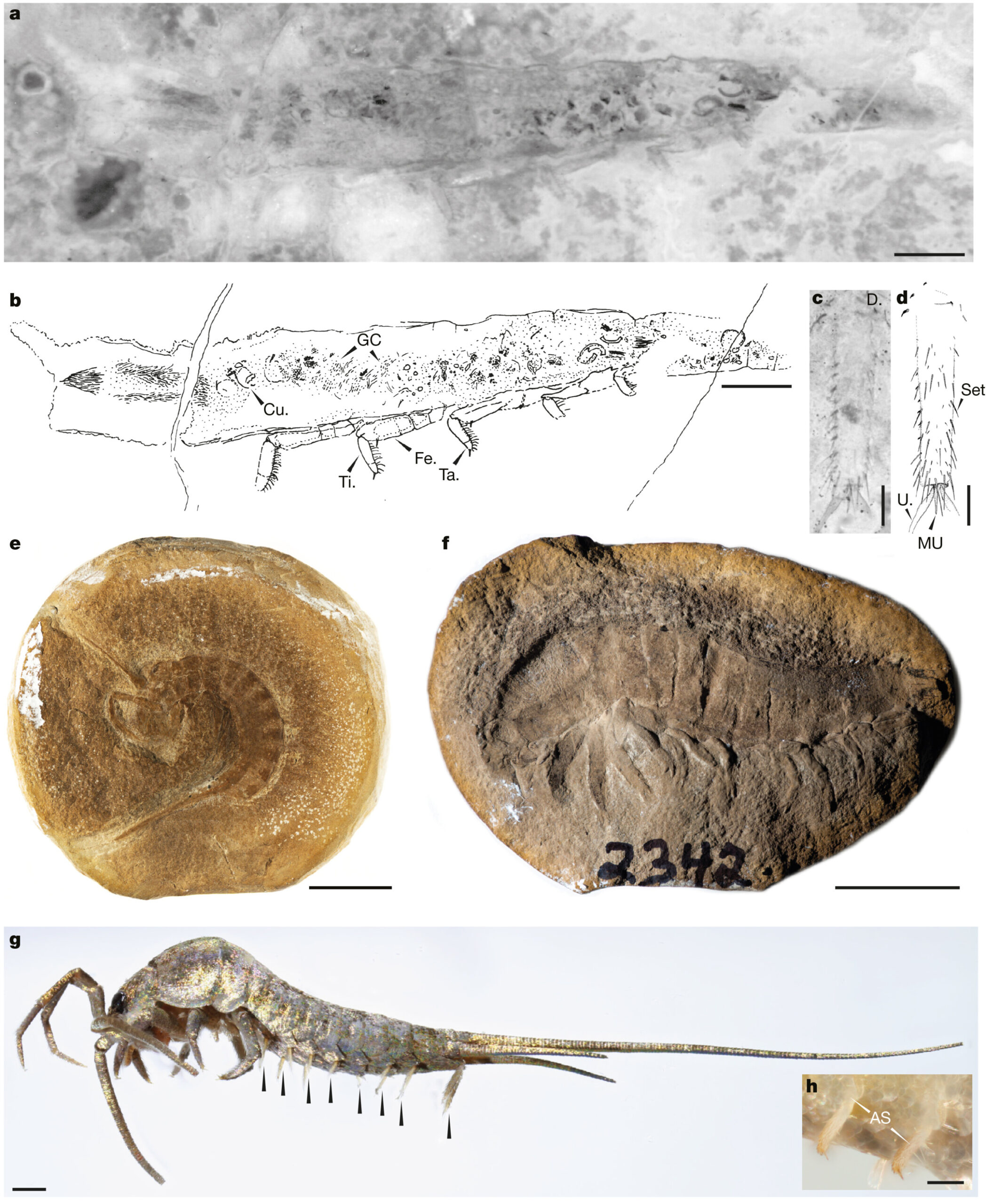
Using cross-polarized light imaging, the team determined that the fossils were not crustacean larvae, as they had previously been interpreted. They represented adult females about 32.09 millimeters long. Including a median tail filament and two cerci, their total body length reached 49.66 millimeters.
The fossils have the basic body organization of insects, including a segmented trunk, six walking legs and an ovipositor. But they also preserve a feature that is absent from living crown-group insects: segments 1 through 9 of the abdomen carried segmented appendages. Toward the rear of the abdomen, those limbs were modified into paddle-like structures.
That combination of traits places C. praecursor among primitive stem insects and provides evidence for a body plan that was still in transition.
Evidence from an 80-million-year gap
The fossils are important partly because of where they fall in the insect fossil record.
Molecular-clock reconstructions suggest that hexapods, the group that includes insects, separated from their marine crustacean relatives and began adapting to life on land as early as the Cambrian-Ordovician interval. But undisputed hexapod body fossils do not appear until the Early Devonian Rhynie Chert, about 405 million years ago.
Clear insect fossils then remain uncommon until the Late Carboniferous. That leaves an approximately 80-million-year gap in the body-fossil record.
To address that gap, the researchers compared C. praecursor with other enigmatic Paleozoic hexapods. Their analysis included Leverhulmia from Early Devonian Scotland and an unnamed hexapod from the Mazon Creek biota of Illinois.
The researchers concluded that all three belonged to a primitive insect stem clade. Together, they represent what the study identifies as the oldest documented insect assemblage globally.
The placement of these fossils pushes evidence for early insect diversification back from the Late Carboniferous into the Early Devonian and helps reconcile, to some degree, the difference between molecular-clock estimates and the body-fossil record.
An insect body plan still carrying aquatic traits
The anatomy of C. praecursor also provides evidence about how the insect body itself changed.
Modern hexapods have six walking legs attached to the thorax, while abdominal appendages have almost entirely disappeared. Paleozoic stem insects, in contrast, commonly retained segmented limbs on the abdomen.
In C. praecursor, some of those abdominal structures had become paddle-like. The researchers interpret this as evidence that early insects retained and remodeled ancestral aquatic structures during their transition toward life on land.
They propose that the reduction of abdominal appendages was an important innovation in terrestrial adaptation. As swimming appendages inherited from crustacean ancestors were lost, these structures were progressively simplified, eventually producing the body organization characteristic of modern insects.
The ovipositor preserved in C. praecursor also indicates that early insects already had varied adaptations for laying eggs. The researchers identify this as a structural foundation for later occupation of different terrestrial microhabitats.
Living between water and land
The setting where C. praecursor was preserved provides another part of the picture.
The fossil-bearing rocks formed in near-shore, shallow-water delta-coastal environments. From this evidence, the researchers infer that the insect lived a semi-aquatic, amphibious lifestyle in humid environments where water and land met.
Their reconstruction suggests that stem-group insects combined aquatic adaptations for movement and respiration with a terrestrial body architecture. Their likely food included humus, plant detritus and fungal spores.
The researchers therefore place these early insects in aquatic-terrestrial transition zones, where they likely acted as decomposers and consumers.
Taken together, C. praecursor and the related Paleozoic fossils support a gradual model of insect terrestrialization. Rather than becoming fully terrestrial immediately after moving onto land, early insects retained, remodeled and eventually reduced ancestral aquatic structures while adapting to environments at the water-land boundary.
The study was published in Nature.