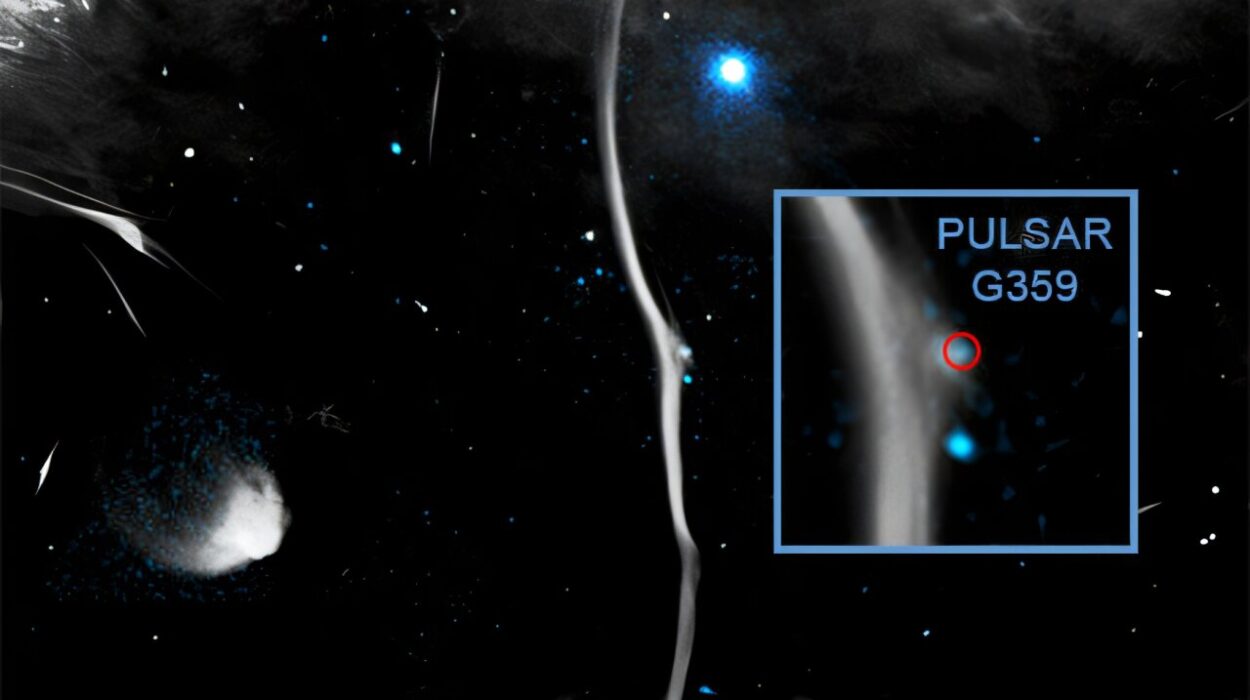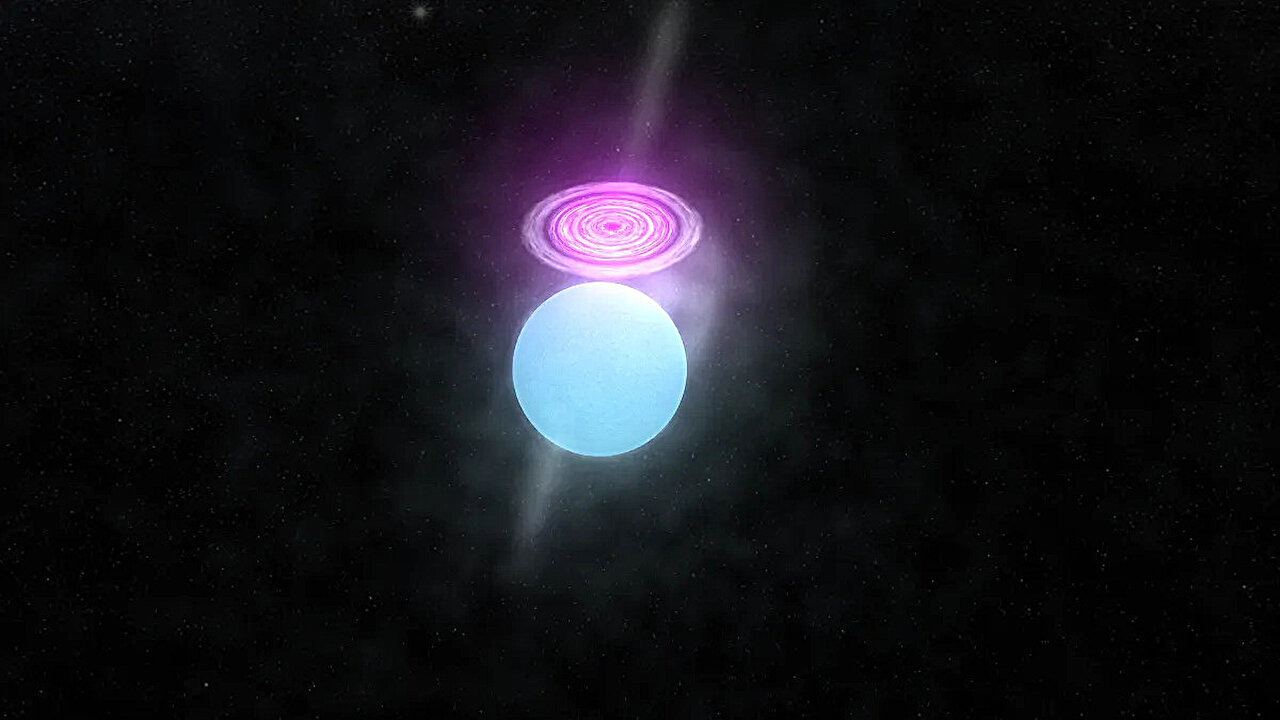
The highest-energy gamma rays coming from the giant Cygnus Bubble may be produced by cosmic rays launched by Cygnus X-3, a distant microquasar that can accelerate protons to energies of about 10 PeV. A new study finds that continuous injection of these particles from the compact binary, followed by their diffusion through surrounding gas, can reasonably reproduce the gamma-ray flux and spatial distribution observed by the LHAASO observatory above 400 TeV.
A different source for the highest-energy gamma rays
The Cygnus region of the Milky Way contains a large extended source of ultrahigh-energy gamma rays known as the Cygnus Bubble. The LHAASO observatory has detected gamma-ray emission from this region extending to around 1 PeV. The source covers an angular radius of about 6 degrees on the sky.
The Cygnus Bubble has generally been associated with the Cygnus X star-forming region, especially the Cygnus OB2 stellar association, which is about 1.4 kiloparsecs from Earth. The new study examines a different possibility for the highest-energy part of the emission. It proposes that gamma rays above 400 TeV may instead be connected to Cygnus X-3, a microquasar located about 9.67 kiloparsecs away.
Cygnus X-3 is a compact binary system. Earlier LHAASO observations found that its ultrahigh-energy gamma-ray emission varies with the system’s 4.8-hour orbital period. That variation points to acceleration and emission in a compact region associated with the binary, likely involving a subrelativistic wind or jet.
The researchers argue that the compact source and the much larger Cygnus Bubble can therefore be part of the same system. In their model, Cygnus X-3 accelerates protons to very high energies. The protons then escape the binary and spread through the surrounding interstellar medium. Their interactions with gas produce gamma rays over a much larger region.
This would make the extended gamma-ray structure a cosmic-ray halo around Cygnus X-3.
Why protons matter
The gamma rays detected directly from the compact Cygnus X-3 system reach energies beyond 1 PeV. The researchers argue that such energies require a hadronic accelerator, meaning one that accelerates protons or other atomic nuclei rather than relying on high-energy electrons. Severe synchrotron and inverse Compton losses would prevent electrons from reaching PeV energies under the conditions considered.
The model therefore follows protons after they leave the binary.
Inside the binary system, the accelerated protons lose only a small fraction of their energy. They can escape into the surrounding interstellar medium without greatly changing their original energy distribution. Once outside the binary, they spread through space by diffusion. As they move through gas, some collide with gas particles and produce gamma rays.
The resulting gamma-ray emission does not have to be concentrated at the location of Cygnus X-3. Instead, it can extend for hundreds of parsecs around the accelerator.
The size of this structure depends on how quickly the cosmic rays diffuse and how much gas is available for their interactions. The researchers find that relatively slow diffusion near the source is needed to keep enough high-energy protons in the region to produce the observed emission.
The large distance does not rule out Cygnus X-3
At first, the distance to Cygnus X-3 appears to create a major problem.
At about 9.67 kiloparsecs, Cygnus X-3 is far behind the Cygnus OB2 association. If the same observed gamma-ray flux came from a source at the greater distance, a simple calculation based only on ordinary distance dilution would suggest a much greater luminosity requirement. The researchers estimate that the difference in distance would increase the required gamma-ray luminosity by roughly 1.5 orders of magnitude under that simple assumption.
But an extended cosmic-ray halo does not behave like a small point source whose radiation simply spreads outward from one location.
The observed gamma-ray flux depends on the distributions of both cosmic rays and gas. When cosmic rays are continuously injected and spread through a large region, the relationship between observed flux and distance can differ from the familiar inverse-square dilution of a point source. The physical size of a structure with a fixed angular extent also grows with its distance.
The researchers therefore tested whether a source as distant as Cygnus X-3 could produce the observed six-degree gamma-ray structure.
Their calculations modeled cosmic-ray transport from the binary into the interstellar medium and included gas extending around the source on scales of up to about 1 kiloparsec. The model also accounted for the fact that the gas distribution changes with distance above and below the Milky Way’s disk.
How the cosmic-ray halo forms
The researchers modeled the particles as protons that are continuously injected by Cygnus X-3.
The proton injection spectrum was represented as a power law with an exponential cutoff. For the main calculations, the spectral index was fixed at 2.0 and the cutoff energy at 10 PeV. The model does not specify the exact physical mechanism that accelerates the protons, although the study notes that super-Eddington accreting X-ray binaries have been proposed as possible accelerators of protons to several tens of PeV.
After escaping the binary, the protons diffuse through the interstellar medium.
The model uses a diffusion coefficient that depends on particle energy. Two descriptions of interstellar turbulence were considered, known as Kolmogorov and Iroshnikov-Kraichnan turbulence. The normalization of the diffusion coefficient was treated as a free parameter because the origin and strength of interstellar turbulence are not fully understood.
The researchers also calculated the time required for protons to lose energy through collisions with surrounding gas. For the conditions considered, these collisions are the dominant energy-loss process for the protons after they enter the interstellar medium.
The model then converts the resulting proton distribution into gamma-ray emission using the expected physics of proton-proton collisions.
The gas around Cygnus X-3 is important
The amount and distribution of gas matter because the gamma rays are produced when cosmic rays interact with that gas.
The researchers first used a simplified model in which the hydrogen density was uniform throughout the emission region. They then considered a more realistic distribution in which the gas density decreases with height above the Galactic plane.
Cygnus X-3 lies at a Galactocentric radius of about 10 kiloparsecs. At this location, the researchers adopted a gas scale height of 300 parsecs, based on empirical models of the Milky Way’s atomic hydrogen distribution. This produces a vertically extended target for the cosmic rays.
For the main nonuniform model, the midplane gas density was set to 1 particle per cubic centimeter. Within the full emission region, the average gas density in that model is about 0.38 particles per cubic centimeter.
The modeled emission region was given a physical radius of 1 kiloparsec. At the 9.67-kiloparsec distance of Cygnus X-3, that corresponds to an angular radius of about 6 degrees, matching the region examined in the LHAASO observations.
The observed radial pattern supports continuous injection
The researchers did more than compare the total gamma-ray flux.
They also examined how the gamma-ray intensity changes with distance from the center of the Cygnus Bubble. This radial distribution contains information about how cosmic rays are spread through the region and how they were injected over time.
For this comparison, the researchers used LHAASO data for photons above 400 TeV within the six-degree region. The data contained 66 photon-like events, with an estimated cosmic-ray background of 9.5 events. The observed photon distribution was combined with the LHAASO energy spectrum to derive the radial gamma-ray flux above 400 TeV.
They then compared that distribution with the predicted emission from continuously injected cosmic rays.
Using a diffusion coefficient of 3 × 10²⁹ square centimeters per second at 1 PeV, the model could reasonably reproduce both the observed gamma-ray flux and the radial intensity profile above 400 TeV. This worked for both turbulence models considered.
The fit did not require fine-tuning the model parameters beyond adjusting the cosmic-ray injection power to match the observed flux.
That result is important to the proposed identification because the radial pattern is consistent with cosmic rays being continuously supplied by a central, point-like accelerator and then spreading outward.
The required energy is within Cygnus X-3’s budget
The model also has to supply enough energy to produce the observed gamma rays.
For a uniform gas density of 1 particle per cubic centimeter, the researchers calculated cosmic-ray injection powers between 3.6 × 10³⁷ and 8.0 × 10³⁷ ergs per second for injection durations of 400 to 100 thousand years, depending on the assumed turbulence model.
The kinetic luminosity of Cygnus X-3 is estimated at about 5 × 10³⁹ ergs per second. With that value, the required fraction of the system’s kinetic power going into cosmic-ray acceleration is about 0.7% to 1.6% for the homogeneous gas model.
The researchers also tested a lower gas density of 0.1 particle per cubic centimeter. Under that assumption, the required acceleration efficiency rises to 7% to 16%. Even in that case, the calculated energy budget remains sufficient in the model for accelerating cosmic rays to about 10 PeV.
The more realistic nonhomogeneous gas distribution requires somewhat more power. For the adopted gas model, the required acceleration efficiency is 1.6% to 3.2% for the same nominal kinetic luminosity of Cygnus X-3.
These calculations lead the researchers to conclude that the energy requirements do not rule out Cygnus X-3 as the source of the highest-energy gamma rays from the Cygnus Bubble.
A possible cavity around the source
Powerful cosmic-ray sources can also alter their surrounding gas.
The researchers considered the possibility that pressure from the cosmic rays could excavate a low-density cavity around Cygnus X-3. They tested a cavity with a radius of 100 parsecs and assumed that the displaced gas accumulated in a thin shell around it.
The cavity produces a characteristic feature near the center of the predicted gamma-ray intensity profile. But it has little effect on the total gamma-ray flux, at least for the energies examined above 1 TeV.
The researchers therefore did not include the evacuation effect in the rest of their analysis.
They note that the predicted central feature cannot be resolved with current LHAASO data. Future observations with better angular resolution could potentially reveal whether such a feature is present.
The diffusion rate remains an important uncertainty
The proposed halo depends strongly on how quickly the cosmic rays move through space.
The researchers’ preferred diffusion coefficient at 1 PeV is 3 × 10²⁹ square centimeters per second. This is lower than values obtained by simply extrapolating commonly used Galactic diffusion coefficients to PeV energies.
One possible explanation is additional turbulence produced by the powerful outflows from Cygnus X-3. The study notes that cosmic-ray streaming can suppress diffusion close to sources, although calculations cited by the researchers suggest that this effect may be confined to only a few tens of parsecs. Strong turbulence from the relativistic jets of Cygnus X-3 could instead produce a larger region of reduced diffusion.
The researchers examine whether the required level of turbulence is physically plausible. Their estimates depend on quantities such as the magnetic-field strength and the correlation length of the turbulence. For some assumed conditions, they obtain turbulence levels that could produce the required diffusion coefficient. But the study also emphasizes that there are uncertainties in understanding the interaction between PeV cosmic rays and magnetic turbulence.
In particular, the current model does not include a transition in the cosmic-ray scattering regime that is expected when particle gyroradii become larger than the correlation length of the magnetic turbulence. The researchers identify this as an issue that should be incorporated into future modeling of PeV cosmic-ray propagation.
The lower-energy gamma rays may have a different origin
The proposed connection between Cygnus X-3 and the Cygnus Bubble is focused mainly on gamma rays above 400 TeV.
The researchers also tested whether Cygnus X-3 could account for the broader gamma-ray emission from 1 TeV to 2 PeV. To reproduce that wider energy range, the model requires a softer cosmic-ray injection spectrum.
For an injection duration of 1 million years, an Iroshnikov-Kraichnan turbulence spectrum, and the same diffusion coefficient normalization used in the main analysis, the researchers obtain an injection spectral index of 2.45 with a 10-PeV cutoff. The required cosmic-ray power above 1 TeV is 5.6 × 10³⁸ ergs per second, or about 11% of the estimated kinetic luminosity of Cygnus X-3.
However, extending that same spectrum down to 1 GeV would require more power than the kinetic luminosity of Cygnus X-3. The researchers note that a harder cosmic-ray spectrum below 1 TeV cannot be excluded, so the LHAASO observations do not constrain the low-energy spectrum.
For this reason, the study treats the lower-energy GeV-to-TeV emission of the Cygnus Bubble as foreground radiation associated with the Cygnus OB2 region, while assigning the highest-energy component to the proposed Cygnus X-3 halo.
Cygnus X-3 could have two related high-energy components
The researchers describe Cygnus X-3 as a possible dual source.
The orbitally modulated PeV gamma rays detected from the compact system would come from the very small region around the binary. At larger distances, particles injected by the system could populate extended jet-termination regions and the surrounding interstellar medium.
In this picture, the same microquasar is associated with both a compact ultrahigh-energy source and a much larger cosmic-ray halo.
The proposed interpretation also places Cygnus X-3 within a broader group of Galactic microquasars associated with ultrahigh-energy gamma-ray halos. The researchers compare it with several other microquasars for which gamma-ray observations have indicated particle acceleration farther out in jet-termination shocks.
The specific proposal for the Cygnus Bubble, however, concerns its highest-energy emission. The study does not replace the established association of the lower-energy emission with the Cygnus OB2 region.
Future observations could test the proposal
Current LHAASO observations do not have enough angular resolution to fully separate the different structures along this crowded line of sight. The Cygnus region contains the foreground Cygnus Cocoon as well as the more distant environment around Cygnus X-3.
The researchers point to next-generation imaging atmospheric Cherenkov telescopes, including the Cherenkov Telescope Array, ASTRI, and the proposed Large Array of Cherenkov Telescopes, as instruments that could provide much better angular resolution in the ultrahigh-energy range.
Such observations could test whether a compact source appears at the position of Cygnus X-3 and could map how the size of the gamma-ray emission changes with energy. The researchers identify a shrinking emission region at higher energies as a possible signature of a discrete injector.
For now, the modeling provides a physically consistent explanation for the gamma rays above 400 TeV within the six-degree Cygnus Bubble region. Under the assumptions tested, continuously injected cosmic rays from Cygnus X-3 can reproduce both the observed flux and its radial distribution, while the required acceleration efficiency remains within the estimated kinetic energy budget of the microquasar.
The study was published in The Astrophysical Journal Letters.