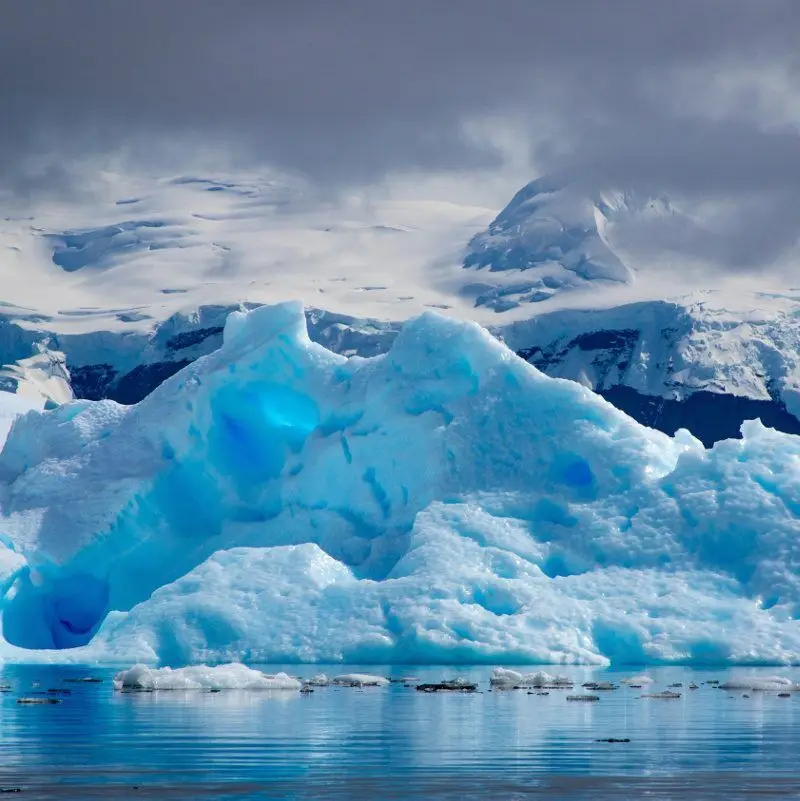
Antarctica looks empty from space—an immense white silence at the bottom of the world. Winds scream across a frozen desert, temperatures plunge far below what human skin can tolerate, and the Sun disappears for months at a time. It feels timeless, untouched, and simple. Yet beneath this vast sheet of ice lies one of the most complex, mysterious, and emotionally stirring landscapes on Earth. Antarctica is not just ice. It is memory. It is motion. It is history sealed under kilometers of frozen time.
Buried beneath the Antarctic ice sheet are secrets that reshape how we understand our planet, our climate, and even life itself. Some of these secrets are ancient, some are still active, and some may determine the future of the world far beyond the polar circle. What follows is a journey beneath the ice, into places no human has ever seen directly, but which science has slowly, carefully revealed.
1. An Entire Hidden Mountain Range
One of the most astonishing secrets beneath Antarctica is that it hides mountains—vast, rugged, ancient mountain ranges buried under ice thicker than many skyscrapers stacked end to end. The most famous of these is the Gamburtsev Mountain Range, a chain comparable in size and height to the European Alps.
Discovered through radar and seismic surveys, these mountains are completely invisible from the surface. Ice more than three kilometers thick smothers them, preserving sharp peaks and deep valleys as if frozen in time. What makes them truly mysterious is their age. Geological evidence suggests they formed hundreds of millions of years ago, long before Antarctica drifted to the South Pole.
Mountains usually erode over time, worn down by wind, rain, and tectonic forces. Yet the Gamburtsev Mountains remain surprisingly jagged. Scientists believe their preservation may be linked to ancient tectonic collisions followed by deep freezing that locked them in place. These hidden mountains are not just geological curiosities—they play a role in shaping how ice flows above them, influencing the stability of the Antarctic ice sheet itself.
Emotionally, these mountains feel like a metaphor for Antarctica as a whole: immense strength hidden beneath apparent emptiness, enduring quietly while the world above changes.
2. A Vast Network of Subglacial Lakes
Beneath the Antarctic ice lies a hidden water world—more than 400 known subglacial lakes, sealed off from the surface for millions of years. The most famous of these is Lake Vostok, one of the largest freshwater lakes on Earth, trapped beneath nearly four kilometers of ice.
These lakes exist because of a combination of pressure and geothermal heat from Earth’s interior. The immense weight of the ice lowers the freezing point of water, while heat from below keeps it liquid. Isolated from sunlight and the atmosphere, these lakes represent some of the most extreme environments on the planet.
What makes them emotionally and scientifically profound is the possibility of life. Microorganisms have been detected in samples taken near these lakes, suggesting that life can persist in complete darkness, extreme cold, and crushing pressure. These findings reshape our understanding of where life can exist—not just on Earth, but potentially on icy moons like Europa and Enceladus.
Each subglacial lake is a time capsule, preserving chemical signatures and biological clues from ancient eras. They whisper stories from a world long vanished, still alive beneath the ice.
3. An Ancient Climate Archive Locked in Ice
Antarctic ice is not just frozen water; it is a detailed archive of Earth’s climate history. Trapped within layers of ice are tiny bubbles of ancient air, some over 800,000 years old. These bubbles contain snapshots of atmospheric composition from different eras, including levels of carbon dioxide, methane, and oxygen.
By drilling deep ice cores, scientists can read these layers like pages in a book, reconstructing temperature changes, volcanic eruptions, and shifts in global climate. This hidden record reveals cycles of ice ages and warm periods, showing how tightly linked greenhouse gases are to temperature.
What makes this secret so emotionally powerful is its relevance to the present. Antarctic ice shows that when carbon dioxide levels rise, temperatures follow. It demonstrates that Earth’s climate system is sensitive and responsive, not slow and forgiving.
Beneath the ice lies proof—not prediction, not theory, but evidence—of how the planet reacts to change. Antarctica remembers everything, even when humanity forgets.
4. Active Volcanoes Beneath the Ice Sheet
Antarctica is often imagined as geologically dead, but beneath the ice lies fire. More than a hundred volcanoes are believed to exist under the Antarctic ice sheet, with several confirmed to be active. Mount Erebus, one of the southernmost active volcanoes on Earth, even hosts a persistent lava lake.
Many of these volcanoes lie buried beneath kilometers of ice, their heat subtly melting ice from below. This geothermal warmth influences how fast ice flows toward the sea and may play a role in destabilizing ice shelves.
Subglacial volcanic activity also contributes to the formation of subglacial lakes and channels, creating hidden rivers beneath the ice. In some areas, sudden releases of meltwater—triggered by volcanic heat—can rapidly reshape the underside of the ice sheet.
The idea of fire beneath ice feels almost poetic: a reminder that Earth’s inner energy never rests, even in the coldest place on the planet.
5. A Hidden River System Flowing Under the Ice
Antarctica is not static. Beneath its frozen surface flows a complex network of subglacial rivers, channels, and water systems that transport meltwater across vast distances. These rivers are invisible from above but detectable through radar and satellite measurements.
Some subglacial rivers stretch for hundreds of kilometers, draining lakes and guiding ice movement. They act like lubricants, allowing ice to slide more easily over bedrock. This hidden hydrological system plays a critical role in determining how fast glaciers move toward the ocean.
Emotionally, these rivers challenge our perception of Antarctica as frozen and lifeless. Beneath the stillness is motion. Beneath silence is flow. The continent is alive in ways that defy its appearance.
6. Fossils from a Green Antarctica
Buried beneath Antarctic ice and sediment are fossils that reveal a shocking truth: Antarctica was once green. Millions of years ago, before it drifted to the South Pole, the continent supported forests, rivers, and diverse life.
Fossilized leaves, pollen, wood, and even dinosaur remains have been discovered along the continent’s edges. These remains tell of a time when Antarctica was part of a warmer supercontinent, connected to South America, Africa, and Australia.
Some fossil plants are similar to those found in modern temperate rainforests, suggesting a climate vastly different from today’s frozen wasteland. These discoveries help scientists understand how continents move, how climates shift, and how life adapts—or fails to adapt—to change.
There is something deeply emotional about these fossils. They are ghosts of a lost world, preserved beneath ice, reminding us that even the most extreme environments were once vibrant and alive.
7. Evidence of Ancient Meteor Impacts
Hidden beneath Antarctica’s ice are scars from ancient cosmic violence. Radar surveys have revealed circular structures that may be impact craters formed by meteorites striking Earth millions of years ago.
One of the most intriguing candidates lies beneath the Wilkes Land region, where a massive structure may correspond to an impact that occurred around the time of a major mass extinction. While the exact role of this impact remains debated, its potential existence highlights Antarctica’s role as a planetary archive.
Ice acts as both shield and preserver, protecting impact sites from erosion that would erase them elsewhere. Beneath the ice, these ancient wounds remain, silent records of events that shaped life on Earth.
8. A Massive Canyon Rivaling the Grand Canyon
Carved deep beneath the ice is a vast canyon system known as the Lambert Graben and associated valleys. Some of these subglacial canyons are comparable in size to the Grand Canyon, stretching for hundreds of kilometers and plunging deep into bedrock.
These features formed long before Antarctica froze, carved by rivers when the continent was warmer. Ice later flowed over them, preserving their shapes rather than erasing them.
These canyons influence how ice moves today, acting as pathways that guide glaciers toward the sea. They are reminders that Antarctica’s landscape was shaped by water long before it was dominated by ice.
9. Microbial Life in Extreme Isolation
Deep beneath the ice, in subglacial lakes and sediments, scientists have discovered microbial life surviving without sunlight, oxygen, or contact with the surface world. These organisms rely on chemical energy rather than photosynthesis, feeding on minerals and gases released from rock.
Some of these microbial ecosystems may have been isolated for millions of years, evolving independently in complete darkness. Their existence expands our understanding of life’s resilience and adaptability.
Emotionally, these microbes carry a quiet message of hope. Life does not require comfort. It requires opportunity. Even under crushing ice and endless darkness, life finds a way.
10. The Fragile Boundary That Holds Back the Sea
Perhaps the most consequential secret beneath Antarctic ice is how delicately balanced it all is. Beneath floating ice shelves lies warm ocean water that slowly erodes ice from below. The boundary between grounded ice and floating ice—called the grounding line—is critical to the stability of the entire ice sheet.
Hidden beneath the ice are slopes and basins that allow seawater to penetrate far inland. Once this process begins, it can accelerate ice loss in ways that are difficult to stop. This hidden vulnerability is not visible from the surface, but it holds global consequences.
Antarctica’s ice contains enough frozen water to raise sea levels by tens of meters if fully melted. The secrets beneath the ice are not just scientific curiosities; they are warnings written in ice and stone.
Beneath the Ice, the Story of Earth Continues
Antarctica is not empty. It is layered, dynamic, and alive with stories that stretch across deep time. Beneath its ice lie mountains older than humanity, rivers that never see sunlight, microbes that defy biological limits, and climate records that speak directly to our future.
To look at Antarctica is to look at a mirror of Earth’s past and a lens into its future. The secrets hidden beneath the ice remind us that our planet is more complex, more fragile, and more interconnected than it appears.
And perhaps the most profound secret of all is this: even in the coldest, most remote place on Earth, nothing is truly still.