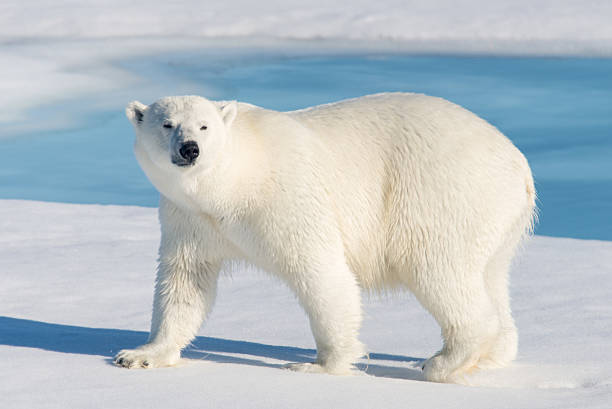
The Arctic is a realm of extremes. Ice stretches as far as the eye can see, temperatures plunge well below freezing, and the sun can disappear for months on end. Yet amid this harsh, frozen landscape thrives one of the most iconic and awe-inspiring creatures on Earth: the polar bear. Known scientifically as Ursus maritimus, the polar bear is not merely a symbol of the Arctic; it is an apex predator uniquely adapted to survive in one of the most unforgiving environments on the planet. Polar bears inspire both fascination and admiration, embodying resilience, power, and the fragile balance of life in a rapidly changing climate.
These magnificent animals are more than just large white bears wandering the ice. They possess intricate behaviors, specialized adaptations, and a remarkable connection to their environment. To truly appreciate them, one must understand both their biology and the world they inhabit. The following are ten incredible polar bear facts that highlight the extraordinary life of these Arctic giants.
1. Polar Bears Are Exceptional Swimmers
Unlike most bear species, polar bears are highly adapted for life in the water. Their long, powerful limbs, slightly webbed paws, and buoyant body fat allow them to swim for astonishing distances. Some individuals have been documented swimming over 60 miles in open water without resting.
Swimming is not merely a recreational activity—it is a vital survival skill. Polar bears often traverse ice floes that drift apart or follow seals across open water. Their thick layer of blubber provides insulation against the frigid Arctic waters, while their large paws act like paddles, propelling them forward efficiently. This ability makes polar bears uniquely suited to a habitat where ice is constantly moving, melting, and reforming.
Yet, swimming long distances also requires incredible endurance and energy. It is a testament to the polar bear’s evolutionary ingenuity that they can navigate such a perilous environment with both strength and grace.
2. They Are Apex Predators
Polar bears sit at the top of the Arctic food chain. Their primary prey consists of seals, which they hunt on sea ice. The hunting technique is both strategic and patient. Polar bears often wait silently at seal breathing holes, sometimes for hours, until a seal surfaces. When the opportunity arises, they strike with incredible speed and force.
The polar bear’s success as a predator relies not only on strength but on acute sensory perception. Their sense of smell is extraordinarily sensitive, allowing them to detect seal dens beneath several feet of snow or to locate prey from miles away. Studies have shown that a polar bear can smell a seal carcass nearly a mile away, even under thick snow and ice.
As apex predators, polar bears play a crucial ecological role. By regulating seal populations, they help maintain balance within the Arctic marine ecosystem. Their hunting behavior demonstrates both the elegance and the ruthlessness of nature’s design.
3. Their Fur Is More Than Just White
At first glance, polar bears appear to be entirely white, providing excellent camouflage on ice and snow. However, their fur is actually translucent. Each hair shaft is hollow and reflects light, giving the bear a white appearance. Beneath the fur, their skin is black, which absorbs heat from the sun and aids in warmth retention.
This dual adaptation is ingenious. The hollow hairs trap air, creating insulation against freezing temperatures. Simultaneously, the black skin beneath maximizes the absorption of solar radiation. This combination allows polar bears to survive in conditions where temperatures can drop below minus 40 degrees Fahrenheit.
Moreover, their fur’s structure repels water. After a swim in icy waters, the hairs shed moisture efficiently, preventing loss of body heat. This adaptation is a perfect example of evolution’s fine-tuned engineering.
4. Polar Bears Have Remarkable Sense of Smell
One of the most incredible features of polar bears is their olfactory prowess. They possess one of the most sensitive noses among terrestrial mammals, capable of detecting prey nearly a mile away and under layers of ice and snow.
This extraordinary sense is not only essential for hunting but also for navigation and survival. Polar bears can detect mates during the breeding season and locate distant food sources across vast expanses of ice. They rely heavily on scent rather than sight, particularly in harsh Arctic conditions where visibility is often low.
Their sense of smell is complemented by sharp hearing and good vision, making them versatile hunters capable of thriving in an environment where food is scarce and conditions are extreme.
5. They Can Survive Extreme Cold
The Arctic is one of the most inhospitable regions on Earth, with temperatures plunging far below freezing for much of the year. Polar bears, however, are superbly adapted to this frigid environment. Their thick layer of blubber, which can be up to four inches thick, insulates against the cold and provides buoyancy in the water.
Layered over the blubber is dense, insulating fur that traps heat and keeps the bear warm even during prolonged exposure to Arctic winds and icy waters. Polar bears also have small ears and tails, minimizing heat loss, and wide paws that distribute their weight when walking on snow or ice, preventing them from sinking.
These adaptations allow polar bears to remain active year-round, hunting, roaming, and surviving conditions that would be fatal to most other mammals.
6. Polar Bears Are Solitary But Socially Intelligent
Despite their solitary nature, polar bears exhibit complex social behaviors when interactions are necessary. Adult males, for example, are mostly solitary but will communicate with others through vocalizations, body language, and scent markings. During the breeding season, males compete for females, engaging in physical contests that demonstrate strength and endurance.
Mother bears, on the other hand, show remarkable social intelligence. They raise cubs alone for up to two and a half years, teaching them survival skills, hunting techniques, and safe navigation across shifting ice. Cubs learn to stalk seals, identify threats, and conserve energy in an environment where mistakes can be fatal.
These social dynamics reveal that polar bears, while often solitary, possess intricate behaviors that maximize survival in a challenging ecosystem.
7. Polar Bears Are Surprisingly Fast
Though they appear lumbering, polar bears are capable of impressive bursts of speed. On land, they can reach up to 25 miles per hour in short sprints. In water, their streamlined bodies and powerful limbs make them formidable swimmers capable of maintaining steady, long-distance movement.
Speed is critical for hunting. When seals surface near breathing holes or haul out onto ice, polar bears must act quickly to capture them. Their combination of stealth, strength, and sudden bursts of velocity makes them extraordinarily efficient predators.
This athleticism, combined with their endurance and intelligence, allows polar bears to survive in an environment where energy is scarce and every hunt matters.
8. Climate Change Threatens Their Survival
Polar bears are intimately tied to sea ice. They rely on ice platforms to hunt seals, breed, and rest. As global temperatures rise, Arctic sea ice is melting at an alarming rate, reducing hunting grounds and forcing bears to travel longer distances for food.
Many populations are experiencing declining body conditions, lower cub survival rates, and increased mortality. In some regions, polar bears have been forced onto land, scavenging human refuse or hunting alternative prey, often with limited success.
The plight of polar bears serves as a stark indicator of climate change’s impact on Arctic ecosystems. Their struggle underscores the interconnectedness of species, climate, and the environment—and reminds us that even apex predators are vulnerable in a changing world.
9. Polar Bears Can Go Without Food for Months
Polar bears are adapted to survive periods of food scarcity, particularly during the summer months when sea ice recedes. During this fasting period, they rely on stored fat reserves built up from previous hunting seasons.
Adult females can lose significant weight while still maintaining strength to care for cubs. Males may endure even longer periods without food, conserving energy and reducing activity to survive until hunting conditions improve.
This fasting ability is extraordinary and highlights the polar bear’s resilience. Yet, as climate change shortens hunting seasons and reduces ice coverage, the duration and severity of fasting periods are increasing, creating serious survival challenges.
10. Polar Bears Are Important Indicators of Arctic Health
Beyond their status as iconic predators, polar bears serve as critical indicators of the Arctic’s ecological health. Changes in their population size, body condition, and distribution reflect shifts in sea ice, prey abundance, and broader environmental changes.
Conservationists and scientists study polar bears to monitor the effects of climate change, pollution, and human activity on Arctic ecosystems. Protecting polar bears requires protecting the entire Arctic habitat, making them a symbol not just of survival but of stewardship for a fragile environment.
Their presence reminds us that even in the remotest regions of the planet, the balance of life is delicate, interconnected, and threatened.
The Majesty and Mystery of Polar Bears
Polar bears are more than just creatures of the Arctic. They are emblematic of survival in extremes, evolution’s ingenuity, and the fragile beauty of our natural world. From their translucent fur and sensitive noses to their endurance in icy waters and remarkable hunting skills, polar bears inspire awe at every turn.
Yet their story is also a cautionary tale. Climate change, habitat loss, and human encroachment challenge their survival, reminding us that even the most resilient species are vulnerable. Studying and protecting polar bears not only preserves a magnificent animal but also safeguards an entire ecosystem, offering insight into the health of our planet as a whole.
Understanding these incredible animals enriches our knowledge, deepens our appreciation, and strengthens our responsibility to preserve the wild places they call home. Polar bears are survivors, hunters, athletes, and sentinels of the Arctic—a testament to life’s adaptability and the majesty of the natural world.