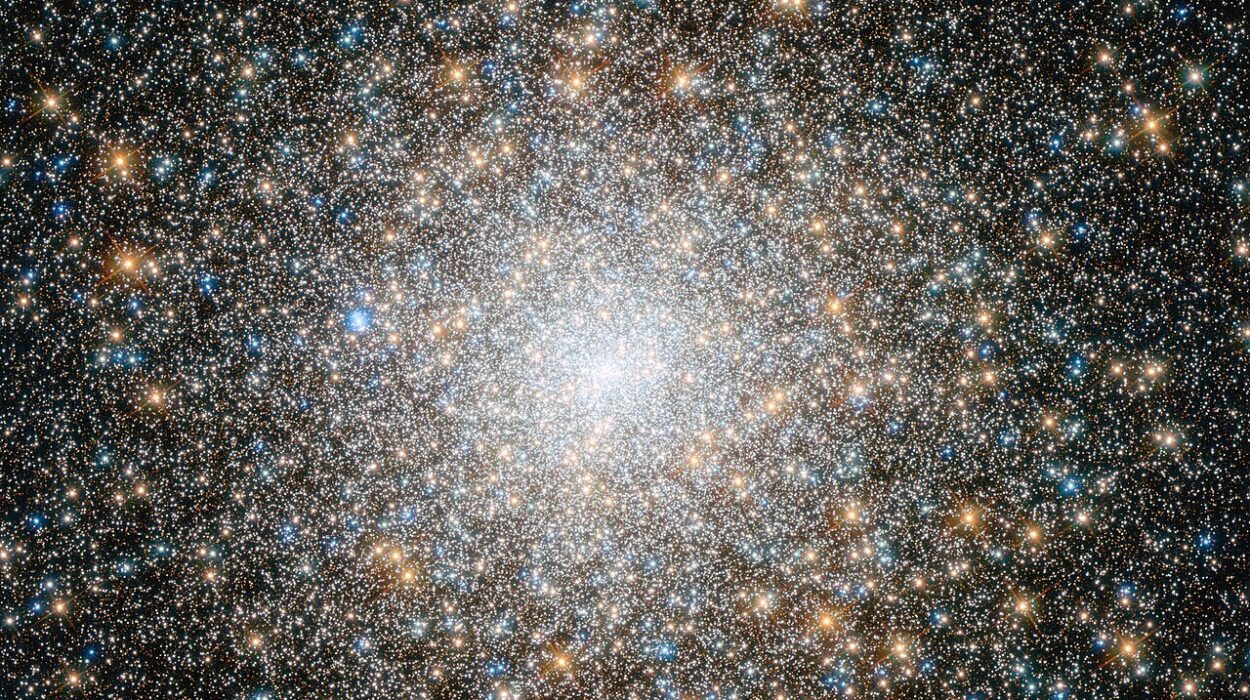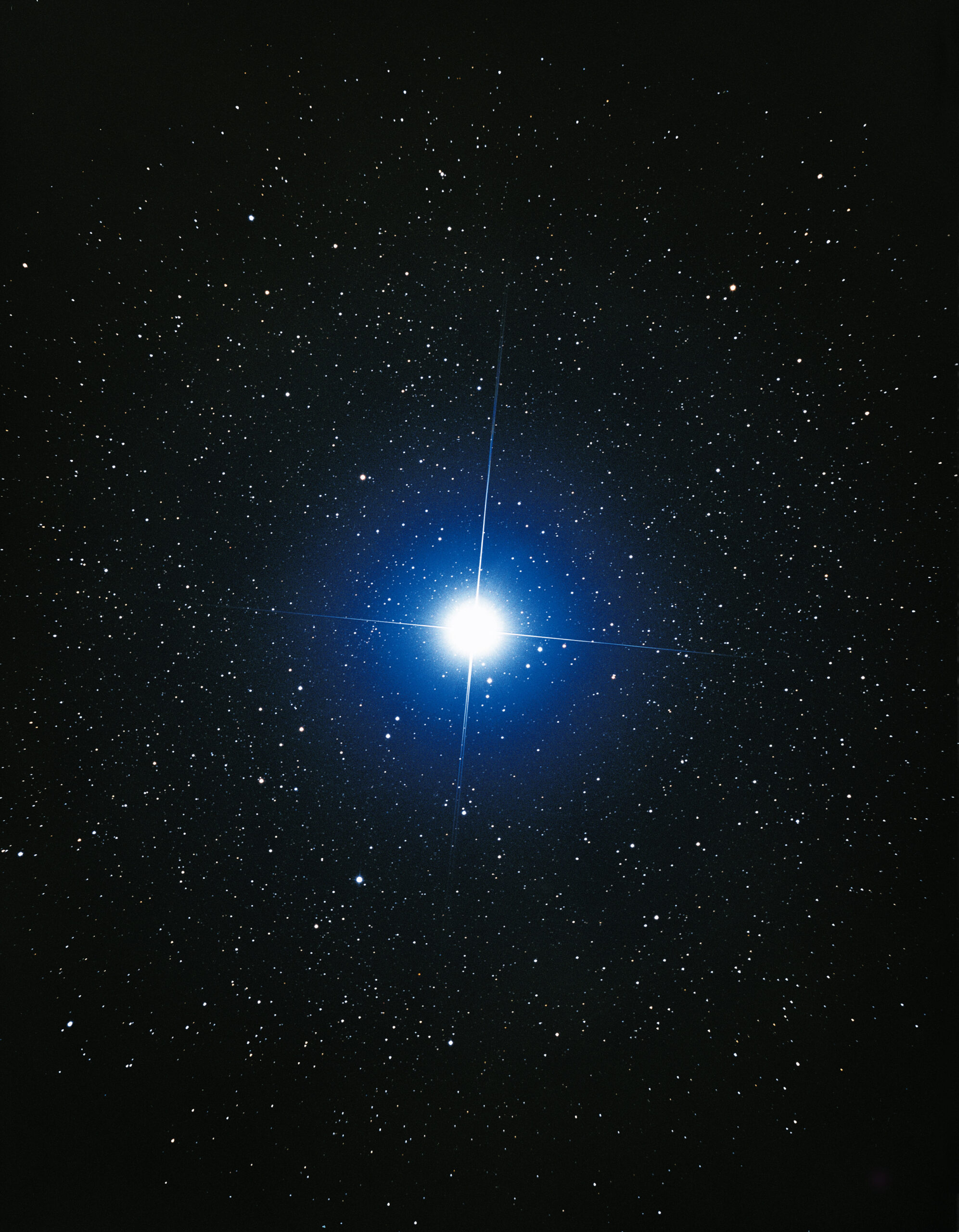
On a clear, moonless night, the sky transforms into one of nature’s greatest spectacles. Thousands of stars shimmer overhead, each representing a distant sun scattered across our Milky Way galaxy. To the unaided eye, they may appear similar—tiny points of white light decorating the darkness. Yet nothing could be further from the truth.
Some stars are relatively small and close to Earth, while others are enormous supergiants hundreds or even thousands of times larger than our Sun. Some burn with an icy blue-white brilliance, while others glow with a warm orange or reddish hue. They differ dramatically in mass, temperature, age, and brightness. The stars we see tonight also represent different moments in time. Because light takes years to travel across space, every glance at the night sky is also a journey into the past.
Astronomers measure a star’s apparent brightness using a scale called apparent magnitude. The lower—or more negative—the magnitude, the brighter the object appears from Earth. Apparent brightness depends on two factors: how luminous a star truly is and how far away it is from us. A nearby but relatively modest star may appear brighter than a far more powerful giant located hundreds of light-years away.
The following ten stars are the brightest stars visible in Earth’s night sky, excluding the Sun. Each has its own remarkable story, unique physical properties, and important role in astronomy.
1. Sirius – The Dog Star
No star dominates the night sky quite like Sirius. Located in the constellation Canis Major, Sirius is the brightest star visible from Earth, with an apparent magnitude of approximately −1.46.
Although Sirius appears exceptionally brilliant, it is not the most luminous star in our region of the galaxy. Much of its brightness comes from its relative proximity. It lies only about 8.6 light-years away, making it one of our closest stellar neighbors.
Sirius is actually a binary star system. The primary star, Sirius A, is about twice as massive as the Sun and shines roughly twenty-five times more brightly. Orbiting it is Sirius B, a white dwarf—the incredibly dense remnant of a once larger star that exhausted its nuclear fuel.
The existence of Sirius B provided astronomers with one of the earliest opportunities to study white dwarfs, helping shape modern theories of stellar evolution.
Throughout history, Sirius has held immense cultural importance. Ancient Egyptians associated its annual rising before sunrise with the flooding of the Nile River, an event vital to agriculture. Across many civilizations, Sirius served as both a navigational marker and a calendar reference.
Its dazzling brilliance continues to make it the undisputed jewel of the night sky.
2. Canopus – The Southern Giant
The second brightest star in the night sky is Canopus, located in the constellation Carina. With an apparent magnitude of approximately −0.74, it dominates southern skies but remains invisible from much of Europe and northern North America.
Canopus lies about 310 light-years from Earth.
Unlike Sirius, whose brightness partly results from proximity, Canopus is genuinely enormous. It is classified as a luminous giant or bright giant, producing roughly 10,000 times more luminosity than the Sun.
Its immense energy output allows it to remain brilliantly visible despite its much greater distance.
Canopus has long served as an important navigation star. Spacecraft have even used it for orientation because its position in the sky is well known and remarkably stable.
As a mature massive star, Canopus represents a stage of stellar evolution far beyond that of the Sun. Over millions of years, it expanded dramatically after exhausting hydrogen in its core.
Although beautiful from Earth, Canopus reminds us that stellar lifetimes are finite, even for the galaxy’s brightest giants.
3. Alpha Centauri
Third on the list is Alpha Centauri, although what appears to the naked eye as one star is actually a remarkable multiple-star system.
Located approximately 4.37 light-years away, Alpha Centauri is the closest stellar system to our Solar System.
The visible brightness comes mainly from two Sun-like stars—Alpha Centauri A and Alpha Centauri B—orbiting one another. A third member, Proxima Centauri, orbits much farther away. Proxima is the closest individual star to the Sun at about 4.24 light-years, though it is far too faint to be seen without a telescope.
Alpha Centauri A closely resembles our own Sun but is somewhat larger and brighter.
Because of its proximity, the Alpha Centauri system has become one of the most important targets in the search for planets beyond our Solar System. Astronomers continue investigating whether potentially habitable worlds may orbit these nearby stars.
Future interstellar missions may one day make Alpha Centauri humanity’s first destination beyond the Solar System.
4. Arcturus – The Orange Giant
High in the northern sky shines the magnificent Arcturus, the brightest star in the constellation Boötes.
With an apparent magnitude of about −0.05, Arcturus is impossible to miss once identified.
Located approximately 37 light-years away, Arcturus is an orange giant nearing the later stages of stellar evolution. It has expanded enormously after consuming much of the hydrogen fuel at its core.
Its diameter is roughly 25 times that of the Sun, while its luminosity exceeds the Sun’s by more than one hundred times.
Arcturus also possesses an unusually high motion across the sky compared to many neighboring stars. This proper motion reflects its unique orbit around the Milky Way and provides valuable information about the galaxy’s history.
Ancient navigators and farmers recognized Arcturus for thousands of years. Today it remains one of the easiest stars to locate using the famous phrase: “Follow the arc to Arcturus,” tracing the curve of the Big Dipper’s handle.
5. Vega – The Ancient Standard of Brightness
The brilliant blue-white star Vega dominates the constellation Lyra and ranks among the most famous stars ever observed.
Located about 25 light-years away, Vega shines with an apparent magnitude near 0.03.
For many years, astronomers used Vega as the reference point for calibrating stellar brightness measurements. Although modern calibration systems have become more sophisticated, Vega remains historically important in observational astronomy.
Vega is much younger than the Sun, only about 450 million years old, compared with the Sun’s age of roughly 4.6 billion years.
Infrared observations have revealed a vast disk of dust surrounding Vega, suggesting ongoing planetary formation or collisions between rocky bodies. This discovery made Vega one of the earliest stars known to possess a debris disk.
Around 12,000 years ago, Vega served as Earth’s North Star due to the gradual wobble of Earth’s rotational axis, a phenomenon called axial precession. Thousands of years from now, it will once again occupy a similar position.
6. Capella – The Goat Star
The brightest star in the constellation Auriga is Capella, one of the most fascinating stellar systems visible without a telescope.
At first glance it appears to be a single brilliant golden star with an apparent magnitude of approximately 0.08.
In reality, Capella consists of multiple stars. Its two primary members are yellow giant stars orbiting each other every 104 days.
Located around 43 light-years away, the system provides astronomers with valuable insight into stellar evolution because both giant stars originated with similar masses yet evolved somewhat differently.
Capella shines brightly in northern winter skies and has served as a navigational marker for centuries.
Its warm golden color contrasts beautifully with nearby blue-white stars, offering a striking visual example of the diversity of stellar temperatures.
7. Rigel – The Blue Supergiant
Few stars illustrate the immense power of stellar evolution better than Rigel, the brilliant blue-white foot of the constellation Orion.
Rigel lies roughly 860 light-years from Earth, though its exact distance has some uncertainty.
Despite this enormous distance, it remains one of the brightest stars visible in the night sky because it is extraordinarily luminous.
Rigel is a blue supergiant, radiating tens of thousands of times more energy than the Sun. Its surface temperature exceeds 11,000 kelvins, giving it its distinctive blue-white appearance.
Massive stars like Rigel live dramatically shorter lives than smaller stars.
While the Sun is expected to survive for about ten billion years, stars comparable to Rigel exhaust their nuclear fuel in only a few million years before ending their lives as spectacular supernova explosions.
Rigel therefore represents both extraordinary brilliance and remarkable impermanence.
8. Procyon – The Little Dog Star
The brightest star in the constellation Canis Minor is Procyon, whose name means “before the dog,” referring to its rising shortly before Sirius.
Located approximately 11.5 light-years away, Procyon has an apparent magnitude near 0.34.
Like Sirius, Procyon is also a binary system.
Its primary star, Procyon A, is slightly larger and more luminous than the Sun. Orbiting it is Procyon B, another white dwarf that provides astronomers with important information about stellar remnants.
Procyon occupies an intermediate stage of evolution, gradually expanding as hydrogen fusion in its core declines.
Because of its proximity and well-measured properties, Procyon remains one of the most thoroughly studied nearby stars.
9. Achernar – The Flattened Star
The southern constellation Eridanus contains one of astronomy’s most unusual bright stars: Achernar.
Located about 139 light-years away, Achernar shines with an apparent magnitude of roughly 0.46.
What makes Achernar particularly remarkable is its shape.
Unlike the nearly spherical Sun, Achernar rotates so rapidly that centrifugal force causes its equatorial region to bulge outward dramatically.
Its equatorial diameter is significantly larger than its polar diameter, making it one of the most flattened stars ever observed.
Rapid rotation also influences its temperature distribution, causing the poles to become hotter than the equator.
Achernar demonstrates that stars are not always perfect spheres and that rotation plays a profound role in stellar physics.
10. Betelgeuse – The Red Supergiant
Completing the list is one of the most famous stars in astronomy: Betelgeuse, the reddish shoulder of Orion.
With an apparent magnitude that varies between about 0.0 and 1.6, Betelgeuse is classified as a semiregular variable star. Its brightness changes because the star itself expands and contracts over time.
Situated roughly 550 light-years from Earth, Betelgeuse is a red supergiant nearing the end of its life.
If placed at the center of our Solar System, its outer atmosphere would extend far beyond the orbit of Mars and perhaps even approach Jupiter’s orbit, depending on how its size is defined.
In late 2019 and early 2020, Betelgeuse unexpectedly dimmed dramatically, leading to widespread speculation that it might soon explode as a supernova.
Subsequent observations revealed that the dimming was caused primarily by a combination of surface cooling and a massive cloud of dust ejected by the star itself.
Although Betelgeuse will eventually explode as a supernova, astronomers cannot predict exactly when. It may happen tomorrow in astronomical terms—or not for another 100,000 years.
When it does explode, it will briefly rival the brightness of the full Moon and become visible during daytime.
Why These Stars Shine So Brightly
The brightness of a star in our sky depends on two important factors: its intrinsic luminosity and its distance from Earth.
Some stars, like Sirius and Alpha Centauri, appear brilliant because they are relatively nearby. Others, such as Rigel and Canopus, are immensely luminous and remain conspicuous despite being hundreds of light-years away.
Luminosity itself depends primarily on a star’s mass and stage of evolution. Massive stars burn nuclear fuel much more rapidly than smaller stars, making them vastly brighter but dramatically shortening their lifespans.
Temperature also affects appearance. Blue stars are generally hotter than white stars, which are hotter than yellow stars, while orange and red stars have cooler surfaces.
Together, brightness, color, mass, and temperature tell astronomers how stars form, evolve, and ultimately die.
Measuring Stellar Brightness
Ancient astronomers divided visible stars into brightness classes based on what they could see with the naked eye. Modern astronomy refined this idea into the magnitude scale.
A difference of one magnitude corresponds to a brightness ratio of approximately 2.512.
Because the scale is logarithmic, Sirius, with a magnitude of −1.46, appears dramatically brighter than stars with positive magnitudes.
Astronomers also distinguish between apparent magnitude, which measures how bright a star appears from Earth, and absolute magnitude, which measures how bright it would appear from a standard distance of 10 parsecs (32.6 light-years).
This distinction allows scientists to compare stars fairly regardless of distance.
The Future of the Brightest Stars
The stars visible tonight will not remain the brightest forever.
Over millions of years, stars move through the galaxy. Some approach the Solar System while others drift farther away. Massive stars eventually explode as supernovae or collapse into neutron stars or black holes. Smaller stars gradually evolve into red giants before ending their lives as white dwarfs.
Earth’s own perspective also changes. The slow wobble of our planet’s rotational axis alters which stars dominate different seasons and which serve as pole stars.
The night sky, though seemingly eternal, is constantly changing on cosmic timescales.
A Sky Filled with Distant Suns
Every bright star in the night sky is far more than a point of light. Each is a colossal sphere of plasma powered by nuclear fusion, producing unimaginable amounts of energy every second. Around many of them may orbit planets, moons, asteroids, and perhaps even environments capable of supporting life.
When we look up on a clear night, we are not simply seeing stars. We are witnessing a vast collection of distant suns scattered across our galaxy, each with its own history, its own future, and its own place in the grand story of the universe.
The ten brightest stars are the easiest to notice, but they are only a tiny fraction of the hundreds of billions of stars that populate the Milky Way. Together, they remind us that even the most familiar lights in our night sky are extraordinary worlds in their own right—ancient, powerful, and endlessly inspiring to everyone who pauses to look upward.