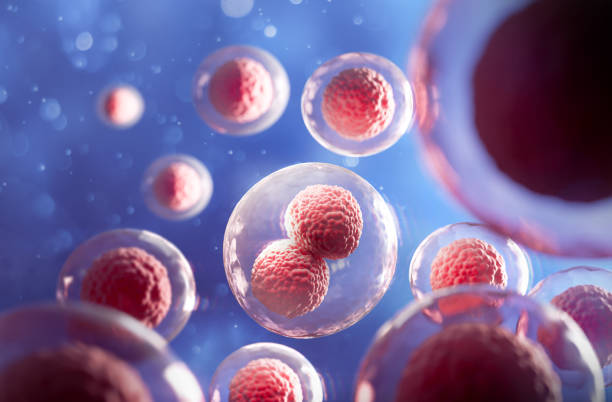
Right now, while you are reading this sentence, cells in your body are being made, used, repaired, and removed.
That sounds simple, but the reality is remarkably complex. Your body is not a fixed structure assembled once and then left unchanged. It is a living system in constant motion. Some cells survive for only a few days, while others can remain with you for decades. Some tissues continually produce new cells. Others have only a limited ability to replace damaged cells. And some cells are largely irreplaceable under normal conditions.
This ongoing process is essential to life. Your body must maintain its skin, blood, digestive tract, immune system, and many other tissues while responding to injury, infection, changing demands, and the ordinary wear and tear of living.
But “your body replaces itself every seven years,” a popular claim sometimes repeated about human biology, is not an accurate description. There is no single timetable for the human body. Cell replacement depends on the type of cell, the tissue it belongs to, its job, its environment, and the signals controlling its survival and division.
To understand how your body renews itself, it helps to start with the basic unit of life: the cell.
Your body is made of constantly changing cells
The human body contains trillions of cells organized into tissues and organs. Cells perform specialized jobs, from carrying oxygen and transmitting electrical signals to producing hormones, defending against microbes, contracting muscles, and maintaining barriers between the body and its environment.
Most cells do not last forever.
Cells can become damaged through normal metabolic activity, environmental stresses, infections, physical injury, or simply the passage of time. Some reach the end of their useful lifespan according to a genetically programmed process. When cells are lost, neighboring cells or specialized populations of stem and progenitor cells can sometimes divide to produce replacements.
This does not mean that every old cell is immediately swapped for a genetically identical new one. Tissue maintenance is a regulated process. Cells communicate with one another and with their surrounding environment to determine when to divide, differentiate, migrate, perform their functions, or die.
The result is a dynamic balance between cell production and cell loss.
When those processes are appropriately balanced, tissues can maintain relatively stable numbers of cells even though individual cells are continually turning over.
What does “cell replacement” actually mean?
Cell replacement can happen in several different ways.
In rapidly renewing tissues, specialized stem cells continually divide. Some of their descendants remain part of the stem-cell population, while others become progenitor cells that eventually mature into functional cells.
A cell can also divide directly to produce two daughter cells, with both remaining in the same general tissue.
In other situations, a mature cell can change its behavior in response to injury or increased demand. Certain tissues can increase their production of cells when more are needed.
Cell death is equally important. Removing cells is not simply a failure of the body. It is a normal biological process that helps shape tissues, eliminate damaged cells, and maintain healthy cell populations.
One of the most important forms of controlled cell death is apoptosis.
During apoptosis, a cell follows an internally regulated sequence that causes it to dismantle itself in an orderly fashion. Its remains can then be cleared by neighboring cells or immune cells, usually without the extensive inflammation associated with many forms of accidental cell injury.
Cell replacement is therefore better understood as a continuous cycle of production, specialization, maintenance, and removal rather than a simple process of “old cells falling off and new cells taking their place.”
Why doesn’t the entire body replace itself at the same speed?
Different tissues face very different biological demands.
The outer layer of your skin is constantly exposed to friction, sunlight, changes in temperature, chemicals, and the outside environment. It therefore requires substantial ongoing renewal.
The lining of the intestine faces another kind of challenge. Its cells are exposed to digestive chemicals, mechanical forces, and a huge population of microorganisms. Many intestinal epithelial cells have relatively short lifespans and are continually replaced.
Blood cells also require constant production. Mature red blood cells circulate for months rather than decades, while many types of white blood cells have much shorter or highly variable lifespans.
Other cells are much more persistent.
Many neurons in the brain and spinal cord can survive for decades. Heart muscle cells can also persist for very long periods, although the heart does have some capacity for renewal and repair.
The important point is that cell age and body age are not the same thing. You are not made entirely of cells that were created at the moment of your birth, but neither are you made entirely of newly produced cells.
Your body is a mixture of cells with very different histories.
Your skin is constantly renewing itself
The skin provides one of the clearest examples of ongoing cell replacement.
The outermost layer of the skin, the epidermis, is primarily made of cells called keratinocytes. New cells are generated in deeper portions of the epidermis. As they mature, they move toward the surface and undergo major changes.
Eventually, many of these cells become flattened, filled with the protein keratin, and form part of the protective outer barrier known as the stratum corneum.
The cells at the surface are eventually shed.
This process is happening continuously, even though you generally do not notice it. Ordinary household dust contains a substantial amount of material from shed skin cells, along with many other environmental particles.
The deeper layers of skin also contain cells with different functions, including pigment-producing melanocytes, immune cells, connective-tissue cells, and other specialized populations. Their rates of renewal differ substantially.
Skin renewal also changes with age and can be altered by factors such as injury, inflammation, hormonal changes, and environmental exposure.
Your blood is being renewed continuously
Blood provides another striking example of cellular turnover.
Red blood cells, or erythrocytes, transport oxygen using the protein hemoglobin. Mature red blood cells lack a nucleus and most of the cellular machinery found in many other cells. They are highly specialized for their job but have a limited lifespan.
The body continually produces new red blood cells in the bone marrow through a process called erythropoiesis.
Production can increase when the body needs more oxygen-carrying capacity. For example, reduced oxygen availability can trigger hormonal signals that stimulate the kidneys to produce more erythropoietin, which in turn promotes red blood cell production in the bone marrow.
Old or damaged red blood cells are removed primarily by cells of the body’s reticuloendothelial system, particularly macrophages in the spleen, liver, and other tissues. Components of their hemoglobin are then processed and recycled.
The iron from hemoglobin can be conserved and reused to make new red blood cells.
So even something as familiar as the blood circulating through your veins represents an ongoing process of cellular production and recycling.
Your immune system is continually making new cells
Your immune system must be able to respond to an enormous variety of potential threats. To do that, it relies on continually produced and replenished populations of immune cells.
Many immune cells originate from blood-forming stem cells in the bone marrow. These stem cells give rise to different blood-cell lineages, including cells involved in innate and adaptive immunity.
Some immune cells are relatively short-lived. Others can survive much longer.
A particularly important example is the memory cell produced by the adaptive immune system. After an infection or vaccination, certain B cells and T cells can persist and help the immune system respond more rapidly if it encounters the same or a related threat again.
This means that immune-system renewal is not simply about replacing old cells with identical copies. The system must continually generate new cells while also maintaining specialized populations that preserve immunological memory.
Your intestinal lining is renewed remarkably quickly
The digestive tract is another tissue where rapid cell replacement is essential.
The lining of the small intestine contains structures called intestinal crypts, which house stem cells that generate new epithelial cells. Their descendants mature into several specialized cell types that perform different functions, including absorbing nutrients, producing mucus, and helping regulate interactions with the gut’s microbial environment.
As intestinal epithelial cells mature, many migrate toward the tips of intestinal structures called villi. Eventually, they are shed and replaced.
This rapid turnover helps maintain the intestinal barrier despite the mechanical and chemical demands placed upon it.
It also illustrates why stem cells are so important. A tissue that continually loses large numbers of cells needs a reliable way to produce replacements without exhausting the cells responsible for regeneration.
Stem cells are the body’s long-term renewal system
A stem cell is a cell with the ability to produce additional cells while maintaining, at least to some degree, a stem-cell population. Depending on the type of stem cell, its descendants may be capable of developing into several specialized cell types.
Adult tissues contain different stem-cell populations with different capabilities.
Blood-forming stem cells in the bone marrow are among the best-understood examples. They can produce the diverse blood-cell populations needed throughout life.
Stem cells in the intestinal lining continually replenish intestinal epithelial cells.
Skin also contains populations of cells capable of supporting ongoing tissue maintenance.
Stem cells are not universal replacement parts that can freely transform into anything the body needs. Their potential is usually constrained by their biological context. A tissue’s stem cells are embedded in a specialized environment, sometimes called a stem-cell niche, that provides signals controlling their behavior.
These signals help determine whether a stem cell remains in its relatively undifferentiated state, divides, or produces descendants that begin specializing.
What happens when a cell divides?
Most ordinary cell division in the body occurs through a process called mitosis.
Before dividing, a cell copies its DNA so that the genetic information can be distributed between two daughter cells. The duplicated chromosomes are organized and separated, and the cell eventually divides into two cells.
The daughters are generally genetically very similar to the original cell, although mutations and other changes can occur.
Cell division is tightly regulated. Cells do not normally divide whenever they want. They respond to signals from neighboring cells, growth factors, hormones, nutrients, physical conditions, and the tissue environment.
This control is essential. Too little cell division can impair tissue maintenance and healing. Too much or poorly controlled division can contribute to cancer.
The ability to regulate cell division is therefore one of the central features of healthy tissue.
How does the body know when to make more cells?
Cells receive and interpret a complex collection of signals.
Growth factors can encourage cells to divide or survive. Hormones can alter cell behavior throughout the body. Signals from neighboring cells can tell a cell that more tissue is needed or that growth should stop.
Physical forces also matter. Cells can sense mechanical changes in their surroundings, including stretching and crowding.
Nutrients, oxygen levels, inflammation, and signals from the immune system can also affect cell behavior.
A tissue therefore behaves less like a pile of independent cells and more like a coordinated community.
When tissue is damaged, the local environment changes. Chemical signals are released, blood flow can change, immune cells may arrive, and surviving cells can alter their behavior. Together, these responses help coordinate repair.
How does your body repair an injury?
When you cut your skin, the body does not simply manufacture replacement tissue and drop it into the wound.
Healing occurs through a coordinated series of overlapping biological processes.
Blood vessels constrict and blood-clotting mechanisms help limit bleeding. Platelets and other components of the blood participate in forming a clot that provides an initial barrier.
The immune system then helps remove damaged tissue and defend against infection. Inflammatory signals recruit immune cells and alter the behavior of nearby cells.
Next, cells proliferate and migrate into the damaged region. New connective tissue and blood vessels can develop, while epithelial cells work to restore the surface barrier.
Finally, the tissue undergoes remodeling. Collagen and other structural components are reorganized, and the repaired area gradually changes.
The result is often functional healing, but it may not restore the tissue to exactly its original state. A deeper wound can leave a scar because the repair process uses fibrous connective tissue to reinforce the damaged area.
Why do some body parts regenerate better than others?
The human body’s capacity for regeneration varies enormously between tissues.
Some tissues are continually renewing themselves. Others can replace cells when necessary but do so more slowly. Still others have limited regenerative capacity.
The liver is a particularly notable example of an organ with substantial regenerative ability. Under appropriate conditions, liver tissue can recover significant mass after partial loss. This does not mean that a liver simply grows back in the same way a salamander can regenerate a limb. Liver regeneration involves changes in cell proliferation, signaling, tissue architecture, and metabolism.
Skeletal muscle also has specialized cells called satellite cells that can contribute to repair after injury.
Bone has significant capacity for remodeling and repair. Bone tissue is continually being broken down and rebuilt as part of normal maintenance.
The central nervous system presents a more complicated picture. Certain regions of the adult brain contain cells capable of generating new neurons under particular conditions, but widespread replacement of mature neurons is not the normal maintenance mechanism for the human brain. Many neurons can survive for a lifetime.
This variation reflects the specialized architecture and biology of each tissue.
Do brain cells get replaced?
The idea that “brain cells never regenerate” is too simplistic, but the opposite claim—that the brain constantly replaces its neurons—is also incorrect.
Many neurons are extraordinarily long-lived. Some of the neurons you have today may have been with you for most or all of your life.
The adult human brain does contain forms of cellular renewal and plasticity, and certain regions have shown evidence of ongoing neurogenesis under particular conditions. However, the extent and functional importance of adult human neurogenesis remain subjects of scientific investigation, and it should not be imagined as a general replacement program for neurons throughout the brain.
The brain’s ability to change does not depend solely on producing new neurons.
Neuroplasticity allows existing neurons to alter their connections and activity. Synapses can strengthen or weaken, circuits can reorganize, and cells can adjust their responses to experience.
In many cases, maintaining and modifying existing neural networks is more important than replacing neurons.
What about the cells in your heart?
Heart muscle cells, known as cardiomyocytes, are capable of some renewal, but the adult human heart has a much more limited regenerative capacity than tissues such as the intestinal lining or skin.
Many cardiomyocytes persist for long periods.
When heart muscle is severely damaged, such as during a heart attack, the body generally cannot regenerate large amounts of lost heart muscle perfectly. Instead, healing involves inflammation, removal of damaged cells, and formation of scar tissue.
This limited regenerative ability is one reason serious heart injury can have lasting effects.
Scientists continue to study the mechanisms that control cardiomyocyte survival, division, and regeneration because understanding them could eventually improve treatments for heart disease. However, the normal adult human heart should not be thought of as an organ that routinely replaces all of its muscle cells.
Your bones are being remodeled throughout life
Bone may look like a rigid, permanent material, but living bone is metabolically active.
Two major cell types are especially important in bone remodeling. Osteoclasts break down existing bone tissue, while osteoblasts help build new bone.
This ongoing remodeling allows the skeleton to adapt to mechanical demands, repair microscopic damage, and regulate the body’s mineral balance.
Bone remodeling does not mean that every bone cell is replaced on a fixed schedule. Instead, different components of bone are continually being renewed and reorganized.
Physical activity influences this system. Mechanical loading provides signals that help regulate bone formation and maintenance, which is one reason weight-bearing activity is important for skeletal health.
What happens to old cells?
Old cells do not simply sit around indefinitely waiting to be replaced.
Some cells die through apoptosis and are removed in an orderly fashion. Others can be damaged and cleared by immune cells. Still others remain alive but gradually change their behavior.
A state called cellular senescence is particularly important in aging biology.
A senescent cell has stopped dividing permanently or for a very long period, but it remains metabolically active. Senescent cells can release signaling molecules that influence nearby cells and tissues.
Senescence can be useful. For example, it can prevent damaged cells from continuing to divide. But the accumulation of certain senescent cells with age may contribute to changes in tissue function.
Scientists are studying how senescent cells influence aging and disease, but the biology is complicated. Senescence is not simply a category of “bad old cells,” and eliminating all senescent cells would not necessarily be beneficial because some serve useful roles in normal physiology.
Does cell replacement slow as you age?
In many tissues, the capacity for regeneration and repair changes with age.
Stem-cell populations can become less active or change their behavior. The tissue environment also changes. Cells can accumulate molecular damage, and communication among cells can become altered.
These changes contribute to slower wound healing and other age-related changes in tissue maintenance.
However, aging does not mean that your cells suddenly stop being replaced. Cell turnover continues throughout life.
The balance between cell production, cell death, repair, and damage simply changes over time.
Aging is therefore not just a matter of cells becoming old one by one. It involves changes across many levels of biology, including DNA maintenance, cellular metabolism, protein quality control, mitochondrial function, inflammation, stem-cell behavior, and communication between cells.
Does your body replace all of its cells every seven years?
No.
The “seven-year body” idea is an appealing simplification, but it does not describe human biology accurately.
Different cells have radically different lifespans. Some are replaced in days, some over months or years, and some can persist for decades.
Even within a single tissue, different cell populations may turn over at different rates. And “replacement” does not always mean that an entire organ is dismantled and rebuilt from scratch.
An organ is a complex structure whose components have different renewal patterns. Some cells are replaced frequently while others remain for long periods.
Your body is therefore not periodically rebuilt according to a seven-year schedule. It is continually maintained.
Are new cells identical to the cells they replace?
New cells generally inherit the same fundamental genetic instructions as the cells from which they originate, but biological identity is more complicated than DNA sequence alone.
Cells with the same genome can behave very differently because different genes are switched on or off in different cell types. This regulation is part of gene expression.
A stem cell can produce descendants that progressively acquire the characteristics of specialized cells. Changes in gene expression, cell signaling, and the surrounding tissue environment guide this process.
Cells can also accumulate mutations and other molecular changes during life.
This means that cell replacement preserves the basic organization of tissues without necessarily producing perfectly interchangeable copies in every molecular detail.
Where do the raw materials for new cells come from?
New cells require matter and energy.
Food provides nutrients that the body digests, absorbs, transforms, stores, and distributes. Amino acids provide building blocks for proteins. Fatty acids and other molecules contribute to cell membranes and energy storage. Sugars and other nutrients can be metabolized to produce energy and supply carbon skeletons for biosynthesis. Vitamins and minerals participate in numerous cellular processes.
Water is also fundamental because cells are largely composed of water and depend on it for biochemical reactions and transport.
The body continually breaks down and rebuilds molecules. Nutrients from food become incorporated into new cellular material, while molecules from older cells are broken down and their components may be reused.
This is why cell renewal is connected to the body’s broader systems of digestion, circulation, metabolism, and waste removal.
Your DNA is also being maintained constantly
Cell replacement is only part of the body’s ongoing maintenance.
Even cells that are not dividing must protect and repair their DNA.
DNA can be damaged by normal chemical reactions within cells as well as by environmental factors such as ultraviolet radiation and certain chemicals. Cells possess sophisticated repair systems that detect and correct many kinds of DNA damage.
When damage is too extensive, a cell may stop dividing, enter senescence, or undergo programmed cell death.
These protective mechanisms are essential because uncontrolled accumulation of DNA changes can interfere with normal cellular function and increase the risk of cancer.
The fact that your cells are constantly repairing themselves is therefore just as important as the production of new cells.
Why doesn’t constant cell replacement make you biologically younger?
Producing new cells does not reset the entire biological history of the body.
A newly produced cell still develops within an environment shaped by age, hormones, metabolism, inflammation, accumulated molecular changes, and the condition of surrounding tissues.
Moreover, many important structures are not simply replaced cell-for-cell.
The extracellular matrix—the network of proteins and other molecules surrounding cells—changes over time. Long-lived proteins can accumulate chemical modifications. Some forms of molecular damage persist. Epigenetic patterns can change. Stem-cell behavior can shift.
Aging is therefore an emergent process involving the whole biological system rather than something determined solely by the average age of individual cells.
Can lifestyle affect cell renewal?
The body regulates cell production primarily through biological mechanisms rather than conscious control, but nutrition, physical activity, sleep, smoking, alcohol exposure, environmental factors, and other aspects of health can influence the systems that maintain tissues.
Adequate nutrition supplies the energy and raw materials required for cellular maintenance. Physical activity affects muscle, bone, metabolism, circulation, and numerous signaling pathways. Sleep supports normal physiological regulation and is associated with processes important for brain and immune function.
Smoking and other sources of toxic exposure can damage cells and DNA and interfere with normal tissue maintenance.
These effects should not be interpreted as meaning that a particular food or supplement can simply “speed up cell regeneration.” Cellular renewal is a tightly regulated biological process, and artificially increasing cell division is not automatically beneficial. Uncontrolled proliferation is a defining feature of cancer.
Healthy tissue maintenance depends on the right balance of growth, specialization, repair, and cell death.
What happens when cell replacement goes wrong?
Too little cell production can cause tissues to lose their ability to function properly.
Too much cell production can also be harmful.
Cancer is fundamentally a disease of abnormal cellular behavior in which cells acquire changes that allow them to grow and survive inappropriately. The normal controls governing division, death, and interactions with surrounding tissues can become disrupted.
Other diseases can result from failures in specific cell populations. Problems with blood-cell production can affect oxygen delivery or immunity. Damage to stem-cell compartments can impair tissue renewal. Excessive or poorly controlled cell death can contribute to tissue degeneration.
Healthy physiology therefore depends not simply on making new cells but on coordinating the entire life cycle of cells.
Are all the cells in your body replaced eventually?
No.
Some cells can remain with you for much of your life, and certain biological structures persist for very long periods.
Long-lived neurons are an important example. Some cells in the eye and other tissues also have unusual longevity or limited replacement capacity.
Even when cells persist, however, they are not necessarily frozen in time. They continually repair molecules, alter their activity, replace damaged components, and respond to changes in their environment.
The human body is therefore neither a completely static structure nor a machine that continuously swaps every component for a new one.
It is a living system in which some parts are rapidly renewed, some are slowly remodeled, and some are maintained for decades.
The body is constantly rebuilding without starting over
Every moment of life involves a balance between what is being created and what is being removed.
New blood cells enter circulation. Intestinal cells are shed and replaced. Skin cells move toward the surface and eventually disappear. Bone is remodeled. Immune cells are produced and cleared. Damaged cells can undergo apoptosis. Long-lived cells maintain themselves while adapting to their environment.
At the same time, the molecules inside cells are continually being repaired, recycled, or replaced.
The remarkable part is not that your body replaces cells. It is that it can do so while preserving the structure and function of an organism that remains recognizably the same person.
Your body does not need to rebuild itself from scratch to stay alive. It maintains itself through an enormous, coordinated network of microscopic processes that never completely stop.