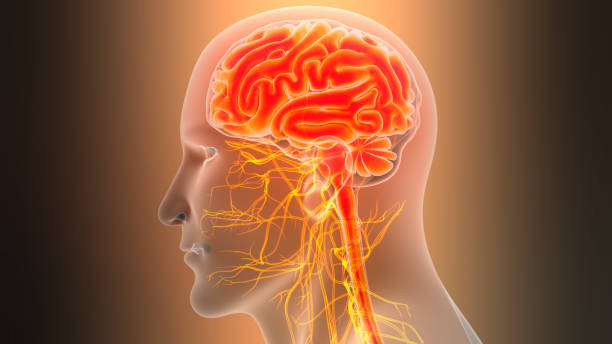
The human brain makes up only a small fraction of the body’s mass, yet it consumes a surprisingly large share of the body’s energy. In an average adult, the brain accounts for roughly 2% of body weight but uses around 20% of the body’s resting energy expenditure. That imbalance is one of the most striking features of human biology.
The brain’s high energy demand is not mainly because thinking feels difficult. Even when you are resting, asleep, or doing very little consciously, your brain is working continuously. Billions of neurons are maintaining electrical conditions, communicating with one another, processing sensory information, regulating body functions, and keeping neural circuits ready to respond.
The brain has very little ability to store energy locally, so it depends on a constant supply of oxygen and fuel delivered by the bloodstream. Most of that fuel is used to support the basic cellular machinery that allows neurons to communicate accurately and remain alive.
Why does the brain need so much energy?
The brain is an extraordinarily active organ. Its cells constantly maintain chemical differences across their membranes, transmit electrical signals, recycle neurotransmitters, transport molecules, build and repair cellular components, and regulate their internal environments.
A major reason for the brain’s energy consumption is that neurons operate using electrical signals. Neurons have membranes that separate electrically charged particles, or ions, inside and outside the cell. The concentrations of ions such as sodium and potassium are carefully controlled.
This separation creates an electrochemical gradient that neurons use to generate and propagate electrical signals. When a neuron fires, channels in its membrane open and allow ions to move across the membrane. The cell then has to restore the original ion concentrations.
That restoration requires energy.
The enzyme sodium-potassium ATPase is especially important. It uses energy from ATP, the cell’s primary energy currency, to move sodium and potassium ions in opposite directions across the cell membrane. This helps reestablish the conditions necessary for neurons to fire again.
Because neurons may communicate repeatedly and because large populations of neurons are continuously maintaining their readiness to communicate, this process consumes substantial energy.
Most brain energy is spent on routine maintenance
It is tempting to imagine that the brain burns most of its energy when you are solving a difficult problem, studying, or concentrating intensely. In reality, the brain’s energy use is much more continuous.
Your brain must maintain its basic operating state whether or not you are consciously engaged in a demanding task. Neurons need energy to preserve membrane potentials, maintain ion gradients, transport materials, synthesize proteins, recycle neurotransmitters, and regulate their internal chemistry.
This baseline activity is sometimes described as the brain’s housekeeping.
The term should not be taken to mean that this activity is unimportant. Without it, neurons would quickly lose their ability to communicate and eventually become damaged.
A useful analogy is a computer that remains powered on even when no demanding program is running. Electricity is still required for the operating system, memory, cooling, background processes, and hardware to remain functional. The brain is vastly more complicated than a computer, but the analogy illustrates why an apparently inactive brain still requires substantial energy.
What happens when a neuron fires?
A neuron at rest maintains a difference in electrical potential across its cell membrane. This state depends on the unequal distribution of ions and the selective permeability of the membrane.
When a neuron receives sufficient input, it can generate an action potential, a rapid electrical event that travels along its axon. Changes in ion permeability allow sodium ions to enter and potassium ions to leave. These movements alter the membrane’s electrical state.
Afterward, the neuron must restore its ionic balance. The sodium-potassium pump and other transport mechanisms consume ATP in the process.
Communication between neurons creates additional energy demands. At many synapses, an electrical signal causes the release of neurotransmitters. Those chemical messengers cross the tiny gap between cells and bind to receptors on the next cell.
Neurotransmitters then have to be removed, broken down, or recycled. Ion concentrations around the synapse must also be restored. Supporting cells participate heavily in these processes.
The energy cost of a single neural event is tiny, but the brain contains enormous numbers of neurons and synapses, and neural activity occurs continuously. Small costs multiplied across this vast network become a substantial metabolic demand.
Where does the brain’s energy come from?
Under ordinary conditions, the brain relies heavily on glucose as a fuel source.
Glucose reaches the brain through the bloodstream. Brain cells metabolize it through a series of biochemical reactions that ultimately produce ATP. Much of the ATP is generated through mitochondrial oxidative metabolism, a process that requires oxygen.
This is why the brain is so dependent on uninterrupted blood flow. Oxygen and glucose must be delivered continuously, while carbon dioxide and other metabolic byproducts must be removed.
The brain has limited energy reserves compared with the amount of energy it requires. It cannot simply stop receiving blood for an extended period and rely on a large internal fuel tank.
This helps explain why interruptions in blood flow can cause brain injury so quickly. When oxygen and glucose delivery falls severely, neurons can no longer maintain their energy-dependent processes. Ion gradients collapse, cellular signaling becomes disrupted, and a cascade of damaging biochemical events can follow.
Why does oxygen matter so much?
Glucose can be broken down without oxygen, but aerobic metabolism is much more efficient at extracting usable energy from it.
Inside mitochondria, products generated from glucose metabolism are processed through pathways that produce large amounts of ATP. Oxygen ultimately serves as the final electron acceptor in the mitochondrial electron transport chain.
The brain therefore consumes a substantial amount of oxygen relative to its size.
This high oxygen demand is one reason the brain has such an extensive network of blood vessels. Cerebral blood flow continually delivers oxygen and nutrients to active tissue.
When a region of the brain becomes more active, its blood flow and energy metabolism generally change as well. Modern brain-imaging techniques can exploit these relationships to estimate patterns of neural activity.
Do neurons use all the brain’s energy?
No. Neurons are central to the brain’s information-processing functions, but they are not the only cells consuming energy.
The brain contains several major classes of glial cells, including astrocytes, oligodendrocytes, and microglia. These cells support neurons in numerous ways and have their own metabolic requirements.
Astrocytes help regulate the chemical environment around neurons, participate in neurotransmitter recycling, support energy metabolism, and interact closely with blood vessels.
Oligodendrocytes produce myelin, the insulating material that surrounds many axons. Maintaining myelin and supporting the electrical transmission of signals requires cellular resources.
Microglia act as immune-related cells within the central nervous system and contribute to surveillance, cleanup, and responses to injury or infection.
The brain’s energy budget is therefore distributed across an interacting community of cells rather than being spent exclusively by neurons.
Why is maintaining ion gradients so expensive?
The fundamental problem is that electrical signaling depends on keeping ions in the right places.
Cells naturally tend toward chemical and electrical equilibrium. If ions can move freely across a membrane, concentration differences gradually dissipate.
Neurons need those differences to remain intact.
The sodium-potassium pump continually works against these tendencies. It uses ATP to move sodium out of the cell and potassium into it. Other pumps, channels, and transporters contribute to maintaining the precise chemical environment required for neural function.
This is energetically expensive because the cell is constantly doing work that would otherwise be unnecessary in a simpler system.
In effect, the brain spends energy maintaining the conditions that make rapid information processing possible.
Why are synapses energetically costly?
A neuron does not simply send an electrical signal down a wire. Communication between neurons involves complex molecular machinery.
At a chemical synapse, the arrival of an action potential triggers calcium ions to enter the presynaptic terminal. Calcium helps initiate the release of neurotransmitter-containing vesicles.
The neurotransmitter then acts on receptors in the receiving cell. Afterward, the signaling molecules must be cleared or recycled, and the cellular components involved in release must be restored.
Each stage requires energy.
There are also enormous numbers of synapses in the human brain. Although the exact number varies depending on how it is estimated and what part of the brain is considered, the scale is in the hundreds of trillions. The combined metabolic cost of maintaining and operating such an intricate communication network is substantial.
Why doesn’t the brain simply use more energy when you think harder?
It does increase energy use in some circumstances, but the increase is generally much smaller than people might expect.
The brain already operates at a relatively high baseline metabolic rate. When you perform a demanding mental task, some neural circuits become more active while others may become less active. The total increase in the brain’s energy consumption is often modest compared with its ongoing baseline demand.
This is partly because difficult mental tasks generally do not switch the entire brain from an “off” state to an “on” state. The brain is already metabolically active.
Instead, demanding tasks tend to change the distribution and pattern of activity across existing networks.
For example, reading, calculating, remembering something, and planning a movement involve partially different neural circuits. The brain reallocates activity rather than simply turning everything up.
This helps explain why feeling mentally exhausted does not necessarily mean that the brain has burned an enormous amount of additional fuel.
Does thinking burn a lot of calories?
Mental activity requires energy, but the popular idea that intense thinking dramatically increases calorie consumption is misleading.
The brain’s baseline energy use is already substantial. Solving a difficult problem does not cause the brain to suddenly consume hundreds of additional calories in a short period.
The metabolic cost of particular cognitive processes can vary, and demanding tasks can alter local energy use. But the overall difference between resting cognition and strenuous mental work is relatively limited.
Mental fatigue is therefore not simply a result of the brain “running out of calories.” It can arise from many interacting factors, including prolonged attention, changes in neurotransmitter systems, sleep pressure, stress, motivation, sensory demands, and the effort required to maintain task performance.
The brain does use glucose continuously, but eating large amounts of sugar does not provide a simple shortcut to better thinking.
Why does the brain need energy even when you’re asleep?
Sleep is not a period in which the brain shuts down.
During sleep, patterns of neural activity change substantially. Some networks become less active, while others show distinctive forms of coordinated activity. The brain continues regulating breathing, heart rate, temperature, hormone systems, and other physiological processes, depending on the stage of sleep.
Sleep is also associated with important processes involved in memory, learning, synaptic regulation, and cellular maintenance.
Because the brain remains metabolically active during sleep, it continues to require oxygen and fuel. Its energy demands may change across sleep stages, but sleep does not eliminate the brain’s basic metabolic needs.
What is the brain’s “default mode”?
One of the most interesting discoveries in neuroscience is that some brain networks become particularly active when a person is not focused on an external task.
A major example is the default mode network, a collection of interconnected brain regions that tends to show characteristic activity during rest and during internally directed mental processes.
Its activity has been associated with functions such as autobiographical memory, imagining possible situations, thinking about other people, and internally generated thought.
The discovery of such networks helped overturn an older and overly simple picture in which the brain was assumed to become largely inactive when a person was not performing a specific task.
Resting brains are not idle brains. They remain engaged in organized activity.
Why does the brain have such a large energy budget?
The brain’s high energy consumption reflects a tradeoff.
Fast, flexible information processing requires maintaining a sophisticated biological system in a state that allows rapid changes in neural activity. Neurons must be able to respond quickly to incoming signals, communicate with other cells, and modify their activity according to changing circumstances.
That flexibility comes with metabolic costs.
The brain also has to operate under tight physical constraints. It must fit inside the skull, maintain a stable temperature and chemical environment, and receive enough oxygen and nutrients without an unlimited blood supply.
Evolution has therefore favored mechanisms that make neural processing energetically manageable rather than simply maximizing energy consumption.
How does the brain keep its energy supply stable?
The brain has a close relationship with the cardiovascular system.
An extensive network of blood vessels delivers oxygen and nutrients to neural tissue. Blood flow is carefully regulated so that different regions receive appropriate supplies according to their physiological needs.
Astrocytes and other cells help coordinate interactions between neural activity and blood vessels. When neural activity changes, local blood flow can change as well.
This coupling between neural activity, metabolism, and blood flow is known as neurovascular coupling.
It is particularly important in neuroscience because techniques such as functional magnetic resonance imaging, or fMRI, use changes in blood oxygenation as an indirect measure related to neural activity.
Importantly, a blood-flow signal is not identical to a direct measurement of neurons firing. It reflects a complex physiological response involving neural activity, metabolism, and vascular processes.
What happens when the brain doesn’t get enough fuel?
Because neurons have high and continuous energy requirements, inadequate fuel delivery can become dangerous quickly.
If blood flow to part of the brain is blocked, as occurs during an ischemic stroke, the affected tissue may not receive enough oxygen and glucose. ATP production falls, and neurons struggle to maintain their ion gradients.
As energy-dependent transport mechanisms fail, abnormal electrical activity and chemical changes can develop. Excessive release of certain neurotransmitters, particularly glutamate, can contribute to a damaging process called excitotoxicity. Calcium can accumulate inside cells, and additional biochemical pathways can contribute to cellular injury and death.
The severity and reversibility of the damage depend on factors such as the extent and duration of reduced blood flow and whether circulation is restored.
This vulnerability is one of the clearest demonstrations of just how dependent the brain is on continuous energy production.
Can the brain use anything besides glucose?
Yes.
Although glucose is a major fuel under ordinary conditions, the brain can adapt its fuel use under certain circumstances.
During prolonged fasting or carbohydrate restriction, the liver produces ketone bodies from fatty acids. These molecules can cross into the brain and serve as an important energy source.
This metabolic flexibility is especially relevant during prolonged periods without food, when maintaining blood glucose becomes a priority.
The brain cannot directly use most fatty acids as a major fuel source because of limitations involving their transport and metabolism within the brain. Ketone bodies provide an alternative that becomes increasingly important during prolonged fasting or starvation.
The brain’s ability to use different fuels does not mean that any particular diet automatically improves cognitive performance. Fuel availability, metabolic state, and overall nutritional health are more complicated than the simple idea that one fuel is inherently “better” for the brain.
Does the brain store energy?
The brain has some capacity to maintain small local energy reserves, including limited stores of glycogen primarily associated with astrocytes. These reserves can help support metabolism under particular conditions.
But compared with the brain’s continuous energy requirements, these stores are limited.
The brain therefore depends heavily on a steady supply from the circulation. This is one reason the body tightly regulates blood glucose and cerebral blood flow.
The brain’s limited energy storage is also one reason prolonged interruption of oxygen delivery is so dangerous.
Why is the brain so metabolically active compared with other organs?
Different organs have different energy demands because they perform different kinds of work.
Muscle can consume enormous amounts of energy during vigorous physical activity because it is converting chemical energy into mechanical work. At rest, however, muscle’s energy consumption falls considerably.
The brain, by contrast, cannot simply stop its core processes when you are sitting still. Maintaining neuronal membranes, synaptic machinery, ion gradients, cellular structures, and supporting systems requires continuous energy.
In other words, much of the brain’s energy expenditure is tied to maintaining its operating state rather than producing obvious external movement.
This is one reason the brain can consume a large share of resting metabolism despite having a relatively small mass.
Why is the human brain especially expensive?
Humans have a large and metabolically demanding brain relative to body size compared with many other animals.
The human brain contains an enormous number of neurons and an exceptionally complex network of connections. But brain size alone does not completely explain energy use. Different species have different relationships among brain size, neuron number, neuronal density, body size, and metabolism.
The evolution of large brains therefore involved substantial energetic tradeoffs.
For humans, maintaining a large brain requires a reliable supply of energy. Human evolutionary biology includes adaptations related to obtaining and processing energy-rich foods, and the energetic demands of the brain have been discussed as one factor in the evolution of human feeding behavior and life history.
However, there is no single explanation for human brain evolution. Brain size and function emerged from interactions among many biological, ecological, social, and evolutionary pressures.
Does a bigger brain always use more energy?
Not necessarily in a simple one-to-one way.
Energy consumption depends on the number and types of neurons, their activity levels, the density and organization of their connections, supporting cells, and other physiological factors.
Across species, researchers have found relationships between brain metabolism and neuronal characteristics that are more informative than brain mass alone. A gram of neural tissue in one species does not necessarily have exactly the same metabolic demands as a gram of neural tissue in another.
Within an individual human, however, the general principle remains clear: neural tissue is energetically expensive to maintain, and the brain’s continuous activity creates a substantial metabolic requirement.
Does intelligence require more brain energy?
There is no simple rule saying that a more intelligent person burns more brain energy.
Cognitive ability depends on the organization and efficiency of neural networks, development, learning, genetics, experience, attention, and many other factors. A brain that performs a task effectively does not necessarily need to consume dramatically more energy than one performing it less efficiently.
In some circumstances, learning can involve changes in neural connections and metabolic activity. But intelligence cannot be reduced to a brain-wide measurement of calorie consumption.
The brain’s energy budget is better understood as the cost of maintaining and operating a highly complex biological information-processing system.
Why is the brain’s energy use important for understanding mental fatigue?
Because the brain already operates at a high baseline metabolic rate, mental fatigue is unlikely to be explained by simply exhausting the brain’s entire energy supply.
When people spend hours concentrating, however, numerous physiological and psychological systems are involved. Sustained attention requires maintaining task-relevant neural activity while suppressing distractions. Motivation can change, stress systems can become engaged, and sleep pressure can accumulate.
The subjective experience of mental fatigue is therefore a complex phenomenon rather than a straightforward measurement of how much glucose the brain has burned.
A short break can make a difficult task feel easier even though it does not magically refill a depleted tank of brain calories. Changes in attention, arousal, motivation, and neural network dynamics can all contribute to the feeling of recovery.
Why can’t the brain just become more energy-efficient?
It can, and biological systems are constantly subject to energetic constraints.
Neurons use specialized signaling mechanisms that balance speed, reliability, and energy consumption. The organization of neural circuits also reflects compromises between the benefits of communication and its metabolic cost.
Myelin is one example. By insulating axons, myelin allows electrical signals to travel efficiently over long distances through a process called saltatory conduction. This permits rapid communication without requiring every portion of the axonal membrane to participate in the same way.
Synaptic organization provides another example. The brain does not maintain every possible connection between every neuron. Its wiring reflects developmental processes, genetic programs, experience, and evolutionary constraints.
The result is a system that performs an extraordinary amount of information processing while operating within a limited biological energy budget.
How does exercise affect the brain’s energy needs?
Physical exercise dramatically increases the body’s overall energy expenditure, but the brain does not simply scale its energy use upward in proportion to the amount of exercise.
Exercise affects the brain in many ways, including through changes in blood flow, metabolism, hormones, neurotransmitter systems, and long-term physiological adaptations. Regular physical activity is associated with broad benefits for cardiovascular and brain health, although the mechanisms are numerous and cannot be reduced to “more blood equals smarter brain.”
During exercise, the body must also allocate energy among working muscles, the cardiovascular system, thermoregulation, and the brain. The brain remains metabolically active throughout.
The key distinction is that exercise greatly increases total body energy expenditure, whereas the brain’s own baseline metabolic demand remains relatively stable compared with the much larger changes occurring in active skeletal muscle.
Why does sleep matter to such an energy-hungry organ?
Sleep provides a period in which the brain can reorganize its activity and carry out processes that support normal function.
Memory consolidation, regulation of synaptic strength, metabolic maintenance, and coordination among brain networks are all associated with sleep. Sleep also affects the systems that regulate appetite, stress, mood, attention, and cognition.
The exact relationship between sleep and brain energy metabolism is complex, and different stages of sleep have different patterns of neural activity and metabolism.
What is clear is that sleep is not simply an energy-saving mode in which the brain turns off. It is an active biological state with its own characteristic patterns of brain function.
What makes the brain’s energy use so remarkable?
The striking feature is not simply that the brain consumes a lot of energy. It is that it does so continuously while performing an enormous variety of tasks.
At any moment, your brain is maintaining cellular gradients, communicating across synapses, processing signals from the senses, controlling movement, regulating internal organs, monitoring the body’s condition, storing and retrieving information, predicting events, and coordinating behavior.
Many of these operations occur without conscious awareness.
All of them depend on cells maintaining the physical and chemical conditions required for neural signaling. The energy consumed by the brain is therefore not primarily the energy of conscious thought. It is the energy required to keep an extraordinarily complicated biological network alive, electrically responsive, chemically balanced, and ready to process information from moment to moment.