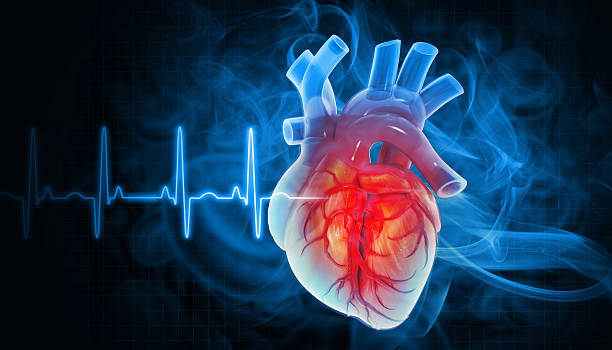
You hear a sudden crash in the next room. Someone steps into your path unexpectedly. You notice movement in the corner of your eye. Before you have consciously decided that anything is dangerous, your heart may already be beating faster.
Sometimes you notice the physical change first: a pounding chest, quicker breathing, tense muscles, sweaty palms, or a sudden feeling of alertness. Only afterward does the thought arrive: That scared me.
This sequence is not a quirk of personality or a sign that the body is somehow acting independently of the brain. It reflects one of the nervous system’s most important jobs: detecting potentially important events and preparing the body to respond before conscious awareness has finished interpreting what is happening.
Fear is not simply a thought that causes a bodily reaction. It is a coordinated process involving the brain, autonomic nervous system, hormones, heart, breathing system, muscles, and senses. Some parts of that process can begin extremely quickly, while conscious recognition takes additional time. As a result, your heart rate can change before you experience fear as a clearly identifiable emotion.
Understanding why requires looking at what the brain does with sensory information, how the autonomic nervous system controls the heart, and why the body’s rapid defensive responses are designed to operate partly outside conscious control.
Your brain does not wait for conscious awareness
A common mental model is that the brain first consciously identifies a threat and then sends a command to the body: I’m afraid, so increase my heart rate. In reality, sensory processing is more complicated and operates on multiple timescales.
When light reaches your eyes, sound reaches your ears, or pressure is detected by your skin, sensory information begins traveling through neural pathways almost immediately. The brain processes aspects of that information before you necessarily have a conscious, verbal understanding of what you are perceiving.
This distinction matters because conscious awareness is not the starting point for every brain process. Your nervous system continuously evaluates incoming information for changes, novelty, relevance, and potential danger. Some of this processing is rapid and automatic. Other processing is slower and more detailed, incorporating memories, context, expectations, and conscious reasoning.
A sudden, ambiguous stimulus can therefore begin triggering defensive physiology while your conscious mind is still working out what happened.
Imagine walking through your house at night and hearing a sharp noise. Your auditory system detects the sound before you consciously identify its source. Neural circuits involved in threat detection can respond to features of the stimulus, particularly when it is sudden or unusual. At the same time, your brain begins a more detailed analysis: Was that a person? A dropped object? The heating system? A pet?
Your heart does not necessarily need to wait for the answer.
That arrangement makes biological sense. If a stimulus really is dangerous, delaying every defensive response until conscious interpretation is complete could be costly. The nervous system is therefore capable of initiating rapid physiological adjustments based on incomplete information. Those adjustments can later be reduced or redirected once the brain determines that the situation is harmless.
The autonomic nervous system can change your heart rate automatically
The immediate control of heart rate is heavily influenced by the autonomic nervous system, which regulates many functions that do not normally require conscious attention.
The autonomic nervous system has several interacting components, including the sympathetic and parasympathetic branches. They are not simply an “accelerator” and “brake” operating in isolation, but that analogy is useful for understanding the basic relationship.
Sympathetic activity generally supports physiological readiness. During a threatening or highly arousing situation, sympathetic signals can increase the heart’s rate and strength of contraction and alter blood flow and other bodily functions.
Parasympathetic activity, particularly through the vagus nerve, generally provides a strong influence that slows the heart under resting conditions. The balance between these influences can change from moment to moment.
This regulation is extremely fast. The heart contains its own electrical pacemaking system, but its activity is continuously modified by signals from the nervous system and by chemical changes in the body. Consequently, your heart rate can begin changing before you consciously experience the situation as fear.
This is one reason the phrase “your heart knows you’re afraid” is misleading. The heart is not independently detecting fear. Rather, neural systems that evaluate the environment can alter cardiovascular activity as part of a broader response to potentially important or threatening events.
The brain’s threat systems can act before fear becomes conscious
Several interconnected brain regions participate in defensive responses. The amygdala is particularly well known because it helps detect and evaluate emotionally significant stimuli, including potential threats.
The amygdala does not function as a simple “fear center,” however. Fear involves a network of brain systems, and the amygdala participates in processing many kinds of emotionally relevant information. It receives information from sensory systems and communicates with other regions that help coordinate physiological and behavioral responses.
One important destination is the hypothalamus, a region involved in regulating the body’s internal state. Through connections with the autonomic nervous system and endocrine system, the hypothalamus can help organize changes in cardiovascular activity, breathing, muscle readiness, and hormone release.
There are also brainstem circuits that can produce extremely rapid defensive reactions. The brain does not use only one pathway for threat processing. Instead, multiple pathways operate together, with some emphasizing speed and others emphasizing detailed analysis.
This layered organization helps explain a familiar experience: jumping at something before realizing what it was.
Your conscious mind may eventually decide, “That was just a book falling off a shelf.” But the initial physiological response did not have to wait for that conclusion.
What happens to your heart during a sudden threat
When the brain interprets something as potentially threatening, autonomic signals can rapidly modify cardiovascular function.
Sympathetic activation can increase heart rate and the force with which the heart contracts. At the same time, changes in blood vessel tone redistribute blood flow in ways that support the body’s immediate demands. Breathing can become faster or deeper, and muscles can become more prepared for movement.
The result is a coordinated shift in the body’s physiological state.
A faster heartbeat increases the rate at which the heart can circulate blood. Combined with changes in breathing and blood flow, this helps prepare the body for rapid physical action. The response is often described as the “fight-or-flight” response, although defensive physiology is broader than those two options. Freezing, orienting, fleeing, defensive movements, and other responses can occur depending on the circumstances.
Importantly, the cardiovascular response does not always consist simply of “heart rate goes up.” Different stages of defensive processing can involve different patterns of autonomic activity. Heart rate can briefly slow during certain orienting or defensive situations before increasing, and the timing and magnitude of changes vary with the stimulus and the individual.
So the popular image of fear as an immediate, uniform surge in heart rate is an oversimplification. The cardiovascular system is responding dynamically to what the brain believes is happening.
Adrenaline is important, but it is not the whole story
Adrenaline, also called epinephrine, is strongly associated with fear because it contributes to many of the physical sensations people recognize as anxiety or alarm.
During significant sympathetic activation, the adrenal glands can release epinephrine into the bloodstream. This hormonal response is part of the body’s broader stress-response system. Epinephrine can increase cardiac activity, influence blood vessels and airways, and help mobilize energy.
Another hormone involved in the stress response is cortisol. Cortisol generally operates on a somewhat slower timescale than the rapid autonomic changes that occur immediately after a startling event. It helps regulate metabolism, cardiovascular function, immune activity, and the body’s response to sustained stress.
That difference in timing is important.
If your heart rate changes within moments of hearing a sudden noise, the initial change does not require cortisol to have risen first. Fast neural control of the cardiovascular system can occur within a much shorter timescale. Hormonal responses then contribute to maintaining and coordinating the body’s altered state.
The body therefore has several overlapping systems for responding to threat, rather than a single “adrenaline switch.”
Why you can feel your heart pounding after the danger is gone
The brain can recognize that a threat has ended before every part of the body’s physiological response has returned to its previous state.
Suppose a car suddenly brakes in front of you. Your attention snaps toward the vehicle, your heart accelerates, and your muscles tense. A moment later, you realize that the car stopped safely and the immediate danger has passed.
The event may be over, but your cardiovascular and autonomic systems may remain activated for a while.
This happens partly because physiological systems do not switch states instantaneously. Hormones released during the response remain in circulation for some time, neural activity takes time to settle, and the brain continues monitoring the environment. Your attention may also remain unusually focused on potential danger.
That lingering activation can produce a recognizable after-effect: your heart is still pounding even though you now know that you are safe.
The experience can feel strange because conscious appraisal and physiological recovery do not necessarily occur at exactly the same moment.
Your heart rate can change before you consciously label an emotion
There is an important distinction between physiological changes and conscious emotional experience.
You might notice your pulse racing and only then realize that you are frightened. But that does not necessarily mean your heart rate caused the fear. Both the cardiovascular response and the conscious emotional experience can be consequences of the brain’s broader evaluation of the situation.
Emotions emerge from interactions among perception, bodily states, memory, attention, interpretation, and brain activity. There is no requirement that one component always come first.
In some situations, the body may change before you have consciously identified the stimulus. In others, you may consciously recognize danger almost immediately and then notice the physical effects. And sometimes you can experience a strong bodily response without feeling particularly afraid at all.
This is why physical sensations alone cannot tell you exactly which emotion you are experiencing.
A racing heart can occur with fear, excitement, exercise, surprise, anger, anticipation, pain, caffeine use, fever, dehydration, and many other conditions. The brain uses context to help interpret bodily signals.
Why the body sometimes reacts to harmless things
The rapid threat-response system is designed to deal with uncertainty, not to achieve perfect accuracy.
If you see something snake-shaped on a hiking trail and jump backward before realizing it is a stick, your defensive response was triggered by incomplete information. The system favored rapid detection over careful identification.
From a survival perspective, that tradeoff can make sense. Missing a genuine threat could have serious consequences, while reacting unnecessarily to a harmless stimulus usually costs much less.
The same basic principle can operate in modern life. A sudden notification, unexpected movement, loud noise, social confrontation, or alarming thought can activate physiological arousal even when no physical danger exists.
Your nervous system does not require a threat to be objectively dangerous before it changes your heart rate. What matters is how the brain evaluates the information available at that moment.
As the situation becomes clearer, higher-level brain processes can update the initial response. The object is identified as harmless, the person is recognized as familiar, or the noise is traced to an ordinary source. Defensive activation can then diminish.
Past experience changes how quickly the response occurs
Threat detection is influenced by learning and memory.
The brain is constantly using previous experience to interpret new sensory information. If a particular sound has repeatedly been associated with danger, for example, a similar sound may receive attention very quickly. Conversely, familiar and predictable stimuli can become less physiologically arousing.
This learning does not mean that every fear response is consciously remembered. Much of the nervous system’s learning about emotional significance can influence reactions without becoming a deliberate memory or thought.
Conditioning provides a classic example. If a previously neutral stimulus becomes repeatedly associated with an unpleasant event, the stimulus can later trigger physiological and behavioral responses on its own. Over time, the brain can also learn that the association no longer predicts danger, although such learning does not necessarily erase the original association completely.
This helps explain why two people can have different heart-rate responses to the same event. Their brains bring different histories, expectations, and learned associations to the situation.
Expectations can affect the body before anything happens
The nervous system does not respond only to information arriving from the outside world. Expectations matter, too.
If you know that you are about to give a speech, walk into a frightening place, ride a roller coaster, or undergo an uncomfortable procedure, your body can begin changing before the event itself occurs.
In these situations, the brain is predicting what is likely to happen and preparing the body accordingly. Thoughts and mental imagery can activate physiological systems even when the anticipated event is not currently occurring.
That is why someone can experience a racing heart while sitting quietly and thinking about an upcoming stressful situation. The absence of immediate physical danger does not prevent the brain from initiating a real physiological response.
The body’s response is real even when the anticipated threat turns out not to occur.
Fear, anxiety, and startle are related but not identical
It is useful to distinguish several experiences that are often grouped together.
A startle response is a rapid, involuntary reaction to a sudden and unexpected stimulus. It can include blinking, muscle contraction, changes in heart rate, and a brief shift in attention. You can startle without developing sustained fear.
Fear is an emotional response to an immediate or perceived threat. It can produce changes in attention, behavior, autonomic activity, and subjective experience.
Anxiety is generally associated with anticipation of potential future threat or uncertainty. It can persist even when no immediate danger is present.
These states can overlap. A sudden sound may startle you, the brain may interpret it as potentially threatening, fear may emerge, and then concern about another similar event may produce anxiety.
But they are not interchangeable, and their underlying physiological patterns are not identical in every circumstance.
Why some people notice their heart rate more than others
People differ considerably in how strongly they perceive and interpret bodily sensations.
Some individuals are highly attentive to internal signals such as heartbeat, breathing, stomach sensations, or muscle tension. This tendency is related to a broader process called interoception: the sensing and interpretation of the body’s internal state.
A person who is highly aware of their heartbeat may notice a small increase that another person barely registers. Once noticed, the sensation can itself attract attention and become part of the emotional experience.
Interpretation matters, too. A rapid heartbeat might be interpreted as evidence that something is wrong, which can increase alarm and further intensify autonomic arousal. Alternatively, someone might interpret the same sensation as a normal consequence of being startled and quickly settle down.
This creates an important feedback loop between the brain and body. The brain changes the body, the brain senses those bodily changes, and those signals can then influence attention and emotional interpretation.
Why a fast heartbeat can sometimes make fear feel stronger
Once the cardiovascular response begins, the resulting sensations become part of what you experience.
A pounding heart, rapid breathing, sweating, trembling, and muscle tension provide the brain with information about the body’s current state. In a threatening context, those sensations can reinforce the perception that something important is happening.
This does not mean that bodily sensations always amplify fear. Their effect depends on context and interpretation.
For example, a racing heart during a roller coaster ride can be experienced as excitement. The same racing heart while alone in a dark parking lot might be experienced as fear. The physical response can overlap, while the emotional meaning differs.
The brain integrates bodily signals with the surrounding situation, memories, expectations, and sensory information to construct an ongoing interpretation of what is happening.
Why conscious awareness feels slower
It can seem surprising that an emotional reaction can begin before conscious awareness, because consciousness feels immediate from the inside.
But conscious perception requires substantial neural processing. The brain must integrate sensory information, identify relevant features, compare them with stored knowledge, allocate attention, and generate a coherent experience.
Some neural responses can occur without entering conscious awareness in the same form.
This is not unique to fear. Many ordinary actions and perceptions depend on processes that occur before conscious awareness. Your nervous system regulates blood pressure, adjusts pupil size, maintains balance, and coordinates countless aspects of movement without requiring you to consciously calculate every step.
Threat-related physiology is another example of the brain’s ability to perform rapid processing outside deliberate awareness.
The heart itself has a built-in rhythm
Although the nervous system strongly influences heart rate, the brain does not manually generate every heartbeat.
Specialized cells in the heart’s sinoatrial node spontaneously generate electrical activity that initiates normal heartbeats. This pacemaker activity creates the basic rhythm of the heart.
The autonomic nervous system continuously adjusts that rhythm according to the body’s needs.
Parasympathetic signaling through the vagus nerve can slow the heart relatively quickly, while sympathetic signaling can increase cardiac activity. Hormones such as epinephrine can further influence the heart.
This arrangement allows the heart to maintain a functioning rhythm while remaining highly responsive to changing conditions.
It also helps explain why heart rate can change rapidly without conscious effort. You do not need to decide to make your heart beat faster when you are startled. Regulatory systems that operate largely outside conscious control handle the adjustment.
Why breathing and heart rate often change together
Fear rarely affects the heart in isolation.
When the brain prepares the body for action, breathing often changes as well. Faster or deeper breathing can alter carbon dioxide levels in the blood and contribute to sensations such as lightheadedness, tingling, or chest tightness.
The cardiovascular and respiratory systems are closely connected, so changes in breathing can also influence heart-rate patterns. Normal heart rate naturally varies with the breathing cycle, a phenomenon known as respiratory sinus arrhythmia.
During emotional arousal, these interactions can become more noticeable. A person may interpret the combined sensations of a racing heart and altered breathing as evidence of escalating fear, which can further increase attention to the body.
This is one reason emotional reactions can sometimes feel like a rapidly building physical cascade rather than a single isolated change.
Not every rapid heartbeat means fear
A faster heart rate has many possible causes.
Exercise is an obvious example. The body increases cardiac output to meet the metabolic demands of working muscles. Physical exertion, heat, illness, dehydration, pain, stimulants such as caffeine, nicotine, certain medications, and strong emotions can all affect heart rate.
Excitement and anticipation can also produce substantial autonomic activation without subjective fear.
Even at rest, heart rate naturally fluctuates. It changes with posture, breathing, sleep, activity, temperature, meals, hydration, and the normal cycles of autonomic regulation.
For that reason, noticing a rapid heartbeat does not by itself establish that you are experiencing fear or that something is medically wrong.
When a racing heart deserves medical attention
Although changes in heart rate are a normal part of the body’s response to emotion and activity, persistent or unexplained symptoms should not automatically be attributed to anxiety.
A person should seek urgent medical attention for a racing or irregular heartbeat accompanied by severe chest pain or pressure, fainting, severe difficulty breathing, or other potentially serious symptoms. A new or persistent pattern of palpitations also deserves discussion with a health professional, particularly if it occurs without an obvious trigger.
Heart rhythm disorders, thyroid problems, anemia, medication effects, dehydration, and other medical conditions can produce symptoms that resemble anxiety or panic. Conversely, anxiety can produce very real cardiovascular sensations without an underlying heart disorder.
The key point is that the sensation alone cannot establish its cause. When symptoms are new, recurrent, severe, or difficult to explain, medical evaluation can help distinguish normal autonomic responses from conditions requiring treatment.
The bigger picture: your body is preparing before your conscious story catches up
The heart-rate change that occurs before you consciously recognize fear is an example of a broader principle of nervous-system function: the brain is continuously processing information and regulating the body before conscious awareness catches up.
A sudden stimulus can rapidly alter neural activity. Threat-related circuits can communicate with systems that control the heart, breathing, muscles, and hormones. The resulting physical changes can become noticeable while conscious interpretation is still developing.
A few moments later, your mind may supply a clear explanation: That noise startled me. That car almost hit me. I thought someone was behind me.
From your perspective, it may feel as though the fear appeared first and the heartbeat followed. But the underlying biology is less neatly ordered. Sensory processing, autonomic changes, bodily sensations, conscious appraisal, memory, and emotion continually influence one another.
Your heart is therefore not predicting fear on its own. It is participating in a fast, integrated system that allows the brain and body to respond to potentially important events before you have finished consciously deciding what they mean.