Most people think of the kidneys as simple filters that remove waste from the blood and turn it into urine. That description is accurate, but it barely captures what these small organs actually do.
Your kidneys are constantly adjusting the chemistry of your internal environment. They filter enormous amounts of fluid from the bloodstream, recover substances your body still needs, remove unwanted compounds, regulate water and electrolytes, help control blood pressure, support healthy bones, and even influence how your body makes red blood cells. They perform much of this work quietly, continuously, and without any conscious effort.
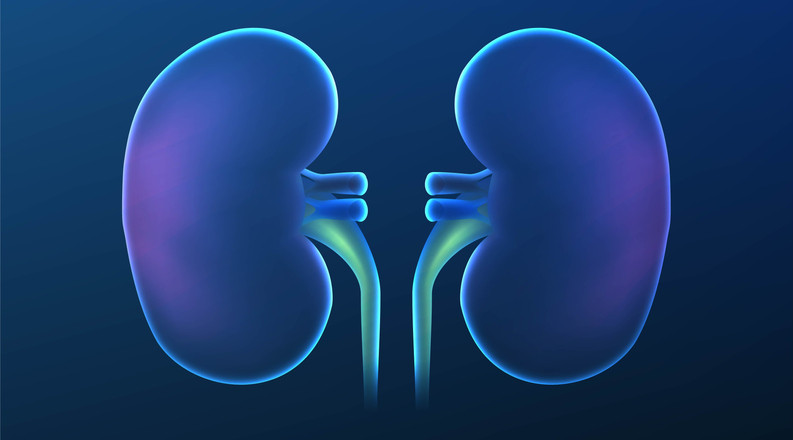
You have two kidneys, each roughly the size of a fist. They sit toward the back of your abdomen, one on each side of your spine, just below the rib cage. Although they are relatively small compared with the rest of the body, their work is essential to keeping the body’s internal conditions within a remarkably narrow range.
Understanding what the kidneys do also helps explain why kidney disease can affect so many different parts of the body. When kidney function declines, the problem is not simply that a person makes less urine. The body’s fluid balance, blood chemistry, blood pressure, hormone systems, bones, muscles, and blood production can all be affected.
Where the kidneys fit into the body’s plumbing system
Blood reaches each kidney through a renal artery. Inside the kidney, that artery branches repeatedly into smaller blood vessels, eventually delivering blood to microscopic structures called nephrons.
Nephrons are the kidney’s basic functional units. Each kidney contains hundreds of thousands of them, although the exact number varies from person to person. A nephron performs the fundamental tasks of filtering blood and then selectively processing the resulting fluid.
After the kidneys process the blood, the finished urine travels through tubes called the ureters to the bladder. The bladder stores urine until it leaves the body through the urethra.
This arrangement can make the kidneys sound like passive plumbing equipment. In reality, the system is highly sophisticated. The kidneys do not simply separate “good” substances from “bad” ones. They continuously decide what to retain, what to return to the bloodstream, what to remove, and how much water should accompany each substance.
Your kidneys filter your blood—but filtering is only the beginning
The first major step in kidney function is filtration.
Within each nephron is a tiny cluster of blood vessels called the glomerulus. Blood enters these vessels under pressure, and some of the water and small dissolved substances move out of the bloodstream into a surrounding structure called Bowman’s capsule. This produces a fluid known as filtrate.
The filtration barrier is selective. Water and many small molecules can pass through, while blood cells and most large proteins normally remain in the bloodstream.
The filtrate contains substances the body may need, including glucose, amino acids, sodium, and other electrolytes. It also contains substances the body eventually needs to eliminate. So the initial filtrate is not simply urine. It is more like a rough draft that the kidney will extensively modify.
This distinction is important. If the kidneys merely filtered blood and discarded everything that passed through the filter, the body would rapidly lose enormous amounts of water and useful nutrients.
Instead, most of the filtered material is reclaimed.
The kidneys reclaim what your body needs
After filtration, the fluid flows through the nephron’s tubules. Along the way, kidney cells transport useful substances back into the blood. This process is called reabsorption.
Glucose provides a simple example. Under normal circumstances, essentially all of the glucose filtered by the kidneys is reabsorbed and returned to the bloodstream. Amino acids are also normally reclaimed. Large amounts of sodium and water are recovered as well.
Other substances are handled according to the body’s needs. The kidney can increase or decrease their reabsorption, helping maintain the right concentrations in the blood.
The result is an extraordinary feat of selective recycling. The kidneys can process a huge volume of filtrate while returning most of it to the circulation and allowing a much smaller amount to become urine.
This is one reason the kidneys are better described as regulators than as simple filters.
How your kidneys control your body’s water supply
Water balance is one of the kidneys’ most important responsibilities.
Your body continually gains and loses water. You obtain water from beverages and food and produce some water through metabolism. You lose water through urine, sweat, breathing, and bowel movements.
The kidneys adjust the amount of water excreted in urine according to the body’s needs. If you are dehydrated, the kidneys conserve more water, producing a smaller volume of more concentrated urine. If you have consumed a large amount of fluid, the kidneys can eliminate more water, producing a larger volume of more dilute urine.
A hormone called antidiuretic hormone, or ADH, plays a major role in this process. ADH is released into the bloodstream when the body needs to conserve water. It acts on the kidneys, particularly the collecting ducts, increasing their ability to allow water to move back into the body.
This system allows the kidneys to respond continuously to changes in hydration rather than operating at one fixed rate.
The kidneys also help maintain the concentration of dissolved substances in body fluids. Keeping water and solutes in the appropriate proportions is essential because cells depend on a stable surrounding environment.
Your kidneys carefully balance electrolytes
Electrolytes are electrically charged minerals and other substances dissolved in body fluids. Sodium, potassium, calcium, chloride, phosphate, and bicarbonate are among the most important ones regulated by the kidneys.
Sodium is especially important because it influences the amount of water in the bloodstream and tissues. The kidneys determine how much sodium is retained and how much is eliminated in urine.
Potassium is another critical example. Cells require potassium for normal electrical activity, and the heart is particularly sensitive to abnormal potassium levels. The kidneys regulate potassium excretion and can adjust it according to the body’s needs.
Calcium and phosphate are closely connected to bone health and are also influenced by kidney function. The kidneys participate in a larger hormonal system that keeps these minerals within appropriate ranges.
These adjustments happen continuously. The amount of an electrolyte entering the body can vary considerably from day to day, yet the concentration in the blood normally remains within a relatively narrow range because the kidneys continually compensate.
Your kidneys help control blood pressure
The kidneys are deeply involved in blood-pressure regulation.
One way they influence blood pressure is through their control of sodium and water. Retaining more sodium generally causes the body to retain more water, increasing the volume of fluid in the circulation. Eliminating sodium and water has the opposite general effect.
The kidneys also participate in a hormone system called the renin-angiotensin-aldosterone system. When the kidneys sense circumstances such as reduced blood flow or certain changes in sodium delivery, specialized kidney cells can release the enzyme renin. This begins a series of chemical reactions that ultimately produce angiotensin II and stimulate the release of aldosterone.
These signals can promote blood-vessel constriction and increased retention of sodium and water, helping restore blood pressure and circulating volume.
This system is useful when the body needs to preserve circulation. However, persistent overactivity of blood-pressure regulatory systems can contribute to hypertension.
The relationship works in both directions. High blood pressure can damage the small blood vessels and filtering structures of the kidneys, while damaged kidneys can make blood-pressure control more difficult. This creates a potentially harmful cycle in chronic kidney disease.
Your kidneys help keep your blood’s chemistry stable
One of the kidney’s most remarkable jobs is maintaining acid-base balance.
Normal metabolism continuously produces acids. The body must prevent these acids from accumulating because even relatively small changes in blood pH can interfere with proteins, enzymes, cellular processes, and organ function.
The lungs provide rapid control of acid-base balance by regulating carbon dioxide. The kidneys provide slower but powerful long-term regulation.
Kidney tubules reclaim filtered bicarbonate, which helps buffer acids. The kidneys also secrete hydrogen ions and produce and excrete ammonium, allowing the body to eliminate acid generated through metabolism.
This cooperation between the lungs and kidneys helps keep blood pH within a tightly controlled range.
When kidney function becomes severely impaired, the body may have difficulty eliminating enough acid, potentially causing a condition called metabolic acidosis.
The kidneys remove metabolic waste
Your cells are constantly carrying out chemical reactions. Those reactions produce waste products that must eventually leave the body.
Urea is one important example. When the body breaks down proteins, nitrogen-containing compounds are converted in the liver into urea. Urea travels through the bloodstream to the kidneys, where it is filtered and ultimately excreted in urine.
Creatinine is another familiar waste product. It is produced largely from normal muscle metabolism and is removed from the bloodstream primarily by the kidneys. Because creatinine production is relatively predictable for an individual, blood creatinine is commonly used as one indicator of kidney filtration.
The kidneys also help eliminate many other compounds, including certain medications and their metabolites. This is one reason kidney function matters when medications are prescribed: reduced kidney function can cause some drugs or their active metabolites to remain in the body longer.
Waste removal, however, is only one part of the kidneys’ job. A person with substantial kidney failure can develop serious problems even before waste products reach extremely high levels because fluid, electrolytes, acid-base balance, and hormone regulation can also become disrupted.
Your kidneys are selective chemical factories
A useful way to imagine a nephron is as a microscopic processing plant.
Blood enters the glomerulus, where filtration occurs. The resulting fluid then travels through a series of specialized tubular segments. Each segment has different transport proteins and performs different tasks.
The proximal tubule reabsorbs much of the filtered sodium and water, along with essentially all filtered glucose and amino acids under normal conditions. It also participates in the handling of bicarbonate and numerous other substances.
The loop of Henle creates conditions that allow the kidney to concentrate urine efficiently. Its descending and ascending portions have different properties, allowing the kidney to establish and use an osmotic gradient within the kidney’s inner region.
The distal tubule and collecting duct perform additional fine adjustments. Hormones such as aldosterone and ADH help regulate how sodium, potassium, and water are handled in these later parts of the nephron.
By the time fluid emerges as urine, it has been transformed extensively from the original filtrate.
Why your urine changes from day to day
Urine is not always the same because your kidneys are constantly responding to your circumstances.
After drinking plenty of water, urine generally becomes more dilute. When you are dehydrated, it becomes more concentrated and usually darker in color.
Diet can also influence urine composition. Certain foods, medications, supplements, and metabolic conditions can change urine’s color, odor, concentration, or chemical composition.
Urine normally contains water along with dissolved waste products and electrolytes. Healthy kidneys generally prevent significant amounts of blood cells and protein from entering the urine.
The presence of certain substances in urine can therefore provide clues about what is happening inside the body. Medical professionals can use urine testing to look for blood, protein, glucose, ketones, signs of infection, and other abnormalities.
Your kidneys make hormones and activate vitamins
The kidneys are also endocrine organs, meaning they produce or help regulate hormones and hormone-like substances.
One important hormone is erythropoietin, commonly called EPO. When the kidneys detect reduced oxygen availability, specialized cells can increase production of erythropoietin. EPO signals the bone marrow to make more red blood cells.
This is why chronic kidney disease can cause anemia. Damaged kidneys may produce insufficient erythropoietin, reducing the body’s ability to maintain normal red-blood-cell production.
The kidneys also participate in vitamin D metabolism. Vitamin D obtained from sunlight, food, or supplements undergoes several chemical transformations in the body. The kidneys perform an important final activation step, producing the biologically active form known as calcitriol.
Calcitriol helps regulate calcium and phosphate metabolism and is important for healthy bones. Reduced kidney function can therefore contribute to abnormalities in mineral balance and bone health.
The kidneys’ hormonal responsibilities demonstrate that they are not merely organs of excretion. They are active participants in communication between different body systems.
How the kidneys work with the heart and blood vessels
The kidneys and cardiovascular system are closely connected.
The heart supplies the kidneys with blood, while the kidneys help regulate the volume and chemical composition of that blood. The kidneys also influence blood pressure through fluid balance and hormonal pathways.
Healthy kidneys receive a substantial amount of the heart’s output because filtering and regulating the blood requires a continuous blood supply. Despite their small size, the kidneys are therefore highly vascular organs.
The tiny blood vessels inside the kidneys are also vulnerable to damage. Conditions that injure blood vessels, particularly long-standing high blood pressure and diabetes, can progressively impair kidney function.
At the same time, chronic kidney disease is associated with a higher risk of cardiovascular disease. Changes in blood pressure, fluid balance, mineral metabolism, anemia, and other biological processes can all contribute to cardiovascular stress.
The connection is so strong that kidney health and cardiovascular health are best viewed as parts of the same larger system rather than completely separate concerns.
What happens when kidney function declines?
Kidney disease can develop suddenly or gradually.
Acute kidney injury is a relatively rapid decline in kidney function. It can occur in situations such as severe dehydration, major blood loss, certain infections, urinary obstruction, or exposure to particular medications or toxins. Depending on the cause and severity, kidney function may recover partially or completely, although acute injury can also lead to lasting damage.
Chronic kidney disease is different. It involves persistent abnormalities in kidney structure or function over time. Common causes include diabetes and high blood pressure, while other causes include certain immune diseases, inherited conditions, recurrent kidney problems, and structural disorders.
Early kidney disease may cause few or no obvious symptoms. This is partly because the kidneys have considerable functional reserve. A person can lose a substantial amount of kidney function before experiencing dramatic symptoms.
As kidney function becomes more impaired, waste products and excess fluid can accumulate. Electrolyte and acid-base abnormalities may develop. Hormonal functions can be disrupted, contributing to anemia and mineral-bone disorders. Blood pressure can become more difficult to control.
Advanced kidney failure can eventually require kidney replacement therapy, such as dialysis, or a kidney transplant.
Why kidney disease can be hard to notice
One of the challenges of kidney disease is that symptoms can be nonspecific.
Fatigue, swelling, changes in urination, nausea, poor appetite, itching, muscle cramps, and difficulty concentrating can occur in significant kidney disease, but these symptoms can also have many other causes.
Some people with early chronic kidney disease have no noticeable symptoms at all. That is why laboratory testing can be important for people who have risk factors for kidney disease.
Two commonly used measures are blood creatinine and urine albumin.
Creatinine is used to estimate how effectively the kidneys are filtering. The resulting estimate is called the estimated glomerular filtration rate, or eGFR. It is not a direct measurement of every aspect of kidney function, but it is an important clinical indicator.
Urine albumin provides different information. Healthy kidney filters retain most albumin in the bloodstream. An elevated amount of albumin in urine can indicate damage to the kidney’s filtering barrier.
Looking at both blood and urine can therefore provide a more informative picture than relying on symptoms alone.
The kidney’s remarkable ability to conserve water
One of the most elegant features of kidney physiology is the ability to produce concentrated urine.
This depends heavily on the architecture of the loop of Henle and the surrounding blood vessels and tissue. The kidney establishes a gradient in the inner region of the organ that allows water to be reclaimed from the collecting ducts when ADH is present.
This mechanism becomes especially important when water is scarce. Instead of allowing large quantities of water to leave the body in dilute urine, the kidneys can conserve water while still eliminating waste.
The system is a sophisticated example of how anatomy and physiology work together. The nephron’s different segments have different permeability and transport properties, and their arrangement creates a system capable of adjusting urine concentration according to the body’s needs.
Your kidneys do not work alone
Kidney function is part of a larger network involving the brain, hormones, lungs, liver, heart, bones, intestines, and blood vessels.
The brain and endocrine system help detect changes in water balance and coordinate hormonal responses. The lungs regulate carbon dioxide and therefore participate in acid-base control. The liver produces substances that eventually become kidney-excreted waste. The bones store large amounts of calcium and phosphate and participate in mineral regulation. The heart and blood vessels determine how blood reaches the kidneys and are themselves influenced by kidney-controlled fluid and hormone systems.
This interconnectedness explains why a kidney problem can have effects far beyond the urinary tract.
It also explains why treating kidney disease often involves more than trying to improve urine production. Medical care may need to address blood pressure, blood sugar, anemia, electrolyte abnormalities, acid-base balance, nutrition, cardiovascular risk, and medication dosing.
What everyday habits support kidney health?
The kidneys are remarkably resilient, but they are not indestructible.
Keeping blood pressure in a healthy range is important because prolonged hypertension can damage kidney blood vessels and filtering structures. For people with diabetes, maintaining appropriate blood glucose levels is also important because long-term high blood sugar can damage the kidneys.
Staying adequately hydrated helps the kidneys perform their normal functions, although there is no universal amount of water that every person must drink each day. Water requirements vary with body size, diet, activity, climate, illness, and other circumstances. People with certain medical conditions may actually need to restrict fluid intake, so more water is not automatically better.
A balanced diet that does not consistently provide excessive sodium can support healthy blood pressure and fluid regulation. Regular physical activity, maintaining a healthy body weight, avoiding tobacco, and limiting excessive alcohol use also support overall cardiovascular and metabolic health, which in turn supports the kidneys.
Medications deserve particular attention. Some pain relievers, especially when used frequently or in certain circumstances, can injure the kidneys. The risk depends on the specific medication, dose, duration, hydration status, and a person’s underlying health. Prescription and over-the-counter drugs should therefore be used according to appropriate medical guidance rather than assuming that nonprescription means risk-free.
People with known kidney disease may have additional dietary, fluid, and medication considerations that are specific to their stage of disease.
How doctors assess kidney function
Kidney health is evaluated using several kinds of information rather than a single test.
Blood testing can measure creatinine and other substances that accumulate when filtration declines. The creatinine value can be used with demographic and clinical information to estimate glomerular filtration.
Urine testing can identify albumin and other abnormalities. A urine albumin-to-creatinine ratio is commonly used to assess albumin loss while accounting for urine concentration.
Blood pressure measurement is also important because hypertension can both contribute to kidney disease and result from it.
Imaging studies may be used when doctors need to examine kidney size, structure, blood flow, or possible obstruction. Ultrasound is one common imaging method. Other tests may be appropriate depending on the suspected condition.
In selected cases, doctors may need more specialized testing or a kidney biopsy to determine the underlying cause of kidney damage.
Why one abnormal test does not always tell the whole story
Kidney measurements have to be interpreted in context.
Creatinine levels are influenced not only by kidney filtration but also by factors such as muscle mass, age, diet, and certain medications. An eGFR is an estimate rather than a perfect direct measurement.
Urine albumin can also fluctuate. Temporary conditions, including strenuous exercise or certain illnesses, can sometimes affect urine findings.
For chronic kidney disease, persistence matters. A single abnormal result does not necessarily establish a chronic disorder. Doctors generally consider repeated measurements, the duration of abnormalities, symptoms, medical history, and other findings.
This is one reason routine medical evaluation is more useful than trying to interpret an isolated laboratory number without context.
The kidneys have an extraordinary workload
The kidneys’ workload becomes easier to appreciate when you consider what filtration actually means.
A large quantity of plasma is filtered through the glomeruli each day. Yet almost all of the filtered water and many filtered substances that the body needs are subsequently reclaimed. The final urine represents only a small fraction of the original filtered volume.
In other words, the kidneys are not simply throwing away huge quantities of fluid. They are repeatedly filtering and then carefully processing it.
Every moment, kidney cells are moving sodium, potassium, hydrogen ions, bicarbonate, glucose, amino acids, water, and numerous other substances across membranes. Hormonal signals adjust these processes as your hydration, blood pressure, diet, and internal chemistry change.
Much of this work happens without any conscious awareness. You do not have to think about keeping your potassium within a safe range or adjusting the concentration of your urine after a long period without drinking. Your kidneys continuously handle those tasks for you.
Why losing kidney function affects the entire body
The breadth of kidney function explains why severe kidney disease is a whole-body disorder.
If filtration declines substantially, waste products can accumulate. If sodium and water excretion becomes inadequate, fluid can build up. If potassium regulation fails, blood potassium can become dangerously abnormal. If acid excretion is impaired, acid can accumulate.
Reduced erythropoietin production can contribute to anemia. Disturbed vitamin D activation and phosphate regulation can affect calcium balance and bones. Changes in hormonal pathways can contribute to high blood pressure.
These effects do not all appear at the same time, and their severity depends on the cause and degree of kidney dysfunction. But together they illustrate an important principle: the kidneys help maintain the internal environment on which virtually every other organ depends.
What kidneys cannot do
Despite their impressive abilities, the kidneys cannot compensate indefinitely for every problem.
They cannot simply remove unlimited amounts of water, sodium, potassium, or toxins without consequences. Their ability to adapt has physiological limits. Severe dehydration, overwhelming illness, major blood loss, urinary blockage, certain toxins, and chronic diseases can exceed those limits.
The kidneys also cannot regenerate unlimited numbers of damaged nephrons. Some kidney injuries can heal, and surviving nephrons can adapt to carry additional workload, but substantial chronic loss of kidney tissue can become permanent.
That is why protecting kidney function over the long term matters. Kidney disease is often easier to prevent or slow than to reverse after extensive permanent damage has occurred.
When kidney symptoms deserve medical attention
Changes such as persistent blood in the urine, unexplained swelling, significant changes in urination, persistent flank pain, or symptoms associated with severe dehydration or illness can warrant medical evaluation.
Sudden major changes in urine output, severe swelling, confusion, difficulty breathing, chest symptoms, or other signs of serious illness require prompt medical attention.
People with diabetes, high blood pressure, cardiovascular disease, a family history of kidney disease, or other recognized risk factors may also benefit from discussing appropriate kidney testing with a health professional, even when they feel well.
The most remarkable thing about the kidneys may be how much they accomplish without demanding attention. Every day, they filter blood, reclaim valuable materials, regulate water and electrolytes, control acid-base balance, influence blood pressure, remove metabolic waste, support red-blood-cell production, participate in vitamin D activation, and continually adjust the composition of the body’s internal fluids.
They do all of this through millions of microscopic processes occurring in parallel, allowing the rest of the body to function within the narrow chemical conditions it requires.