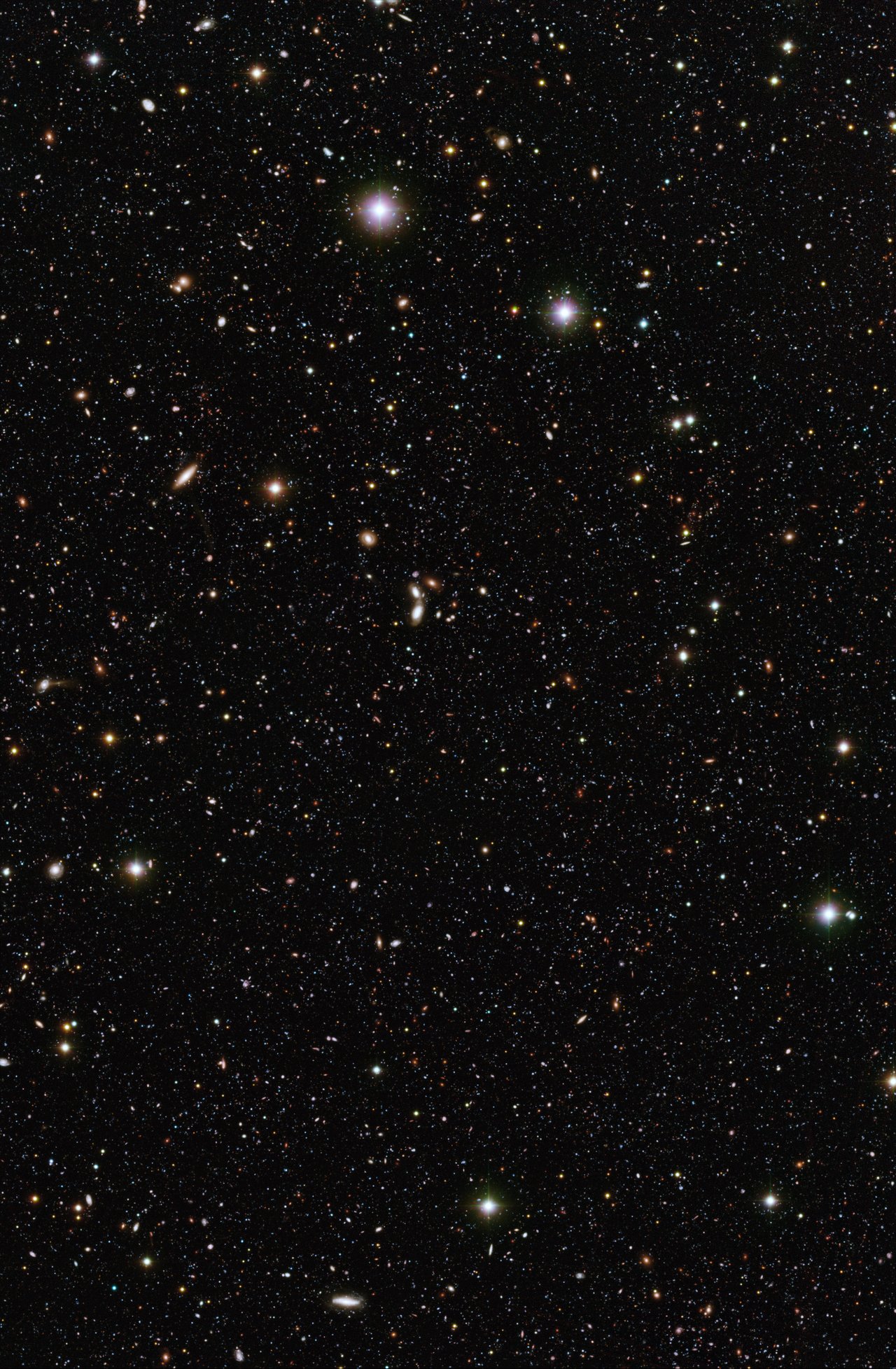
Imagine floating outside a spacecraft, with billions of stars shining in every direction. A nearby star explodes in a brilliant supernova. A massive asteroid crashes into a distant planet. Two enormous black holes collide, releasing more energy than trillions of suns combined. It seems like these incredible cosmic events should produce deafening explosions.
Yet, if you were somehow standing safely in space, you would hear absolutely nothing.
No booming explosions.
No roaring stars.
No crashing planets.
Only complete silence.
This strange reality surprises many people because movies often portray space as a place filled with dramatic sounds. Spaceships roar past each other, lasers blast across the sky, and exploding planets create thunderous shock waves. While these sound effects make movies exciting, they do not reflect how the universe actually works.
The real reason space is silent is one of the most fascinating lessons in physics. To understand it, we first need to understand what sound really is.
What Is Sound?
Sound is not an object you can hold or see. It is a type of mechanical wave created when something vibrates.
When a guitar string is plucked, it vibrates rapidly. Those vibrations push nearby air molecules together, creating regions of higher pressure. These compressed molecules then push on neighboring molecules, forming a wave that travels through the air.
When these pressure waves reach your ears, your eardrums vibrate in the same pattern. Your brain interprets these vibrations as music, speech, or any other sound.
Without vibrating particles to carry these waves, sound simply cannot travel.
This simple fact explains why Earth’s atmosphere is full of sound while outer space is not.
Why Does Sound Need a Medium?
Sound always requires a material through which it can travel. Scientists call this material a medium.
The medium can be air, water, metal, wood, glass, or almost any solid, liquid, or gas.
Imagine standing beside a lake. When you throw a stone into the water, ripples spread outward because water molecules pass the disturbance from one to another.
Sound behaves in a similar way.
Instead of moving water, sound moves tiny particles in a material. Each particle bumps into the next, passing the vibration along.
On Earth, the atmosphere provides billions upon billions of air molecules that continuously carry sound waves from one place to another.
Without these particles, there is nothing to transmit the vibration.
What Is a Vacuum?
Outer space is often described as a vacuum.
A vacuum is a region containing extremely little matter. Unlike Earth’s atmosphere, where trillions of molecules occupy every cubic centimeter, the vast emptiness between planets and stars contains incredibly few particles.
Space is not perfectly empty. There are scattered hydrogen atoms, dust grains, cosmic rays, and tiny amounts of gas. However, these particles are spread so far apart that they cannot efficiently carry ordinary sound waves.
In many regions of interstellar space, there may be only a few atoms in an entire cubic centimeter. By comparison, a single cubic centimeter of air at sea level contains around 25 quintillion molecules.
That enormous difference is why sound disappears in space.
Why Can’t Sound Travel Through Space?
Imagine two people standing on opposite sides of a large empty room.
If the room is filled with air, one person can shout, and the other will hear the sound because air molecules carry the vibrations.
Now imagine removing every air molecule from the room.
The speaker’s vocal cords would still vibrate, but there would be nothing to carry those vibrations across the room.
The listener would hear nothing.
This is essentially what happens in outer space.
Even if a gigantic explosion occurs, there are too few particles between the source and the observer to transmit the sound.
The explosion still produces light, heat, radiation, and expanding gas. These can travel through space in different ways.
But the sound itself cannot.
Why Can We Hear Sounds on Earth?
Earth is surrounded by a thick atmosphere extending hundreds of kilometers above the surface.
Every conversation, bird song, thunderstorm, and musical performance depends on this blanket of air.
When someone speaks, vibrating vocal cords create pressure waves that travel through countless air molecules until they reach another person’s ears.
Because Earth’s atmosphere is relatively dense, sound travels very efficiently.
The speed of sound in dry air at room temperature is approximately 343 meters per second, although this speed changes with temperature, pressure, and humidity.
Without Earth’s atmosphere, our world would become eerily silent.
Can Sound Travel Through Solids?
Yes.
In fact, sound often travels faster through solids than through air.
This is because atoms inside solids are packed much closer together.
When one atom vibrates, it quickly transfers energy to neighboring atoms.
This is why placing your ear against a railroad track allows you to hear an approaching train before you can hear it through the air.
It is also why construction workers sometimes detect vibrations through walls or floors.
Inside spacecraft, astronauts can hear sounds because vibrations travel through the air inside the cabin and through the spacecraft’s structure itself.
Can Sound Travel Through Water?
Absolutely.
Water molecules are much closer together than air molecules, making water an excellent medium for sound.
Marine animals rely heavily on sound because light does not travel very far underwater.
Whales communicate across hundreds or even thousands of kilometers using low-frequency sounds.
Dolphins use sound waves to navigate and locate prey through echolocation.
Submarines detect distant objects by analyzing sound waves traveling through the ocean.
Water carries sound much more efficiently than air.
Is Space Completely Empty?
Although space is often called a vacuum, it is not perfectly empty.
The regions between stars contain extremely thin clouds of gas known as the interstellar medium.
Between galaxies lies the even thinner intergalactic medium.
Near planets and stars, gases become denser.
The Sun constantly releases a stream of charged particles called the solar wind.
Some nebulae contain enough gas to form new stars.
Even so, these regions remain far too diffuse for ordinary sound to travel the way it does on Earth.
The particles are simply too far apart.
Do Explosions Make Sound in Space?
This question has a surprising answer.
Yes, explosions themselves generate sound.
Whenever gases expand violently, pressure waves are created.
However, those sound waves remain trapped inside the expanding cloud of gas because there is almost no surrounding material to carry them farther.
Imagine clapping your hands underwater.
The sound travels through the water because water provides a medium.
Now imagine clapping your hands in a perfect vacuum.
Your hands would still collide, but no sound wave could travel away from them.
The same principle applies to explosions in space.
Why Do Movies Show Sound in Space?
The answer is simple: storytelling.
Movies are designed to create excitement and emotional impact.
Imagine watching an intense space battle with complete silence.
Although scientifically accurate, many viewers would find it less dramatic.
Explosions, engine noises, laser blasts, and roaring spacecraft help audiences feel the action.
Filmmakers intentionally add these sounds because they enhance the viewing experience, not because they represent reality.
Some science fiction films choose greater scientific realism by allowing exterior scenes in space to remain silent, creating an atmosphere that many scientists appreciate.
If Astronauts Are Outside a Spacecraft, Can They Hear Anything?
If two astronauts are performing a spacewalk and one taps on the outside of the spacecraft, the other cannot hear the sound through space itself.
However, if both astronauts are touching the same structure, vibrations can travel through the metal.
Similarly, astronauts hear each other by speaking through radio systems built into their spacesuits.
Their voices become electrical signals transmitted by radio waves.
Radio waves are electromagnetic waves, not sound waves.
Unlike sound, electromagnetic waves do not require a material medium.
They travel easily through the vacuum of space.
How Do Astronauts Communicate?
Astronauts communicate using radio technology.
Microphones inside their helmets convert sound into electrical signals.
These signals become radio waves that travel through space at the speed of light.
The receiving radio converts the signal back into sound inside the other astronaut’s helmet.
Without radio communication, astronauts working outside spacecraft would be unable to hear one another despite being only a few meters apart.
Can Scientists “Hear” Space?
You may have seen videos claiming to reveal “the sound of a black hole” or “the sound of the universe.”
These descriptions can be confusing.
Scientists are not recording ordinary sound traveling through empty space.
Instead, they often convert other kinds of data into sounds.
This process is called sonification.
For example, measurements of X-rays, radio waves, magnetic fields, or particle vibrations can be translated into audio frequencies humans can hear.
These sounds represent scientific data rather than actual noises traveling through the vacuum.
They help researchers identify patterns that might otherwise be difficult to notice.
Are There Places in Space Where Sound Can Travel?
Yes.
Inside planets, stars, and dense gas clouds, sound can travel because matter is present.
The Sun, for example, constantly vibrates.
Powerful pressure waves move through its hot plasma.
Astronomers study these vibrations using a field called helioseismology.
By analyzing how sound waves move inside the Sun, scientists learn about its internal structure in much the same way geologists use earthquake waves to study Earth’s interior.
Similarly, sound waves can travel inside giant molecular clouds where new stars are forming.
The key requirement is always the same: enough particles must exist to carry the vibrations.
The Strange Sounds of Black Holes
Black holes themselves do not produce ordinary sound that travels across space.
However, gas swirling around black holes can generate pressure waves.
In galaxy clusters filled with hot gas, astronomers have detected enormous pressure waves associated with supermassive black holes.
One famous example comes from the Perseus Galaxy Cluster.
These pressure waves occur at frequencies far below human hearing—millions of billions of times lower than the notes our ears can detect.
Scientists can mathematically shift these frequencies upward into the audible range, allowing people to listen to a representation of the data.
Again, this is not sound traveling through empty space to Earth. It is scientific information converted into audio.
Why Can Light Travel Through Space but Sound Cannot?
This difference often confuses people.
Light is an electromagnetic wave.
Unlike sound, it does not require particles to carry it.
Light can move through a perfect vacuum because oscillating electric and magnetic fields sustain one another as they travel.
This is why sunlight reaches Earth across approximately 150 million kilometers of nearly empty space.
The same principle allows radio waves, microwaves, X-rays, gamma rays, and visible light to cross the universe.
Sound, by contrast, depends entirely on matter.
Without particles, it has nowhere to go.
What Would You Experience If You Floated in Space?
Imagine floating safely outside a spacecraft while looking at Earth.
The Sun shines brilliantly.
Stars sparkle without twinkling.
The spacecraft slowly drifts nearby.
Perhaps a distant meteor flashes across the darkness.
Despite this breathtaking view, you would hear nothing.
No engine roar.
No rushing wind.
No echoes.
No distant explosions.
Only silence.
Your own breathing, heartbeat, and movements inside your spacesuit would be audible because the air within your helmet carries sound to your ears.
Everything outside would remain completely silent.
It would be one of the quietest places imaginable.
The Beauty of Cosmic Silence
The silence of space is not a sign that the universe is inactive. Quite the opposite.
Every second, stars are born inside giant clouds of gas. Massive stars explode as supernovae. Galaxies collide over millions of years. Black holes merge, releasing immense amounts of energy. Planets orbit their stars, and comets race through the darkness.
The universe is constantly in motion.
Yet almost all of this unfolds in profound silence because the vast vacuum between celestial objects cannot carry ordinary sound.
This remarkable fact reminds us that our everyday experiences on Earth depend on something we rarely notice: the atmosphere surrounding us. It is this invisible ocean of air that allows us to hear laughter, music, birdsong, thunder, and every spoken word.
Beyond that protective blanket lies a universe filled with light, gravity, radiation, and motion—but also with one of nature’s most extraordinary features: an almost perfect silence that stretches across billions of light-years.