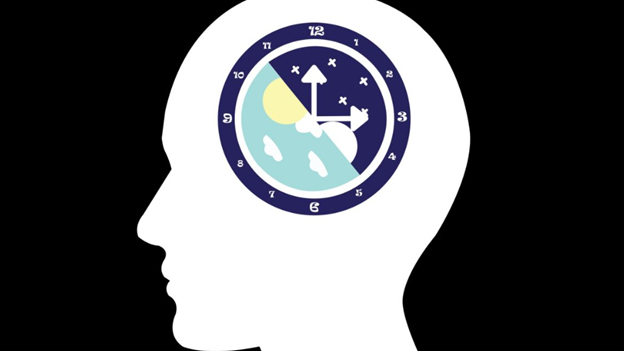
Every day, your body performs thousands of processes on a schedule. You become sleepy at roughly predictable times, tend to feel more alert during other parts of the day, and experience daily rhythms in body temperature, hormones, digestion, metabolism, and even immune activity. These patterns are not simply responses to the clock on your wall. Much of the timing is coordinated by an internal biological timekeeping system.
This system is known as the circadian rhythm. The word comes from Latin words meaning “approximately” and “day,” reflecting the fact that the central human biological clock follows a cycle of roughly 24 hours.
Your internal clock does not work alone. It constantly receives information from the environment, particularly from light and darkness, and adjusts itself so that your biological day stays reasonably aligned with the astronomical day. At the same time, your behavior—when you sleep, eat, exercise, work, and expose yourself to light—can influence the timing of your biological rhythms.
Understanding this system helps explain why jet lag happens, why working overnight can be difficult, why bright light at certain times can affect sleep, and why getting enough sleep is not only about accumulating a certain number of hours. Timing matters, too.
What is the body’s internal clock?
The body’s internal clock is a network of biological timing mechanisms that coordinate rhythmic changes throughout the body. The best-known of these rhythms is the circadian rhythm, which repeats approximately every 24 hours.
Circadian rhythms influence the sleep-wake cycle, but their reach extends far beyond sleep. They help regulate fluctuations in body temperature, hormone production, cardiovascular activity, metabolism, digestion, alertness, and other physiological functions. Many tissues and organs contain their own molecular clocks, allowing different parts of the body to anticipate recurring changes in the environment rather than simply reacting to them after they occur.
The brain contains a central clock that helps coordinate these rhythms. This central pacemaker is located in a small region of the hypothalamus called the suprachiasmatic nucleus, or SCN. Despite its tiny size, the SCN plays a major role in organizing the timing of daily biological activity.
The clock is not a simple timer that counts from midnight to midnight. Instead, it is an active biological system that generates rhythms and continually adjusts them in response to environmental signals.
Why does the body need an internal clock?
Life on Earth evolved under a repeating cycle of light and darkness. Organisms that could anticipate predictable environmental changes had an advantage over those that could respond only after the changes occurred.
For humans, daytime generally provides conditions associated with activity, wakefulness, food availability, and interaction with the environment. Nighttime historically brought darkness and conditions more compatible with rest and sleep.
An internal clock allows the body to prepare for these recurring changes. Hormones can rise or fall in anticipation of the expected time of day, body temperature can change according to a daily pattern, and the brain can shift between states that support alertness and sleep.
This anticipatory function is important. Your body does not wait until you have been awake for 16 hours before beginning all of the processes associated with nighttime. Instead, biological timing systems help prepare you for different phases of the day.
The master clock in the brain
The central circadian clock resides in the suprachiasmatic nucleus, a paired structure located in the hypothalamus, near the point where the optic nerves from the eyes cross.
The SCN receives information about environmental light through the eyes. Specialized light-sensitive cells in the retina contain a photopigment called melanopsin and send information about ambient light to the SCN through a pathway known as the retinohypothalamic tract.
This pathway is particularly important for biological timing. It does not function primarily as a system for seeing images. Instead, it tells the brain about the intensity and timing of environmental light.
The SCN uses that information to keep the body’s internal timing system synchronized with the external day-night cycle.
When light reaches the appropriate retinal pathways during the day, it generally promotes a biological state appropriate for daytime. Darkness, particularly during the biological night, allows the timing system to promote processes associated with nighttime.
How the internal clock keeps time
At the molecular level, circadian rhythms arise from interacting biological feedback loops involving genes and proteins.
Certain clock-related genes provide instructions for proteins that accumulate inside cells. As those proteins build up, they eventually inhibit the activity of the genes that produced them. As the proteins are broken down, the inhibition weakens, allowing the cycle to begin again.
This feedback process takes approximately a day. Although the molecular details are complex, the basic principle resembles a biological oscillator: molecules are produced, accumulate, influence gene activity, are degraded, and then the cycle repeats.
These molecular clocks operate in many tissues throughout the body. The brain’s central clock helps coordinate them, while local clocks respond to signals from the central system and to cues associated with the timing of behavior, particularly eating and activity.
The result is not one clock ticking inside the body, but a coordinated network of clocks.
Why the clock is not exactly 24 hours
The human circadian system is approximately 24 hours long, but it is not perfectly synchronized to exactly 24 hours when isolated from environmental time cues.
In controlled conditions without normal exposure to the natural light-dark cycle, people’s internal rhythms can drift away from the 24-hour day. This is one reason scientists describe the rhythm as “circadian” rather than simply “24-hour.”
Environmental signals continually reset the system. The most powerful of these signals is light.
The daily adjustment of the internal clock to environmental cues is called entrainment. Entrainment keeps the timing of your biological rhythms aligned with the rotation of Earth.
Light is the body’s most important time cue
A biological signal that helps synchronize a circadian clock is called a zeitgeber, a German term meaning “time giver.” Light is the dominant zeitgeber for the human circadian system.
The timing of light exposure matters. Light reaching the appropriate retinal cells during the biological night can shift the timing of the circadian clock. Depending on when the exposure occurs, it can move the clock earlier or later.
This is why exposure to bright light is used in some circumstances to help adjust circadian timing. Morning light and evening light do not necessarily have identical effects because the circadian system responds differently to light at different biological times.
This also helps explain why light exposure before bedtime can sometimes make it harder to fall asleep. Bright light, especially light rich in shorter wavelengths, can provide the brain with a signal associated with daytime and can suppress melatonin production.
The effect should not be reduced to the idea that “blue light is always bad.” The timing, intensity, duration, and context of light exposure all matter. Ordinary indoor lighting is generally much less intense than outdoor daylight, while bright outdoor light can be a powerful circadian signal even when the sky appears overcast.
Melatonin is part of the clock’s signaling system
Melatonin is a hormone produced primarily by the pineal gland. Its production is controlled by the circadian system and is strongly influenced by the light-dark cycle.
Under normal conditions, melatonin levels tend to rise during the biological evening and night, remain elevated during much of the night, and decline toward morning. Darkness therefore provides conditions that favor melatonin production, while light suppresses it.
Melatonin is sometimes described as the “sleep hormone,” but that description is incomplete. Melatonin is better understood as a signal of biological night. Its presence helps communicate nighttime information to tissues throughout the body and participates in the timing of sleep.
Taking melatonin can affect circadian timing as well as sleep. The effects depend substantially on dose, timing, individual circumstances, and the reason it is being used. More melatonin is not necessarily better, and taking it at the wrong time can produce an unwanted shift in circadian timing.
Your sleep schedule is controlled by more than one system
The tendency to sleep and wake is governed by an interaction between the circadian system and another process often called sleep homeostasis.
Sleep homeostasis is essentially the buildup of pressure to sleep as time awake accumulates. The longer you remain awake, the stronger this pressure generally becomes. Sleeping reduces that pressure.
The circadian system, by contrast, provides a time-of-day signal that promotes wakefulness during part of the day and sleepiness during another part.
These two systems interact. You can think of sleep pressure as accumulating with time awake while the circadian clock determines when your body is biologically inclined toward wakefulness or sleep.
This explains why simply staying awake longer does not guarantee that you will fall asleep immediately at any desired time. At some times, the circadian system strongly promotes wakefulness even when you have accumulated substantial sleep pressure.
It also explains why a person who has been awake for a very long time may eventually sleep despite a poorly timed circadian signal.
Why you can feel sleepy at roughly the same time each night
The circadian system contributes to a predictable evening transition toward sleep.
As the biological night approaches, melatonin production normally increases, core body temperature begins to decline, and the circadian drive for wakefulness weakens. At the same time, sleep pressure accumulated during the day is substantial.
Together, these processes create a strong tendency toward sleep.
The exact timing differs between people. Some people naturally become sleepy relatively early and wake early, while others tend toward later sleep and wake times. These differences are partly related to genetics and development and are commonly described in terms of chronotype.
What is a chronotype?
A chronotype describes a person’s natural tendency toward particular timing of sleep and wakefulness.
Someone with an earlier chronotype may naturally become sleepy earlier in the evening and wake earlier in the morning. Someone with a later chronotype may naturally prefer going to bed later and waking later.
Chronotype is not simply a matter of personal preference or discipline. Biological factors influence it, although behavior and social schedules can substantially shape when someone actually sleeps.
Chronotype also changes across the lifespan. Children often tend to have relatively early schedules. During adolescence, the circadian system commonly shifts toward later timing, which contributes to the tendency for teenagers to become sleepy later at night and have difficulty waking very early. Later in adulthood, sleep timing often shifts earlier again.
Why teenagers often struggle with early mornings
The biological shift toward later sleep timing during adolescence is one of the clearest examples of how internal clocks interact with social schedules.
During puberty, circadian timing commonly becomes delayed. Adolescents may not feel naturally sleepy as early as they did when they were children. At the same time, school schedules may require them to wake early.
This creates a situation in which a teenager can be biologically inclined to sleep later while still being required to get up early. The resulting sleep restriction is therefore not necessarily a matter of simply choosing to stay up late.
The interaction between developmental biology and school schedules is one reason sleep timing is an important consideration in adolescent health.
Why jet lag happens
Jet lag occurs when your internal clock becomes temporarily misaligned with the local time after rapid travel across time zones.
Suppose you fly several time zones eastward. The local clock may say it is bedtime, but your internal circadian system may still be operating according to the timing of your departure location. Your body therefore receives conflicting signals.
You may feel sleepy during the day, awake at night, hungry at unusual times, or generally out of sync. Concentration and mood can also be affected.
The opposite can happen after traveling westward, although the adjustment process is not identical. In general, the circadian system can shift more easily in one direction than the other, which contributes to differences in how people experience eastward and westward travel.
The internal clock gradually adjusts because environmental cues at the destination reset it. Appropriately timed exposure to light is one of the major mechanisms involved in this adjustment.
Daylight saving time reveals how sensitive the clock can be
Even a one-hour change in the social clock can temporarily disrupt sleep timing for some people.
When clocks are shifted forward or backward, the external schedule changes immediately, but the body’s circadian system does not instantly reset. For a period of time, your biological timing and the social clock can be slightly misaligned.
The disruption is generally much smaller than the shift produced by crossing multiple time zones, but it illustrates an important principle: clock time and biological time are related but not identical.
Shift work can conflict with the internal clock
People who regularly work at night face a particularly difficult circadian challenge.
The human circadian system is strongly oriented toward being awake during the day and sleeping at night. A person working overnight may therefore need to remain alert when the biological clock is promoting sleep and then attempt to sleep during daylight when the clock is promoting wakefulness.
Night-shift workers can adapt to some degree, especially when schedules are consistent and environmental cues are carefully controlled. But complete adaptation is not always easy, and rotating schedules can make it especially difficult because the clock is repeatedly asked to change.
Circadian misalignment is one reason that working hours, sleep opportunity, light exposure, and recovery time all matter when considering the effects of shift work.
Eating has its own timing signals
The circadian system does not respond only to light.
The timing of meals, physical activity, and other behaviors can provide information to peripheral clocks throughout the body. Food timing is particularly relevant to clocks in metabolic tissues such as the liver.
This does not mean that eating at a particular hour automatically determines health outcomes. Human metabolism is influenced by many interacting factors, including total energy intake, food composition, activity, sleep, genetics, and individual circumstances.
It does mean that the body’s systems are sensitive to the timing of daily behavior. Eating, sleeping, and activity all take place within a broader biological schedule.
Your body temperature follows a daily rhythm
Core body temperature is not constant throughout the day.
It generally reaches a relatively low point during the biological night and rises during the daytime. This pattern is closely connected with the circadian regulation of sleep and wakefulness.
The nighttime decline in core temperature is part of the physiological transition toward sleep. Changes in temperature regulation can also influence how easily the body loses heat, which is one reason a cool sleeping environment can feel conducive to sleep for many people.
Body temperature is also influenced by exercise, illness, environmental temperature, hormones, and other factors, so the circadian pattern is only one component of temperature regulation.
Hormones follow daily schedules, too
Several hormones show daily patterns that are influenced by the circadian system.
Cortisol, for example, normally follows a pronounced daily rhythm. Levels tend to rise toward the morning, helping support the transition to daytime activity, and generally decline over the course of the day.
Growth hormone secretion is strongly associated with sleep and tends to occur in pulses, with substantial secretion during certain stages of sleep. Other hormones, including those involved in metabolism and reproduction, also show temporal patterns.
These rhythms demonstrate why sleep timing can affect physiology beyond the simple question of whether someone feels rested.
The circadian clock influences metabolism
Metabolism changes across the day. The body’s handling of glucose, lipids, and other nutrients is influenced by circadian timing, sleep, hormones, physical activity, and food intake.
Many metabolic processes are organized so that different biochemical pathways are more active at different times. The liver, pancreas, skeletal muscle, adipose tissue, and other organs contain clocks that help coordinate these processes.
This is one reason researchers study circadian alignment: the degree to which sleep, eating, activity, light exposure, and other behaviors occur at times that are compatible with the body’s biological timing.
Circadian biology does not imply that there is one universally optimal hour for every person to eat, exercise, or sleep. Individual schedules and biological timing differ. The important principle is that these processes are temporally organized rather than operating independently of the clock.
The immune system has a clock, too
Immune activity also shows circadian patterns.
Components of both innate and adaptive immunity can vary across the day, including the movement and activity of certain immune cells and the production of signaling molecules involved in immune responses.
The relationship is complex because infection, inflammation, sleep, hormones, stress, and behavior can all influence immune function. The circadian system is one part of that network.
This area of research has helped establish a broader understanding of the body as a coordinated temporal system rather than a collection of independent organs.
What happens when the clock and the schedule disagree?
Circadian misalignment occurs when the timing signaled by the internal biological clock differs substantially from the timing demanded by the environment or daily schedule.
Jet lag is an obvious example. Shift work is another. Sleeping very late on weekends and then waking early on weekdays can create a smaller but recurring mismatch for some people.
Social schedules can also produce what researchers sometimes call social jet lag, in which a person’s sleep timing differs between work or school days and free days.
Circadian misalignment does not necessarily mean that something is medically wrong. Humans are adaptable, and schedules vary widely. But persistent disruption of circadian timing can interfere with sleep quality, alertness, metabolism, and other physiological processes.
Can you reset your internal clock?
Yes, within limits. The circadian system is designed to adjust to environmental signals, and its timing can shift.
Light is the strongest environmental cue. Consistent exposure to daylight during the day and reduced exposure to bright light at night can help reinforce a clear day-night pattern.
Regular sleep and wake times also provide behavioral consistency. Eating and exercising at relatively consistent times may provide additional timing signals, particularly to peripheral clocks.
The important point is that changing circadian timing is usually a process rather than an instantaneous switch. A person’s clock may shift gradually as environmental cues change.
For major schedule changes, the timing of light exposure can be particularly important. Because light can shift the clock differently depending on when it reaches the circadian system, simply seeking bright light at an arbitrary time is not equivalent to deliberately adjusting circadian timing.
Why morning light can be so powerful
Outdoor light is generally much brighter than typical indoor illumination. Getting substantial natural light during the morning provides the circadian system with a strong signal about where the beginning of the day falls.
Morning light can be especially useful when someone is trying to maintain or shift toward an earlier schedule. Evening light can have the opposite timing effect, depending on when it occurs relative to the individual’s circadian phase.
This is why “get more sunlight” is not a complete description of circadian health. When you encounter light matters.
The same light source can have different effects depending on whether it is encountered during the biological day or biological night.
Why screens can matter at night
Phones, tablets, computers, televisions, and other illuminated devices can contribute to nighttime light exposure. Their effect on circadian timing depends on factors such as brightness, duration, viewing distance, and the timing of exposure.
The issue is not unique to screens. Room lighting can also provide circadian signals, particularly when it is bright and used late at night.
Screens can additionally affect sleep in ways that have little to do with the circadian clock. Engaging content can increase alertness, notifications can interrupt sleep, and using a device can simply displace time that would otherwise have been spent sleeping.
Thus, nighttime screen use is best understood as one part of a larger interaction between light, behavior, arousal, and sleep opportunity.
Does sleeping at the same time every day matter?
Consistency can make it easier for the circadian system and sleep homeostatic system to work together.
A relatively stable sleep schedule provides repeated timing cues, while irregular schedules can repeatedly require the body to adjust. That does not mean everyone must follow an identical bedtime every night. Work schedules, family responsibilities, travel, and other realities inevitably create variation.
The practical principle is that large and frequent shifts in sleep timing can be more disruptive than modest variation.
Getting enough sleep remains essential as well. A perfectly consistent schedule cannot compensate for chronically inadequate sleep.
Why you sometimes wake up before your alarm
If your sleep schedule is consistent, your circadian system can develop a strong expectation of when waking should occur.
Toward the end of the biological night, circadian signals begin promoting wakefulness. Hormonal and physiological changes also prepare the body for daytime activity. As a result, some people occasionally wake shortly before an alarm.
This does not mean that the body contains a conscious countdown timer. Rather, repeated schedules allow biological processes to become synchronized with predictable environmental and behavioral cues.
Why you can feel wide awake late at night
Feeling alert late at night does not necessarily mean that your body does not need sleep.
The circadian system produces periods of increased wakefulness. In addition, exposure to bright light, stimulating activities, caffeine, stress, and accumulated sleep habits can affect how sleepy you feel.
A person with a naturally later chronotype may also experience a stronger tendency toward evening alertness than someone with an earlier chronotype.
This is why “just go to bed earlier” can be surprisingly difficult for someone whose circadian timing is substantially delayed. Sleep pressure and circadian timing must both be considered.
Caffeine can interact with sleep timing
Caffeine blocks adenosine receptors in the brain. Adenosine is involved in the accumulation of sleep pressure during wakefulness, so caffeine can make a person feel less sleepy.
Caffeine does not simply reset the circadian clock. Instead, it can alter the experience of sleepiness and, depending on timing and individual sensitivity, interfere with sleep.
Because caffeine remains in the body for hours, consuming it later in the day can affect nighttime sleep even when a person does not feel particularly stimulated.
The resulting reduction in sleep can then influence the next day’s circadian and homeostatic processes, creating a cycle in which daytime fatigue encourages stimulant use that subsequently makes nighttime sleep more difficult.
Exercise and the body clock
Physical activity is another biological signal that can interact with circadian timing.
Exercise can influence body temperature, hormones, metabolism, sleepiness, and other physiological processes. The timing of exercise can therefore have different effects on different aspects of physiology.
For most people, the overall benefits of regular physical activity are more important than trying to identify one universally ideal time of day to exercise. Individual preference, schedule, performance goals, and sleep response all matter.
Aging changes the internal clock
Circadian timing changes over the lifespan.
Older adults commonly experience earlier sleep and wake times, reduced amplitude of some circadian rhythms, and changes in sleep architecture. They may also become more sensitive to disruptions in environmental timing.
Changes in light exposure can contribute. Older adults may spend less time outdoors and may receive weaker daytime light signals, while nighttime environmental light can remain present.
These changes are not simply the result of one biological mechanism. Aging affects many components of sleep and circadian regulation simultaneously.
What happens when the clock is chronically disrupted?
Research has associated long-term circadian disruption with a range of health concerns, including metabolic problems, cardiovascular disease, mood disturbances, and other conditions. Much of this evidence comes from a combination of laboratory studies, observational research, and studies of populations exposed to unusual work schedules.
It is important to interpret these associations carefully. Circadian disruption often occurs alongside other factors, such as insufficient sleep, irregular eating, stress, reduced physical activity, or occupational demands. It can therefore be difficult to determine how much of a particular health effect is caused by circadian misalignment itself.
Even so, the biological evidence is strong that circadian timing affects fundamental processes throughout the body. Chronic disruption is not merely a matter of feeling tired at an inconvenient hour.
Circadian rhythm disorders
For some people, the mismatch between their internal clock and the required schedule becomes severe enough to produce a circadian rhythm sleep-wake disorder.
In delayed sleep-wake phase disorder, sleep and wake times are substantially later than desired or socially required, and the person may have difficulty falling asleep at conventional times and waking early.
In advanced sleep-wake phase disorder, the pattern is shifted in the opposite direction, with unusually early evening sleepiness and early morning awakening.
There are also disorders associated with irregular or poorly synchronized sleep-wake patterns, including non-24-hour patterns that occur most commonly in people who are totally blind because they lack the normal light input needed to synchronize the circadian clock to the 24-hour day.
Treatment depends on the specific disorder and can involve carefully timed light exposure, behavioral scheduling, and sometimes melatonin or other medical approaches under professional guidance.
Blindness and the circadian clock
Vision and circadian light detection are related but not identical.
Some people who are blind retain functioning retinal pathways capable of detecting light for circadian purposes even when they cannot form visual images. Others, particularly people without functional light perception, may lack the normal light signal needed to synchronize the circadian system.
This distinction helps demonstrate that the retina does more than provide the brain with visual information. Specialized retinal cells also act as sensors of environmental illumination for biological timing.
Internal clocks are found throughout the body
The SCN is often called the “master clock,” but the body contains many other clocks.
Cells in organs such as the liver, heart, kidneys, pancreas, and muscles possess molecular mechanisms that generate circadian rhythms. These peripheral clocks help coordinate local functions with the overall daily cycle.
The central clock and peripheral clocks communicate through neural, hormonal, metabolic, and behavioral signals.
This organization resembles a coordinated orchestra more than a single clock. The central system helps establish overall timing, while local clocks help individual tissues schedule their own activities.
When these clocks become poorly synchronized with one another, physiological processes can become less coordinated.
The internal clock is not a rigid schedule
It is tempting to imagine that the circadian system dictates exactly what your body must do at every hour. In reality, biological rhythms are flexible.
The clock can shift. Environmental conditions can alter it. Behavior can influence it. Different people have different chronotypes. Age changes circadian timing. Illness, medications, travel, work schedules, and other factors can also affect sleep and biological rhythms.
The circadian system provides timing information and biological tendencies, not an inflexible timetable.
That flexibility is essential because humans live in environments that rarely follow perfectly natural light-dark cycles.
Why modern life can confuse the clock
Electric lighting, indoor work, artificial nighttime illumination, travel, overnight employment, irregular meal schedules, and around-the-clock entertainment have given humans unprecedented control over the timing of daily activities.
These technologies are not inherently harmful, and many are essential to modern life. The challenge is that the biological clock evolved in an environment where daylight and darkness provided much stronger and more predictable timing signals.
Modern environments can therefore create situations in which someone is physically awake, eating, working, and exposed to light at times when their circadian system would normally promote sleep.
The resulting mismatch is one of the central issues studied in modern circadian biology.
Your internal clock and sleep are related but not identical
A person can sleep for eight hours and still experience poor-quality or poorly timed sleep.
Conversely, someone can have a circadian schedule that is well aligned with their environment but still be sleep deprived.
Sleep duration, sleep quality, circadian timing, and sleep regularity are distinct dimensions of sleep health. They interact, but none can completely substitute for the others.
This distinction is particularly important when interpreting advice about sleep. “Get eight hours” addresses quantity, while “keep a regular schedule” addresses timing and consistency. Both can matter.
How scientists study biological clocks
Researchers study circadian rhythms using controlled light-dark schedules, measurements of hormones and body temperature, sleep recordings, behavioral observations, molecular biology, and other techniques.
Melatonin timing can provide information about circadian phase because its production follows a characteristic daily pattern. Core body temperature also provides a useful physiological marker.
Scientists can additionally study clock genes and their molecular feedback systems in cells and laboratory organisms.
Human circadian research is challenging because behavior, environment, and biology are tightly intertwined. A person who sleeps late may do so because of their internal clock, because of work, because of habits, or because of all three.
Careful experiments are therefore necessary to distinguish the effects of circadian timing from the effects of lifestyle and sleep deprivation.
The deeper idea behind the body’s clock
The most important concept in circadian biology is not that there is a single clock hidden somewhere in the brain. It is that biology is organized in time.
Your body does not perform the same physiological tasks at the same intensity around the clock. Different systems rise and fall in activity according to recurring patterns. These rhythms allow the body to anticipate environmental changes and coordinate processes that work better when they occur in the right temporal relationship.
The internal clock is therefore less like an alarm clock and more like a timing system that helps synchronize the entire organism with the repeating cycle of the day and night.