If someone asked you to name the most important molecule in your body, DNA would be a very strong answer.
You cannot see it with your eyes. You cannot feel it working. Yet DNA is involved in one of the most remarkable jobs in biology: storing the genetic information that helps cells build, maintain, and reproduce living organisms.
DNA is often called the body’s instruction manual, and that comparison is useful—but not perfect. DNA does not directly build your body like a tiny engineer holding a blueprint. Instead, it stores biological information that cells can read and use to make molecules, especially proteins and functional RNA molecules, that carry out many of life’s processes.
So, what exactly is the function of DNA?
At its most basic level, DNA has two major roles. It stores genetic information and passes that information from one generation of cells and organisms to the next.
That sounds simple.
But inside those two jobs is an entire biological story.
What Does DNA Stand For?
DNA stands for deoxyribonucleic acid.
The name may sound like something invented specifically to frighten students during a biology exam, but the basic idea is easier to understand than the name suggests.
DNA is a large molecule found in almost all living organisms. Humans, plants, animals, fungi, and many microorganisms use DNA to store genetic information.
In humans and many other organisms, most DNA is located inside the nucleus of the cell. A small amount of DNA is also found inside structures called mitochondria. Plants and many other photosynthetic organisms also have DNA inside chloroplasts.
DNA is made from smaller building blocks called nucleotides.
These nucleotides contain four types of chemical bases: adenine, thymine, cytosine, and guanine.
Scientists usually represent them with four letters: A, T, C, and G.
The order of these chemical letters carries genetic information.
DNA Stores Biological Information
Think about a language.
The English alphabet uses a limited number of letters, yet those letters can be arranged into an enormous number of words, sentences, books, and ideas.
DNA works in a somewhat similar way.
It uses only four main chemical bases—A, T, C, and G—but their sequence can store an enormous amount of information.
For example, one small change in the order of DNA bases can sometimes change the instructions used to produce a molecule. In other cases, a change may have little or no effect.
The important thing is the sequence.
DNA is not useful simply because it contains A, T, C, and G. It is useful because of the order in which they are arranged.
That sequence can contain information involved in making proteins and functional RNA molecules, as well as information that helps control when and where genes are used.
So, you can think of DNA as a kind of biological information-storage system.
But unlike a computer file, DNA does not sit quietly on a hard drive waiting for someone to click it.
DNA is part of a living, constantly changing cellular system.
DNA Contains Genes
A gene is a segment of DNA that contains information used to produce a functional product, such as a protein or a functional RNA molecule.
Genes help provide instructions for making molecules that perform important jobs inside cells.
Some proteins help build cellular structures. Some act as enzymes and speed up chemical reactions. Some transport substances. Some receive signals. Some help cells communicate. Some help control other biological processes.
However, not all DNA is made up of protein-coding genes.
This is an important point.
A large amount of DNA does not directly contain instructions for building proteins. Some DNA sequences help regulate gene activity, meaning they influence when, where, and how strongly certain genes are used. Other DNA sequences have structural roles or other functions. Scientists are also continuing to study the functions of many DNA regions.
So, DNA is much more than a long collection of simple protein recipes.
It is part of a complex information system.
DNA Helps Cells Make Proteins
One of DNA’s most important functions is providing the information used to make proteins.
Proteins are essential molecules in living organisms.
Your body contains many different kinds of proteins. Some help form structures in cells and tissues. Some help move substances. Some act as enzymes that speed up chemical reactions. Some help cells send and receive signals.
But DNA usually does not directly build proteins.
Instead, the information in a gene is typically copied into a related molecule called RNA.
This first step is called transcription.
You can imagine DNA as the original information source and RNA as a temporary working copy.
The RNA can then be used by cellular structures called ribosomes to help assemble a protein from smaller building blocks called amino acids.
This process is called translation.
So, in a simplified form, the flow of information often looks like this:
DNA contains genetic information.
RNA carries a copy of some of that information.
Ribosomes use the information to help assemble proteins.
This general flow is often described as DNA → RNA → protein.
Of course, biology is more complicated than a single arrow can show. Cells have many types of RNA and many ways of regulating how genetic information is used. But this simple pathway captures one of DNA’s most important roles.
DNA Helps Determine When Genes Are Used
Having a gene is not the same as using it all the time.
Nearly all the cells in your body contain essentially the same DNA, yet your brain cells and skin cells are very different.
Why?
One major reason is gene regulation.
Different cells use different parts of the genetic information stored in DNA.
A muscle cell needs certain proteins to perform its functions. A nerve cell needs other proteins. A liver cell uses a different combination.
The DNA sequence provides the information, but cells carefully control which genes are active.
Imagine a huge library containing thousands of books.
Every cell may have access to a similar library, but it does not read every book at the same time.
A heart cell and a skin cell may have similar copies of the genetic library, but they open different sections depending on what they need to do.
This selective use of genetic information helps cells become specialized.
DNA Helps Build and Maintain an Organism
DNA plays a major role in development.
A single fertilized cell can divide again and again, eventually producing an organism made of many different types of cells.
This does not happen because every cell randomly decides what to become.
Complex networks of genetic activity help guide development.
Genes and their regulatory regions influence the production of molecules that help cells grow, divide, communicate, and specialize.
During development, different genes become active or inactive at different times and in different cells.
This coordinated activity helps create tissues and organs.
Of course, DNA does not work alone.
Development also depends on interactions between cells, chemical signals, environmental conditions, and many other biological processes.
So it would be inaccurate to say that DNA is a complete architectural blueprint that mechanically builds a person from beginning to end.
DNA provides crucial biological information, but living development is a dynamic process involving many interacting systems.
DNA Helps Pass Information from Cell to Cell
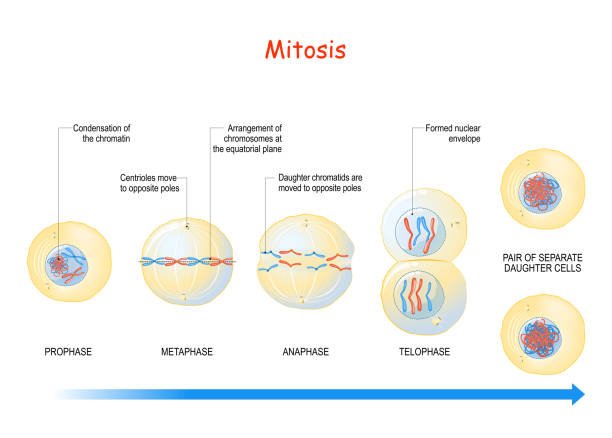
Before a cell divides, it usually needs to copy its DNA.
This process is called DNA replication.
The goal is to ensure that new cells receive genetic information.
DNA has a structure that makes copying possible.
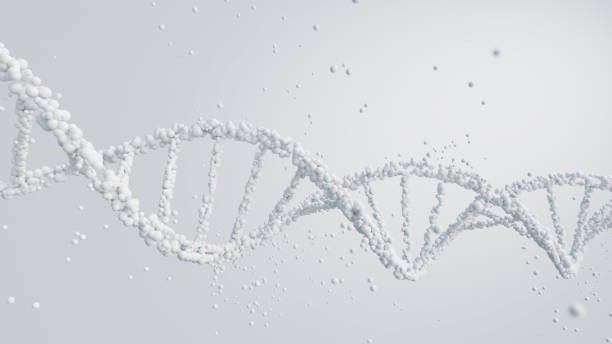
The famous DNA molecule is often described as a double helix. It looks somewhat like a twisted ladder.
The sides of the ladder are made of repeating chemical components, while the paired bases form the rungs.
A pairs with T.
C pairs with G.
Because of this pairing, each DNA strand can help guide the creation of a complementary strand during replication.
When a cell copies its DNA, the two original strands separate, and each can serve as a template for building a new complementary strand.
This is a beautifully efficient system.
DNA essentially contains information that helps cells make another copy of the information.
But DNA replication is not absolutely perfect.
Cells have systems that help detect and repair many copying errors. Still, occasional changes can remain.
These changes are called mutations.
DNA Passes Genetic Information Between Generations
DNA is also essential for heredity.
Parents pass genetic information to their offspring through reproductive cells.
In humans, genetic material from both biological parents contributes to the DNA of a child.
This helps explain why family members can share certain inherited characteristics.
However, inheritance is not as simple as saying that one gene controls one visible trait.
Many traits are influenced by multiple genes. Environmental conditions can also affect how traits develop.
Height, for example, is influenced by many genetic factors and also by environmental conditions, including nutrition and health during development.
So DNA contributes to biological traits, but it does not act as a simple destiny machine.
Genes interact with other genes, cells, and environments.
Biology loves complexity.
DNA Makes Evolution Possible
DNA also plays a central role in evolution.
DNA can change over generations through mutations and other genetic processes.
Some genetic changes have little or no noticeable effect. Some can be harmful. Some may be beneficial in certain environments.
Because DNA is passed between generations, genetic variation can be inherited.
Over long periods, processes such as natural selection can change the frequency of genetic variants in populations.
This is one reason DNA is so important to the history of life.
It stores information from the past while also allowing variation to appear.
Every living species alive today carries genetic information shaped by a long evolutionary history.
Your DNA is not simply a personal instruction set.
It is also part of an ancient biological story stretching back through countless generations.
DNA Is Not a Tiny Person Hiding Inside You
It can be tempting to imagine DNA as a miniature version of you, somehow containing a tiny hidden human waiting to unfold.
That is not how it works.
DNA does not contain a microscopic photograph of your future face, a miniature drawing of your hands, or a tiny script describing every moment of your life.
Instead, DNA contains sequences of biological information that cells use within complex systems.
Those systems interact with one another and with the environment.
This is why genes influence many aspects of biology without acting like simple commands.
A gene may affect the production of a protein. That protein may interact with other molecules. Those interactions may influence cells. Cells interact with tissues. Tissues form organs. Organisms interact with their environments.
By the time you reach a visible characteristic, the biological story can be extremely complicated.
Almost Every Cell Contains a Copy of Your DNA
One of the most amazing things about DNA is that many cells in your body contain essentially the same genetic information.
Your body has many different kinds of cells.
You have skin cells, muscle cells, nerve cells, and many others.
Yet these cells generally begin with essentially the same DNA sequence.
What makes them different is largely the way genetic information is used.
Different genes are active in different cell types.
This allows cells to produce different sets of proteins and other molecules.
It is a little like giving thousands of people the same enormous cookbook.
One person opens the section on bread.
Another reads the soup recipes.
Another focuses on desserts.
The books may contain the same information, but different parts are being used.
Your cells work in a far more complex way, of course. A cookbook cannot replicate itself, repair damage, respond to chemical signals, or become a liver.
At least not yet.
But the comparison helps explain how similar DNA can support very different kinds of cells.
DNA Must Be Carefully Protected
DNA is extremely important, but it can also be damaged.
Radiation, certain chemicals, and normal chemical processes inside cells can damage DNA.
Fortunately, cells have evolved multiple DNA repair systems.
These systems can identify and repair many kinds of damage.
Some repair processes fix incorrectly paired bases. Others help repair more serious forms of DNA damage.
These repair systems are important because damaged DNA can interfere with normal cellular function.
However, repair is not always perfect.
If changes remain in DNA and are copied during cell division, they can become mutations.
Some mutations have no significant effect. Others can alter biological processes.
In certain situations, accumulated genetic changes can contribute to diseases, including cancer.
This is why accurate DNA copying and repair are so important for healthy cells.
DNA Is Packed Into Chromosomes
Human DNA is extremely long compared with the tiny size of a cell.
If you stretched out the DNA from a typical human cell, it would be far longer than the cell itself.
So how does all that DNA fit inside the nucleus?
The answer involves careful packaging.
DNA is associated with proteins, including proteins called histones, and is organized into structures called chromosomes.
This packaging helps DNA fit inside the cell and also plays a role in controlling access to genetic information.
In humans, most cells contain 23 pairs of chromosomes, for a total of 46 chromosomes.
One chromosome can contain many genes along with large amounts of other DNA.
Chromosomes are not just storage boxes.
Their structure and organization can also influence how DNA functions inside the cell.
DNA and RNA Work Together
DNA often gets most of the attention in discussions about genetics, but RNA is also essential.
DNA is generally the long-term store of genetic information.
RNA performs several important roles.
Some RNA molecules carry genetic instructions from DNA to ribosomes. Other RNA molecules help ribosomes function. Some RNA molecules help regulate gene activity.
Some viruses also use RNA, rather than DNA, as their genetic material.
This reminds us that biology does not have only one strategy.
Life has developed many ways to store, copy, and use biological information.
DNA is incredibly important, but it works as part of a larger molecular system.
DNA Is Important in Every Stage of Life
From the earliest stages of development to the functioning of adult cells, DNA is continuously involved in biology.
During development, patterns of gene activity help guide cell specialization.
Throughout life, cells use DNA information to produce many of the molecules they need.
When cells divide, DNA is copied.
When reproductive cells are formed, genetic information is passed onward.
Over generations, changes in DNA contribute to genetic variation and evolution.
DNA is not constantly shouting instructions at every cell.
Much of the time, it is carefully regulated.
Different sections are used at different times.
Some genes may be highly active in one cell and largely inactive in another.
This controlled use of DNA information is essential for complex life.
DNA Does Not Work Alone
It is easy to give DNA too much credit.
DNA is essential, but DNA alone cannot create a living organism.
A DNA molecule removed from a cell cannot independently eat, grow, think, repair a wound, or build an organism.
DNA needs the cellular machinery that reads and uses its information.
Cells already contain proteins, RNA molecules, membranes, chemical energy, and many other components that work together.
Even before a developing organism begins making all of its own molecules, it depends on materials and molecular systems provided by the parent cell.
So DNA is better understood as part of an incredibly complex biological network.
It stores information.
But living systems are what read, regulate, copy, and act on that information.
Why Is DNA Shaped Like a Double Helix?
The double-helix structure of DNA is one of the most famous shapes in science.
Its structure is not just visually impressive.
The pairing of bases is important for storing and copying genetic information.
Because A pairs with T and C pairs with G, one DNA strand contains information that can help determine the sequence of its partner.
This makes DNA replication possible.
The structure also provides a stable way to store large amounts of information.
At the same time, the two strands can be separated when cells need to copy DNA or use information from particular genes.
In other words, DNA has a structure well suited to both stability and accessibility.
That is a very useful combination when your job is storing important information for billions of years of evolution.
Your DNA Is Similar to That of Other Living Things
All life on Earth uses DNA in ways that reflect a shared biological history.
Humans share some genetic information with other animals, plants, fungi, and microorganisms.
This does not mean humans are simply versions of other organisms.
It means that living things share fundamental biological processes and, in many cases, inherited genetic relationships.
Many genes and biological pathways have been conserved through evolution because they perform important functions.
By comparing DNA sequences, scientists can learn about evolutionary relationships between organisms.
DNA has therefore become an important tool for studying the history of life.
It can reveal relationships that are not always obvious from appearance alone.
Can DNA Change?
Yes.
DNA can change through mutations and other genetic processes.
A mutation can involve a change in one DNA base or larger changes affecting longer sections of DNA.
Some changes happen when DNA is copied.
Others can result from damage.
Many mutations have little or no effect.
Some affect the function of a gene or the activity of nearby genetic regions.
Whether a mutation has an effect depends on many factors, including where it occurs and how it changes biological processes.
This is another reason DNA should not be viewed as a perfectly fixed instruction book.
DNA is remarkably stable, but it is not unchangeable.
And without genetic variation, evolution as we know it would not occur.
DNA Has Transformed Modern Science
Understanding DNA has changed biology and medicine.
Scientists can study DNA to investigate inherited conditions, understand evolutionary relationships, identify some microorganisms, and learn more about the biology of diseases.
DNA analysis is also used in many areas of scientific research.
Researchers can compare genetic sequences, investigate how genes function, and study how genetic changes affect cells.
However, DNA information must be interpreted carefully.
Finding a genetic difference does not automatically mean that it directly causes a particular trait or disease.
Biological systems are often influenced by many genes and environmental factors.
Good science requires evidence.
A sequence alone may raise an important question, but understanding its biological significance can require years of additional research.
DNA Is a Record of Life and a Tool for Life
Perhaps one of DNA’s most fascinating functions is that it does two things at once.
It preserves information.
And it allows that information to be used.
Your cells store DNA, protect it, copy it, repair it, and read selected parts of it when needed.
Through these processes, DNA helps connect generations of cells.
Across reproduction, it helps connect generations of organisms.
Across evolution, it helps preserve and modify biological information over immense periods of time.
In that sense, DNA is both a biological archive and an active part of the machinery of life.
So, What Is the Main Function of DNA?
The main function of DNA is to store, transmit, and provide access to genetic information.
That information helps cells produce proteins and functional RNA molecules, regulate biological processes, develop and maintain organisms, and pass hereditary information to new cells and future generations.
DNA also provides the basis for genetic variation, which plays an essential role in evolution.
It is difficult to overstate how important this molecule is.
Every time a cell divides, DNA must be copied.
Every time a cell produces certain proteins, information from DNA may be used.
Every new generation receives genetic information connected to the generations that came before it.
And all of this begins with an astonishingly simple system built from just four main chemical letters: A, T, C, and G.
Four letters.
Countless combinations.
An extraordinary amount of biological information.
So the next time you hear someone call DNA the “instruction manual of life,” remember the deeper story.
DNA is not a tiny book containing a complete script for every moment of your existence.
It is a molecular system for storing biological information and making that information available to living cells.
Your cells read it selectively.
They copy it.
They repair it.
They regulate it.
They pass it on.
And through billions of years of evolution, DNA has helped make the incredible diversity of life on Earth possible.
Inside nearly every cell of your body, this remarkable molecule is quietly carrying information from your biological past while helping your cells function in the present.
You cannot see it with your eyes.
You probably never notice it.
But without DNA and the complex cellular systems that use it, life as we know it would be impossible.