Homeostasis is the process by which living organisms maintain relatively stable internal conditions despite changes in their surroundings. The human body, for example, regulates its temperature, blood sugar, water balance, and blood acidity so that cells can function properly. These conditions do not remain perfectly constant; instead, the body continually adjusts them within ranges that support life.
Homeostasis is essential to survival because cells depend on specific physical and chemical conditions to carry out their work. When those conditions move too far outside their normal ranges, organs may function poorly, and serious illness can occur.
Understanding homeostasis helps explain how the body responds to heat, exercise, dehydration, eating, and illness. It also reveals a fundamental principle of biology: living systems survive not by remaining unchanged, but by continuously adapting to change.
What is homeostasis?
Homeostasis is the dynamic regulation of an organism’s internal environment. The term comes from Greek roots meaning roughly “similar” and “standing,” reflecting the idea of maintaining relative stability rather than absolute sameness.
The concept was developed in modern physiology through the work of scientists who studied how the body regulates its internal conditions. Physiologist Walter Cannon popularized the term homeostasis in the early 20th century, building on earlier work by French physiologist Claude Bernard, who emphasized the importance of a stable internal environment.
In humans, homeostasis involves regulating variables such as body temperature, blood glucose concentration, blood pressure, electrolyte levels, and the pH of body fluids. Each variable has a range within which it can fluctuate without disrupting normal function.
For example, body temperature may rise during exercise and fall during exposure to cold weather. The body responds by activating mechanisms that release heat or conserve it. Similarly, blood glucose rises after a meal and falls between meals, prompting hormonal responses that help keep it within a suitable range.
Homeostasis does not mean that every measurement remains fixed. Instead, it means that interconnected systems detect changes and make adjustments to prevent harmful deviations.
How does homeostasis work?
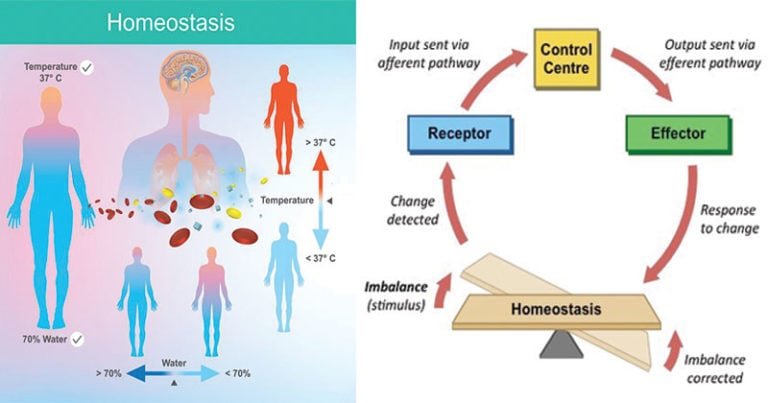
Most homeostatic processes rely on a control system that detects a change, evaluates information about the body’s condition, and triggers a response. Although the details vary, many of these systems share three main components: receptors, a control center, and effectors.
- Receptors detect changes in a regulated condition. Temperature-sensitive nerve endings, for instance, detect warming or cooling, while specialized cells in the pancreas respond to changes in blood glucose.
- Control centers process information and coordinate an appropriate response. The brain regulates many aspects of temperature and water balance, while the pancreas helps coordinate blood glucose regulation.
- Effectors carry out the response. These may include muscles, glands, organs, or individual cells. Sweat glands, for example, release sweat when the body needs to lose heat.
These components communicate through the nervous system, hormones, or other chemical signals. The response then changes the condition that triggered the process.
A common example is body temperature regulation. When internal temperature rises, the brain activates responses such as sweating and widening blood vessels near the skin. Evaporation of sweat removes heat, while increased blood flow near the skin helps transfer heat to the environment. As the body cools, these responses diminish.
Homeostatic control is continuous. The body does not wait until a condition becomes dangerous before responding; many systems make small adjustments all the time. The effectiveness of these adjustments depends on the condition being regulated, the body’s current needs, and the surrounding environment.
Types of homeostasis and the feedback mechanisms behind them
Homeostasis can be discussed in terms of the conditions an organism regulates, such as temperature or blood glucose, and the feedback mechanisms used to maintain those conditions. In human physiology, negative feedback is the most common mechanism, while positive feedback supports certain processes that need to progress toward a particular outcome.
Negative feedback
Negative feedback occurs when a response counteracts the initial change in a regulated condition. If a variable rises above its desired range, the body activates responses that tend to lower it. If the variable falls too low, responses help raise it.
This mechanism stabilizes internal conditions and prevents small changes from escalating unnecessarily.
Body temperature regulation is a clear example. When the body becomes too warm, sweating and increased blood flow to the skin help release heat. When the body becomes too cold, sweating decreases, blood vessels near the skin narrow, and shivering may begin. Shivering produces heat through repeated muscle contractions.
Blood glucose regulation also depends on negative feedback. After a meal, glucose enters the bloodstream and its concentration rises. The pancreas releases insulin, a hormone that helps cells take up glucose and encourages the liver and muscles to store it. As blood glucose falls toward its normal range, insulin secretion decreases.
Between meals, when blood glucose declines, the pancreas releases glucagon. This hormone signals the liver to release stored glucose and produce more glucose when needed. Together, insulin and glucagon help keep blood glucose within a range that supports the body’s energy needs.
Positive feedback
Positive feedback occurs when a response amplifies the initial change rather than reversing it. Unlike negative feedback, which generally stabilizes a condition, positive feedback pushes a process forward until a specific event or endpoint stops it.
One example occurs during childbirth. When the baby’s head stretches the cervix, nerve signals reach the brain and stimulate the release of oxytocin. This hormone strengthens uterine contractions, which increase cervical stretching and prompt further oxytocin release. The cycle continues until delivery removes the stimulus.
Blood clotting provides another example. When a blood vessel is damaged, activated platelets and clotting proteins help recruit and activate additional components of the clotting process. This amplification allows a clot to form efficiently at the injury site. The process is controlled by multiple mechanisms that limit clot formation and prevent it from spreading unnecessarily.
Positive feedback is not inherently harmful. It is useful when a biological process needs to reach a clear endpoint. However, because it amplifies change, it generally requires a stopping mechanism.
Feedforward regulation
Some biological responses begin before a regulated condition changes substantially. This is called feedforward regulation.
For example, the sight, smell, or anticipation of food can stimulate digestive activity before nutrients enter the bloodstream. Similarly, the nervous system can increase heart rate and breathing in preparation for physical activity.
Feedforward responses help the body anticipate predictable demands instead of relying entirely on reactions to changes that have already occurred. They often work alongside feedback mechanisms rather than replacing them.
Key examples of homeostasis in the human body
Homeostasis involves many systems working together. Temperature regulation and blood glucose control are familiar examples, but the same principle applies to water balance, blood chemistry, blood pressure, and calcium regulation.
Body temperature
Human cells function within a relatively narrow range of internal temperatures. Enzymes, which help chemical reactions occur, are sensitive to temperature, so excessive heating or cooling can interfere with normal cellular processes.
The hypothalamus, a region of the brain, plays a central role in regulating body temperature. It receives information about temperature from the body and coordinates responses that help balance heat production and heat loss.
When the body overheats, sweating and increased blood flow to the skin promote cooling. When the body cools, reduced skin blood flow helps conserve heat, and shivering generates additional warmth. Behavior also contributes: people may seek shade, remove layers of clothing, move indoors, or find warmth.
These mechanisms have limits. High humidity can make sweat less effective at cooling the body because evaporation slows. Prolonged exposure to extreme heat or cold can overwhelm normal regulatory responses and lead to dangerous conditions.
Blood glucose
Glucose is an important energy source, particularly for the brain and other tissues that depend heavily on a continuous supply of fuel. Blood glucose must therefore be regulated as it rises after meals and falls during periods without food.
The pancreas monitors blood glucose and releases insulin or glucagon as needed. Insulin promotes glucose uptake in certain tissues and encourages storage, while glucagon helps the liver make glucose available between meals.
The liver is especially important because it can store glucose as glycogen and release glucose when the body needs it. Muscle tissue also stores glycogen, primarily for its own energy use.
Diabetes illustrates what can happen when blood glucose regulation is impaired. In type 1 diabetes, the body produces little or no insulin because insulin-producing pancreatic cells are destroyed. In type 2 diabetes, cells respond less effectively to insulin, and the body may eventually be unable to produce enough insulin to compensate. Without adequate regulation, blood glucose can remain abnormally high and damage tissues over time.
Water balance
The body must maintain an appropriate balance between water intake and water loss. Water is essential for transporting substances, supporting chemical reactions, regulating temperature, and maintaining blood volume.
The hypothalamus helps monitor the concentration of dissolved substances in the blood. When the body needs to conserve water, the brain stimulates thirst and promotes the release of antidiuretic hormone, also called vasopressin. This hormone acts on the kidneys, increasing the amount of water they reabsorb and reducing water loss in urine.
When water is abundant, antidiuretic hormone secretion generally decreases, allowing the kidneys to excrete more water.
The kidneys also regulate sodium and other electrolytes, which are minerals that carry electrical charges when dissolved in body fluids. These substances are important for nerve signaling, muscle contraction, and fluid distribution between body compartments.
Dehydration can occur when water losses exceed intake. Severe dehydration may reduce blood volume, disrupt electrolyte balance, and impair circulation and organ function. Drinking excessive amounts of water too quickly can also be dangerous because it can dilute blood sodium to abnormally low levels.
Blood pressure and circulation
Blood pressure must be regulated to deliver sufficient blood to tissues without placing excessive strain on blood vessels. It changes naturally with posture, activity, stress, and other circumstances.
Pressure-sensitive receptors called baroreceptors, located in major arteries, detect changes in the stretch of blood vessel walls. They send signals to the brain, which adjusts heart rate, the force of heart contractions, and the diameter of blood vessels.
When a person stands up, gravity causes blood to shift toward the lower body. The resulting change in circulation triggers responses that help maintain blood flow to the brain. If these responses are delayed or inadequate, a person may feel dizzy or faint.
The kidneys also contribute to longer-term blood pressure regulation by adjusting salt and water excretion. Hormones, including components of the renin-angiotensin-aldosterone system, help regulate blood volume and blood vessel constriction.
Blood pressure control illustrates how homeostasis depends on several organs and signaling systems working together rather than on a single control mechanism.
Blood pH
The acidity or alkalinity of a fluid is measured using the pH scale. Blood pH is normally maintained within a narrow range, approximately 7.35 to 7.45. Even relatively small departures can interfere with enzyme activity, electrical signaling, and other essential functions.
The body regulates blood pH through chemical buffers, the lungs, and the kidneys. Buffers are substances that resist abrupt changes in acidity. The bicarbonate buffer system is particularly important in blood.
The lungs help regulate pH by controlling how much carbon dioxide is removed during breathing. Carbon dioxide reacts with water to form carbonic acid, which can release hydrogen ions. When breathing increases, more carbon dioxide is expelled, generally reducing acidity. When breathing slows, carbon dioxide can accumulate, increasing acidity.
The kidneys provide additional control by excreting hydrogen ions and adjusting the amount of bicarbonate returned to the blood. These renal responses are slower than many respiratory adjustments but are important for sustained regulation.
Severe disruptions in blood pH can result from respiratory problems, kidney disease, metabolic disturbances, or other illnesses. The interaction among buffers, breathing, and kidney function helps prevent ordinary metabolic activity from causing dangerous shifts.
Calcium balance
Calcium is needed for strong bones and teeth, but it also supports muscle contraction, nerve signaling, and blood clotting. Because these functions depend on appropriate calcium concentrations in the blood, the body regulates calcium carefully.
The parathyroid glands release parathyroid hormone when blood calcium falls. This hormone helps raise calcium levels by influencing the kidneys, promoting calcium release from bone when necessary, and supporting the activation of vitamin D. Active vitamin D increases calcium absorption from the digestive tract.
Another hormone, calcitonin, can reduce the movement of calcium from bone into the blood under certain conditions, although it plays a more limited role in everyday calcium regulation in adult humans than parathyroid hormone and vitamin D.
Calcium homeostasis requires coordination among the bones, kidneys, intestines, and endocrine system. A disturbance in this balance can affect muscles, nerves, and skeletal health.
Homeostasis in other living organisms
Homeostasis is not limited to humans. Plants, other animals, and microorganisms all regulate internal conditions, although their mechanisms differ according to their biology and environment.
Plants regulate water balance through structures called stomata, tiny pores in leaves that allow carbon dioxide to enter for photosynthesis while permitting water vapor to escape. Guard cells surrounding each pore adjust its opening in response to environmental conditions and internal signals. During water stress, plants can close their stomata to reduce water loss, although this also limits carbon dioxide uptake and can slow photosynthesis.
Plants also regulate internal ion concentrations, acidity, and other conditions needed for growth. Because they cannot move away from unfavorable environments, these adjustments are especially important for surviving changes in light, temperature, and water availability.
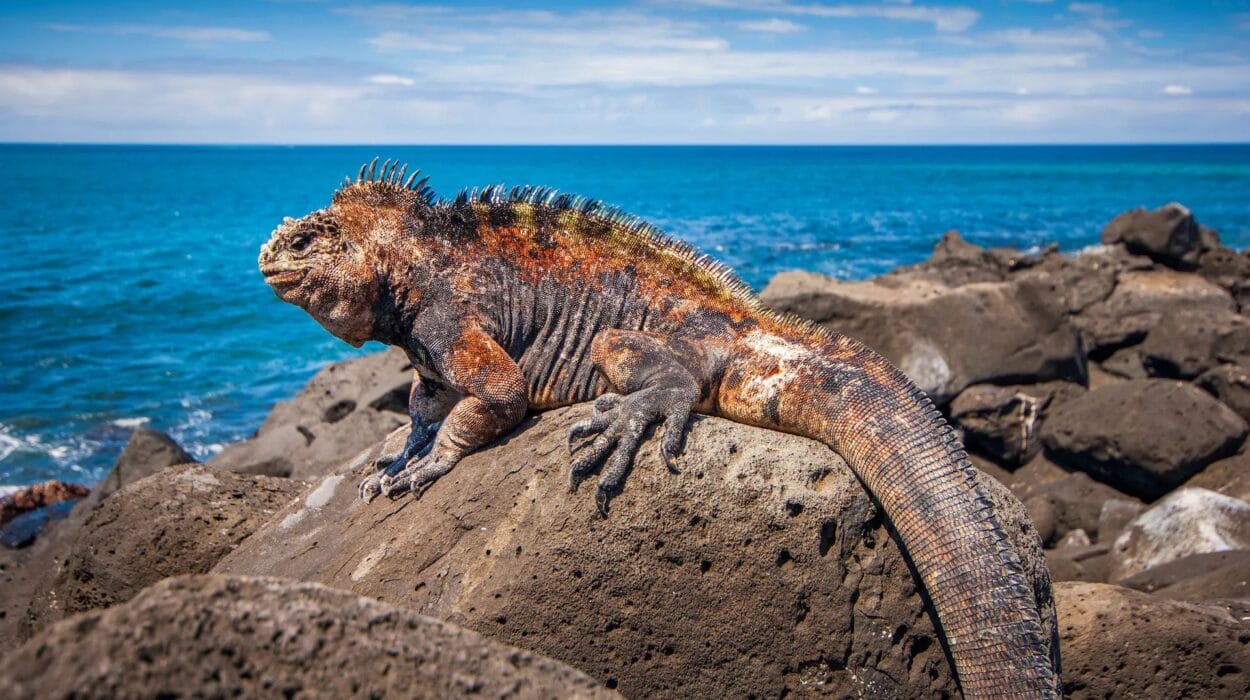
Animals that maintain relatively stable internal body temperatures through metabolic heat production are called endotherms. Birds and mammals use mechanisms such as insulation, changes in blood flow, and behavioral adjustments to manage heat exchange. In contrast, many ectotherms rely more heavily on environmental heat sources, using behaviors such as basking in sunlight or moving into shade to regulate body temperature. Ectotherms still maintain internal stability, but their body temperatures generally vary more with their surroundings.
Single-celled organisms also regulate their internal environments. For example, many freshwater protists use contractile vacuoles to collect and expel excess water that enters their cells by osmosis. Without this process, water accumulation could disrupt cellular function.
These examples demonstrate that homeostasis is a broad biological principle, not a single mechanism shared identically by every organism.
What happens when homeostasis is disrupted?
The body can tolerate many temporary fluctuations, but homeostatic mechanisms have limits. A disruption occurs when a regulated condition moves outside its healthy range or when the systems responsible for correcting it cannot respond adequately.
Disruptions can result from disease, injury, genetic conditions, environmental extremes, inadequate nutrition, dehydration, or the effects of certain medications. Sometimes the problem lies in the sensors that detect a change. In other cases, a control center may not coordinate the correct response, or an organ may be unable to carry it out.
Diabetes is one example of impaired homeostasis because blood glucose regulation no longer functions effectively. Kidney failure can disrupt water balance, electrolyte concentrations, blood pressure, and acid-base regulation. Severe heat exposure can overwhelm temperature-control mechanisms, while serious respiratory disease can interfere with carbon dioxide removal and blood pH regulation.
The effects often extend beyond a single variable. For instance, severe dehydration can lower blood volume, reduce blood pressure, and impair the delivery of oxygen to tissues. An initial disturbance may therefore trigger additional problems in interconnected systems.
Homeostatic failure does not always mean that a condition cannot be corrected. Medical treatment can often restore or support regulation. Insulin therapy helps people with type 1 diabetes manage blood glucose, dialysis can replace some kidney functions, and intravenous fluids may help correct certain forms of dehydration or fluid loss. The appropriate treatment depends on the underlying cause and the nature of the disturbance.
Is homeostasis the same as equilibrium?
Homeostasis and equilibrium are related concepts, but they are not the same.
In a state of equilibrium, opposing processes are balanced so that there is no net change in the relevant system. Many living systems, however, must remain active and continually use energy to maintain their internal conditions. This is why homeostasis is better understood as a dynamic balance than as a static equilibrium.
For example, the body continuously generates heat through metabolism while also losing heat to the environment. Body temperature remains relatively stable when heat production and heat loss are appropriately balanced. If either changes, regulatory responses adjust the balance.
Similarly, cells maintain differences in ion concentrations across their membranes. These differences are essential for nerve impulses, muscle contraction, and transport across cell membranes. Preserving them requires energy, particularly when cells move substances against their natural concentration gradients.
Living organisms therefore maintain stability through ongoing activity. Homeostasis depends on energy, functioning organs, communication between cells, and the ability to respond to changing conditions.
Why homeostasis is essential for life
Homeostasis creates the conditions cells need to perform their essential functions. Enzymes must operate within suitable ranges of temperature and acidity, cells require an appropriate balance of water and dissolved substances, and tissues need a reliable supply of oxygen and energy.
No single regulated variable works independently. Temperature affects chemical reactions, water balance influences blood volume, and changes in electrolyte concentrations can alter electrical activity in nerves and muscles. The body’s regulatory systems must coordinate these processes to maintain the internal environment.
Homeostasis is not a guarantee that an organism will remain healthy under every circumstance. Extreme environmental conditions, serious illness, aging, and injury can exceed the body’s ability to compensate. Nevertheless, continuous regulation allows organisms to function across a wide variety of conditions that would otherwise disrupt cellular activity.
The central idea is simple: life depends on controlled change. Through feedback mechanisms, coordinated organs, and continual adjustments, living systems preserve the internal conditions necessary for survival even as the world around them changes.