Humanity has always built tools to extend its intelligence. From the invention of writing to the creation of computers, each technological leap has allowed people to think faster, remember more, and explore deeper questions about the universe. In the twenty-first century, artificial intelligence has become the newest frontier in that long journey. Among the most ambitious developments in this field is a system known as Gemini.
Gemini represents a major step forward in the evolution of AI systems. Developed by Google and its advanced research division Google DeepMind, Gemini was designed to be far more than a traditional chatbot or language model. It was built as a multimodal artificial intelligence capable of understanding and generating different forms of information—text, images, audio, video, and even computer code.
In simple terms, Gemini is a powerful AI system created to interact with human knowledge in ways that resemble human reasoning. But the story behind Gemini is not just about software. It is about the larger transformation of technology, the merging of language and machine learning, and humanity’s ongoing attempt to create machines that can understand the world.
Understanding Gemini means understanding the modern era of artificial intelligence itself.
The Rise of Artificial Intelligence
Artificial intelligence did not appear suddenly. It emerged gradually over decades of research in computer science, mathematics, and cognitive science.
In the mid-twentieth century, scientists began exploring whether machines could simulate human intelligence. Early pioneers believed computers might eventually solve problems, recognize patterns, and even communicate in natural language. These ideas formed the foundation of the academic field known as Artificial Intelligence.
However, early computers lacked the computational power and data necessary for sophisticated AI. Progress was slow for many years.
The situation changed dramatically in the early twenty-first century with the rise of machine learning. Instead of programming every rule manually, scientists began training computers to learn patterns from massive datasets. This approach, known as Machine Learning, allowed algorithms to improve through experience.
A powerful subset of machine learning called Deep Learning further accelerated progress. Deep learning systems use large artificial neural networks inspired loosely by the structure of the human brain. These networks can analyze enormous amounts of information and identify complex patterns.
By the 2010s, deep learning was transforming fields such as image recognition, speech processing, and natural language understanding. Companies began building AI models capable of writing text, translating languages, and answering questions.
The development of large language models marked a turning point. These models were trained on vast collections of text from books, websites, articles, and other sources. Through this training, they learned the statistical relationships between words and ideas.
Gemini emerged from this rapidly evolving landscape of large-scale AI systems.
The Origins of Gemini
Gemini was created by Google DeepMind, the AI research laboratory formed through the merger of Google Brain and DeepMind. The goal of this collaboration was to combine world-class research in machine learning with the engineering scale of one of the world’s largest technology companies.
DeepMind had already achieved major breakthroughs in artificial intelligence. One of its most famous achievements was the creation of AlphaGo, an AI system that defeated professional Go players, including world champion Lee Sedol in 2016. The victory demonstrated the extraordinary potential of deep learning and reinforcement learning.
Google Brain, meanwhile, had been pioneering research in neural networks and large-scale machine learning infrastructure.
The creation of Gemini combined the expertise of these teams. The project aimed to build a new generation of AI models capable of understanding information in a more flexible and integrated way.
Rather than focusing only on text, Gemini was designed from the beginning to work across multiple types of data. This design philosophy made it fundamentally different from earlier AI systems that specialized in a single domain.
Gemini’s architecture allows it to interpret images, understand spoken language, analyze videos, and generate responses that combine different forms of information. This ability is known as multimodality.
What Does Multimodal AI Mean?
Most early AI systems specialized in one kind of data. A speech recognition system converted audio into text. An image recognition system identified objects in photographs. A language model generated written responses.
Multimodal AI systems aim to combine these abilities.
Gemini was built to process multiple forms of information simultaneously. It can analyze text, images, audio, and video within a single model. This integration allows the AI to interpret complex situations more like humans do.
For example, a multimodal system might analyze a photograph and explain what is happening in the scene. It might watch a short video and describe the events occurring within it. It might combine text instructions with visual information to solve a problem.
This capability opens many possibilities. A student could upload a diagram from a textbook and ask the AI to explain it. A programmer could provide code and ask for debugging assistance. A scientist could analyze experimental data.
The power of multimodal AI lies in its flexibility. Instead of switching between specialized systems, users can interact with a single model that understands multiple types of information.
Gemini was designed to operate at this intersection of data types.
The Architecture Behind Gemini
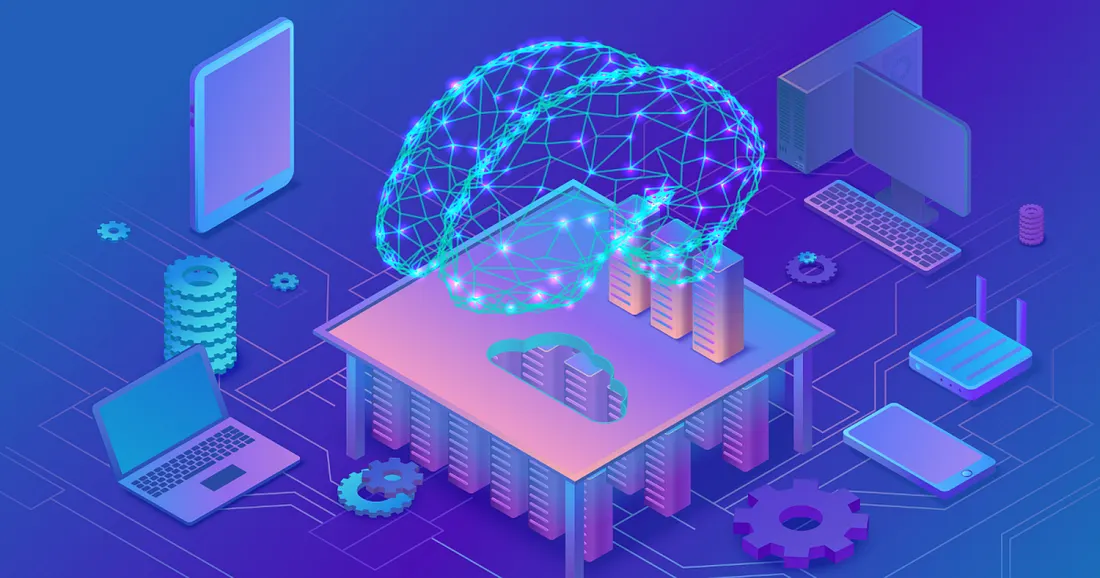
Although the technical details are extremely complex, the foundation of Gemini lies in neural networks trained on massive datasets.
Modern AI systems like Gemini typically use an architecture known as a transformer network. This approach was introduced in a landmark research paper by scientists at Google in 2017.
Transformer networks excel at analyzing sequences of information, such as sentences or code. They rely on a mechanism called attention, which allows the model to focus on relevant parts of the input when generating responses.
The attention mechanism enables the AI to understand relationships between words, concepts, and data points. This allows it to produce coherent and contextually relevant outputs.
Gemini extends this architecture to handle different data types simultaneously. Images, text, and audio can all be encoded into representations that the neural network processes.
During training, the model learns patterns linking these representations together. It learns how images relate to descriptions, how code relates to instructions, and how visual patterns correspond to language.
The result is a unified model capable of performing tasks across multiple domains.
Different Versions of Gemini
Like many advanced AI systems, Gemini exists in multiple versions designed for different levels of performance and efficiency.
Some versions are optimized for extremely powerful data centers and research applications. These models contain vast numbers of parameters—internal variables that allow the neural network to represent knowledge.
Other versions are designed to run efficiently on smartphones and consumer devices.
This layered approach allows Gemini technology to scale across different platforms. A large research model might power advanced analysis, while smaller versions might assist users on mobile devices.
This flexibility reflects the broader strategy of integrating AI into everyday digital experiences.
Gemini and the Modern AI Ecosystem
Gemini is not an isolated project. It exists within a rapidly expanding ecosystem of artificial intelligence technologies.
In recent years, AI has become central to search engines, translation systems, recommendation algorithms, and digital assistants. Companies across the world are racing to develop increasingly powerful models capable of performing complex cognitive tasks.
Within this landscape, Gemini represents one of the most advanced attempts to build a general-purpose AI system.
General-purpose AI models aim to perform a wide variety of tasks rather than focusing on a single specialized function. They can write essays, analyze images, summarize documents, generate code, answer questions, and assist with research.
This versatility makes them valuable tools for education, creativity, business, and scientific research.
At the same time, it raises important questions about reliability, ethics, and the future relationship between humans and intelligent machines.
Applications of Gemini
Gemini has a wide range of potential applications across many fields.
In education, AI systems like Gemini can act as interactive tutors. Students can ask questions about mathematics, science, literature, or history and receive explanations tailored to their level of understanding. Visual diagrams and complex concepts can be broken down into accessible explanations.
In programming, Gemini can analyze software code, identify errors, and suggest improvements. Developers can use AI assistance to speed up debugging and development processes.
In creative fields, AI can help generate ideas for writing, design, and storytelling. Artists and writers may collaborate with AI systems to explore new possibilities.
In research and data analysis, Gemini can process large volumes of information quickly. Scientists can use AI to summarize research papers, analyze datasets, and explore patterns that might otherwise remain hidden.
Medical researchers are also exploring how AI can assist in analyzing medical images, understanding clinical data, and supporting diagnostic processes.
These applications illustrate the broad potential of advanced AI systems to augment human intelligence.
The Role of Data in Training AI
Every AI system depends on training data. During training, neural networks analyze vast collections of information to learn patterns and relationships.
For language models, this data often includes books, articles, websites, and other textual material. For multimodal systems like Gemini, training also involves images, videos, and audio.
The training process involves adjusting the parameters of the neural network so that its predictions become increasingly accurate. Over time, the model learns to generate responses that align with patterns in the data.
However, training data also introduces challenges. If the data contains biases or inaccuracies, the AI may reflect those patterns. Ensuring fairness and accuracy in AI systems requires careful design and evaluation.
Researchers continue to develop methods for improving the reliability and transparency of AI models.
Challenges and Limitations of AI Systems
Despite their impressive capabilities, AI models like Gemini are not perfect.
They do not possess true understanding or consciousness. Instead, they generate responses based on patterns learned during training. This means they can sometimes produce incorrect or misleading information.
AI systems may also struggle with tasks requiring deep reasoning, long-term planning, or real-world experience.
Another challenge involves the enormous computational resources required to train large models. Training advanced AI systems requires powerful hardware and significant energy consumption.
Researchers are actively working on improving efficiency and developing methods for more sustainable AI development.
Safety is another critical issue. AI systems must be designed to avoid harmful outputs and to behave responsibly when interacting with users.
These challenges are part of the ongoing evolution of artificial intelligence.
The Future of Gemini and AI
The development of Gemini reflects a broader transformation in computing.
Artificial intelligence is moving toward systems that can understand multiple forms of information, reason about complex problems, and assist humans across a wide range of tasks.
Future AI systems may become even more capable, integrating deeper reasoning abilities and improved understanding of context.
Researchers are exploring ways to combine different AI techniques, including reinforcement learning, symbolic reasoning, and neural networks. These approaches may lead to more powerful and reliable systems.
At the same time, society must consider the ethical and social implications of increasingly intelligent machines.
Questions about privacy, employment, education, and human creativity are central to the discussion surrounding AI.
Gemini is one step in this evolving journey.
Why Gemini Matters
Technology often advances through incremental improvements, but occasionally a development signals a shift in how humans interact with machines.
Gemini represents such a shift.
By integrating language, vision, and other forms of information into a single model, Gemini moves AI closer to systems that can engage with the world in more flexible ways.
It reflects decades of research in computer science and machine learning, combined with enormous computational infrastructure.
More importantly, it highlights humanity’s desire to build tools that extend our intellectual reach.
Just as telescopes expanded our vision of the cosmos and microscopes revealed the hidden structures of life, artificial intelligence is expanding our ability to process knowledge.
Gemini stands at the intersection of that transformation.
A New Chapter in Human–Machine Collaboration
The story of artificial intelligence is still being written.
Every generation builds technologies that shape the next. Computers once filled entire rooms and performed simple calculations. Today they fit in our pockets and connect billions of people around the globe.
Artificial intelligence is following a similar trajectory.
Systems like Gemini suggest a future in which humans and machines collaborate more closely than ever before. AI may help researchers solve scientific puzzles, assist teachers in guiding students, and enable creators to explore new forms of expression.
Yet even as machines grow more capable, human curiosity remains the driving force.
Gemini, like all technology, is ultimately a tool. Its value depends on how people choose to use it.
In that sense, the story of Gemini is not only about algorithms and neural networks. It is about humanity’s continuing effort to understand intelligence itself—and to build technologies that help us explore the vast universe of knowledge.