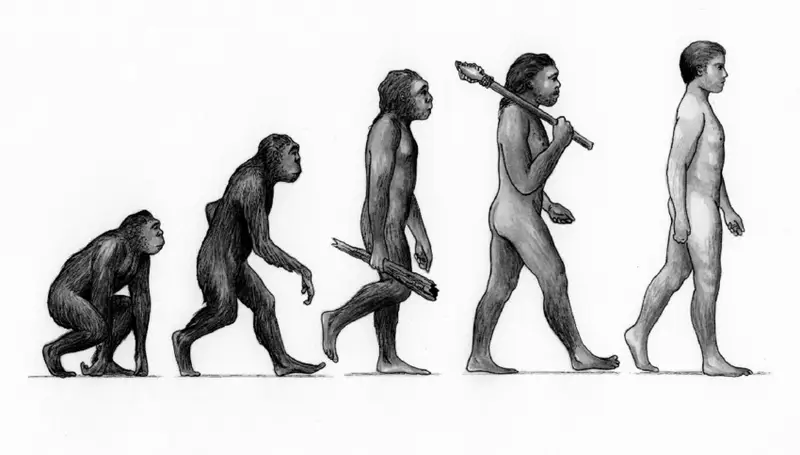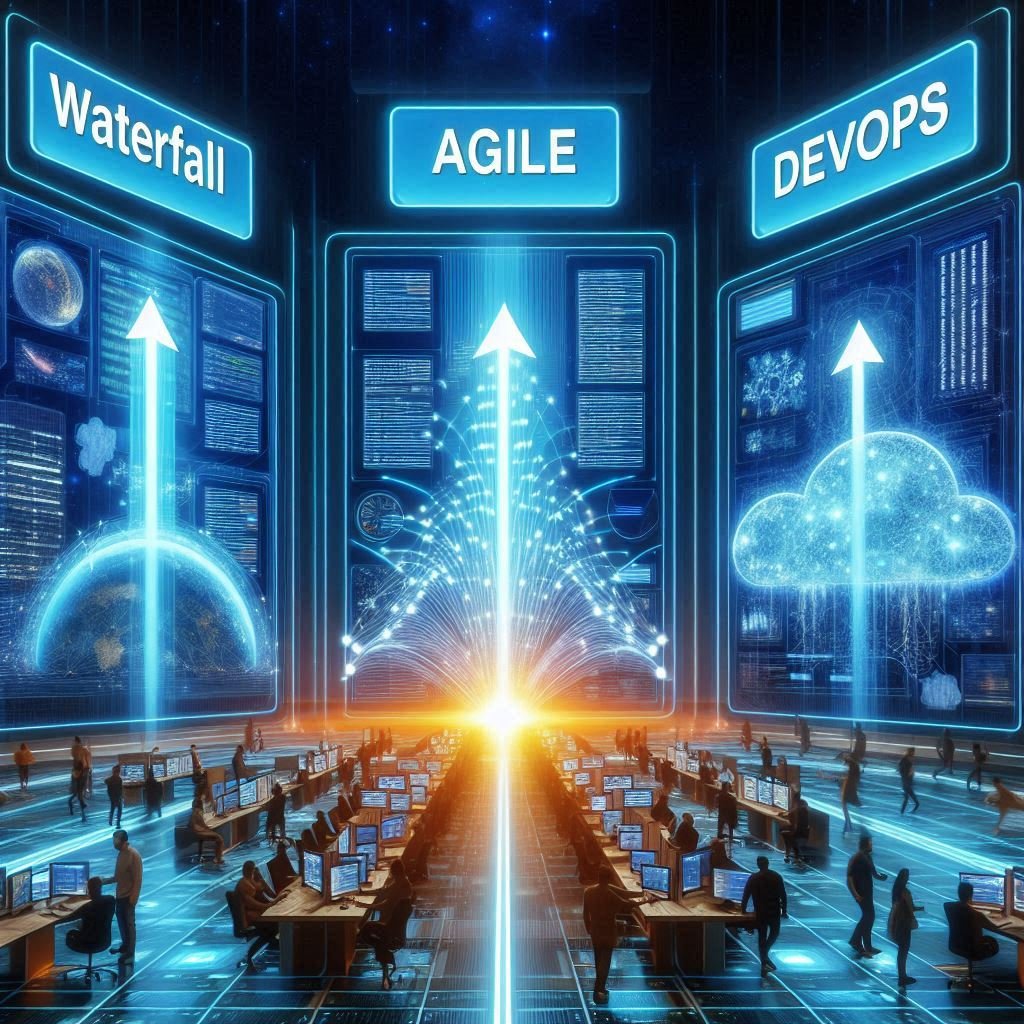
In the ever-evolving landscape of software engineering, three paradigms stand out as milestones in how humanity builds technology: Waterfall, Agile, and DevOps. Each emerged from a distinct historical moment and responded to different challenges in the development process. The Waterfall model introduced structure and predictability to software projects during an era when computing was young and resources were scarce. Agile revolutionized that rigidity by placing adaptability and collaboration at the forefront, ensuring that software could evolve alongside user needs and market changes. DevOps then extended the Agile philosophy into operations, unifying development and deployment into a continuous cycle of improvement.
These three approaches—Waterfall, Agile, and DevOps—represent not just technical methodologies but cultural shifts in how teams conceive, build, and deliver software. Understanding their differences, strengths, and interdependencies is critical for organizations navigating today’s complex digital world. This comprehensive exploration examines the evolution, principles, and implications of each model, revealing how the debate between them shapes the future of software engineering.
The Origins of the Waterfall Model
The Waterfall model is the earliest structured software development methodology, introduced formally in the 1970s, although its principles existed in engineering long before. The model’s most recognized description came from Dr. Winston W. Royce in his 1970 paper Managing the Development of Large Software Systems, which outlined a sequential design process. Ironically, Royce presented the linear “waterfall” process as a flawed approach, yet his description became the blueprint for decades of software development practice.
Waterfall was rooted in the traditions of manufacturing and civil engineering, where projects followed clear phases—design, build, test, deliver—with minimal overlap. Software, at the time, was seen as a product to be constructed according to precise specifications. Developers followed a predefined set of stages: requirements gathering, system design, implementation, integration, testing, deployment, and maintenance. Each stage had to be completed before the next could begin, creating a cascading effect—hence the name “waterfall.”
The predictability of this model appealed to managers and government agencies that needed rigid documentation and accountability. Projects could be budgeted, scheduled, and tracked with apparent clarity. In industries such as aerospace, defense, and banking, where safety and compliance were paramount, Waterfall became the standard.
However, as computing evolved, software grew increasingly complex, and customer expectations changed. The Waterfall model began to reveal its limitations. The rigid linear flow made it difficult to adapt to new requirements once development had begun. Late discovery of defects or changing business needs often led to costly rework. Despite its limitations, the Waterfall model established foundational project management concepts—clear documentation, phase milestones, and disciplined testing—that continue to influence modern methodologies.
The Rise of Agile as a Response to Rigidity
By the late 1990s, the software industry faced a growing crisis. Projects managed under the Waterfall model were often delivered late, over budget, or missing key features. The fast pace of technological innovation and user demand outstripped the ability of linear planning to respond. Teams needed a way to embrace change rather than resist it. This discontent culminated in 2001 with the publication of the Agile Manifesto, written by seventeen software practitioners who sought a new way to build software.
Agile emphasized flexibility, collaboration, and continuous delivery of value. It shifted focus from documentation to working software, from contract negotiation to customer collaboration, and from rigid plans to adaptive iteration. Agile was not a single method but an umbrella philosophy encompassing frameworks like Scrum, Kanban, Extreme Programming (XP), and Crystal. These frameworks shared the same core principles: iterative development, short feedback loops, self-organizing teams, and customer involvement throughout the process.
In Agile, projects are broken down into smaller, manageable increments called iterations or sprints, typically lasting from one to four weeks. Each sprint delivers a potentially shippable product increment. This cycle allows teams to gather user feedback early and often, ensuring that software evolves to meet real-world needs. Requirements are treated as living documents, adaptable as the team gains insight into the user’s goals and constraints.
The Agile movement fundamentally redefined success in software engineering. Instead of measuring progress by completion of phases or documents, success was measured by customer satisfaction and the ability to adapt to change. It also reshaped organizational culture. Hierarchies flattened, cross-functional collaboration increased, and developers gained greater autonomy. Agile ceremonies—daily stand-ups, sprint reviews, retrospectives—became tools for fostering transparency and accountability.
Agile’s success was driven not just by methodology but by mindset. It represented a philosophical rejection of bureaucracy and an embrace of experimentation. Yet, as Agile spread across industries and enterprises, it encountered its own growing pains. Scaling Agile to large organizations introduced challenges in maintaining coordination, governance, and consistency across multiple teams. Nevertheless, Agile remains one of the most transformative movements in the history of software development, inspiring new generations of methods and technologies.
DevOps: Bridging the Divide Between Development and Operations
While Agile revolutionized how teams developed software, it largely focused on the creation phase—coding, testing, and iteration. The deployment and maintenance stages, often managed by separate operations teams, remained bottlenecks. Developers might deliver rapid iterations, but if operations could not deploy them reliably, the benefits of Agile were lost. This disconnect gave rise to DevOps, a movement that sought to unify development and operations into a single continuous process.
DevOps emerged around 2009 as organizations recognized that software delivery needed to be holistic. It combined Agile principles of iteration with automation, infrastructure management, and cultural collaboration. DevOps promotes the idea of continuous integration, continuous delivery, and continuous deployment (CI/CD), where code changes flow seamlessly from development to production through automated pipelines.
The heart of DevOps lies in breaking down silos. Traditionally, developers wrote code and “threw it over the wall” to operations, who were responsible for stability and uptime. This adversarial dynamic created inefficiencies and blame. DevOps fosters shared ownership: developers are responsible not only for writing code but also for how it runs in production. Operations teams, in turn, embrace automation and collaboration, enabling rapid yet reliable releases.
Automation plays a central role in DevOps. Configuration management tools like Ansible and Puppet, containerization platforms like Docker, and orchestration systems like Kubernetes allow teams to manage infrastructure as code. This means that environments can be reproduced consistently, deployments become predictable, and rollback mechanisms are reliable. Continuous monitoring and observability further ensure that performance issues are detected early, feeding real-time data back to developers for improvement.
Culturally, DevOps represents an evolution beyond methodology—it is a philosophy of ownership, collaboration, and learning. It encourages experimentation and blameless postmortems when failures occur, emphasizing improvement over punishment. This mindset aligns with the complex realities of modern distributed systems, where adaptability and resilience are key to success.
Comparing Philosophies and Paradigms
To understand the ongoing debate between Waterfall, Agile, and DevOps, it is essential to view them as distinct yet related paradigms shaped by the technological and cultural needs of their times. Waterfall represents structure and predictability; Agile embodies flexibility and responsiveness; DevOps unites speed with reliability.
The Waterfall model operates on a predictive philosophy—it assumes that with enough planning and analysis, one can foresee all requirements and challenges before coding begins. It thrives in stable environments with well-defined objectives, such as safety-critical systems or hardware integration projects. Agile, by contrast, operates on an adaptive philosophy—it assumes that change is inevitable and that the best way to handle it is through short feedback cycles and collaboration. Agile thrives in dynamic, uncertain environments where requirements evolve rapidly. DevOps extends this adaptability beyond development into operational excellence, ensuring that changes can be deployed continuously without compromising stability.
Each paradigm also reflects different attitudes toward risk. Waterfall seeks to minimize risk through control and documentation, aiming to prevent problems through foresight. Agile accepts risk as a natural consequence of innovation, mitigating it through frequent feedback. DevOps manages risk through automation and monitoring, creating safety nets that allow rapid change without fear of failure.
These philosophical differences shape organizational structure and behavior. Waterfall projects often involve formal hierarchies and specialized roles, while Agile encourages cross-functional teams and collective ownership. DevOps further dissolves boundaries, merging responsibilities and fostering a culture of shared accountability. The debate between these models is not about superiority but about context—understanding when and why each approach is most effective.
The Evolution of Team Dynamics
The shift from Waterfall to Agile to DevOps reflects a broader transformation in how software teams operate. Under the Waterfall model, teams were structured hierarchically, with distinct roles for analysts, designers, developers, testers, and managers. Each group worked largely in isolation, passing deliverables sequentially to the next. Communication was formal, and collaboration was limited to predefined checkpoints. While this structure provided control, it also created bottlenecks and misunderstandings that slowed progress.
Agile dismantled these silos by forming cross-functional teams that owned the entire development process for specific features or components. Developers, testers, and product owners collaborated daily, aligning on priorities and adapting plans based on feedback. This structure accelerated learning and reduced the risk of misalignment between business goals and technical execution.
DevOps takes this collaboration even further, merging development, testing, and operations into a single lifecycle. In DevOps environments, developers are involved in deployment and monitoring, while operations contribute to infrastructure automation and reliability engineering. This integration blurs traditional boundaries and promotes shared responsibility for the product’s success. It also introduces new roles such as site reliability engineers (SREs), who balance development velocity with operational stability.
These evolving team dynamics underscore a key insight: successful software development is as much about people and communication as it is about code. Each methodology reshaped the human side of engineering, teaching teams to value transparency, autonomy, and accountability.
Project Management and Planning
Project management lies at the heart of any software methodology, and each paradigm approaches it differently. Waterfall emphasizes meticulous upfront planning. Project managers define detailed schedules, resource allocations, and risk assessments before coding begins. This approach offers clarity and control, which can be essential for projects with strict regulatory or contractual obligations. However, it assumes that requirements remain stable—a condition rarely met in practice.
Agile replaced detailed upfront plans with adaptive planning. Instead of fixed timelines, projects are broken into sprints or iterations, and priorities are revisited regularly. This allows teams to respond quickly to changing customer needs or market conditions. Planning becomes an ongoing process rather than a one-time event, and progress is measured in terms of value delivered rather than tasks completed.
DevOps integrates planning directly into continuous delivery pipelines. In this model, planning is ongoing and informed by real-time operational data. Metrics such as deployment frequency, lead time, and mean time to recovery (MTTR) become indicators of success. Instead of fixed milestones, DevOps relies on feedback loops between development and production to guide decisions. This creates a self-correcting system that evolves organically over time.
Each approach offers advantages depending on the project’s nature. Waterfall’s rigidity can be beneficial when change is undesirable or costly. Agile’s flexibility excels when innovation and iteration are priorities. DevOps’ continuous planning ensures sustained adaptability, making it the most resilient in volatile environments.
Quality Assurance and Testing Approaches
Testing philosophy varies widely across the three paradigms. In the Waterfall model, testing is a discrete phase that occurs after implementation. Quality assurance teams verify that the completed system meets the original specifications. While this approach ensures thorough verification, it also means that defects are discovered late, when they are more expensive to fix.
Agile integrates testing into every iteration. Developers and testers collaborate closely, writing unit tests, integration tests, and acceptance tests throughout the development process. Continuous testing ensures that quality is built in rather than inspected at the end. Test-driven development (TDD) and behavior-driven development (BDD) reinforce this principle by requiring tests to be written before the code itself.
DevOps elevates testing further through automation and continuous integration. Every code change triggers automated builds and tests, ensuring that defects are caught immediately. Automated regression testing, performance testing, and security scanning are integrated into CI/CD pipelines, creating a seamless quality assurance cycle. This shift enables faster feedback and reduces human error, aligning perfectly with the DevOps goal of rapid, reliable delivery.
Ultimately, the evolution from Waterfall to DevOps represents a journey from reactive quality control to proactive quality assurance. Modern teams no longer wait to verify correctness; they design systems to ensure correctness from the start.
Culture, Communication, and Collaboration
At its core, the debate between Waterfall, Agile, and DevOps is not just technical—it is cultural. Each methodology represents a distinct worldview about how humans collaborate to create complex systems.
Waterfall fosters a culture of hierarchy and control. Communication flows vertically, and decision-making is centralized. Success is measured by adherence to plans and completion of milestones. This environment values predictability and discipline, but it can stifle creativity and responsiveness.
Agile promotes a culture of empowerment and collaboration. Communication is open and frequent, decisions are decentralized, and teams are trusted to self-organize. Success is defined by customer satisfaction and continuous improvement. This culture thrives on transparency, flexibility, and collective ownership.
DevOps extends these values to the entire software lifecycle. It champions a culture of shared responsibility, where developers, testers, and operators work as one. Automation replaces manual gatekeeping, and failures are treated as learning opportunities. DevOps culture is inherently experimental, encouraging innovation while maintaining reliability through rigorous monitoring and feedback.
These cultural dimensions determine how teams respond to challenges. In rigid hierarchies, problems are escalated and analyzed; in Agile environments, they are discussed and iterated upon; in DevOps ecosystems, they are automated, measured, and continuously improved. The maturity of a team’s culture often dictates the success of its chosen methodology.
Measuring Success Across Paradigms
Metrics play a crucial role in evaluating software methodologies. Waterfall projects traditionally measure success through scope, schedule, and budget adherence—often referred to as the “iron triangle.” These metrics align with its emphasis on predictability and control. However, they do not always capture customer satisfaction or adaptability.
Agile shifts measurement toward value delivery and team performance. Velocity, sprint burndown, and customer satisfaction scores become indicators of success. These metrics reflect Agile’s focus on responsiveness and user-centric design.
DevOps adopts operational metrics that quantify system health and delivery performance. Deployment frequency, change failure rate, and recovery time are key indicators of a team’s ability to deliver continuously and safely. These metrics bridge development and operations, providing a holistic view of performance across the entire software lifecycle.
Each set of metrics reflects deeper philosophical values: Waterfall prioritizes efficiency, Agile prioritizes adaptability, and DevOps prioritizes resilience. Mature organizations often combine these perspectives to balance stability with innovation.
The Modern Software Landscape
Today’s software ecosystem is more complex than ever. Cloud computing, containerization, microservices, and continuous delivery pipelines have blurred the boundaries between development and operations. In this environment, the strict divisions between Waterfall, Agile, and DevOps are increasingly fluid. Many organizations adopt hybrid models that combine elements of each approach to suit specific needs.
Highly regulated industries, such as healthcare and finance, still rely on Waterfall-like documentation for compliance, even as they incorporate Agile development cycles. Enterprises adopting DevOps often retain Agile frameworks for project planning while automating operations through CI/CD. The lines between these paradigms continue to merge, forming what some call “AgileOps” or “DevSecOps,” which integrates security and compliance into the DevOps pipeline.
The evolution toward continuous improvement and automation does not eliminate the relevance of earlier models—it builds upon them. The structured discipline of Waterfall ensures accountability; the adaptability of Agile drives innovation; and the automation of DevOps ensures speed and reliability. Together, they form the foundation of modern software engineering.
Conclusion: The Convergence of Methodologies
The debate between Waterfall, Agile, and DevOps is less about competition and more about convergence. Each arose from a specific historical context, addressing unique pain points in the evolution of software engineering. Waterfall brought structure to chaos, Agile brought adaptability to rigidity, and DevOps brought unity to fragmentation.
In reality, successful software development rarely adheres to a single pure model. Modern organizations synthesize these methodologies, adopting Waterfall’s discipline where predictability is vital, Agile’s iteration where feedback is essential, and DevOps’ automation where speed is paramount. The ultimate goal is not adherence to dogma but delivery of value—software that is reliable, adaptable, and aligned with human needs.
As technology continues to evolve, so too will the methods we use to build it. The future may introduce new paradigms that transcend even DevOps, integrating artificial intelligence and autonomous systems into the development lifecycle. Yet the lessons of Waterfall, Agile, and DevOps will remain timeless: structure enables control, iteration enables learning, and collaboration enables progress.
The great software debate is not about choosing one over the others—it is about understanding how each contributes to the ever-unfolding story of human ingenuity in the digital age.