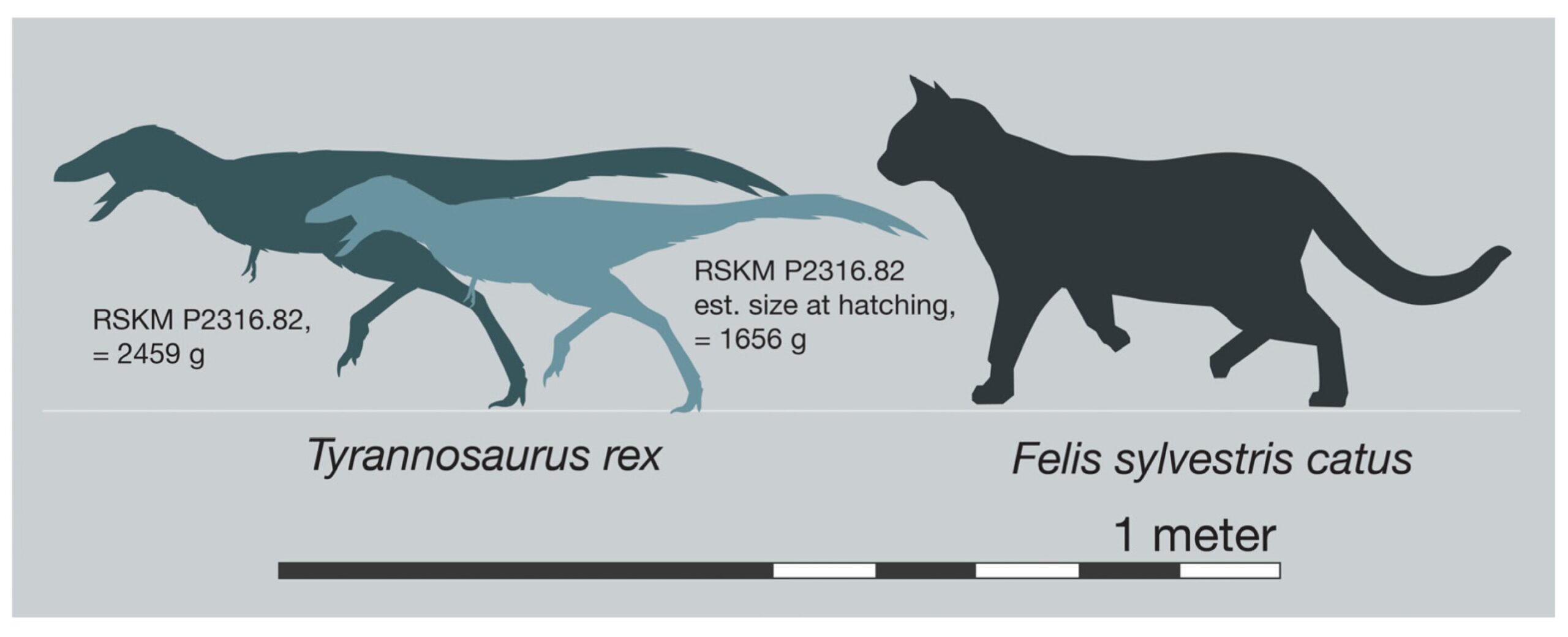
New fossil evidence suggests Tyrannosaurus rex hatchlings weighed less than 5 pounds (2.3 kilograms)—roughly the size of a house cat—and were capable of moving and feeding themselves shortly after emerging from the egg. The findings indicate these young predators may have hunted vertebrate prey from an early age, offering new clues about dinosaur growth and parental care.
The towering adult Tyrannosaurus rex has long symbolized the peak of prehistoric predation, reaching up to 13 feet (4 meters) tall and weighing around 9 tons (8 tonnes). Yet new research paints a strikingly different picture of the animal’s earliest days. Instead of emerging as large, vulnerable hatchlings, newly born T. rex appear to have entered the world as surprisingly small but highly capable predators.
The study, published in the journal Biology, draws on overlooked fossils from museum collections across North America. By combining detailed anatomical analysis with advanced imaging techniques, researchers reconstructed the appearance and lifestyle of some of the youngest tyrannosaurs ever identified.
Hidden fossils revealed the earliest stage of T. rex life
Studying baby dinosaurs is notoriously difficult because their bones are both tiny and fragile. Many specimens remain unrecognized in museum drawers and storage cabinets, where they have been overlooked for years.
To identify genuine tyrannosaur remains, the researchers focused on distinctive skeletal features. One particularly important clue was the characteristic middle foot bone found within the tyrannosaur family. This bone contains a deep pit on its front surface and a ridge along the back, allowing scientists to distinguish it from similar bones belonging to other dinosaurs.
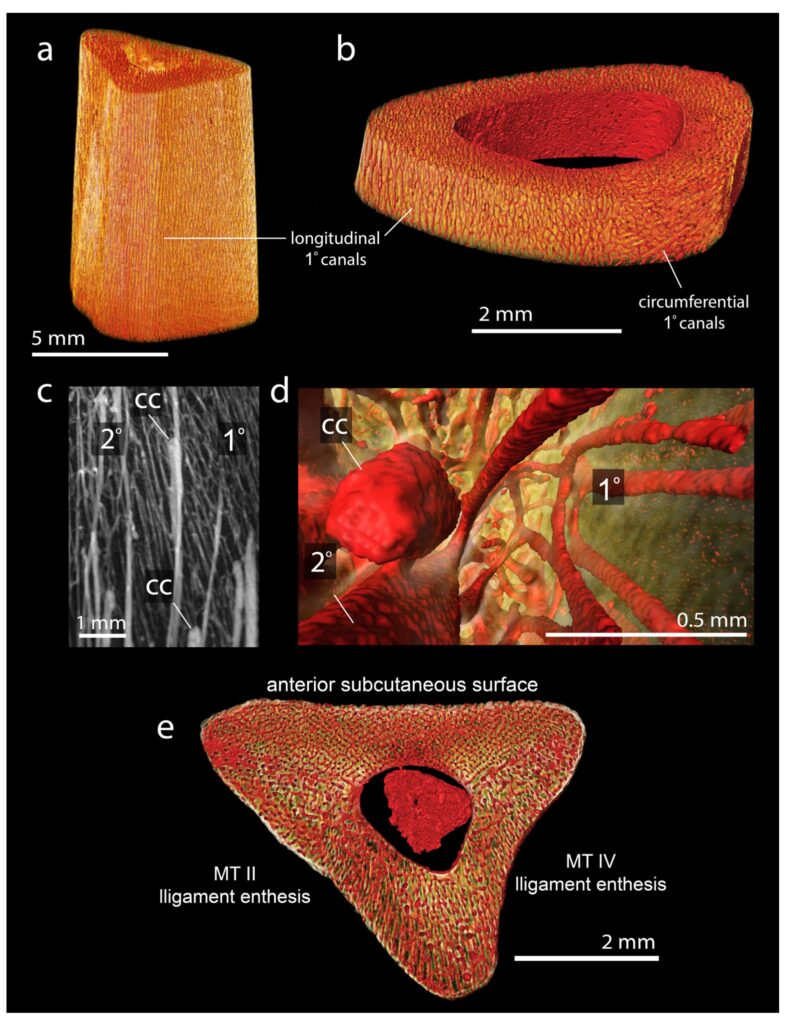
The team also examined small fossilized teeth, selecting specimens that matched known characteristics of T. rex teeth. Rather than cutting into the delicate fossils, they used high-resolution synchrotron X-ray scanning to examine the internal structure of the bones while leaving the specimens intact.
Evidence suggests hatchlings were active almost immediately
The internal bone structure provided one of the study’s most important discoveries.
Researchers found evidence of bone remodeling, a process associated with mechanical stress generated during regular movement. That pattern suggests the hatchlings were already walking—and likely running—soon after hatching rather than remaining inactive or dependent on prolonged parental care.
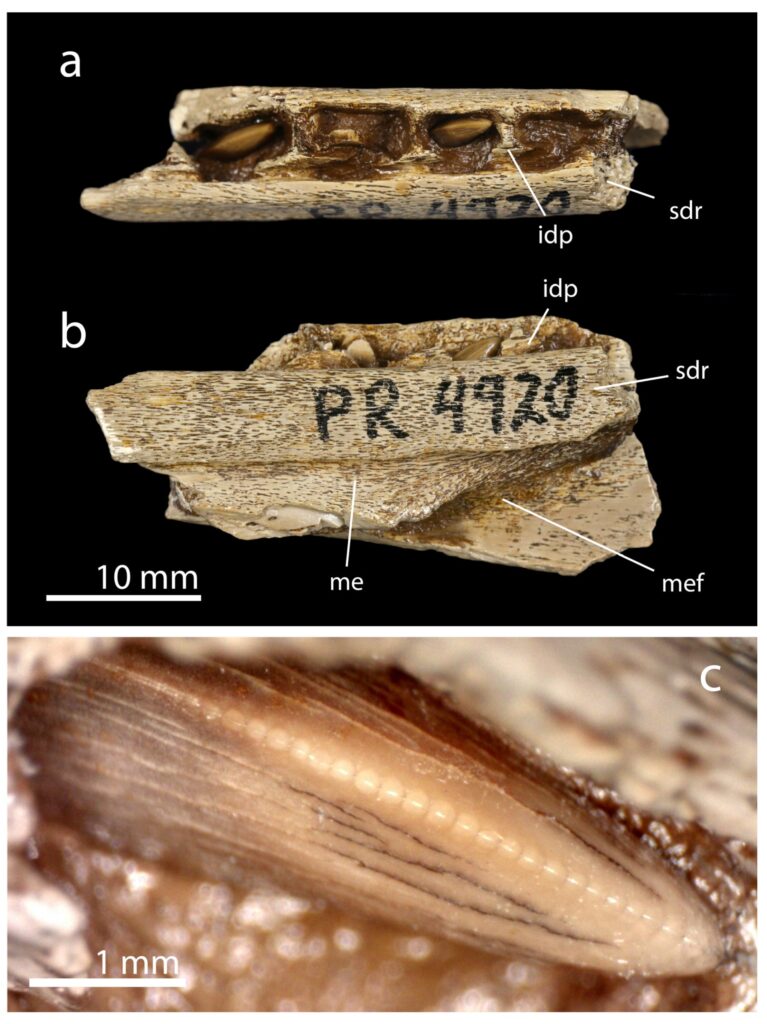
The teeth told a similar story. Many displayed noticeable wear, indicating they had already been used to feed on relatively large vertebrate prey rather than insects or other tiny food sources. Based on this evidence, the researchers argue that young tyrannosaurs probably began hunting and feeding on other animals very early in life.
As the study’s authors wrote, “They show that tyrannosaur eggs and hatchlings were small, <2.5 kg, and suggest that young were highly precocial, able to move and feed themselves soon after hatching.”
Mathematical models estimate surprisingly small newborns
The fossil evidence was combined with mathematical modeling and comparisons with living birds and crocodiles to estimate the size of newly hatched T. rex.
According to those calculations, a hatchling would have weighed about 1.7 kilograms (3.7 pounds) and measured roughly 75 centimeters (about 2.5 feet) long.
Those dimensions make the newborn predator remarkably small compared with the enormous adult it would eventually become. Despite their modest size, the fossils suggest these animals were equipped to function independently almost from the beginning of life.
The researchers also examined fossils from Gorgosaurus, a smaller tyrannosaur relative that lived millions of years before T. rex. Hatchlings of this species were estimated to have been even lighter, weighing only about 1.3 kilograms (2.9 pounds).
Clutch sizes may have been larger than previously assumed
The study also explored how many eggs a T. rex may have produced during a single reproductive event.
Based on their analysis, the researchers concluded that tyrannosaurs probably laid at least 15–30 eggs per clutch. They also noted that substantially larger clutches cannot be ruled out.
“What we can therefore say with some confidence is that tyrannosaurs probably laid at least 15–30 eggs,” the researchers wrote. “Larger clutches of 50 or even 100 eggs are not impossible.”
Although the study does not directly observe nesting behavior, these estimates provide another piece of the puzzle surrounding tyrannosaur reproduction.
A glimpse into the evolution of dinosaur parenting
Beyond reconstructing the life of baby tyrannosaurs, the findings also contribute to broader questions about how dinosaurs cared for their young.
The researchers argue that dinosaurs may have occupied an intermediate position between modern reptiles and birds. Living reptiles such as crocodiles typically produce large numbers of eggs while providing relatively limited care after hatching. Birds, in contrast, generally lay fewer eggs and devote substantial energy to raising their offspring.
The evidence from these newly identified tyrannosaur hatchlings suggests a different strategy. Producing many offspring while giving them the ability to move and feed independently shortly after hatching would represent a reproductive pattern somewhere between those two living groups.
Rather than relying heavily on prolonged parental care, newly hatched tyrannosaurs appear to have been equipped to survive on their own almost immediately.
By uncovering overlooked fossils and applying modern imaging technology, the study offers one of the clearest views yet of the earliest days in the life of Earth’s most famous predator. Far from being miniature versions of the colossal adults, T. rex hatchlings were house-cat-sized, surprisingly lightweight, and, according to the fossil evidence, already prepared to navigate a dangerous Late Cretaceous world on their own.