No one knows exactly when the world will end, largely because the question has more than one scientific answer. Earth could become uninhabitable long before the planet itself disappears, humanity could face an existential catastrophe without destroying the rest of life, and the universe could continue to exist long after stars have stopped shining.
Science offers a clearer picture of these possibilities by examining how Earth, the Sun, and the universe evolve, as well as the risks posed by human activities and natural disasters. Some long-term changes are well understood, while others remain uncertain. What the evidence does not support is a specific, reliable date for the end of the world.
The most important distinction is between the end of human civilization, the end of life on Earth, the destruction of the planet, and the ultimate fate of the universe. These are separate events that could occur on vastly different timescales.
What does it mean for the world to end?
In everyday language, the end of the world usually means a catastrophe that destroys humanity or makes Earth unrecognizable. Scientifically, however, there are several ways to define such an ending.
The collapse of modern civilization would not necessarily mean the extinction of humanity. Even a global catastrophe could leave surviving populations capable of rebuilding societies. Human extinction would be a more extreme outcome, requiring the disappearance of every surviving human population.
The end of life on Earth would be different still. If humans disappeared but microorganisms continued living in the planet’s oceans, soil, or deep underground, life would persist. Conversely, Earth could lose its ability to support complex life while some hardy microorganisms survived.
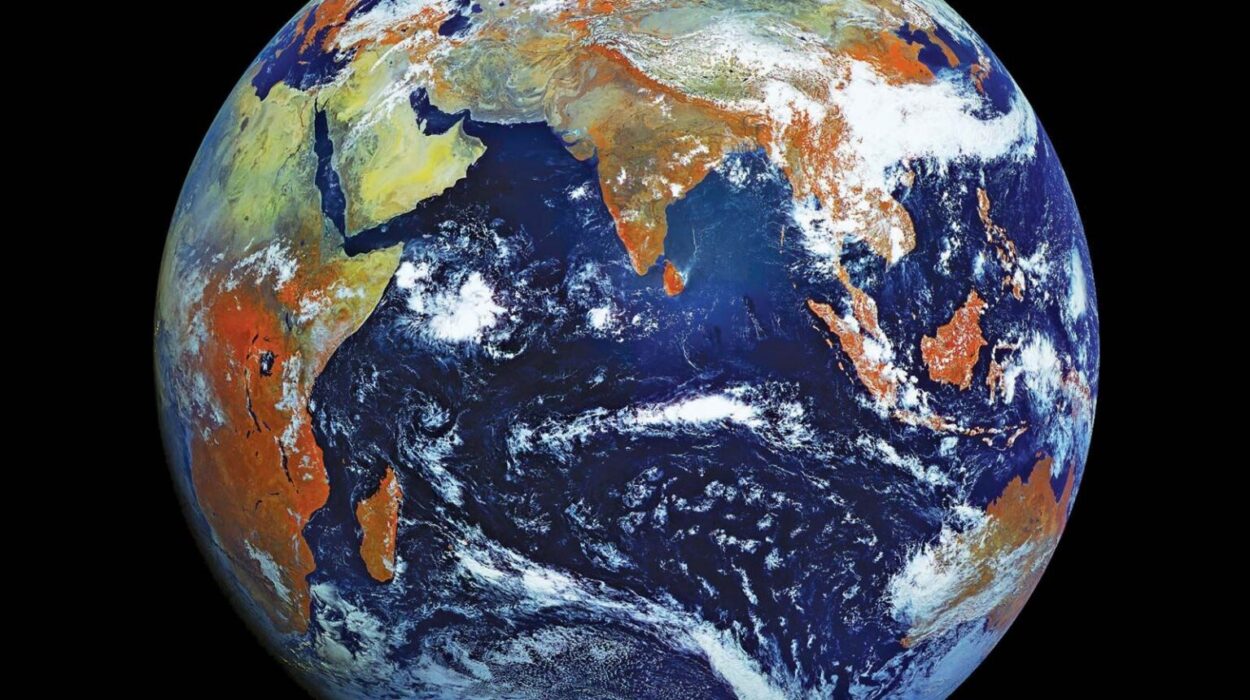
The physical destruction of Earth is another possibility. The planet could remain intact long after its surface became too hot for life, and even the eventual transformation of the Sun would not necessarily mean that Earth must be completely destroyed.
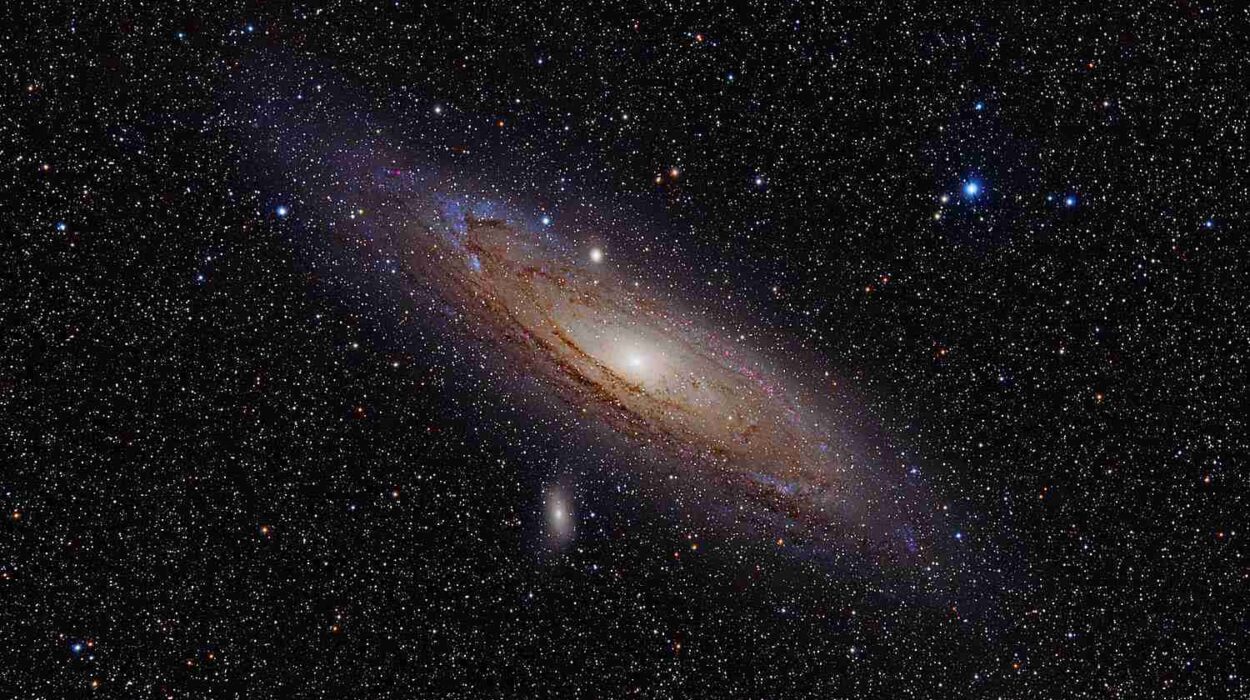
Finally, the end of the universe could mean something different from all these planetary events. Cosmologists study whether the universe will continue expanding indefinitely, how its energy will change over time, and whether the physical conditions needed for stars and other structures will eventually disappear.
Understanding these distinctions makes it possible to evaluate the risks without confusing a threat to civilization with the destruction of everything that exists.
The Sun will eventually make Earth uninhabitable
The most firmly established long-term threat to Earth’s habitability comes from the Sun itself. Our star is not a permanent, unchanging source of energy. It gradually evolves as nuclear reactions transform hydrogen into helium in its core.
Today, the Sun is in a relatively stable stage of its life, known as the main sequence. During this phase, the energy released by nuclear fusion balances the inward pull of gravity, allowing the star to remain stable over billions of years.
But the Sun slowly becomes brighter as it ages. That gradual increase in brightness will eventually disrupt Earth’s climate and water cycle.
As more solar energy reaches the planet, Earth’s surface and atmosphere will warm. Higher temperatures will increase evaporation, alter weather patterns, and place additional stress on ecosystems. Over much longer periods, changes in the carbon cycle and the ability of rocks to remove carbon dioxide from the atmosphere will make it increasingly difficult for plants to survive.
Plants depend on carbon dioxide for photosynthesis, the process through which they use sunlight to produce sugars. If atmospheric carbon dioxide falls too low, many plants will struggle to survive, disrupting food webs that depend on them. Rising temperatures and changes in ocean chemistry would add further pressure to the biosphere.
Eventually, the planet could lose its surface oceans through a combination of increased evaporation and changes in the atmosphere. Water vapor is a greenhouse gas, meaning it absorbs heat radiated by Earth’s surface. Under sufficiently hot conditions, this process can reinforce warming and allow water to escape into space.
Scientists expect Earth to become unsuitable for most or all familiar forms of life well before the Sun reaches its final stages. The exact timeline depends on complex interactions among the Sun, atmosphere, oceans, and carbon cycle, but the broad direction is clear: Earth’s current habitability is temporary.
This process is not an imminent threat. It unfolds over hundreds of millions to billions of years, far beyond the timescale of human civilization as we know it.
What will happen when the Sun becomes a red giant?
The Sun’s eventual transformation will bring even more dramatic changes.
In roughly five billion years, after exhausting much of the hydrogen fuel in its core, the Sun will leave its current stable phase and expand into a red giant. During this stage, its outer layers will grow enormously, while the structure and energy production of its interior change.
The inner solar system will be transformed. Mercury and Venus are expected to be engulfed by the expanding Sun. Earth’s fate is less certain in precise physical terms because the Sun will lose mass, allowing Earth’s orbit to expand, while tidal interactions with the swollen star will pull Earth inward. Whether Earth is ultimately swallowed by the Sun depends on the balance of these effects.
Even if Earth avoids direct engulfment, its surface will not remain habitable. The planet’s oceans will have disappeared long before the red giant phase, and its familiar climate and atmosphere will no longer exist.
After the red giant stage, the Sun will shed its outer layers, leaving behind a hot, dense stellar remnant called a white dwarf. This object will gradually cool over an immense period.
By then, Earth may have been destroyed, or it may survive as a scorched, lifeless remnant. Either way, the planet we know today will no longer exist as a living world.
This is one of astronomy’s most reliable broad predictions. The exact details of Earth’s final fate remain uncertain, but the Sun’s evolution will eventually end the conditions that make our planet suitable for life.
Could an asteroid or comet destroy civilization?
A large asteroid impact is one of the few natural events capable of causing a global catastrophe on a relatively short timescale.
Earth has experienced major impacts throughout its history. The best-known example is the impact associated with the mass extinction about 66 million years ago, which eliminated the non-avian dinosaurs and many other species. Evidence indicates that a large asteroid struck the region of the present-day Yucatán Peninsula, triggering environmental changes that devastated ecosystems worldwide.
A sufficiently large impact can release enormous amounts of energy, generate powerful shock waves, start fires, and throw dust and other material into the atmosphere. If enough sunlight is blocked, global temperatures could fall, photosynthesis could decline, and food supplies could collapse.
The consequences would depend on the object’s size, composition, speed, and impact location. A smaller asteroid might devastate a region without producing global effects. A much larger object could disrupt the climate and threaten civilization across continents.
However, asteroid impacts are not equally likely at all sizes. Smaller objects strike Earth more frequently, while the largest, most globally destructive impacts are much rarer.
Astronomers track many near-Earth asteroids and assess their orbits to identify potential hazards. Planetary defense programs also investigate whether a threatening object’s trajectory could be changed before impact. A spacecraft demonstration has shown that deliberately striking an asteroid can alter its motion, although the practicality of any real deflection mission would depend on the specific object and the time available.
No scientific basis exists for assigning a predictable date to a civilization-ending impact. The risk is real, but it is not evidence that such a catastrophe is approaching.
Could a supervolcano trigger the end of the world?
Massive volcanic eruptions can alter the climate and disrupt food production on a global scale. The most dangerous effects may come not from lava flows themselves, but from gases and fine particles released into the atmosphere.
Sulfur dioxide from a major eruption can form sulfate aerosols, tiny airborne particles that reflect some incoming sunlight back into space. If enough of these particles reach the stratosphere, the layer of the atmosphere above most weather systems, they can temporarily cool the planet.
A sufficiently large eruption could shorten growing seasons, damage crops, disrupt transportation, and create serious economic and humanitarian crises. The consequences would depend on the eruption’s size, the material released, atmospheric conditions, and the resilience of food systems.
The term supervolcano is commonly used for volcanic systems capable of exceptionally large eruptions. Such eruptions are possible, but they are not routine events, and their effects should not be confused with the total destruction of Earth.
Even an enormous eruption would not physically destroy the planet. Nor would it automatically eliminate all life. Many organisms could survive in environments less exposed to the immediate effects, although entire ecosystems and human populations could suffer devastating losses.
The larger concern is that a severe natural shock could interact with existing vulnerabilities. If harvests failed across several major agricultural regions, for example, food shortages could spread through international markets, particularly where communities already lacked reliable access to food.
As with asteroid impacts, the timing of a future supereruption cannot be predicted with enough precision to identify a specific year. Scientists monitor volcanic systems, but monitoring does not make every eruption forecastable.
How dangerous are human-made threats?
Unlike distant astronomical changes, several of the most serious threats to humanity arise from human decisions and technologies. These risks deserve particular attention because people can sometimes reduce them through policy, engineering, cooperation, and changes in behavior.
Nuclear war is one example. A large-scale nuclear conflict could kill enormous numbers of people directly through explosions, fires, radiation, and the destruction of essential infrastructure. Smoke from widespread urban fires could also enter the upper atmosphere and reduce sunlight, potentially cooling the climate and damaging agricultural production.
The extent of such effects would depend on the scale and circumstances of the conflict. It would be misleading to claim that any nuclear exchange would necessarily destroy every human being, but a major nuclear war could threaten global civilization and create consequences far beyond the countries involved.
Climate change presents a different kind of risk. Greenhouse gases released by human activities trap additional heat in the climate system, raising global temperatures and altering precipitation, sea levels, and the frequency or intensity of some extreme weather events. These changes can damage ecosystems, threaten food and water supplies, increase heat-related illness, and expose communities to costly disasters.
Climate change is not expected to physically destroy Earth or make every part of the planet uninhabitable. Its dangers lie in the accumulating stress it places on natural systems and human societies. The scale of future harm depends significantly on future emissions, adaptation, and the vulnerability of affected populations.
Other potential risks include engineered biological threats, severe pandemics, and the misuse of powerful emerging technologies. Their likelihood and possible consequences vary, and some are difficult to quantify. A new disease could cause a global emergency without threatening human extinction; a deliberately engineered pathogen could present different risks depending on its characteristics and how widely it spread.
These dangers should not be treated as equally likely, equally severe, or equally preventable. Nor should uncertainty be mistaken for proof that a disaster is inevitable. The practical question is how to identify credible hazards, strengthen safeguards, and reduce the chance that a local or regional crisis becomes a worldwide catastrophe.
Could a gamma-ray burst or another cosmic event wipe out life?
The universe contains events capable of releasing extraordinary amounts of energy. Some could affect Earth if they occurred sufficiently close and directed their energy toward the planet.
A gamma-ray burst is a brief, intense release of high-energy radiation associated with certain violent cosmic events. A sufficiently nearby burst aimed toward Earth could damage the atmosphere, including the ozone layer that helps shield the surface from harmful ultraviolet radiation.
If atmospheric ozone were severely depleted, more ultraviolet radiation from the Sun could reach the surface, harming organisms and disrupting ecosystems. The broader effects would depend on the burst’s distance, energy, direction, and interaction with the atmosphere.
Other astronomical hazards include nearby stellar explosions, though their danger likewise depends heavily on distance and circumstances.
These events are physically real, but their existence does not mean Earth faces an imminent cosmic disaster. The most destructive scenarios require particular conditions, and there is no established reason to expect one to end life on Earth on a predictable schedule.
Cosmic hazards also illustrate an important point: a catastrophic event does not need to destroy the planet to transform its surface environment. Changes to the atmosphere or global food web could be enough to threaten many species.
Could humanity go extinct without Earth being destroyed?
Yes. Human survival depends on a relatively narrow set of environmental conditions, functioning ecosystems, and social systems. A catastrophe could threaten humanity even if the planet remained physically intact and many other organisms survived.
The distinction matters because human extinction is not the same as the collapse of civilization. A global economic breakdown, for instance, could cause immense suffering without eliminating every human population. A severe pandemic or widespread ecological crisis might kill large numbers of people while leaving survivors capable of rebuilding.
Extinction would require a more extreme outcome in which no viable human population remained. Assessing that possibility is difficult because many hazards are poorly understood, and the behavior of complex societies is hard to predict.
Modern civilization is connected through global trade, energy systems, communications, agriculture, and transportation. Those connections provide enormous benefits, but they can also transmit disruptions. A shock to one system can affect others, especially when several crises occur together.
At the same time, humanity has substantial capacity to respond to danger. Scientific knowledge, public health systems, food storage, disaster planning, international coordination, and technological innovation can reduce vulnerability. These protections are imperfect and unevenly distributed, but they make the future different from a simple story of unavoidable collapse.
The most useful scientific approach is therefore neither to assume that humanity will survive every conceivable threat nor to presume that extinction is inevitable. It is to distinguish plausible risks from speculative scenarios and to invest in measures that reduce the likelihood and severity of catastrophe.
What will happen to the universe in the distant future?
The question becomes even larger when it moves beyond Earth and considers the fate of the entire universe.
Observations indicate that the universe is expanding. On sufficiently large scales, distant galaxies are generally moving away from one another as space itself expands. Measurements also show that this expansion is accelerating, a phenomenon commonly attributed to an unknown component called dark energy.
If the universe continues expanding in a way consistent with the simplest model of dark energy, the most likely broad outcome is a gradual transition toward a colder, more dilute cosmos. Galaxies beyond our local gravitationally bound region would become increasingly difficult to observe, while star formation would eventually decline as the supply of usable gas became depleted or dispersed.
Stars do not shine forever. They consume nuclear fuel, and their remnants cool over time. Some stellar remnants can persist long after ordinary stars have disappeared, but the universe will gradually lose the bright, energetic structures that dominate the night sky today.
This possible far-future state is often called heat death. The term does not mean the universe burns up or suddenly disappears. Instead, it describes a state in which usable energy differences become increasingly unavailable for doing work, leaving little capacity for the complex processes associated with stars, life, and active cosmic structures.
The timescales involved are extraordinarily long, far beyond the age of the universe today. Many details, including the long-term behavior of matter and black holes, remain uncertain.
Other theoretical possibilities have also been proposed. If dark energy behaves differently from the simplest model, the universe’s expansion could eventually produce a more dramatic outcome, such as a Big Rip, in which even gravitationally bound structures are torn apart. Other ideas involve a future contraction or a transition to a different physical state. These scenarios are not equally supported by current evidence, and none provides a reliable countdown to the universe’s end.
For now, the evidence most strongly supports continued cosmic expansion. What ultimately happens depends on the physical nature of dark energy and other fundamental properties that scientists are still investigating.
Why scientists cannot give an exact date for the end of the world
Some aspects of Earth’s future can be predicted with considerable confidence. The Sun will continue evolving, the planet’s environment will change over geological time, and the universe will not remain in its present state forever.
Other possibilities are much harder to forecast. A large asteroid’s future orbit can sometimes be calculated precisely once it has been observed, but the timing of an unknown impactor cannot be established in advance. Volcanic eruptions can be monitored for warning signs, but their exact timing remains difficult to predict. Human-made catastrophes depend on decisions, institutions, technologies, and circumstances that can change.
Scientific predictions also have different levels of certainty. A well-understood physical process may support a robust estimate of a distant event, even when the precise details remain unknown. A complex social or technological risk may have a much wider range of possible outcomes.
This is why a single date for the end of the world would be misleading. It would combine fundamentally different events, each with its own causes, timescales, and uncertainties, into a prediction that science cannot justify.
It is also important to distinguish between what is possible and what is probable. A scenario can be physically conceivable without being likely, and a low-probability event can still deserve attention if its consequences would be enormous. Sound risk assessment considers both the quality of the evidence and the potential scale of harm.
What the distant future means for life today
The universe’s eventual fate may be unavoidable in a broad physical sense, but many of the dangers facing humanity are not fixed. The Sun’s evolution cannot be stopped, yet nuclear conflict, preventable disease, environmental damage, and technological accidents are influenced by choices made in the present.
That difference matters because long-term astronomical certainty should not distract from nearer-term risks that people can actually reduce. Protecting ecosystems, improving public health, monitoring asteroids, strengthening food systems, and developing safeguards for dangerous technologies can all make humanity more resilient.
Science also offers reasons to avoid fatalism. Earth has experienced enormous changes throughout its history, including mass extinctions, yet life has persisted for billions of years. Human civilization is much younger and more vulnerable than the biosphere as a whole, but it also possesses something no other known species has demonstrated at the same scale: the ability to study global risks, anticipate some consequences, and deliberately change its behavior.
There is no scientifically established date when the world will end. Earth will eventually lose its habitability as the Sun grows brighter, and the Sun’s later evolution will transform the planet. The universe itself may continue expanding toward a cold, diffuse future over immense spans of time. Between now and those distant events, humanity faces genuine risks whose outcomes are far less predetermined.
The most accurate answer is therefore not that the world will end on a particular day, nor that it will remain unchanged forever. It is that different endings operate on different timescales, and our ability to understand and influence them depends on which one we mean.