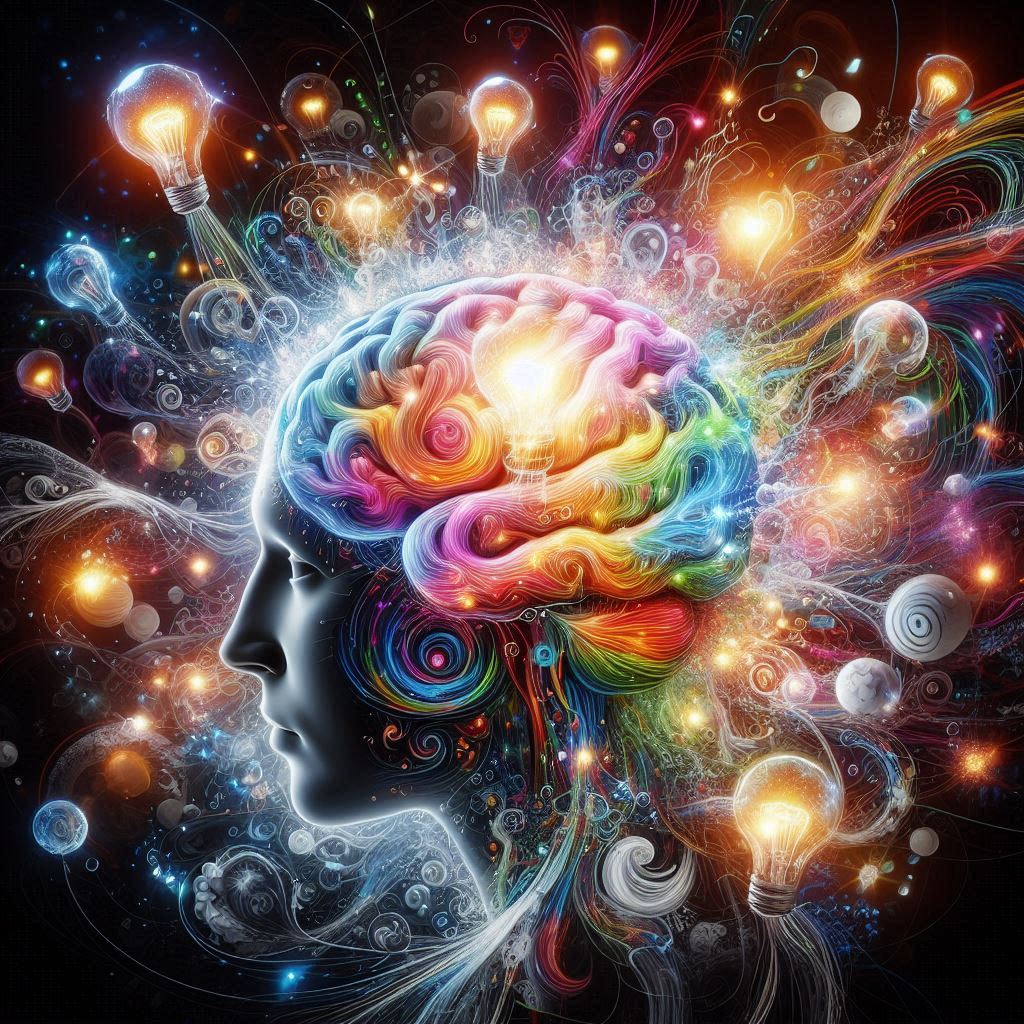
Creativity is one of the most fascinating and complex aspects of the human mind. It is the source of every invention, work of art, and scientific breakthrough that has shaped human civilization. From the cave paintings of prehistoric humans to the theories of modern physics and the innovations of digital technology, creativity defines what it means to be human. Yet, despite its immense importance, creativity remains one of psychology’s most mysterious phenomena.
The study of creativity seeks to answer fundamental questions about the mind. Where do new ideas come from? How does the brain generate something that has never existed before? Why are some people more creative than others? And how can creativity be nurtured, measured, or even predicted? These questions lie at the intersection of psychology, neuroscience, philosophy, and education.
Understanding creativity requires a deep dive into the cognitive processes that generate original ideas, the emotional and motivational factors that sustain creative effort, and the social and cultural environments that either nurture or stifle innovation. The psychology of creativity does not treat creativity as a magical gift but as a human capacity shaped by the brain, mind, and experience—a capacity that can be studied, understood, and enhanced.
Defining Creativity
Psychologists define creativity as the ability to produce ideas or products that are both novel and appropriate. Novelty means originality—something new, unique, or unexpected. Appropriateness means usefulness or relevance—an idea must make sense or serve a purpose within a given context. A painting that introduces an entirely new style, a scientific hypothesis that redefines an entire field, or a solution that solves a problem in an innovative way are all examples of creativity.
This dual definition distinguishes creativity from mere imagination. Imagination allows people to think of things that do not exist, but creativity turns imagination into something functional or meaningful. It is the combination of divergent thinking, which generates multiple possibilities, and convergent thinking, which selects and refines the best one.
The definition of creativity has evolved over time. Early thinkers saw it as a divine or mysterious force, a kind of inspiration that came from outside the individual. The ancient Greeks attributed creativity to the Muses, divine beings who bestowed artistic insight. During the Renaissance, creativity began to be viewed as a human trait—an expression of genius or individual talent. In the modern era, psychology reframed creativity as a cognitive process that can be analyzed scientifically, involving mental flexibility, associative thinking, and problem-solving.
Historical Perspectives on Creativity
The psychological study of creativity is relatively young, but the concept itself has deep historical roots. In the 19th century, creativity was often associated with madness or eccentricity. Early psychiatrists such as Cesare Lombroso believed that creative genius was linked to mental illness, citing examples of artists and poets who displayed unusual behaviors or emotional instability. Although this view has been largely discredited, it sparked an enduring interest in the relationship between creativity and mental health.
In the early 20th century, Sigmund Freud proposed that creativity arises from the unconscious mind. He viewed artistic and imaginative expression as a form of sublimation—transforming repressed desires or conflicts into socially acceptable outlets such as art or writing. Freud’s theory inspired generations of psychologists to explore the hidden emotional roots of creative thought.
Later, humanistic psychologists like Abraham Maslow and Carl Rogers offered a more optimistic view. They saw creativity as a natural expression of self-actualization—the drive to fulfill one’s potential. For them, creativity was not limited to artists or scientists; it was a universal human quality that could manifest in everyday life, from problem-solving to interpersonal relationships.
In the 1950s and 1960s, psychologists began to study creativity systematically. J. P. Guilford’s pioneering research on divergent thinking introduced a new framework for understanding creative cognition. Guilford argued that creativity involved generating multiple possible answers to open-ended problems, rather than finding one correct solution. This marked a turning point in creativity research, shifting focus from personality traits to mental processes.
The Cognitive Foundations of Creativity
At its core, creativity is a cognitive process. It involves perception, memory, attention, and problem-solving—all working together to generate new combinations of ideas. The human brain has an extraordinary ability to connect seemingly unrelated concepts, a process known as associative thinking. When you think of “a bird” and “a machine,” your brain might link them to form the idea of “an airplane.” Such connections are the building blocks of creative insight.
One key cognitive mechanism behind creativity is divergent thinking. This refers to the ability to generate many different ideas from a single starting point. Divergent thinking contrasts with convergent thinking, which focuses on narrowing options to find the one correct answer. Both are essential to creativity: divergent thinking provides raw material, and convergent thinking shapes it into a coherent and useful product.
Memory also plays a critical role. Creative thinking does not emerge from a blank slate; it relies on stored knowledge and experience. The brain’s ability to retrieve and recombine information in novel ways allows for new patterns and associations to emerge. Expertise in a domain often enhances creativity, as it provides a richer database of concepts to draw from.
Another important factor is cognitive flexibility—the ability to switch perspectives, change strategies, or reinterpret information. Creative individuals often display high flexibility, allowing them to escape habitual thought patterns and consider unconventional solutions. This flexibility is closely linked to the brain’s executive functions, controlled by regions in the prefrontal cortex.
The Neuroscience of Creativity
In recent decades, neuroscience has begun to reveal the brain mechanisms that underlie creative thinking. Creativity is not confined to a single “creative area” of the brain but emerges from the interaction of multiple networks. Three main networks play a crucial role: the default mode network (DMN), the executive control network (ECN), and the salience network (SN).
The default mode network is active during rest, daydreaming, and internal reflection. It supports spontaneous thought, imagination, and associative connections—all vital for generating novel ideas. The executive control network, on the other hand, is responsible for focused attention, planning, and evaluation. It helps refine and assess ideas, ensuring that they are logical and useful. The salience network mediates between these two, deciding when to engage spontaneous imagination and when to apply focused control.
Creative thinking, therefore, involves dynamic switching between these networks. During brainstorming or free association, the default mode network predominates; during evaluation and refinement, the executive network takes over. Highly creative individuals seem to integrate these processes more efficiently, allowing free flow between spontaneous and deliberate thinking.
Brain imaging studies have also shown that the prefrontal cortex, responsible for executive functions, plays a key role in creativity. Interestingly, moments of creative insight—those sudden “Aha!” experiences—are often associated with a temporary decrease in prefrontal activity, a state sometimes called transient hypofrontality. This reduced inhibition may allow more remote associations to emerge, enabling novel connections that are normally suppressed by logical control.
The Role of Insight and the “Aha!” Moment
Many creative breakthroughs occur not through gradual reasoning but through sudden flashes of insight. Psychologists call this the “Aha!” moment—a sudden realization that resolves a problem or brings clarity to a complex situation. Insight often feels effortless and surprising, as if the solution appears out of nowhere.
Studies on insight have shown that it involves a shift in mental representation. The problem solver must restructure their understanding of the situation, breaking free from incorrect assumptions or habitual thought patterns. This process often requires an incubation period, during which the mind unconsciously reorganizes information. That is why taking a break or sleeping on a problem can lead to sudden inspiration later.
Neuroscientific research indicates that insight involves activation in the right temporal lobe, especially in the anterior superior temporal gyrus. This area is associated with integrating distant associations and processing abstract relationships. Moments before an insight occurs, brain activity often shows a burst of alpha waves, suggesting that the brain is inhibiting external distractions to allow internal connections to form.
Insight does not happen randomly—it depends on preparation. The more deeply a person engages with a problem, the more raw material the mind has to work with during incubation. The “Aha!” moment may feel spontaneous, but it is the result of prior effort and unconscious processing.
Personality and Motivation in Creativity
Creativity is not only about cognition; it is also shaped by personality and motivation. Certain personality traits consistently correlate with high creativity. Openness to experience—the tendency to seek novelty, curiosity, and aesthetic sensitivity—is one of the strongest predictors of creative potential. Highly creative individuals often display a tolerance for ambiguity, a preference for complexity, and a willingness to take intellectual risks.
Intrinsic motivation also plays a crucial role. Psychologists Teresa Amabile and Mihaly Csikszentmihalyi have shown that people are most creative when they are driven by internal passion and curiosity rather than external rewards. Intrinsically motivated individuals engage deeply with their work for its own sake, entering a state of deep focus known as flow.
Flow is characterized by complete absorption in an activity, where time seems to disappear, and performance feels effortless. It occurs when the challenge of a task matches one’s skills, leading to a perfect balance between control and exploration. Many artists, scientists, and athletes describe their most creative moments as experiences of flow.
At the same time, creativity often requires perseverance. Many breakthroughs come after long periods of failure or uncertainty. Resilience, persistence, and emotional stability help creative individuals overcome setbacks and continue pursuing their goals despite obstacles.
The Social and Cultural Context of Creativity
Creativity does not occur in isolation. It is deeply influenced by social, cultural, and environmental factors. The same idea can be seen as groundbreaking in one culture and irrelevant in another. What counts as “creative” depends on shared values, traditions, and collective needs.
Sociocultural theories of creativity emphasize the importance of collaboration and context. Psychologist Lev Vygotsky argued that creativity develops through social interaction and the internalization of cultural tools such as language and symbols. Similarly, Mihaly Csikszentmihalyi’s systems model views creativity as the result of interactions between the individual, the domain of knowledge, and the field of experts who evaluate and recognize innovation.
Environments that support freedom, diversity, and open communication tend to foster creativity. Workplaces and educational institutions that encourage experimentation and tolerate mistakes create conditions where new ideas can flourish. Conversely, rigid hierarchies, excessive evaluation, and fear of failure suppress creative potential.
Cross-cultural research has also shown differences in creative expression. Western cultures often value individual originality and self-expression, while Eastern cultures emphasize harmony, adaptation, and collective benefit. Both perspectives contribute valuable insights into how creativity functions across societies.
Creativity Across the Lifespan
Creativity is not confined to childhood or youth—it evolves throughout life. Children display spontaneous and uninhibited imagination, often engaging in play that combines fantasy and reality. However, as they grow older, formal education and social norms can constrain their creative expression. Encouraging divergent thinking and curiosity in early education is essential to preserve creative potential.
In adulthood, creativity often becomes more focused and disciplined. Professional expertise allows individuals to make meaningful contributions to their fields, combining originality with mastery. Many great creative achievements occur when experience and experimentation converge.
In later life, creativity can take on reflective and integrative forms. Older adults may draw on rich life experiences to create works of wisdom, mentorship, or artistic expression. Contrary to popular belief, the creative mind does not necessarily decline with age; rather, it transforms, emphasizing depth, insight, and synthesis.
Measuring and Enhancing Creativity
Measuring creativity has always been challenging, given its subjective and multifaceted nature. Psychologists have developed various methods, such as divergent thinking tests, which measure fluency, flexibility, and originality of ideas. Other approaches include evaluating creative products through expert judgment or assessing self-reported creative achievements.
Enhancing creativity involves fostering certain cognitive and emotional conditions. Techniques such as brainstorming, mind mapping, and analogical reasoning can stimulate divergent thinking. Environments that promote autonomy, playfulness, and cross-disciplinary collaboration also enhance creative output.
Recent research in neuroscience and psychology suggests that creativity can be trained. Activities that strengthen associative thinking, mindfulness practices that increase awareness, and exposure to diverse experiences all contribute to creative growth. Sleep, rest, and daydreaming also play vital roles by allowing unconscious processing to occur.
The Relationship Between Creativity and Mental Health
The link between creativity and mental illness has been debated for centuries. While some studies suggest higher rates of mood disorders among artists and writers, others caution against romanticizing the “mad genius” stereotype. The truth appears more nuanced.
Mild forms of mood variability, such as hypomania, may enhance creative productivity by increasing energy and associative thinking. However, severe mental illness can impair functioning and hinder sustained creativity. Resilience, self-awareness, and emotional regulation appear to be key factors that allow individuals to channel emotional intensity into creative work.
Creativity can also serve as a coping mechanism, providing emotional expression and psychological healing. Art therapy, writing, and music are powerful tools for processing trauma and enhancing well-being. In this sense, creativity not only produces beauty but also restores balance to the mind.
Creativity in the Age of Technology
In the 21st century, technology has transformed the landscape of creativity. Artificial intelligence, digital art, and global collaboration have expanded what it means to create. Machines can now compose music, generate art, and even write poetry, prompting new debates about the nature of human creativity.
While AI can mimic creative processes, it lacks consciousness, intention, and emotional experience—the hallmarks of human creativity. The human mind remains unique in its ability to assign meaning, purpose, and moral value to creative acts.
Technology, however, can amplify creativity by providing new tools for experimentation and communication. Digital platforms allow for unprecedented sharing of ideas, while interdisciplinary collaboration between humans and machines opens new frontiers in science, design, and art. The challenge of the future will be to use these technologies ethically and imaginatively, enhancing rather than replacing the creative spirit.
The Future of Creativity Research
The study of creativity is entering an exciting era. Advances in neuroscience, artificial intelligence, and cognitive psychology are beginning to unravel the biological and computational foundations of creative thought. Researchers are exploring how genetic, environmental, and cultural factors interact to shape individual creativity.
Emerging fields such as neuroaesthetics and computational creativity are bridging art and science, offering new insights into how beauty, emotion, and innovation arise from the brain’s activity. The future may reveal not only how creativity works but also how it can be cultivated in education, healthcare, and society at large.
Creativity will continue to be a defining feature of human evolution. As the world faces complex global challenges—climate change, social inequality, and technological transformation—creative thinking will be essential to design sustainable solutions and imagine new possibilities for humanity.
Conclusion
Creativity is the heartbeat of human progress. It is the invisible thread connecting art and science, emotion and intellect, individuality and culture. From the neural firing of the brain to the social dynamics of collaboration, creativity represents the interplay of countless forces—biological, psychological, and environmental—that shape the emergence of new ideas.
The psychology of creativity reveals that innovation is not a mystery reserved for geniuses but a universal capacity that lives within every mind. It thrives on curiosity, courage, and the willingness to see the world not as it is, but as it could be.
Understanding where new ideas come from allows us not only to appreciate creativity but to nurture it—in ourselves, in our children, and in the societies we build. For as long as humans continue to dream, explore, and create, the story of creativity will remain the story of our species—a story without end.