Particles carrying only a tiny fraction of the electric charge of an electron could be hiding in places ordinary particle detectors struggle to probe. A team of physicists has proposed using a much older kind of experiment, the Cavendish test, to search for these hypothetical millicharged particles and potentially reach sensitivities beyond those of particle accelerator experiments.
Millicharged particles, or mCPs, are hypothetical particles predicted by some extensions of the Standard Model of particle physics. Unlike familiar charged particles, they would carry an electric charge that is only a small fraction of the electron’s charge.
That tiny charge would make them interact very weakly with ordinary matter and electromagnetic fields. As a result, conventional particle physics experiments could have difficulty detecting them.
Some models also propose that millicharged particles make up a small fraction of dark matter. Dark matter does not emit, absorb or reflect light and interacts weakly with ordinary matter, leaving its composition and properties uncertain.
The new proposal focuses on a possibility that could bring these particles within reach of a very different kind of detector.
An old precision experiment gets a new purpose
Harikrishnan Ramani, Asher Berlin, Zachary Bogorad and Peter W. Graham proposed adapting the Cavendish experiment to search for millicharged particles that may accumulate naturally near Earth.
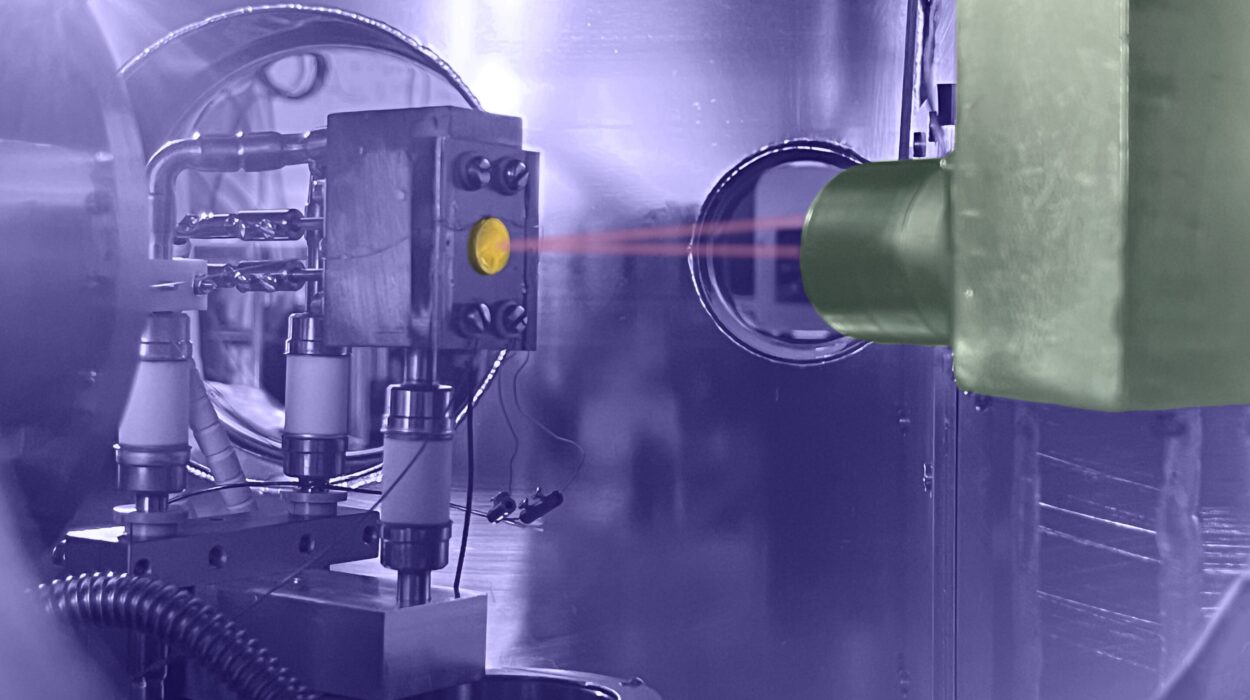
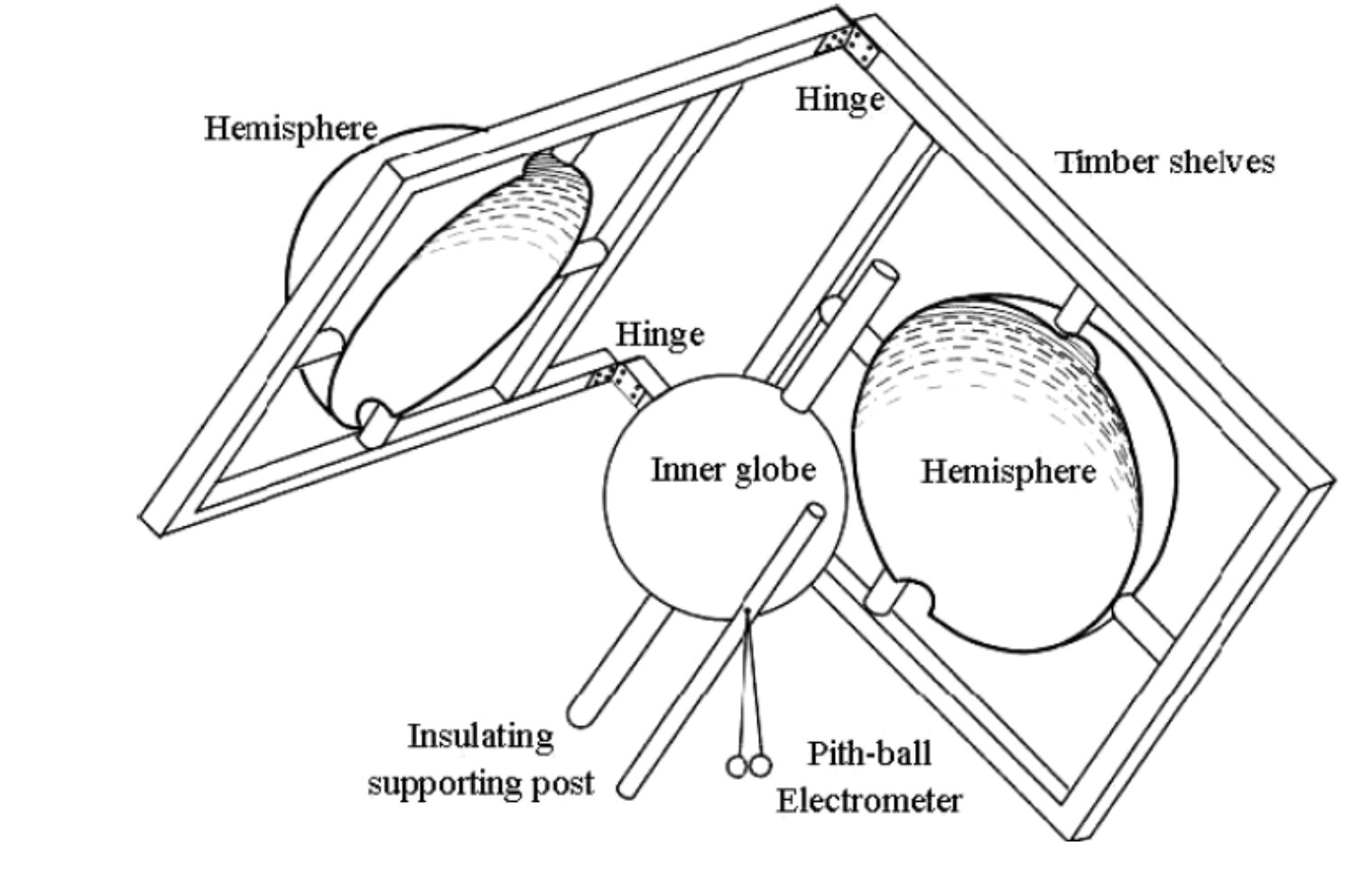
A Cavendish test is a precision experiment used to examine Coulomb’s law, which describes the electric force between charged objects. The proposed version would use a device capable of oscillating electric charges and measuring the weak electric field produced as a result.
The setup centers on a large Faraday cage, a conductive shell that blocks external electric fields and electromagnetic radiation.
Under ordinary expectations, the cage should shield its interior from an external electric field. If Coulomb’s law and Gauss’ law were exact, no electric field would be induced inside the cage.
Millicharged particles could change that picture.
How the cage could expose the particles
The researchers propose that millicharged particles could pass through the Faraday cage because of their unusual interaction with electric fields.
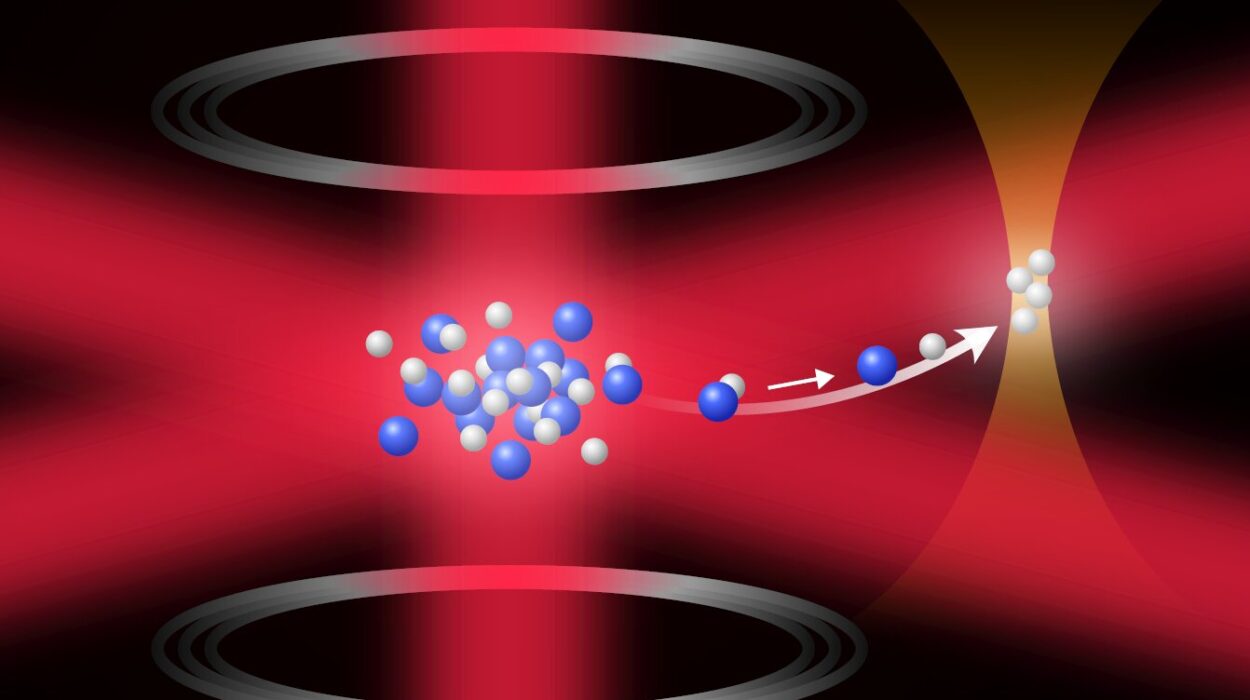
When the cage alternates between positive and negative potentials, the particles would be expected to move into and out of the cage in response to its charge. That movement could produce an oscillating electric field inside the cage.
Ordinary Standard Model charges would not behave in the same way because they have a work function that makes it difficult for them to penetrate the cage. In the proposed experiment, the cage would therefore serve as a kind of filter that allows the hypothetical particles to produce a detectable signal while suppressing the response from ordinary charges.
There is another connection to the laws governing electric fields. The researchers note that millicharged particles can give the photon an effective plasma mass, producing a screening effect. Because Coulomb’s law requires a massless photon, this could appear as a deviation from the expected behavior of the electric field.
A related version of this type of device was historically used to place limits on the photon’s mass.
The experiment could probe two possible sources
The proposed experiment could, in principle, search for millicharged particles from two different sources.
One possibility is cosmic rays produced by the particles. The researchers say their search would not depend on whether those particles are dark matter or on a particular model for the cosmology of the universe.
In this case, the basic idea resembles a collider experiment in which a particle is produced and then detected. The difference is that the millicharged particles being searched for could have been produced much earlier.
The researchers’ projections indicate that the proposed approach could reach more than three orders of magnitude greater sensitivity in charge than current and future accelerator-based proposals. They describe this as unusual for a new experiment using existing technology to investigate particles in the MeV–GeV mass range.
The second possibility is that millicharged particles form part of dark matter.
According to the researchers’ projections, a revised Cavendish test could be sensitive to millicharged particles making up less than one part in a trillion of all dark matter.
A possible test is now being explored
The researchers are currently exploring a prototype with Kent Irwin’s group at Stanford University and applying for funding.
Because the proposed experiment can be built using current technology, the team says it could produce results within a few years.
The study was published in Physical Review Letters.