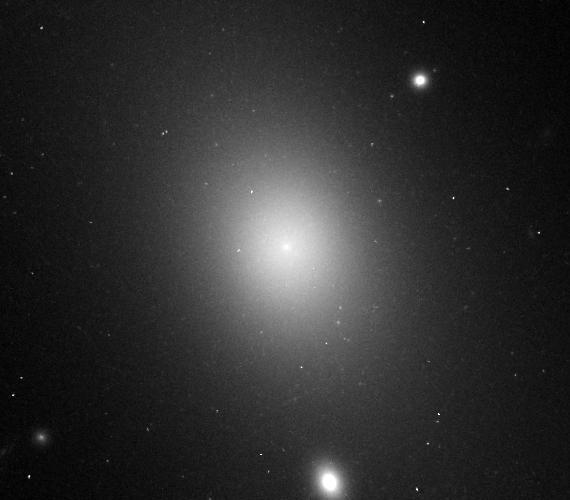
Astronomers estimate that the observable universe contains hundreds of billions to perhaps a few trillion galaxies. The exact number remains uncertain because many galaxies are too faint, distant, or small for current telescopes to detect individually. The best estimates depend on how scientists count galaxies, how they account for objects below observational limits, and how they interpret the history of galaxy formation.
A commonly cited estimate is approximately 200 billion galaxies, based on earlier observations and analyses. However, research using deeper observations and models of galaxy populations has suggested that the total number could be substantially higher, potentially approaching 2 trillion. These figures are not competing measurements of a fixed, directly counted population. They reflect different observational capabilities, assumptions, and methods of estimating galaxies that cannot yet be seen.
Understanding the number of galaxies requires more than counting visible objects. Astronomers must first establish what the observable universe means, determine how galaxies are distributed across cosmic distances, and account for the limitations of modern instruments.
What is the observable universe?
The observable universe is the region of the entire universe from which light or other signals have had enough time to reach Earth since the universe began expanding. It is not necessarily the entire universe. Rather, it represents the portion of space that can, in principle, be observed from our location.
The universe is approximately 13.8 billion years old. Because light travels at a finite speed, looking at distant objects means looking into the past. Light from a galaxy that is 10 billion light-years away, for example, shows that galaxy as it existed billions of years ago, not as it exists today.
It might seem reasonable to assume that the observable universe extends 13.8 billion light-years in every direction. However, this would overlook the expansion of space itself.
While light has been traveling toward us, the universe has continued to expand. Consequently, the regions that emitted the oldest light we can observe are now much farther away than their original distances suggest. The radius of the observable universe is approximately 46.5 billion light-years, giving it a diameter of roughly 93 billion light-years.
This distinction is essential. The observable universe is defined by how far information has been able to reach us, while its present-day size reflects the expansion of space during the journey of that information.
The boundary of the observable universe is not a physical wall or an edge of space. It is an observational horizon. Beyond it, galaxies or other structures may exist, but their light has not had enough time to reach us.
Why counting galaxies is so difficult
Counting galaxies sounds straightforward: point a telescope toward the sky, identify the galaxies in its images, and calculate the total. In practice, the process is considerably more complicated.
Galaxies vary enormously in size, brightness, shape, and structure. Some contain hundreds of billions of stars, while others are much smaller and contain relatively few. Some are bright and easy to detect, whereas others are extremely faint, diffuse, or obscured by dust.
Distance creates another major challenge. A galaxy becomes harder to observe as its light spreads over an increasingly large area during its journey to Earth. The expansion of the universe also stretches incoming light toward longer wavelengths, a phenomenon called redshift.
Redshift occurs because the expansion of space increases the wavelength of light traveling through it. Light that began as visible or ultraviolet radiation may arrive at Earth as infrared radiation. Detecting such distant galaxies therefore requires instruments capable of observing wavelengths beyond those visible to human eyes.
Even when telescopes detect distant galaxies, their images may reveal only a small portion of their original structure. At extreme distances, an entire galaxy can appear as a faint point of light. Astronomers must distinguish genuine galaxies from stars, measurement artifacts, and other astronomical sources.
Another difficulty is that some galaxies are simply too faint to appear in existing observations. A telescope can count only objects that produce detectable signals under its observing conditions. Galaxies below that threshold must be estimated using statistical methods and models.
For these reasons, the number of galaxies in the observable universe is an astronomical estimate rather than a complete direct count.
How astronomers estimate the number of galaxies
Astronomers use deep-sky observations to study small regions of the sky in extraordinary detail. Instead of photographing the entire sky at once, telescopes observe selected areas for extended periods, collecting enough light to reveal extremely faint and distant objects.
The Hubble Space Telescope played an important role in improving galaxy estimates. Its deep-field observations demonstrated that apparently empty regions of the sky contain enormous numbers of distant galaxies.
One particularly influential observation was the Hubble Ultra Deep Field. By observing a tiny patch of sky for a long period, Hubble revealed thousands of galaxies in an area that would appear almost empty to the unaided eye.
Astronomers use such observations to estimate how many galaxies might exist across the entire observable universe. They measure the number of galaxies within a particular area, account for their brightness and distance, and extrapolate the results to larger regions.
This approach requires careful statistical analysis. The observed patch must be sufficiently representative of the broader universe, and scientists must account for variations in galaxy density, observational limitations, and the possibility of missing faint objects.
Astronomers also use mathematical models to estimate the number of galaxies that remain undetected. These models incorporate observations of galaxy brightness, size, distribution, and evolution over cosmic time.
The result is a more complete estimate than a simple count of visible galaxies, although it necessarily includes uncertainty.
Why estimates range from hundreds of billions to trillions
The difference between estimates of approximately 200 billion and as many as 2 trillion galaxies largely reflects improvements in observational depth and methods for accounting for faint galaxies.
Earlier estimates relied heavily on galaxies bright enough to be detected by available telescopes. These observations provided valuable information but were less sensitive to small, faint galaxies, particularly those in the distant universe.
Later analyses suggested that many more galaxies might exist below the detection limits of those observations. When astronomers incorporated these potentially unseen objects into their calculations, the estimated total increased substantially.
The distinction between directly observed galaxies and statistically inferred galaxies is important. A telescope does not necessarily need to photograph every galaxy for astronomers to estimate the population. However, the reliability of such estimates depends on how accurately the models describe the galaxies that observations cannot reveal.
The estimate of roughly 2 trillion galaxies became widely discussed following analyses of deep-field observations and models of galaxy populations. It should not be interpreted as a precise, universally established count.
More recent observations, including those from the James Webb Space Telescope, have improved our understanding of distant galaxies and early cosmic history. These observations provide additional information about galaxy populations, including objects that earlier instruments struggled to detect.
Nevertheless, they do not eliminate the fundamental challenge of counting every galaxy across the observable universe. The total remains dependent on observational limits and assumptions about populations that are too faint to measure directly.
What makes a galaxy?
To understand what astronomers are counting, it helps to understand what constitutes a galaxy.
A galaxy is a gravitationally bound system containing stars, gas, dust, stellar remnants, and dark matter. Dark matter is a form of matter that does not emit, absorb, or reflect light in the ordinary way but reveals its presence through gravitational effects.
Galaxies can contain millions, billions, or even trillions of stars. They also vary considerably in appearance and structure.
Spiral galaxies have flattened disks containing stars, gas, and dust, often with prominent spiral arms. The Milky Way, our home galaxy, is a barred spiral galaxy.
Elliptical galaxies generally have rounded or elongated shapes and contain relatively little cold gas compared with actively star-forming spiral galaxies. Many contain older stellar populations.
Irregular galaxies lack the well-defined structure of spiral and elliptical galaxies. Gravitational interactions, collisions, and internal processes can contribute to their unusual shapes.
There are also dwarf galaxies, which are much smaller and less luminous than large galaxies. Some contain relatively few stars, making them difficult to detect at great distances.
Dwarf galaxies are especially important when estimating the total number of galaxies. Although they are individually faint, they may be far more numerous than large, bright galaxies. Missing large numbers of these objects can therefore produce a substantial underestimate of the total population.
The definition of a galaxy can also become complicated at the smallest scales. Astronomers must distinguish genuine gravitationally bound stellar systems from star clusters and other structures. This is particularly challenging when studying faint, low-mass objects.
How the expansion of the universe affects what we observe
The expanding universe plays a central role in determining which galaxies astronomers can detect and how their distances are measured.
In 1929, astronomer Edwin Hubble published observations showing that distant galaxies generally move away from us, with more distant galaxies receding faster on average. This relationship provided important evidence that the universe is expanding.
Modern cosmology explains this expansion through the changing scale of space itself. Galaxies are generally not traveling through space away from a single central point. Instead, the distances between widely separated, gravitationally unbound regions increase as the universe expands.
This expansion has important consequences for observations. Light traveling across cosmic distances becomes stretched to longer wavelengths. The farther away a galaxy is, the greater its redshift generally becomes.
Astronomers use redshift to investigate how far back in cosmic history a galaxy is being observed. Because light takes time to travel, distant galaxies appear as they were when the universe was younger.
However, redshift is not a simple direct measurement of a galaxy’s present-day distance. Astronomers interpret it using cosmological models that describe the expansion history of the universe.
The expansion also means that galaxies near the observable horizon can be much farther away today than when the light we detect was emitted. This is another reason why the observable universe is much larger than 13.8 billion light-years in radius.
How galaxies formed and evolved
The number of galaxies in the observable universe is closely connected to the history of cosmic structure formation.
According to the leading cosmological model, the universe began in an extremely hot, dense state and has expanded and cooled over approximately 13.8 billion years.
Early in cosmic history, matter was distributed almost uniformly, but small differences in density existed. Over time, gravity amplified these differences. Regions containing slightly more matter attracted additional material, gradually becoming denser.
Dark matter played a particularly important role. Because it interacts gravitationally but does not strongly interact with ordinary light, it could begin forming large-scale structures before ordinary matter developed into stars and luminous galaxies.
Gas accumulated within gravitationally bound dark matter structures, cooled, and eventually formed stars. These early stellar systems became the building blocks of galaxies.
Galaxies continued to grow through the accumulation of gas, the formation of new stars, and mergers with other galaxies. Some became large spiral systems, while others developed elliptical shapes or remained relatively small.
Galaxy evolution is not a uniform process. Star formation can slow or stop, interactions can reshape galaxies, and mergers can combine smaller systems into larger ones.
This history matters when estimating the total number of galaxies because astronomers observe different stages of galaxy evolution at different distances. A distant galaxy may represent an early stage of a system that has since merged with others or changed substantially.
Consequently, counting galaxies across the observable universe is also an exercise in understanding how cosmic structures formed and evolved.
What the James Webb Space Telescope has revealed
The James Webb Space Telescope has significantly expanded astronomers’ ability to study distant galaxies.
Unlike Hubble, which observes across visible, ultraviolet, and near-infrared wavelengths, Webb is designed primarily for infrared observations. This makes it especially useful for detecting light from galaxies whose wavelengths have been stretched by cosmic expansion.
Some of the most distant galaxies observed by Webb existed only a few hundred million years after the beginning of the universe. Studying them provides evidence about how quickly early galaxies formed stars, accumulated mass, and developed structure.
These observations have improved scientific understanding of the early universe, but they do not establish a definitive total number of galaxies.
One reason is that observing a distant galaxy does not automatically reveal its complete stellar population or total mass. Astronomers must interpret its brightness, spectrum, distance, and other properties to estimate its characteristics.
Another reason is that Webb, like every telescope, has observational limits. Extremely faint galaxies may remain undetected, and measurements of early galaxies can be affected by uncertainties in stellar populations, dust, and other physical properties.
Webb’s greatest contribution to this question is therefore not a final galaxy count. It is the ability to test and improve models of how galaxies formed, how numerous they were at different stages of cosmic history, and how their populations changed over time.
Does the observable universe contain all the galaxies that exist?
No. The observable universe should not be confused with the entire universe.
The observable universe is limited by the distance that light and other signals have been able to travel to us since the beginning of cosmic history. The universe beyond that boundary may contain additional galaxies, clusters, and large-scale structures.
Scientists do not currently know the full size of the universe. It may extend far beyond the observable region, and some cosmological models allow it to be spatially infinite.
If the universe is infinite and galaxies continue to exist throughout space on sufficiently large scales, the total number of galaxies in the entire universe could also be infinite. However, this is a conditional possibility, not an established observational fact.
Even if the universe is finite, its total size could be vastly greater than the observable region.
There is also no known physical center of the universe from which all galaxies are expanding. Every observer in a sufficiently large region would see distant galaxies generally receding, because cosmic expansion affects distances throughout space.
The observable universe is therefore a horizon defined by our position and the history of cosmic expansion, not the boundary of everything that exists.
Why the number of galaxies matters
Estimating the number of galaxies helps astronomers understand the distribution of matter, the formation of cosmic structures, and the evolution of the universe.
Galaxies are not distributed randomly at every scale. They gather into groups and clusters, which are connected by enormous structures called filaments. Between these structures lie vast regions with relatively few galaxies, known as cosmic voids.
This large-scale arrangement is often described as the cosmic web. Mapping it allows scientists to investigate how gravity shaped the universe over billions of years.
Galaxy counts also help researchers test theories of dark matter and galaxy formation. If observations reveal more or fewer faint galaxies than models predict, scientists can investigate whether their assumptions about star formation, gas cooling, feedback from stars, or dark matter need revision.
The number of galaxies also provides context for the extraordinary scale of the cosmos. Every galaxy represents a complex gravitational system with its own history, stellar populations, and potential planetary systems.
However, the total number of galaxies does not directly tell us how many stars, planets, or potentially habitable environments exist. Those quantities depend on additional factors, including galaxy size, stellar evolution, planetary formation, and the conditions necessary for life.
A galaxy count is one important measurement among many that help scientists understand the universe.
The best current answer remains an estimate
So, how many galaxies are in the observable universe?
The most responsible answer is that there are likely hundreds of billions of galaxies, with some widely discussed estimates suggesting that the total could approach 2 trillion when faint, undetected systems are included.
The difference between these figures reflects the difficulty of observing the faintest galaxies and estimating populations beyond the limits of current telescopes. It does not mean astronomers have directly counted 2 trillion individual galaxies.
Future observations, improved instruments, and more accurate models of galaxy formation may refine these estimates. Even then, a perfectly complete count may remain impossible because some galaxies are too faint or distant to observe individually.
What scientists can establish with considerable confidence is that the observable universe contains an immense population of galaxies, distributed across a vast expanding region of space. The precise total remains uncertain, but continued observations are steadily improving our understanding of how many galaxies exist and how they came to be.