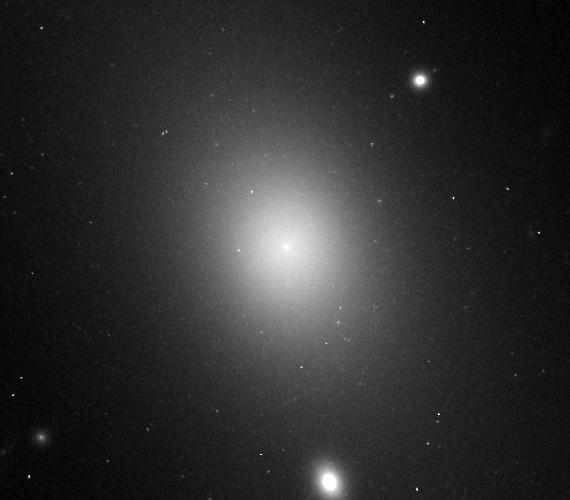
When we look up at the night sky, the countless stars visible to the naked eye seem unimaginably vast. Yet those stars belong to just one galaxy—our home, the Milky Way. Beyond it lies an almost incomprehensible universe filled with hundreds of billions, and perhaps even trillions, of galaxies. Some are tiny dwarf galaxies containing only a few million stars. Others are colossal cosmic cities, stretching across millions of light-years and housing trillions of stars.
Galaxies are the largest gravitationally bound structures in the universe. They are not simply collections of stars. Each galaxy contains vast clouds of gas and dust, dark matter halos that outweigh all visible matter, globular star clusters, planetary systems, nebulae, and often a supermassive black hole at its center. Their immense gravity shapes the motions of everything within them and influences neighboring galaxies across enormous distances.
The largest galaxies known are almost all giant elliptical galaxies. Unlike graceful spiral galaxies with well-defined arms, these enormous systems resemble vast, glowing ellipsoids of stars. Most formed through repeated galaxy mergers over billions of years. Every collision added more stars, gas, dark matter, and star clusters, allowing these giants to grow to astonishing proportions.
It is important to note that astronomers measure galaxy size in different ways. A galaxy may be the largest by diameter, the most massive, or the brightest. Because galaxy boundaries gradually fade into surrounding space, exact measurements often change as observations improve. New telescopes and deep imaging continue to reveal faint outer halos that extend much farther than previously known.
The following galaxies represent some of the largest and most extraordinary galaxies currently known to science.
1. IC 1101
At the very top of the list stands one of the greatest cosmic giants ever discovered: IC 1101.
Located approximately one billion light-years from Earth in the constellation Virgo, IC 1101 has long been regarded as the largest known galaxy by diameter. Estimates suggest it spans roughly 4 to 6 million light-years across, although the exact size depends on how astronomers define its extremely faint outer regions.
To appreciate this scale, consider that the Milky Way measures about 100,000 to 120,000 light-years in diameter. Even using conservative estimates, IC 1101 is dozens of times wider than our galaxy.
Its immense size is largely the result of countless galactic mergers over cosmic history. Situated near the center of the rich galaxy cluster Abell 2029, IC 1101 has spent billions of years absorbing smaller neighboring galaxies. Each merger contributed stars, gas, dark matter, and globular clusters, gradually building one of the largest stellar systems in existence.
Astronomers estimate that IC 1101 contains well over 100 trillion stars, although precise numbers remain uncertain because the galaxy’s outer regions are extremely diffuse.
At its center resides an extraordinarily massive supermassive black hole, with estimates ranging into the tens of billions of solar masses. Such enormous black holes are thought to grow alongside their host galaxies during repeated mergers.
The faint halo surrounding IC 1101 extends so far into intergalactic space that distinguishing where the galaxy ends and the surrounding cluster begins becomes remarkably difficult.
2. Holmberg 15A
Near the center of the galaxy cluster Abell 85 lies another remarkable cosmic giant: Holmberg 15A.
This enormous elliptical galaxy has attracted particular scientific attention because it hosts one of the most massive black holes ever identified. Recent studies estimate the central black hole may contain tens of billions of times the mass of the Sun.
Holmberg 15A spans well over a million light-years and dominates the central region of its galaxy cluster.
Like many giant ellipticals, its history is written in collisions. Over billions of years, galaxies drifting through the cluster gradually merged with Holmberg 15A, contributing their stars to its expanding halo.
Its central region contains an unusually large, diffuse stellar core. Astronomers believe repeated mergers of supermassive black holes may have ejected stars from the center through gravitational interactions, creating this enormous depleted core.
Today, Holmberg 15A serves as an important laboratory for studying both galaxy evolution and the growth of supermassive black holes.
3. NGC 4874
At the heart of the famous Coma Cluster lies NGC 4874.
This giant elliptical galaxy is one of the dominant members of one of the nearest rich galaxy clusters to Earth.
Its stellar halo stretches across more than a million light-years, blending gradually into the diffuse intracluster light produced by countless stripped stars.
NGC 4874 contains thousands of globular star clusters orbiting its enormous gravitational field.
Astronomers believe its immense size results from repeated mergers with smaller galaxies over billions of years. Many stars now residing within NGC 4874 likely originated in completely different galaxies before being incorporated into the growing giant.
The galaxy also hosts a powerful supermassive black hole and emits strong X-ray radiation due to hot gas trapped within the cluster’s gravitational potential.
4. NGC 4889
Sharing dominance of the Coma Cluster with NGC 4874 is another remarkable giant: NGC 4889.
This galaxy is not only enormous in physical size but also among the most massive galaxies ever measured.
Its central black hole ranks among the largest known, containing roughly twenty billion solar masses.
The galaxy’s smooth elliptical appearance reflects its violent history. Spiral arms disappear after repeated mergers, leaving stars moving in many different directions rather than organized circular orbits.
Detailed observations show relatively little cold gas remaining within the galaxy. Most star formation ended long ago, leaving an ancient stellar population composed primarily of old, red stars.
Although visually calm today, NGC 4889 is the product of an extraordinarily dynamic past filled with repeated collisions.
5. UGC 2885
Unlike most giants on this list, UGC 2885 is not an elliptical galaxy.
Instead, it is one of the largest spiral galaxies known.
Sometimes nicknamed “Rubin’s Galaxy” in honor of astronomer Vera Rubin, who made pioneering contributions to the study of dark matter, UGC 2885 stretches approximately 800,000 light-years across.
Its magnificent spiral arms contain enormous numbers of stars, gas clouds, and star-forming regions.
Despite its tremendous size, the galaxy has experienced relatively few major mergers compared with giant elliptical galaxies.
Instead, astronomers believe it grew gradually by accumulating gas and smaller satellite galaxies while largely preserving its spiral structure.
UGC 2885 demonstrates that galaxies do not need catastrophic collisions to become enormous. Slow, steady growth over billions of years can also produce cosmic giants.
6. ESO 306-017
ESO 306-017 dominates what astronomers call a fossil group.
A fossil group forms when numerous galaxies merge into one dominant central galaxy while relatively few large companions remain nearby.
ESO 306-017 extends over a million light-years and possesses an immense surrounding halo of hot X-ray-emitting gas.
Its current isolation likely reflects billions of years spent consuming neighboring galaxies.
Astronomers study fossil groups because they provide valuable clues about how giant galaxies continue growing even after major cluster evolution slows.
ESO 306-017 represents the likely future of many galaxy groups, including perhaps our own Local Group billions of years from now.
7. NGC 6166
Deep within the galaxy cluster Abell 2199 lies NGC 6166.
This enormous cD galaxy possesses one of the largest known diffuse stellar envelopes.
Unlike ordinary galaxies with relatively clear edges, NGC 6166 gradually fades into the surrounding cluster through an extended halo of stars stripped from smaller galaxies.
Many astronomers believe much of its outer light originates from stars that no longer belong to any individual galaxy.
Instead, they orbit freely within the cluster while remaining gravitationally associated with the central giant.
NGC 6166 illustrates how galaxy clusters themselves contribute to the growth of their dominant members.
8. M87
One of the most famous galaxies in astronomy is Messier 87, commonly known as M87.
Located about 53 million light-years away in the Virgo Cluster, M87 spans hundreds of thousands of light-years and ranks among the universe’s most massive galaxies.
Its fame increased dramatically in 2019 when the Event Horizon Telescope Collaboration produced the first-ever image of a black hole’s shadow.
The galaxy contains several trillion stars and thousands of globular clusters.
A spectacular relativistic jet extends thousands of light-years from its central supermassive black hole.
This jet, powered by material falling into the black hole, emits radiation across the electromagnetic spectrum and provides astronomers with a unique opportunity to study extreme physics.
M87 continues to be one of the most important galaxies for understanding black holes, galaxy evolution, and high-energy astrophysics.
9. NGC 3311
Near the center of the Hydra Cluster resides NGC 3311.
Although not as famous as M87 or IC 1101, NGC 3311 possesses an extraordinarily extended stellar halo.
Recent observations suggest that its outer regions continue growing through interactions with surrounding galaxies.
The galaxy’s diffuse envelope contains stars that likely originated in numerous smaller galaxies disrupted by tidal forces.
These stripped stars now contribute to one of the largest stellar halos known.
NGC 3311 demonstrates that galaxy growth remains an ongoing process even in the present-day universe.
10. NGC 1275
Completing this list is NGC 1275, located at the center of the Perseus Cluster.
This galaxy is particularly fascinating because it combines enormous size with extraordinary activity.
Unlike many giant ellipticals that are largely dormant, NGC 1275 contains complex networks of glowing gas filaments extending tens of thousands of light-years.
Its central supermassive black hole powers powerful jets that interact with surrounding hot gas.
Astronomers observe immense cavities within the cluster’s X-ray-emitting gas created by these energetic outflows.
These interactions regulate star formation, redistribute energy throughout the cluster, and influence the evolution of the entire galactic environment.
NGC 1275 reveals that giant galaxies remain dynamic systems capable of reshaping their surroundings on enormous scales.
How Do Galaxies Become So Large?
The universe did not begin with giant galaxies.
Shortly after the Big Bang, matter was distributed far more uniformly than it is today. Tiny fluctuations in density gradually grew under the influence of gravity.
Small galaxies formed first.
Over billions of years, these galaxies collided and merged repeatedly.
Each merger increased stellar mass, dark matter content, and overall size.
Computer simulations show that the largest galaxies experience dozens or even hundreds of significant mergers during their lifetimes.
In galaxy clusters, this process becomes especially efficient because galaxies frequently pass close enough for gravity to alter their orbits.
Eventually, one dominant galaxy begins absorbing its neighbors.
This process, sometimes called galactic cannibalism, explains why the largest galaxies usually occupy the centers of massive clusters.
The Role of Dark Matter
Visible stars account for only a small fraction of a galaxy’s total mass.
Most of a galaxy’s gravitational influence comes from dark matter—an invisible substance that neither emits nor absorbs light but exerts gravity.
Every giant galaxy resides within an enormous dark matter halo extending far beyond its visible stars.
These halos guide galaxy formation, regulate mergers, and determine how galaxies interact within clusters.
Without dark matter, galaxies as we know them would almost certainly never have formed.
Although scientists still do not know the true nature of dark matter, its gravitational effects are observed throughout the universe.
Are These Really the Largest?
One of astronomy’s greatest challenges is defining where a galaxy actually ends.
Unlike planets or stars, galaxies do not possess sharp boundaries.
Their stellar density gradually decreases until it blends into surrounding intergalactic space.
As telescopes become more sensitive, astronomers continue detecting increasingly faint outer halos.
Consequently, estimates of galaxy diameters frequently change.
Some galaxies once believed to span one million light-years are now known to extend considerably farther.
Future observations by next-generation observatories may identify even larger galaxies or revise measurements of those already known.
The title of “largest galaxy” remains an active area of astronomical research rather than a permanently settled fact.
Cosmic Giants and Our Place in the Universe
The largest galaxies challenge human imagination.
Their stars number in the trillions.
Their diameters stretch across millions of light-years.
Their black holes outweigh billions of Suns.
Their histories span nearly the entire age of the universe.
Yet these giants are not isolated wonders. They are products of the same physical laws that shaped our own Milky Way. Gravity, dark matter, cosmic expansion, and billions of years of evolution have transformed modest early galaxies into immense cosmic structures that dominate the largest galaxy clusters.
Studying these colossal systems helps astronomers understand how the universe itself has grown and changed. Every giant galaxy preserves a record of ancient mergers, vanished companions, and the slow accumulation of matter across cosmic time. They are not merely large collections of stars—they are living archives of the universe’s history, written across millions of light-years and billions of years of evolution.