The idea that an artificial intelligence might one day simulate the entire universe is one of the most arresting concepts of the modern age. It sits at the crossroads of physics, computer science, philosophy, and human imagination. On the surface, the question seems almost fantastical, as if borrowed from science fiction rather than serious scientific debate. Yet beneath its dramatic framing lies a genuine and profound inquiry: can the totality of physical reality, from the smallest quantum fluctuation to the largest cosmic structure, be reproduced within a computational system governed by artificial intelligence?
This question is not merely about technological ambition. It touches the deepest assumptions we hold about the nature of reality, information, and knowledge. If the universe can be simulated, then perhaps it is fundamentally computable. If it cannot, then there may be limits to what intelligence, artificial or otherwise, can ever know or recreate. To explore this question responsibly requires scientific rigor, conceptual clarity, and an appreciation of both the power and the limits of human-made systems.
What Does It Mean to Simulate the Universe?
To simulate the universe does not simply mean to create a visually convincing imitation. In scientific terms, a simulation is a computational model that reproduces the behavior of a system according to well-defined physical laws. A true simulation of the universe would require encoding the fundamental laws of physics and applying them to all matter and energy across space and time, yielding outcomes consistent with observed reality.
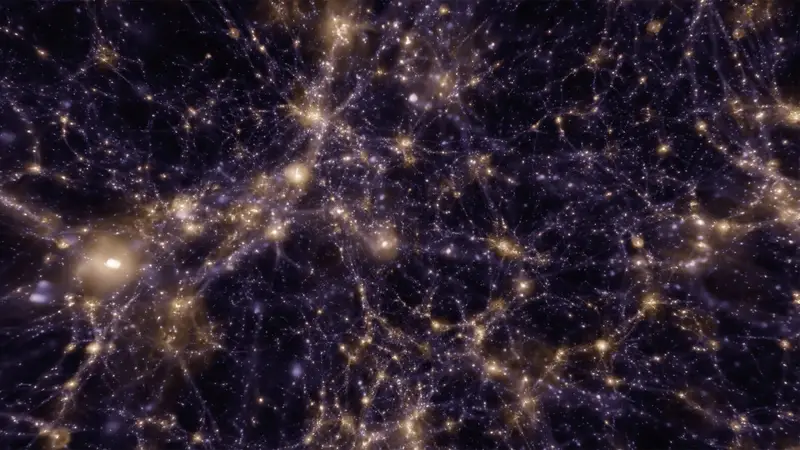
Modern physics already relies heavily on simulations. Cosmologists simulate galaxy formation, climate scientists simulate Earth’s atmosphere, and particle physicists simulate high-energy collisions. These simulations are not perfect replicas of reality, but approximations constrained by computational resources, theoretical knowledge, and observational data. They work because many physical systems exhibit patterns that can be modeled without tracking every microscopic detail.
The idea of simulating the entire universe, however, raises the stakes dramatically. Such a simulation would need to account for every particle, every interaction, and potentially every quantum event. It would not merely predict statistical behavior, but reproduce the universe in full fidelity. Whether such a goal is even meaningful depends on how we understand both simulation and reality itself.
Artificial Intelligence and the Nature of Computation
Artificial intelligence is often misunderstood as a kind of independent mind, but in scientific terms it is a class of computational systems designed to perform tasks that typically require human intelligence. These systems operate by processing information according to algorithms implemented on physical hardware. Even the most advanced AI models remain bound by the limits of computation, energy, and memory.
AI excels at pattern recognition, optimization, and approximation. It can learn complex relationships from data and generate predictions that would be difficult for humans to derive explicitly. In physics, AI has already been used to accelerate simulations, discover new materials, and identify patterns in astronomical data. These successes sometimes fuel the belief that AI might eventually transcend human limitations altogether.
Yet AI does not escape the fundamental constraints of computation. Every calculation requires time and energy. Every piece of information must be stored in some physical medium. Any simulation, no matter how sophisticated, is ultimately grounded in physical processes that obey the laws of physics themselves. This fact becomes crucial when considering whether an AI could simulate the universe in its entirety.
The Universe as an Information System
One of the most influential ideas in modern theoretical physics is that information plays a central role in the structure of reality. Concepts such as entropy, black hole thermodynamics, and quantum information theory suggest that physical systems can be understood in terms of information storage, processing, and transfer. Some physicists have even proposed that the universe itself can be viewed as a vast computational process.
If the universe is fundamentally informational, then the notion of simulating it might seem less absurd. In principle, if all physical states can be represented as information, then a sufficiently powerful computer might replicate those states. This line of thinking underlies speculative ideas such as digital physics and the hypothesis that reality itself might be a kind of computation.
However, treating the universe as an information system does not automatically make it simulable. Information is always embodied in physical systems, and the amount of information in the observable universe is immense. Estimates based on entropy and quantum limits suggest that the universe contains an enormous, though finite, amount of information. Any system attempting to simulate the universe would need to represent at least that much information, raising immediate questions about feasibility.
Computational Limits Imposed by Physics
Physics does not merely describe the universe; it constrains what is possible within it. One of the most important constraints on simulation arises from fundamental limits on computation. The laws of thermodynamics, quantum mechanics, and relativity impose strict bounds on how much information can be processed in a given region of space and time.
The concept of a maximum computational capacity is not speculative. Theoretical limits exist on the number of operations that can be performed by a physical system of a given size and energy. These limits imply that no computer embedded within the universe can process more information than the universe itself contains. As a result, a perfect, one-to-one simulation of the entire universe within the universe appears impossible.
This argument is often framed as a matter of self-reference. A system cannot fully contain a representation of itself without exceeding its own capacity. Any simulation that aims to reproduce the universe in complete detail would need to be at least as complex as the universe it simulates. Since the simulator must exist within the universe, it cannot surpass the universe’s total informational content.
Quantum Mechanics and the Problem of Detail
Quantum mechanics introduces additional complications. At the quantum level, physical systems are described by wave functions that encode probabilities rather than definite outcomes. The evolution of these wave functions can involve enormous amounts of information, especially for systems with many interacting particles.
To simulate a quantum system exactly requires tracking all possible quantum states and their superpositions. For small systems, this is feasible. For large systems, the required computational resources grow exponentially. This phenomenon, known as the exponential scaling problem, is one of the central challenges in quantum simulation.
Even quantum computers, which exploit quantum effects to perform certain calculations more efficiently, are not exempt from fundamental limits. While they can simulate some quantum systems more effectively than classical computers, they are still bound by physical constraints on size, coherence, and error correction. Simulating the full quantum state of the universe would require a quantum computer of unimaginable scale, likely exceeding what the universe itself can physically support.
Chaos, Sensitivity, and Predictability
Another obstacle to universal simulation arises from chaos theory. Many physical systems exhibit extreme sensitivity to initial conditions, meaning that tiny differences in starting states can lead to vastly different outcomes. Weather systems, turbulent fluids, and certain gravitational systems are classic examples of chaotic behavior.
In a chaotic system, perfect prediction requires perfect knowledge of initial conditions. Any uncertainty, no matter how small, grows over time and eventually dominates the system’s behavior. Since measurements in the real world are always limited in precision, simulations of chaotic systems inevitably diverge from reality after a certain point.
The universe contains countless chaotic processes operating simultaneously across different scales. Even if an AI could simulate physical laws with extraordinary accuracy, it would still face insurmountable challenges in reproducing exact outcomes over long periods. At best, it could generate statistically accurate ensembles of possible behaviors, not a single, definitive unfolding of cosmic history.
The Role of Approximation in Scientific Simulation
In practice, all scientific simulations rely on approximation. Physicists choose which details to include and which to ignore, based on the questions they wish to answer. This strategy works because many large-scale phenomena are insensitive to microscopic details. Galaxies, for example, can be modeled without tracking individual atoms, and climate models can capture global trends without resolving every air molecule.
Artificial intelligence enhances this approach by identifying effective representations and learning reduced models from data. AI-driven simulations can capture complex behavior while using fewer computational resources. This capability has transformed many areas of science and engineering.
However, approximation is fundamentally different from total replication. An approximate simulation of the universe can be extraordinarily useful without being complete. The claim that AI might simulate the entire universe often conflates these two ideas, mistaking the success of partial models for evidence that full simulation is attainable.
Could a Smaller Universe Simulate a Larger One?
One might imagine a scenario in which an advanced civilization builds a computer that simulates a universe larger or more detailed than its own. This idea is popular in speculative discussions and philosophical arguments about simulated realities. Yet from a physical perspective, this notion encounters serious difficulties.
Any simulation must be implemented on physical hardware, which occupies space, consumes energy, and obeys physical laws. If the simulated universe contains more information than the simulator, then the simulator cannot store or process that information faithfully. This is not a matter of technological immaturity, but a fundamental consequence of physics.
Some have suggested that clever encoding or compression might overcome this limitation. While compression can reduce redundancy, it cannot eliminate information that is genuinely independent. A faithful simulation of a universe with equal or greater complexity than the host universe would require more information than the host universe can provide.
The Simulation Hypothesis and Scientific Caution
The question of universal simulation is often associated with the simulation hypothesis, which proposes that our own universe might be a simulation created by some advanced intelligence. While this idea has generated philosophical debate, it remains speculative and lacks direct empirical support.
From a scientific standpoint, hypotheses must be testable. At present, there is no known experiment that can distinguish conclusively between a base reality and a sufficiently advanced simulation. This does not mean the hypothesis is false, but it does place it outside the domain of established science.
Moreover, even if simulations of limited universes were possible, this would not imply that simulating an entire universe, including the simulator itself, is feasible. The logical and physical constraints discussed earlier still apply. Scientific caution demands that we distinguish between intriguing possibilities and conclusions grounded in evidence.
Time, Causality, and the Flow of the Universe
A complete simulation of the universe would need to reproduce not only spatial structure, but temporal evolution. Time in physics is not merely a parameter; it is deeply intertwined with causality, entropy, and the structure of spacetime. In relativity, time is relative to the observer, and in thermodynamics, the arrow of time emerges from the statistical behavior of large systems.
Simulating time accurately would require the simulation to evolve according to the same causal structure as the universe. This raises subtle questions about synchronization, reference frames, and the meaning of temporal correspondence between the simulation and the simulated world.
If a simulation runs faster or slower than real time, does it still count as simulating the universe? If it skips or approximates certain events, what is lost? These questions highlight the conceptual difficulty of defining what a “complete” simulation would even mean.
Consciousness and Observers Within a Simulation
Some discussions of universal simulation extend beyond physics to include consciousness. If a simulated universe contains conscious observers, then the simulation must reproduce not only physical processes, but the conditions under which subjective experience arises. This introduces profound philosophical challenges.
From a scientific perspective, consciousness is associated with complex physical processes in the brain. Simulating these processes would require extraordinary detail and accuracy. Whether such a simulation could produce genuine subjective experience or merely a functional imitation is an open question in philosophy of mind.
Importantly, the inclusion of conscious observers does not circumvent physical limits. Conscious processes, like all physical processes, consume energy and process information. Their inclusion only increases the complexity of the simulation, reinforcing the challenges already discussed.
What AI Can Realistically Do for Cosmology
While simulating the entire universe may be impossible, AI already plays a transformative role in cosmology and fundamental physics. Machine learning algorithms help analyze vast datasets from telescopes, identify subtle patterns, and test theoretical models against observations. AI accelerates simulations by learning effective approximations and optimizing computational strategies.
These contributions do not diminish the value of human insight. Rather, they extend human capabilities, allowing scientists to explore models that would otherwise be intractable. AI serves as a powerful tool within the scientific process, not as a replacement for physical law or empirical validation.
The realistic future of AI in physics lies in deeper understanding, not total replication. By helping us explore complex systems and test theoretical ideas, AI brings us closer to understanding the universe as it is, even if it can never recreate it in full.
The Difference Between Prediction and Reproduction
An important distinction in this discussion is the difference between predicting behavior and reproducing reality. Physics aims to predict the outcomes of experiments and observations within well-defined uncertainties. A simulation that achieves this goal is successful, even if it does not capture every microscopic detail.
Reproducing the universe, by contrast, implies duplicating its complete state and evolution. This is a far stronger requirement, one that goes beyond the practical aims of science. The success of physics has never depended on such total replication, but on the ability to identify underlying principles that govern observable phenomena.
Understanding this distinction helps clarify why the idea of simulating the entire universe, while fascinating, may not be scientifically meaningful. The goal of science is not to duplicate reality, but to explain it.
The Human Meaning of the Question
The enduring appeal of the question “Can AI simulate the entire universe?” lies not only in its technical aspects, but in what it reveals about human curiosity. It reflects a desire for mastery, for total understanding, and for reassurance that the universe is ultimately knowable.
Physics teaches a more nuanced lesson. The universe is intelligible, but not exhaustible. Each layer of understanding reveals deeper questions. Limits are not failures of imagination, but features of a reality that is richer than any single description.
AI, like physics itself, is a product of this ongoing quest. It extends our reach, sharpens our tools, and challenges our assumptions. But it does not abolish mystery. Instead, it reframes mystery in more precise terms.
Conclusion: A Universe Beyond Total Simulation
From a scientifically grounded perspective, the idea that AI could simulate the entire universe in complete detail faces overwhelming physical, computational, and conceptual barriers. The limits imposed by information theory, quantum mechanics, chaos, and self-reference strongly suggest that no system within the universe can fully reproduce the universe itself.
This conclusion does not diminish the power of AI or the ambition of physics. On the contrary, it clarifies what these endeavors are truly about. AI can help us model, understand, and explore the universe with unprecedented depth. Physics can reveal laws of astonishing elegance and universality. Together, they can illuminate vast regions of the unknown.
Yet the universe remains larger than any model, richer than any simulation, and deeper than any computation. The impossibility of total simulation is not a defeat, but a reminder of the profound complexity of reality. In seeking to understand the universe, we do not aim to contain it, but to listen to it, question it, and learn from it, knowing that some horizons will always lie beyond our reach.