Ancient genomes from more than 300 individuals in northwestern Hungary are shedding new light on one of Europe’s most mysterious eras. By combining DNA evidence with archaeological discoveries, researchers found that the collapse of Roman rule was followed by complex population movements, cultural interactions, and the creation of a new hierarchical society rather than a single wave of migration.
For centuries, the period following the fall of the Roman Empire has remained one of the least understood chapters in European history. Written records are scarce, and much of what historians know comes from Roman perspectives. Now, a major genetic and archaeological investigation is offering an unprecedented look at the people who lived through this transformation.
The findings come from the HistoGenes project, an international research effort that combines ancient DNA analysis with archaeological evidence to reconstruct life in early medieval Europe. Published in Science, the study provides fresh insight into how communities evolved in the centuries after Roman authority disappeared from large parts of the continent.
Examining the DNA of Early Medieval Communities
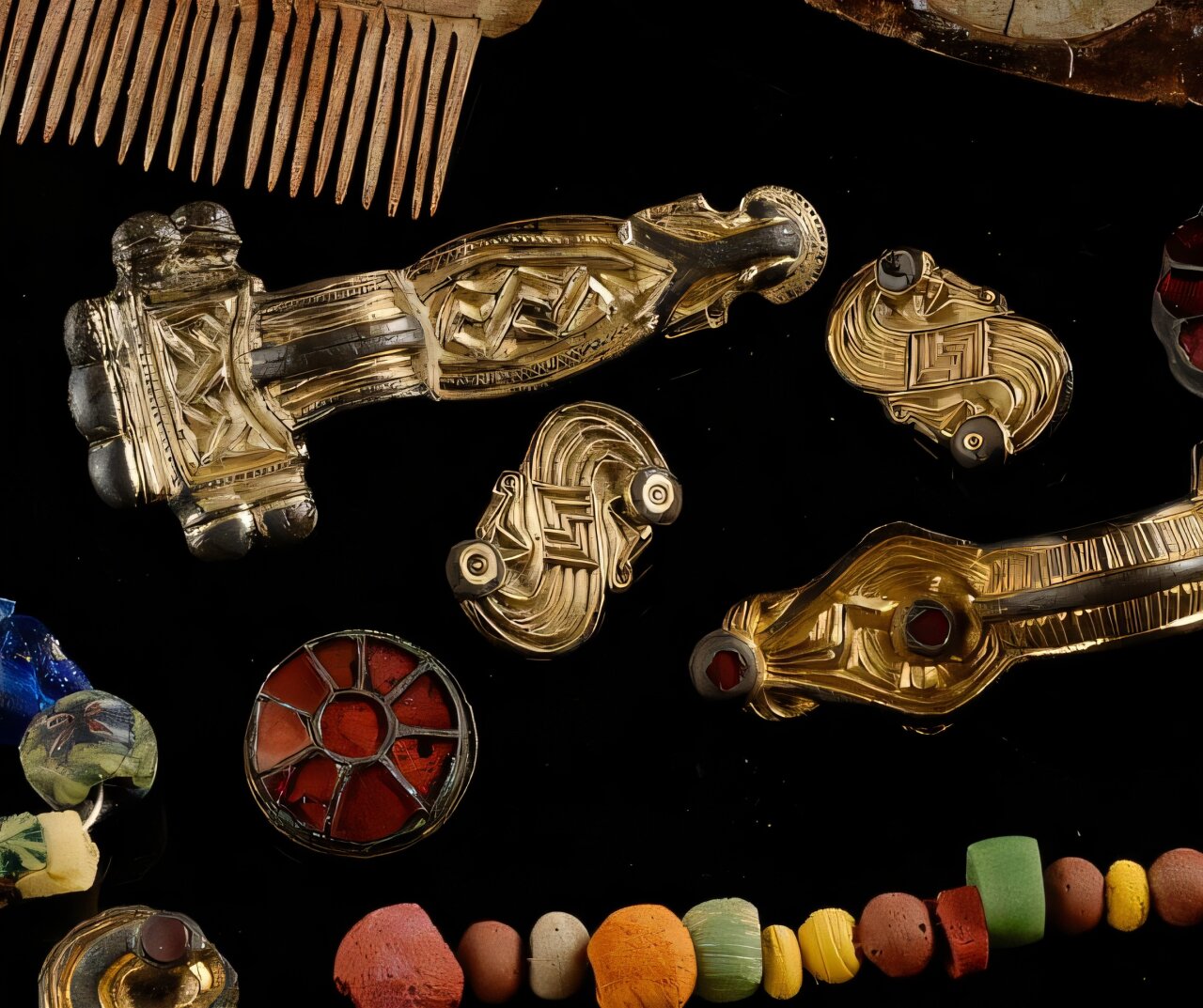
Researchers analyzed the genomes of more than 300 individuals who lived in the Little Hungarian Plain, a region in present-day northwestern Hungary. The work was led by Yijie Tian of Stony Brook University and István Koncz of Eötvös Loránd University in Hungary, with contributions from an international team of geneticists, archaeologists, historians, and anthropologists.
Their analysis revealed a striking contrast between populations living during the Roman era and those who occupied the region after the empire’s decline.
During the Roman period, communities in the area were connected through a dense network of infrastructure and cooperation. Genetically, these populations showed predominantly southern European ancestry, while also containing notable ancestry linked to Asia and Africa. The findings reflect the diverse and cosmopolitan nature of the Roman world.
A Shift After the Fall of Rome
The picture changed significantly in the post-Roman period.
Researchers detected a rise in northern European ancestry among individuals buried at later sites. When combined with archaeological evidence, the genetic data suggested that this shift likely reflected the expansion of the Lombard Kingdom, a historically documented but long-debated movement of people from regions north of the Danube River into former Roman territories during the early sixth century.
Rather than confirming a single, dramatic migration event, however, the evidence pointed to something far more complex.
The study found that population movement occurred through sustained and interconnected patterns of mobility. Genetic links connected people living in the Little Hungarian Plain with populations located farther north, indicating ongoing movement and interaction across considerable distances.
Building a New Society
One of the study’s most important conclusions is that these newcomers did not simply settle scattered rural communities.
Instead, the evidence suggests they helped establish a diverse and hierarchical society, including ruling elites who played a central role in creating a new post-Roman political order.
This finding challenges simplified narratives that portray the period primarily as an age of invasion and collapse. The research indicates that community formation involved multiple groups interacting with one another and developing new social structures.
The emergence of the Lombards as a dominant political force was only part of the story. Local populations with predominantly southern European ancestry continued to play an important role in shaping the region’s future alongside incoming groups with stronger northern European ancestry.
Challenging Traditional Views of the “Barbarian” Era
Historians have often described the centuries following Rome’s decline through the lens of migrations by so-called “barbarian” groups that established kingdoms across Europe.
Because these societies left behind relatively few written records, scholars have frequently depended on accounts written by conquered Romans. As a result, many aspects of daily life, social organization, and population dynamics have remained difficult to reconstruct.
The new findings challenge the idea that post-Roman communities emerged through straightforward replacement of one population by another.
Instead, the research points to multiple forms of community building driven by interaction, integration, and cooperation among diverse groups. The study suggests that the formation of early medieval societies was far more dynamic than traditional historical narratives often imply.
Evidence of Complex Human Mobility
According to Patrick Geary, professor emeritus in the School of Historical Studies and co-principal investigator of the HistoGenes project, the broader research effort has revealed a wide spectrum of population movements across Central Europe.
The project has identified both gradual local mobility and long-distance migration, as well as rapid population shifts involving people moving from Eastern Asia into the Carpathian Basin. Researchers also found that material culture and genetic ancestry did not always align, demonstrating that cultural identity cannot be understood through genetics alone.
The findings further highlight the many ways newcomers became integrated into existing populations, creating societies that blended different backgrounds, traditions, and ancestries.
A Massive Effort to Reconstruct Europe’s Past
The HistoGenes project represents one of the most ambitious investigations of early medieval Europe undertaken to date.
Its multidisciplinary team has analyzed more than 6,000 individuals who lived in Central Europe between 400 and 900 C.E. By combining genetics, archaeology, history, and anthropology, researchers are building a far more detailed picture of how societies changed during a period that has long remained poorly understood.
The latest study adds an important piece to that puzzle, revealing how people moved, interacted, and formed new political and social structures in the wake of Rome’s collapse.
Why This Matters
The centuries following the fall of the Roman Empire helped shape the foundations of medieval Europe, yet they remain among the least documented periods in European history. This research demonstrates how ancient DNA can fill critical gaps left by limited written records, providing direct evidence of who lived in these communities and how they were connected.
By showing that post-Roman societies emerged through complex interactions between migrants and local populations rather than simple replacement, the study offers a more nuanced understanding of human mobility, cultural integration, and state formation. It also highlights the power of combining genetics with archaeology to uncover the stories of people whose voices were largely absent from the historical record.