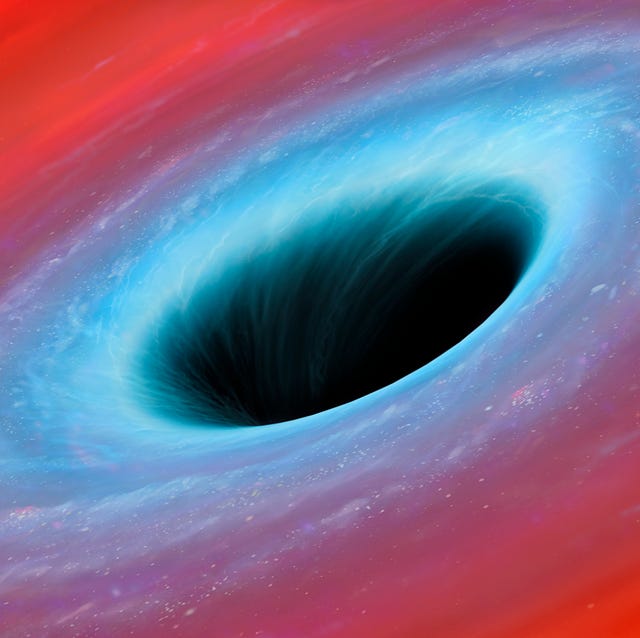
Few objects in the universe capture the human imagination quite like black holes. They are invisible yet unimaginably powerful. They bend space and time, consume matter, and sit at the centers of most large galaxies. Their mysterious nature has inspired countless books, movies, documentaries, and internet discussions.
But fascination often comes with misunderstanding.
Black holes are frequently portrayed as cosmic monsters that endlessly roam the universe, swallowing everything in sight. They are imagined as portals to other dimensions, gateways through time, or infinitely hungry vacuum cleaners capable of destroying entire galaxies without warning.
The real science is both more subtle and, in many ways, even more astonishing.
Over the past century, physicists and astronomers have transformed black holes from mathematical curiosities into well-established astrophysical objects. Einstein’s theory of general relativity predicted their existence. Observations of stars orbiting invisible massive objects, detections of gravitational waves, and the first direct images of black hole shadows have provided overwhelming evidence that black holes are real.
Yet despite these remarkable discoveries, myths continue to circulate.
Understanding what black holes truly are helps us appreciate not only these extraordinary objects but also the fundamental laws governing the universe.
Let’s separate science from fiction by exploring fifteen of the biggest myths about black holes.
1. Myth: Black Holes Suck Everything Around Them Like Giant Vacuum Cleaners
This is perhaps the most widespread misconception about black holes.
Movies often portray black holes as cosmic vacuum cleaners that relentlessly pull in everything nearby. Entire planets, stars, and galaxies appear helpless once a black hole exists.
Reality is very different.
A black hole exerts gravity just like any other object with the same mass.
If the Sun were somehow replaced by a black hole of identical mass—a physically impossible scenario, but useful as a thought experiment—the planets would continue orbiting almost exactly as they do today. Earth’s orbit would remain essentially unchanged because gravity depends on mass and distance, not on whether that mass is a star or a black hole.
The only major difference would be the absence of sunlight, causing Earth to freeze over.
Objects fall into black holes only if they come sufficiently close or lose enough orbital energy.
Black holes do not actively “reach out” and pull distant objects toward themselves.
2. Myth: Black Holes Wander Through Space Destroying Everything
Science fiction frequently depicts rogue black holes drifting through galaxies, consuming every star in their path.
While isolated black holes can indeed move through space, they do not randomly devastate entire regions.
Most stellar black holes remain near the locations where their parent stars ended their lives.
Supermassive black holes typically reside at the centers of galaxies, where they have remained for billions of years.
Even when galaxies collide, the central black holes eventually merge rather than roaming wildly through space.
The enormous distances between stars also make random destructive encounters extraordinarily rare.
Our Milky Way’s central black hole has existed for billions of years without threatening the Solar System, which orbits safely about 26,000 light-years away.
3. Myth: Black Holes Are Giant Holes in Space
The name “black hole” is somewhat misleading.
People often imagine an actual hole—a tunnel or opening leading somewhere else.
In reality, a black hole is not an empty hole.
It is an extremely compact concentration of mass.
General relativity describes it as a region of spacetime where gravity becomes so intense that nothing—not even light—can escape once it crosses the event horizon.
The word “hole” refers to the inability of information to escape, not to an empty cavity in space.
A black hole possesses mass, angular momentum, and sometimes electric charge.
It is one of the densest known objects in the universe.
4. Myth: Black Holes Are Completely Empty
Closely related to the previous misconception is the belief that black holes contain nothing at all.
Current physics does not support this idea.
General relativity predicts that matter falling into a black hole continues collapsing toward an extremely dense central region known mathematically as a singularity.
However, this prediction almost certainly indicates that general relativity becomes incomplete under such extreme conditions.
Physicists expect that a future theory of quantum gravity will provide a more accurate description.
At present, nobody knows precisely what exists inside a black hole beyond the event horizon.
The interior remains one of the greatest unsolved problems in theoretical physics.
5. Myth: Black Holes Destroy Matter Completely
Matter falling into a black hole undergoes extraordinary gravitational effects.
But whether matter is truly destroyed remains an open scientific question.
One of modern physics’ biggest debates concerns the black hole information paradox.
Quantum mechanics suggests that information cannot simply disappear.
General relativity appears to allow information to become permanently inaccessible inside black holes.
Reconciling these two ideas remains one of theoretical physics’ greatest challenges.
Many proposed solutions exist, but none has achieved universal acceptance.
Scientists therefore avoid claiming that matter or information is simply “destroyed.”
The reality is considerably more complicated.
6. Myth: Nothing Can Ever Escape a Black Hole
This statement is only partly true.
Once an object crosses the event horizon, current physics indicates that escape becomes impossible.
However, black holes themselves are not entirely eternal.
In the 1970s, physicist Stephen Hawking showed that quantum effects near the event horizon should cause black holes to emit extremely faint thermal radiation, now called Hawking radiation.
Over unimaginably long timescales, this process causes black holes to lose mass.
Tiny hypothetical black holes would evaporate relatively quickly.
Supermassive black holes, however, would require vastly longer than the current age of the universe to disappear.
So while nothing escapes from inside the event horizon, black holes themselves are not completely isolated from quantum processes.
7. Myth: Black Holes Instantly Kill Anything That Approaches
Many illustrations show spacecraft being torn apart the moment they near a black hole.
Reality depends entirely on the black hole’s size.
Near relatively small stellar-mass black holes, tidal forces become enormous close to the event horizon.
These forces stretch objects dramatically, a process informally known as spaghettification.
However, supermassive black holes behave differently.
Because their event horizons are much larger, tidal forces at the horizon may actually be relatively gentle.
An astronaut crossing the event horizon of a sufficiently massive black hole might initially notice nothing unusual at that precise location.
The fatal tidal forces would occur much deeper inside.
8. Myth: Black Holes Are Invisible and Cannot Be Detected
Black holes themselves emit no light.
However, astronomers detect them in many different ways.
Matter falling toward a black hole often forms an accretion disk.
Friction within this disk heats gas to millions of degrees, producing intense X-rays and other radiation.
Astronomers also observe stars orbiting invisible massive objects.
Gravitational waves reveal black hole mergers.
The bending of light by gravity, known as gravitational lensing, provides additional evidence.
In 2019, the Event Horizon Telescope Collaboration released the first image of a black hole’s shadow.
In 2022, they produced an image of the Milky Way’s central supermassive black hole.
These observations confirmed decades of theoretical predictions.
9. Myth: Every Massive Star Becomes a Black Hole
Massive stars end their lives in different ways.
Some become neutron stars.
Others produce black holes.
The outcome depends primarily on the star’s initial mass, chemical composition, and the details of its final evolution.
Stars similar to the Sun never become black holes.
Instead, they eventually evolve into white dwarfs after shedding their outer layers.
Only the most massive stars possess enough material to collapse into stellar black holes after exhausting their nuclear fuel.
Black holes are therefore relatively rare compared with ordinary stars.
10. Myth: Supermassive Black Holes Formed from Giant Stars
The origins of supermassive black holes remain one of astronomy’s biggest mysteries.
They contain millions or even billions of times the Sun’s mass.
No known star could ever become so massive.
Scientists believe supermassive black holes likely formed through more complex processes involving early cosmic gas clouds, repeated mergers, rapid accretion, or combinations of these mechanisms.
Exactly how the first supermassive black holes appeared so quickly after the Big Bang remains an active area of research.
This mystery continues to challenge modern cosmology.
11. Myth: Black Holes Are Cosmic Portals to Other Universes
Science fiction frequently portrays black holes as wormholes connecting distant regions of space or entirely different universes.
General relativity does contain mathematical solutions involving wormholes.
However, these solutions are not the same as ordinary astrophysical black holes.
No observational evidence shows that real black holes function as portals.
Most theoretical wormholes would collapse almost instantly unless supported by hypothetical forms of exotic matter that have never been observed.
While the idea is fascinating, current science provides no evidence that entering a black hole leads somewhere else.
12. Myth: Black Holes Are the Largest Objects in the Universe
Black holes can become enormous.
Some contain tens of billions of solar masses.
Yet their physical sizes remain surprisingly modest compared with many astronomical structures.
Galaxies span tens of thousands to hundreds of thousands of light-years.
Galaxy clusters extend millions of light-years.
The observable universe measures roughly 93 billion light-years across.
Even the largest known black holes occupy only tiny fractions of these immense cosmic scales.
They are extraordinarily massive but not the largest structures in existence.
13. Myth: Time Stops Everywhere Near a Black Hole
Einstein’s theory predicts gravitational time dilation.
Clocks closer to extremely strong gravity run more slowly relative to distant observers.
This effect has been experimentally confirmed in weaker gravitational fields, including those around Earth.
Near a black hole, time dilation becomes much more pronounced.
However, time does not simply “stop” for someone falling into the black hole.
To the falling observer, time continues normally according to their own clock.
The apparent slowing occurs when comparing different observers located in different gravitational environments.
This distinction is essential.
Relativity changes how different observers measure time, not whether time itself exists.
14. Myth: Black Holes Consume Entire Galaxies
Supermassive black holes occupy the centers of most galaxies.
Yet they do not gradually eat their host galaxies.
The Milky Way’s central black hole contains roughly four million solar masses.
That sounds enormous until compared with the galaxy’s total stellar mass, which exceeds one hundred billion solar masses.
The central black hole represents only a tiny fraction of the galaxy’s total mass.
Stars orbit the galactic center much as planets orbit the Sun.
Only stars that venture unusually close risk being captured.
Most of the galaxy remains entirely unaffected.
In fact, galaxies and their central black holes appear to evolve together over billions of years in surprisingly stable relationships.
15. Myth: Scientists Fully Understand Black Holes
Perhaps the greatest misconception is that black holes are essentially solved scientific problems.
Nothing could be further from the truth.
Black holes occupy the frontier of modern physics.
Researchers continue investigating questions that strike at the foundations of our understanding of reality.
What happens at the singularity?
How is information preserved?
Can quantum mechanics and general relativity be unified?
How exactly do supermassive black holes form?
What role do black holes play in galaxy evolution?
Could primordial black holes exist?
Do black holes help reveal the nature of quantum gravity?
Every year brings new discoveries, but also new questions.
Far from ending scientific curiosity, black holes continue to deepen it.
Why Black Holes Fascinate Us
Black holes occupy a unique place in science.
They combine extreme gravity, warped spacetime, quantum mechanics, high-energy astrophysics, and cosmology into a single phenomenon.
They challenge intuition because they operate far outside everyday human experience.
Nothing in ordinary life prepares us to imagine objects from which even light cannot escape.
Yet the universe contains many millions of them.
Some quietly orbit through galaxies.
Others power brilliant quasars visible across billions of light-years.
Some merge violently, sending ripples through spacetime that modern detectors can measure.
Others may have existed since the earliest moments after the Big Bang.
Black holes are no longer speculative ideas.
They are observed members of the cosmic landscape.
What We Actually Know About Black Holes
Despite the mysteries that remain, scientists have established several fundamental facts with remarkable confidence.
Black holes form when enough mass is compressed into a sufficiently small region that gravity prevents light from escaping. They obey Einstein’s theory of general relativity with extraordinary accuracy under observed conditions. They possess measurable mass, spin, and sometimes electric charge. Matter orbiting them emits intense radiation before crossing the event horizon. They merge with one another, producing gravitational waves that have now been detected many times. Supermassive black holes reside at the centers of most large galaxies, including our own.
These conclusions rest not on speculation but on decades of astronomical observations, theoretical work, and increasingly sophisticated instruments.
The Greatest Mystery of All
The most remarkable thing about black holes is not what we know.
It is what we still do not know.
They sit at the intersection of the two greatest theories in modern physics: general relativity, which describes gravity on large scales, and quantum mechanics, which governs the microscopic world.
Both theories are extraordinarily successful.
Yet inside black holes, they appear fundamentally incompatible.
Somewhere beyond the event horizon lies a realm where our current understanding reaches its limit.
Whether future breakthroughs come from new telescopes, gravitational-wave observatories, quantum theories of gravity, or discoveries not yet imagined, black holes will almost certainly remain among the most important laboratories for exploring the deepest laws of nature.
The myths surrounding black holes often portray them as monsters or magical gateways. The scientific reality is far more compelling. They are natural consequences of gravity, extraordinary products of stellar evolution and cosmic history, and profound reminders that the universe still holds mysteries capable of transforming our understanding of space, time, matter, and reality itself.